Tajikistan’s eastern Gorno-Badakhshan Autonomous Oblast (GBAO) has frequently been described as sparsely inhabited.
According to the human rights organization ADC Memorial, tens of thousands of people have left this sparsely inhabited region since the Tajik government’s crackdown in 2021–2022.
The estimated departures amount to more than 20% of GBAO’s pre-crackdown population, and conditions continue to worsen, so the exodus looks set to continue.
Life at the Rooftop of the World
GBAO makes up about 45% of Tajikistan; nearly all of the region is mountainous, with some peaks climbing to more than 7,000 meters.
What is now GBAO was one part of a network of communities in the Pamir Mountains that stretched into present-day China, Afghanistan, and Kyrgyzstan. People have lived there for thousands of years. The ancient fortresses of Yamchun, built in the 3rd century BC, and Kaakha, built in the 2nd century, are the remains of a network of fortresses that once guarded trade through this area.
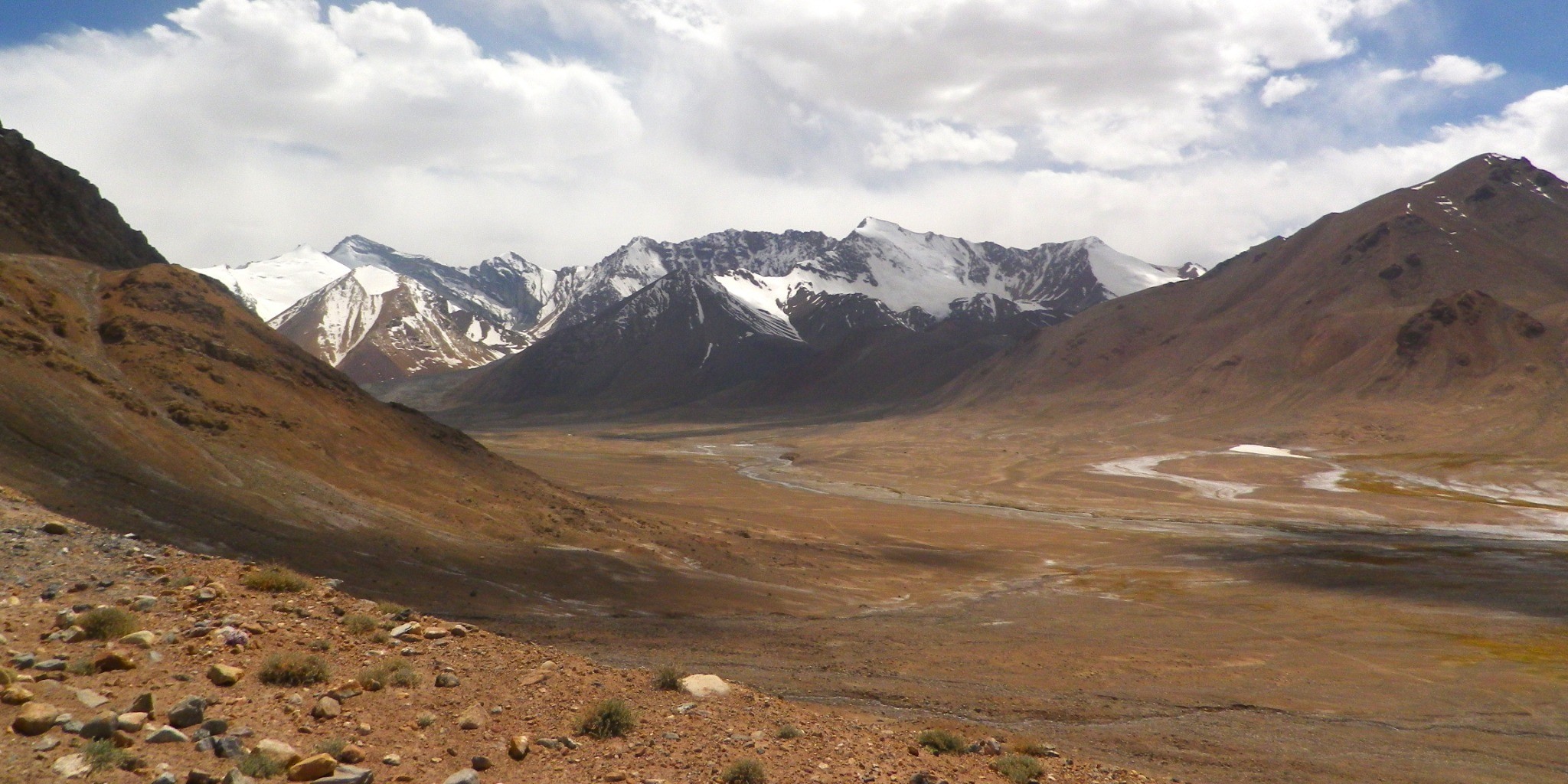
White Horse Pass in Tajikistan’s Pamir Mountains. Image: Stephen M. Bland.
The small population was scattered across river valleys of the Pamir Mountains and developed in isolation from one another, so, unsurprisingly, there are several different languages spoken in the region.
The GBAO capital is Khorog, at an elevation of some 2,200 meters, which is also the biggest town in GBAO with a population of some 30,000. Russia established Khorog as a garrison town at the end of the 19th century. The town looks down on the Pyanj River, and on the other side of the river is Afghanistan.
Only two roads connect Khorog to the outside world: one leading to the Tajik capital Dushanbe to the west, and now to the Chinese border in the east, and another road that comes from southern Kyrgyzstan and passes through GBAO’s second-largest city, Murgab, at an elevation of some 3,650 meters, and with a population somewhere between 7,500 and 8,000.

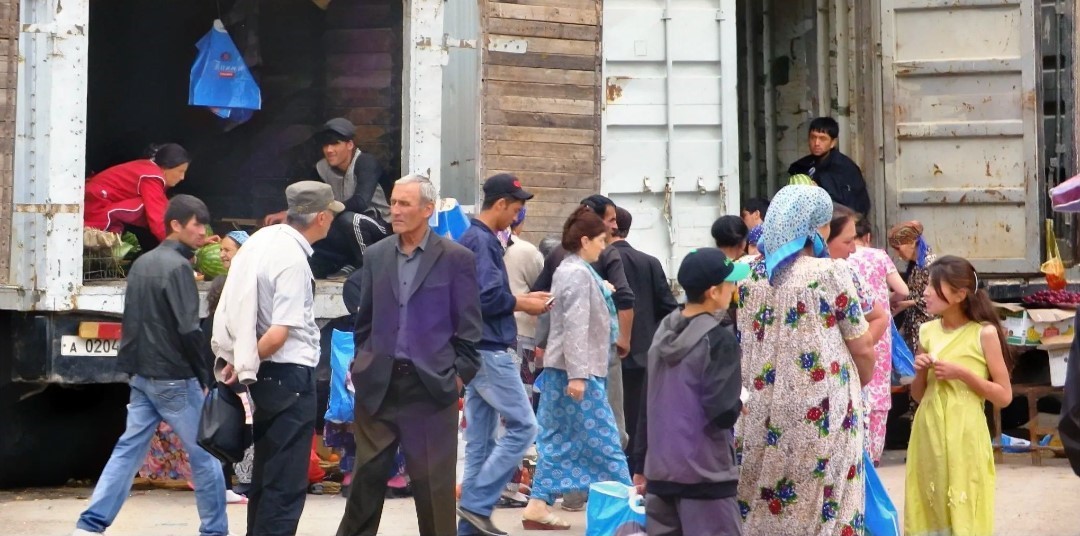
Murgab Bazaar; image: Stephen M. Bland.
Both roads face sudden and sustained closures during winter months due to avalanches and snowfall. Storms in the mountains can prevent planes from travelling to or from GBAO for weeks at a time.
Despite these challenges and more, by 2021, the population in GBAO had grown to some 230,000, which is still only about 2% of Tajikistan’s population.
Not Fully Part of Tajikistan
Customs and language distinguish “Pamiris” of GBAO from Tajiks, but perhaps the most important difference is religion.
The Pamiris are Ismailis, Shi’ites, followers of the Aga Khan. Most Tajiks are Sunni Muslims.
After the collapse of the Soviet Union, Tajikistan declared independence on September 9, 1991. In spring 1992, a civil war broke out that pitted Tajik government forces backed by Russia and Uzbekistan against the United Tajik Opposition (UTO), a coalition of domestic opposition groups that included the Islamic Renaissance Party of Tajikistan (IRPT), the Democratic Party of Tajikistan, and La’li Badakhshan (Rubies of Badakhshan), a Pamiri group seeking greater autonomy for GBAO.
The UTO established bases and safe havens in the nearly inaccessible, rugged terrain of the mountains in GBAO.
The Tajik government was able to keep some GBAO border towns under its control due to the presence of Russian border guards who remained stationed along Tajikistan’s frontier with Afghanistan after the USSR disintegrated.
The 1997 Tajik Peace Accord brought an end to the civil war. But the Tajik government was in no shape to establish control over GBAO and maintained nominal rule there by reaching deals with influential local figures in GBAO, dubbed “informal leaders.”
Some of these informal leaders were given state posts as administrative officials or customs service chiefs. That was officially in keeping with the terms of the peace agreement that guaranteed places in the government for former UTO members.
The government was able to appoint its people, usually loyal Pamiris, to key posts such as GBAO chairman or Khorog mayor. But the people of the region often, and successfully, pushed back against government attempts to exert greater control over GBAO.
There were small battles in GBAO in 2008, 2012, 2014 and 2018, which concluded every time with the government having to negotiate a settlement with the region’s informal leaders.
Tajik President Emomali Rahmon signed the peace agreement in 1997, but in the years that followed he methodically removed his former opponents from government positions.
After having the IRPT’s registration revoked and then Tajikistan’s Supreme Court declaring the IRPT an extremist group and banning its activities in 2015, GBAO was the only area of Tajikistan where people could still protest against government policies.

Everyday life at Khorog’s bazaar, Gorno-Badakhshan. Image: Stephen M. Bland.
The Last Protests
In November 2021, security forces killed young GBAO native Gulbiddin Ziyobekov. Authorities said Ziyobekov had resisted an attempt to detain him. In February 2020, Ziyobekov and other local men had confronted an assistant prosecutor whom they accused of sexually harassing a local woman.
A protest broke out in Khorog, and demonstrators brought Ziyobekov’s body to the administration building. Violence erupted; several protesters were killed, and dozens were arrested.
Tensions simmered, and in May 2022, residents of the Khorog area planned to conduct a protest demanding freedom for all the people detained in the violence in November 2021, and the dismissal of several government-appointed local officials.
On May 16, as a group of several hundred approached the Khorog administration building, soldiers and security forces fired tear gas and rubber bullets. Violence escalated quickly.
The Tajik government said organized terrorist groups were attempting to create unrest in GBAO, and authorities launched a security operation across GBAO to neutralize the alleged terrorists. The operation continued into June. The government was vague about the number of people killed, putting the figure at around 20, but witnesses and international rights groups said the true number was at least several dozen.
A crackdown started against Pamiris. Any influential figure in GBAO was detained, and hundreds were imprisoned. Even GBAO natives in Russia who posted on social networks about the situation were extradited back to Tajikistan and thrown in prison.
The Aga Khan Development Network (AKDN) was really the only party that had invested significant amounts of money into GBAO after Tajikistan’s independence. Most of the AKDN facilities were either closed down or appropriated by the state.
Residents were told to remove any portraits of the Aga Khan, and Ismaili prayer meetings at private homes were banned.
Locals speaking in any language but Tajik faced pressure and sometimes violence from police and security forces.
At Tajikistan’s November 5, 2026, UN human rights review, member states called for accountability for the violent crackdowns in GBAO.
According to a November 11 article from RFERL’s Azattyq Asia, Olga Abramenko of ADC Memorial said her organization conducted research that found more than 50,000 people had left GBAO since 2022. Abramenko said that while the number might seem high, she considered it credible despite gaps in migration data.
The population was some 230,000 before May 2022. But the combination of lack of employment, discrimination, and fear of arrest and imprisonment has led many to vacate their homeland.
In the best of times, life was difficult in GBAO. Now, with AKDN aid greatly reduced and few signs that the government or any foreign party plans to invest in GBAO, and with the discrimination against the indigenous peoples continuing, many seem to have concluded there is no future for them there.