• KGS/USD = 0.01143 0%
  • KZT/USD = 0.00206 0%
  • TJS/USD = 0.10811 -0.18%
  • UZS/USD = 0.00008 0%
  • TMT/USD = 0.28571 0%
  • KGS/USD = 0.01143 0%
  • KZT/USD = 0.00206 0%
  • TJS/USD = 0.10811 -0.18%
  • UZS/USD = 0.00008 0%
  • TMT/USD = 0.28571 0%
  • KGS/USD = 0.01143 0%
  • KZT/USD = 0.00206 0%
  • TJS/USD = 0.10811 -0.18%
  • UZS/USD = 0.00008 0%
  • TMT/USD = 0.28571 0%
  • KGS/USD = 0.01143 0%
  • KZT/USD = 0.00206 0%
  • TJS/USD = 0.10811 -0.18%
  • UZS/USD = 0.00008 0%
  • TMT/USD = 0.28571 0%
  • KGS/USD = 0.01143 0%
  • KZT/USD = 0.00206 0%
  • TJS/USD = 0.10811 -0.18%
  • UZS/USD = 0.00008 0%
  • TMT/USD = 0.28571 0%
  • KGS/USD = 0.01143 0%
  • KZT/USD = 0.00206 0%
  • TJS/USD = 0.10811 -0.18%
  • UZS/USD = 0.00008 0%
  • TMT/USD = 0.28571 0%
  • KGS/USD = 0.01143 0%
  • KZT/USD = 0.00206 0%
  • TJS/USD = 0.10811 -0.18%
  • UZS/USD = 0.00008 0%
  • TMT/USD = 0.28571 0%
  • KGS/USD = 0.01143 0%
  • KZT/USD = 0.00206 0%
  • TJS/USD = 0.10811 -0.18%
  • UZS/USD = 0.00008 0%
  • TMT/USD = 0.28571 0%

Viewing results 1 - 6 of 80

Kazakhstan to Plant Forests to Reduce Carbon Dioxide Emissions

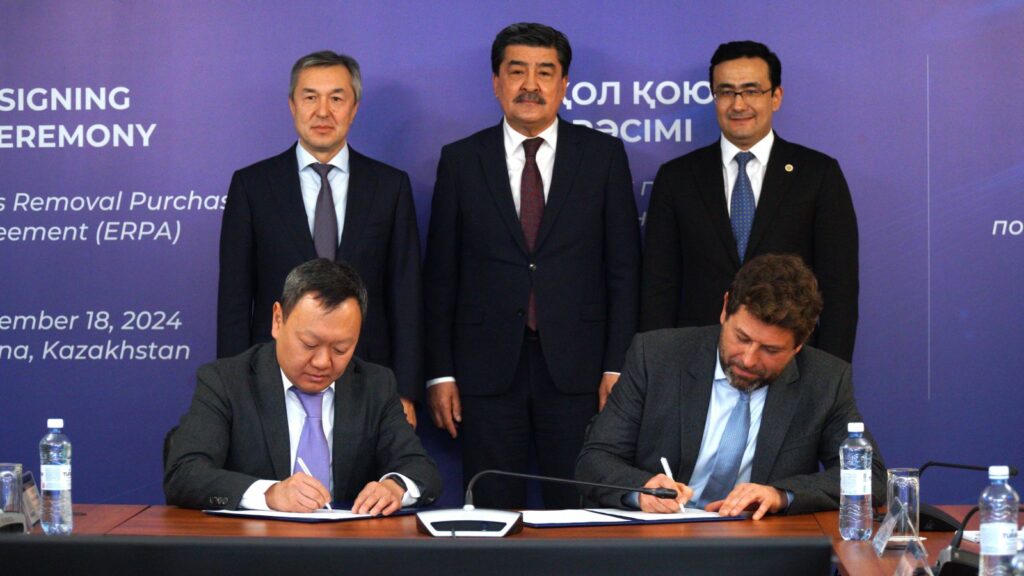
On November 18, the British company SEFE Marketing & Trading Ltd. and Kazakhstan’s SAFC LLP signed an emission removal purchase agreement, marking the launch of the country’s first forest climate project. The project aims to plant 3.3 million trees across 1,500 hectares in the Almaty region. According to forecasts, the initiative will achieve an average annual reduction of 26 tons of CO₂ per hectare. Over the 30-year project period, this is expected to remove 1.2 million tons of carbon dioxide from the atmosphere. Additionally, the project is designed to promote agroforestry, ecotourism, and job creation in the region. During a meeting with one of SEFE's Vice-Presidents, Alexander Demidov, and SAFC's CEO Yuri Kim, Kazakhstan’s Prime Minister Olzhas Bektenov emphasized the government’s commitment to supporting environmental initiatives. “We strive to create favorable conditions for attracting foreign investment in environmental projects. The government supports projects aimed at restoring ecosystems, reducing carbon footprint, and developing a green economy,” he stated. Kim added: “This project was supported by the President of Kazakhstan and the Atameken National Chamber of Entrepreneurs, and now we are starting its practical implementation. By combining the competencies of SEFE and SAFC, we will demonstrate Kazakhstan's broad capabilities for attracting foreign investment.” According to Atameken, the project not only lays the groundwork for others to follow suit but also leads the way for new investment opportunities in carbon farming. This approach marks a new stage in diversifying Kazakhstan’s economy, creating potential revenue streams from agricultural production and greenhouse gas emission trading. Kazakhstan’s forest climate initiative demonstrates the country’s commitment to sustainability while attracting foreign investment to bolster its green economy.
Uzbekistan and Germany Partner on Green Industrialization with €3 Million Grant

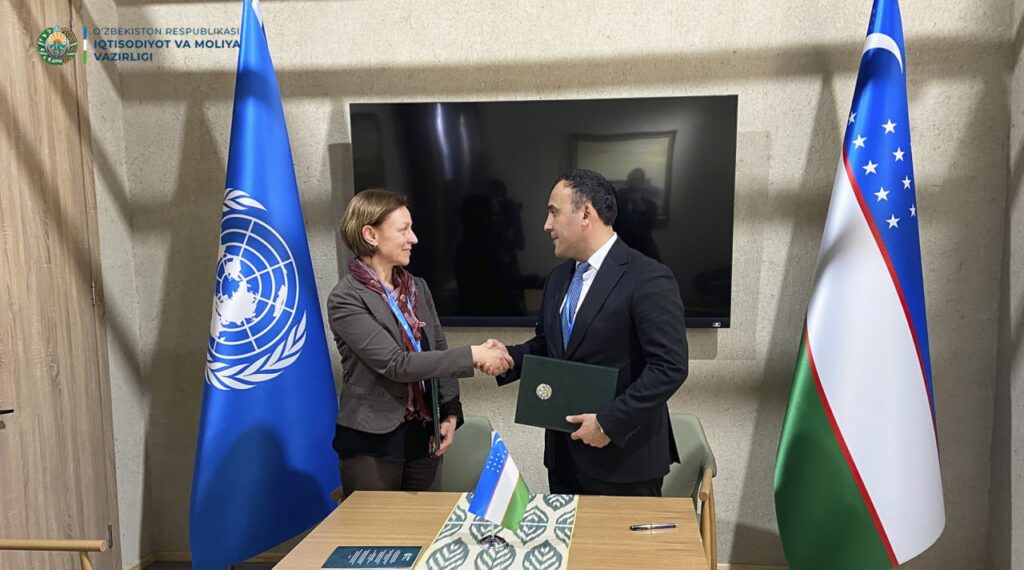
On November 13, at the 29th UN Climate Change Conference (COP29) in Azerbaijan's capital Baku, Uzbekistan's Ministry of Economy and Finance signed a memorandum with the German International Cooperation Society (GIZ) to secure additional funding for a project aimed at supporting the private sector in green industrialization. As part of the initiative, Germany has allocated €9 million to help Uzbekistan’s private sector transition to a green economy. The project is designed to assist the Uzbek government in implementing economic reforms and fostering sustainable economic development, focusing on enhancing the capacity of both the public and private sectors to adopt green industrialization practices. The initiative will also provide technical expertise in measuring and certifying greenhouse gas emissions, supporting Uzbekistan’s participation in international carbon trading mechanisms, and aligning with the European Union’s Cross-Border Adjustment Mechanism (CBAM). Additionally, it aims to promote resource-saving and sustainable production by encouraging the private sector to adopt green technologies, including circular economy practices and green industrial park models. To further bolster the project, a €3 million grant was approved during the conference. This funding will complement the ongoing initiative, titled “Support to the Private Sector and Advice on Economic Policy in Uzbekistan.”

COP29: Environmental Initiatives in the Real World

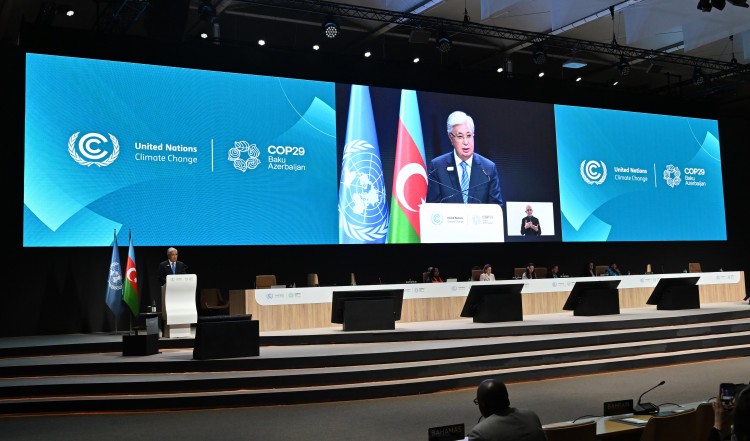
Kazakhstan's President Kassym-Jomart Tokayev has addressed the World Climate Summit in Baku, Azerbaijan. In his speech he spoke about the country's environmental problems, but also mentioned opportunities for new eco-friendly projects. At the same time, many world leaders did not attend the summit, and activist Greta Thunberg said climate problems should be discussed at other venues. Tokayev reaffirmed Kazakhstan's commitment to the global climate agenda and emphasized the importance of international cooperation in the fight against climate change. He reminded forum participants that carbon neutrality by 2060 can only be achieved with close cooperation and technology exchange. “Access to predictable funding and state-of-the-art technology is vital to achieving the targets. The NCQG should pay special attention to regions most vulnerable to climate change, including landlocked developing countries. Despite accounting for only 1% of global emissions, Central Asia faces multiple climate risks. To increase efficiency, we must actively utilize advanced technologies such as artificial intelligence, satellite monitoring, and other digital tools to provide early warning and better management of water and land resources,” Tokayev said. Tokayev added that Kazakhstan has opportunities for transition to better agriculture. According to him, the republic, which has 200 million hectares of agricultural land, is an ideal platform for introducing “carbon farming." The president said these agricultural production methods can reduce emissions and improve soil quality. “Our country provides 43% of the world's uranium supply and plays a significant role in developing low-carbon nuclear power. In October this year, ROK citizens supported the construction of a nuclear power plant in a nationwide referendum. We strive to ensure the safety and efficiency of this project through partnership with the world's technological leaders in energy”, added Tokayev. He separately emphasized the problem of the world's water resources. “Climate change is already seriously impacting the global water cycle. Water-related disasters account for more than 80% of all natural disasters. This year, the ROK faces unprecedented floods. To respond quickly in the future and recover from such emergencies, we are implementing a comprehensive risk management system. In partnership with France, Kazakhstan will hold the One Water Summit in December to actualize the water agenda. Participants of this forum will discuss the problems of global water management,” Tokayev said. “Today, the Caspian Sea is under threat. Saving the world's largest lake is a problem that requires long-term international cooperation. We support President Ilham Aliyev's (Azerbaijan) initiative to create a group of experts from the Caspian littoral states. Additionally, Kazakhstan is taking concrete steps to preserve the Aral Sea,” he added. Also, within the framework of the World Climate Summit in Baku, an important agreement for Kazakhstan's water sector was signed. Deputy Prime Minister and Minister of National Economy Nurlan Baybazarov said the Islamic Development Bank will finance Kazakhstan's $1.1 billion project for water resources development, which will be realized in nine regions. Kazakhstan is not standing still Today, Kazakhstan has several major environmental projects in operation. These include the Astana Green Belt, which has significantly improved the city's ecology, reduced air...

World Bank Report Outlines Path to Drive Tajikistan’s Green Transition and Economic Growth

On November 7, the World Bank Group published the Tajikistan Country Climate and Development Report (CCDR), highlighting the transformative potential of climate action for Tajikistan's economy. The report suggests that addressing climate risks can drive economic renewal, create jobs, and enhance resilience against the rising frequency of extreme weather events caused by climate change. Ozan Sevimli, World Bank Group Country Manager for Tajikistan, emphasized the urgency of a strategic shift: “Tajikistan urgently needs an economic reset to tackle its numerous development challenges and the growing impacts of climate change that threaten future progress. The CCDR provides a roadmap for accelerating the transition to a green economy, supporting long-term growth.” A key finding of the report is the importance of mobilizing private-sector financing to supplement Tajikistan's limited public resources. This financing will be crucial in securing the nation’s green transition and ensuring water, food, and energy security. Despite ranking 130th globally in greenhouse gas emissions, Tajikistan is highly vulnerable to climate change impacts, notes Bahodur Sheralizoda, Chair of the Environmental Protection Committee under the Tajik government: “Although our contribution to global emissions is minimal, we are one of the most climate-vulnerable countries in the world. The CCDR advises the government to improve production efficiency, foster innovative technologies, and create green jobs to reduce our susceptibility to climate-related challenges.” The report warns that Tajikistan already faces high risks of floods, earthquakes, and landslides, with potential infrastructure and agricultural losses that could lower GDP by 5-6% by 2050. The strategic Vakhsh River Basin, which produces 90% of the country’s electricity, underscores the dual challenges of climate and development. Annual costs of land degradation are estimated at $325 million, with further increases anticipated. Additionally, air pollution remains a major health risk, accounting for 84 deaths per 100,000 people—Central Asia’s second-highest rate. A green transition could deliver substantial benefits. By 2050, reduced healthcare costs from lower air pollution, fewer road accidents, and improved road conditions could save over $3.5 billion. Investments in renewable energy, including hydro, solar, and geothermal, as well as in energy efficiency, promise new employment opportunities across sectors. The report advises the Tajik government to fast-track low-carbon development to strengthen economic growth, energy security, export potential, and job creation, all while enhancing air quality. Achieving these goals will require significant investments: Tajikistan needs around $17 billion, in addition to the $79 billion required for the government’s reform agenda from 2025 to 2050. Private sector investments, particularly in energy, industry, and agriculture, will be essential. Recognizing that the financial needs for this transformation exceed domestic resources, the report underscores the importance of external support. Tajikistan will need substantial technical and financial assistance from international bodies, climate funds, and development partners to fulfill its climate and development goals.

Tajikistan and ADB Sign Grant for Green Corridor Initiative

On November 1, Tajikistan's Ministry of Finance signed a grant agreement worth $86.6 million with the Asian Development Bank (ADB) for a “Green Corridor Demonstration Project”. This project aims to reconstruct 49 kilometers of Tajikistan's Dangara-Gulistan highway, expand it to four lanes with a "Green Road" element, add 48.8 kilometers of bicycle lanes, and build two charging roads. The AIIB has approved a $75.5 million loan for Tajikistan to build a 920-meter bridge, connecting 350,000 people in the northeast to Dushanbe and regional towns and the border of Kyrgyzstan.

IFC Increases Investments in Central Asia

The International Finance Corporation (IFC), a member of the World Bank Group, says it committed $1.04 billion in Central Asia in the fiscal year 2024, which started on July 1, 2023, and ended on June 30, 2024. The funds comprised over $400 million in long-term financing from IFC’s account, $600 million in mobilization, and $35 million in short-term trade and supply-chain finance to facilitate trade flows. The funds, coupled with advisory support, aimed to increase private sector participation, create jobs, boost financial inclusion, bolster infrastructure, and support the region’s green transition. Priority sectors included finance, capital markets, renewable energy, agriculture, and infrastructure. Over the last fiscal year, IFC-supported projects in the Central Asian region created about 35,000 jobs, including more than 13,000 for women. Strengthening local financial markets is among its key objectives. To that end, the IFC invested $228 million in 10 financial institutions in Kazakhstan, Kyrgyzstan, Tajikistan, and Uzbekistan, with up to half earmarked for women entrepreneurs and rural enterprises. The IFC also supported local financial institutions in growing their micro, small, and medium enterprises (MSME) businesses, advancing climate finance and digital transformation, and issuing the first-ever sustainability, social, and green bonds. The IFC and the World Bank financed a new solar plant with the country’s first battery energy storage system to support Uzbekistan's green transition and climate action. The plant is expected to provide electricity access to approximately 75,000 households in the Bukhara region. In Tajikistan, the IFC invested in the country’s first green bond, issued by Eskhata Bank. The bond will support climate-smart projects and MSMEs undertaking environmental projects. In Kazakhstan and Kyrgyzstan, in addition to investments to increase financial inclusion, the IFC has been evaluating new advisory and investment opportunities, including PPPs in areas such as drinking water supply, renewable energy (including geothermal solutions for heating and cooling), railway projects as part of the Middle Corridor, and the first municipal green bonds in Central Asia. The IFC also supports Kazakhstan's accelerated methane mitigation efforts, which align with the Global Methane Pledge. Wiebke Schloemer, the IFC’s Director for Türkiye and Central Asia, reiterated its commitment to the region: “Over the past 20 years, the region has seen substantial development, with an average annual growth rate of 6.2 percent. Central Asia must leverage the green transition to boost private investment, strengthen connectivity, and reduce resource dependency to continue this growth. The IFC aims to address these goals and continue to deliver solutions where we are needed most — from increasing access to finance for farmers and women entrepreneurs to creating jobs to continue to help countries transition to net zero.”