• KGS/USD = 0.01144 0%
  • KZT/USD = 0.00213 0%
  • TJS/USD = 0.10562 0%
  • UZS/USD = 0.00008 0%
  • TMT/USD = 0.28530 0%
  • KGS/USD = 0.01144 0%
  • KZT/USD = 0.00213 0%
  • TJS/USD = 0.10562 0%
  • UZS/USD = 0.00008 0%
  • TMT/USD = 0.28530 0%
  • KGS/USD = 0.01144 0%
  • KZT/USD = 0.00213 0%
  • TJS/USD = 0.10562 0%
  • UZS/USD = 0.00008 0%
  • TMT/USD = 0.28530 0%
  • KGS/USD = 0.01144 0%
  • KZT/USD = 0.00213 0%
  • TJS/USD = 0.10562 0%
  • UZS/USD = 0.00008 0%
  • TMT/USD = 0.28530 0%
  • KGS/USD = 0.01144 0%
  • KZT/USD = 0.00213 0%
  • TJS/USD = 0.10562 0%
  • UZS/USD = 0.00008 0%
  • TMT/USD = 0.28530 0%
  • KGS/USD = 0.01144 0%
  • KZT/USD = 0.00213 0%
  • TJS/USD = 0.10562 0%
  • UZS/USD = 0.00008 0%
  • TMT/USD = 0.28530 0%
  • KGS/USD = 0.01144 0%
  • KZT/USD = 0.00213 0%
  • TJS/USD = 0.10562 0%
  • UZS/USD = 0.00008 0%
  • TMT/USD = 0.28530 0%
  • KGS/USD = 0.01144 0%
  • KZT/USD = 0.00213 0%
  • TJS/USD = 0.10562 0%
  • UZS/USD = 0.00008 0%
  • TMT/USD = 0.28530 0%

Viewing results 1 - 6 of 5

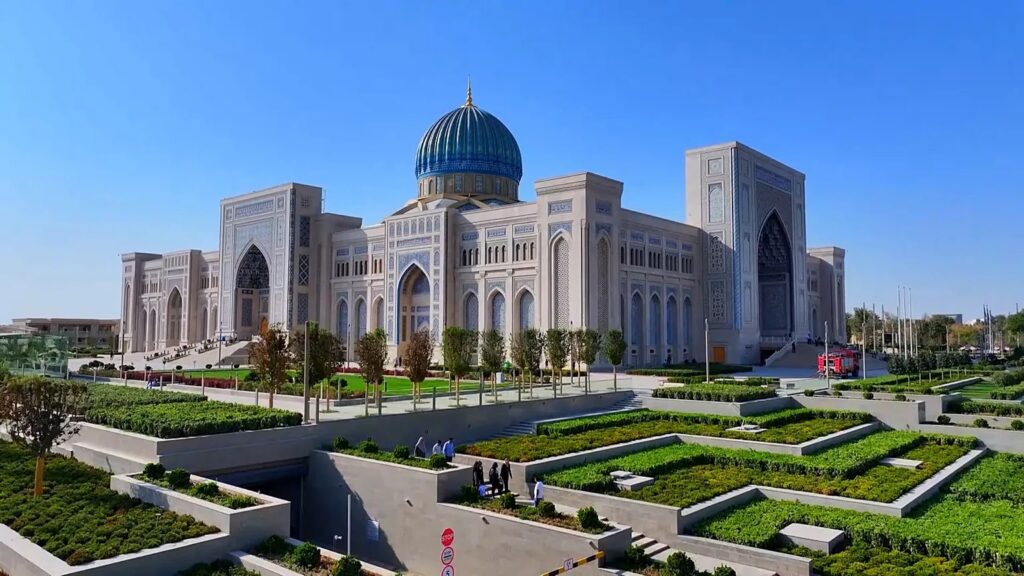
Uzbekistan’s Islamic Civilization Center Enters Guinness World Records as Largest Museum

The Center of Islamic Civilization in Uzbekistan has been officially recognized as the world’s largest museum dedicated to Islamic civilization, receiving a Guinness World Records title on April 13. The recognition was confirmed by Guinness World Records adjudicator Şeyda Subaşı Gemici, who attended the ceremony alongside project architects, designers, and members of the Center’s Scientific Council. The award followed a detailed verification process. The recognition comes as Uzbekistan continues to invest in large-scale cultural infrastructure as part of a broader effort to present its historical narrative and reshape its international image. “As an official Guinness World Records adjudicator, I can state that every corner of the museum and every exhibit possesses its own uniqueness and cultural value,” Gemici said. “The evaluation process strictly followed established procedures… every exhibit was recorded and verified by specialists in Islamic archaeology, art, and science.” She added that the scale and depth of the project left a strong impression, describing it as “an outstanding achievement” and, in Guinness terminology, “Officially Amazing.” The Center is a large-scale scientific, educational, and museum complex initiated in 2017 under the leadership of President Shavkat Mirziyoyev and completed on March 17, 2026. It was conceived as a platform combining research, cultural heritage, and modern technologies, aimed at showcasing the history and contributions of Islamic civilization. The project reflects a wider policy under Mirziyoyev of positioning Uzbekistan not only as a historical center of Islamic scholarship but as a modern platform for its study and interpretation. Chief architect, Abdukakhor Turdiev, said the project reflects Uzbekistan’s historical and cultural legacy. “The uniqueness of the Center lies in the fact that its architecture reflects the rich culture and heritage of Uzbekistan,” he said, adding that the country is increasingly positioning itself as an active participant in global cultural dialogue. Across Central Asia, governments have increasingly used large cultural projects to reinforce national identity and attract international attention, but Uzbekistan has placed particular emphasis on linking heritage with scholarship and global engagement. According to officials, the complex has quickly become one of the most visited cultural sites in the region, receiving up to 5,000 visitors daily, including both locals and international tourists. That scale suggests the Center is intended not only as a museum, but as a flagship institution shaping how both domestic and international audiences understand the region’s intellectual and cultural history. Director Firdavs Abdukhalikov described the award as recognition of years of work by hundreds of specialists. He said the Center’s primary goal is to support scientific and educational projects while preserving and promoting Uzbekistan’s cultural heritage. Beyond its record-setting size, the Center reflects Uzbekistan’s broader effort to reclaim and reinterpret its place in the history of Islamic civilization. By combining scholarship, state backing, and public accessibility, it positions cultural heritage as both a foundation of national identity and a tool of international engagement.

Young Uzbek Engineers Set Guinness World Record with 1,946 Robots

Uzbekistan has entered the Guinness World Records after 1,946 young engineers simultaneously assembled mini-robots at a public event in Tashkent. The Ministry of Higher Education, Science and Innovation announced the achievement via its official Telegram channel. The record-setting event took place in Yangi O‘zbekiston Park, where each participant built a robot in unison, surpassing the previous record set in India in 2023, when 1,459 students completed a similar task. Describing the achievement as a “historic milestone,” the ministry said: “Our youth achieved it, Uzbekistan has broken a Guinness World Record! This success once again inscribes our country’s name in the Guinness Book of Records. It demonstrates the scientific-technical potential, creativity, and teamwork of Uzbek youth, opening the door to new achievements in technology and innovation.” The event served as both a technical showcase and a celebration of collaboration, innovation, and national pride. The accomplishment adds to a growing list of Guinness World Records from across Central Asia. In May, acrobats Batyr Zhanuzak and Marlen Maratov from the Almaty Circus earned a record in Milan for the “Fastest time climbing and descending two ladders with a person standing on their hands on the head.”

Kazakh Acrobats Enter Guinness World Records with Daring Feat

Batyr Zhanuzak and Marlen Maratov, acrobats from the Almaty Circus, have entered the Guinness World Records following a breathtaking performance at the international show Lo Show Dei Record in Milan. The duo stunned both the jury and audience when Zhanuzak climbed up and down a ladder twice, all while balancing Maratov in a one-arm handstand on his head. Their feat, completed in 36 seconds, was recognized as a world record in the category: “Fastest time climbing and descending two ladders with a person standing on their hands on the head.” “We already have four records with the team, though not all are officially recorded,” said 32-year-old Zhanuzak. “If someone breaks our record, we’re ready for a rematch. But for now, we’re aiming for new heights.” For 29-year-old Maratov, the accomplishment reflects years of preparation. “I spent four years training for this, to balance on one hand. But always with safety equipment,” he explained. “I think I’m the first to do it without any. It’s extremely dangerous.” He added that one previous attempt nearly ended in a fall, but Zhanuzak caught him at the last second. That moment became a turning point, a realization of their shared capabilities. Both performers are part of the internationally acclaimed “Serbat” circus troupe and have represented Kazakhstan in high-profile competitions worldwide. Their resume includes appearances in the finals of major talent shows in the United States, United Kingdom, and China. Their performances are widely praised for their originality, technical mastery, and artistic flair. Maksat Zhaikov, director of the Kazakh State Circus, called the achievement “not only a personal triumph but a contribution to the development of Kazakh circus art.” He added that the record reinforces Kazakhstan’s reputation on the global performing arts stage. Zhanuzak and Maratov are already planning their next challenge, incorporating a third ladder into their act. But their primary goal, they emphasize, is to show the world that Kazakh artists rank among the best.