• KZT/USD = 0.00214
  • TJS/USD = 0.10810
  • UZS/USD = 0.00008
  • TMT/USD = 0.29760
  • KZT/USD = 0.00214
  • TJS/USD = 0.10810
  • UZS/USD = 0.00008
  • TMT/USD = 0.29760
  • KZT/USD = 0.00214
  • TJS/USD = 0.10810
  • UZS/USD = 0.00008
  • TMT/USD = 0.29760
  • KZT/USD = 0.00214
  • TJS/USD = 0.10810
  • UZS/USD = 0.00008
  • TMT/USD = 0.29760
  • KZT/USD = 0.00214
  • TJS/USD = 0.10810
  • UZS/USD = 0.00008
  • TMT/USD = 0.29760
  • KZT/USD = 0.00214
  • TJS/USD = 0.10810
  • UZS/USD = 0.00008
  • TMT/USD = 0.29760
  • KZT/USD = 0.00214
  • TJS/USD = 0.10810
  • UZS/USD = 0.00008
  • TMT/USD = 0.29760
  • KZT/USD = 0.00214
  • TJS/USD = 0.10810
  • UZS/USD = 0.00008
  • TMT/USD = 0.29760
10 August 2026

Viewing results 1 - 6 of 9

Swiss Court Fines Lombard Odier $3.7 Million in Karimova Money-Laundering Case

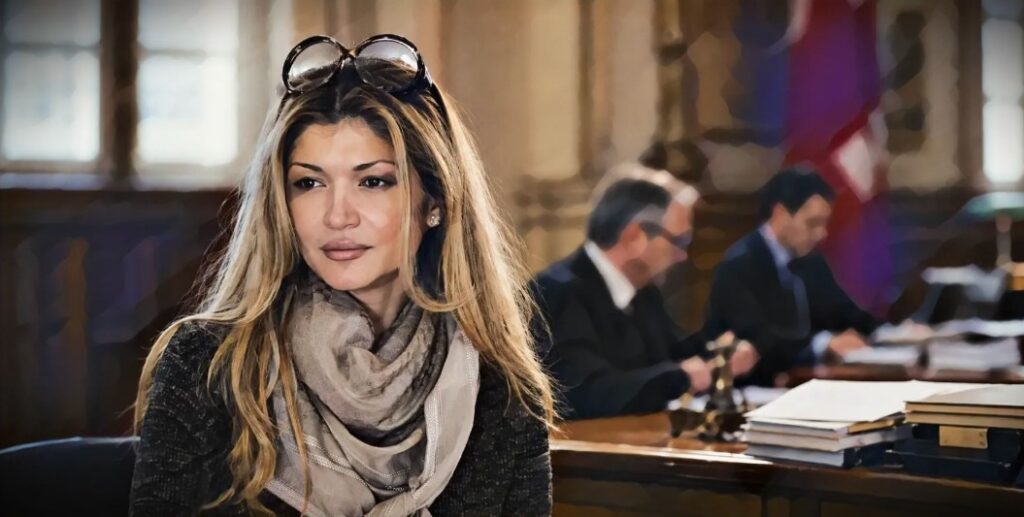
Switzerland’s Federal Criminal Court has fined Geneva-based private bank Lombard Odier 3 million Swiss francs, or about $3.68 million, after finding that it failed to take adequate organizational measures to prevent money laundering in a case linked to Gulnara Karimova, the eldest daughter of Uzbekistan’s late President Islam Karimov. The court also dismissed criminal proceedings against Karimova without ruling on the allegations against her. The ruling was delivered on July 27 in Bellinzona, following a trial that began in April. Swiss prosecutors had accused Karimova of accepting bribes and leading a criminal organization known as “The Office,” which allegedly channeled hundreds of millions of dollars through Swiss bank accounts between 2005 and 2013. Lombard Odier and one of its former account managers were accused of helping conceal assets derived from the group’s activities. The former employee was found guilty of aggravated money laundering. The court concluded that the bank had failed to take “all reasonable and necessary organizational measures” to prevent the offense. The former account manager, identified only as “C.,” received a fully suspended 24-month prison sentence. The court also ordered the confiscation in Switzerland of more than 400 million Swiss francs in assets originating from the money-laundering offense or controlled by “The Office.” In a statement, Lombard Odier said the case began after it voluntarily reported suspicious transactions to the Swiss authorities in 2012. It maintained that robust anti-money-laundering controls were in place and said it would appeal. The first-instance judgment is not final. The court dismissed the proceedings against Karimova on procedural grounds. The judges concluded that there was no realistic prospect of her release from prison in Uzbekistan or extradition to Switzerland before the limitation period expired. The court did not rule on the allegations against her. Proceedings were also dismissed against another defendant, identified only as “B.,” who lives in Russia and could not travel to Switzerland through no fault of his own. The sentences imposed on Lombard Odier and its former employee were reduced because of the time elapsed since the offenses in 2011 and 2012. Charges covering events before July 27, 2011, were dismissed as time-barred. Karimova, now 54, has consistently denied wrongdoing. She has been imprisoned in Uzbekistan since March 2019, when she was moved from house arrest after the authorities said she had breached its conditions. She is serving a 13-year sentence for offenses including organizing a criminal group, extortion, and embezzlement. The Swiss investigation began in 2012 and concerns conduct dating back more than two decades. In May 2025, the Federal Criminal Court joined the proceedings against Karimova and Lombard Odier. The wider international investigation has involved assets across several jurisdictions. Assets associated with Karimova in Switzerland, France, and the United States have previously been estimated at nearly $1.4 billion. The case has also led to efforts to return confiscated assets to Uzbekistan. In February 2025, Uzbekistan and Switzerland signed an agreement covering approximately $182 million confiscated by the Swiss authorities. The funds are to be transferred through the Uzbekistan...

Uzbekistan Completes First Ishonch Fund Health Project for Maternal and Newborn Care

Uzbekistan has completed the first healthcare program financed through the Ishonch Fund, a mechanism established under the restitution agreement between Uzbekistan and Switzerland to channel returned assets into public development projects. The initiative invested $43.5 million in maternal and newborn healthcare across the country, marking the fund’s first large-scale use for social sector reform, the Ministry of Economy and Finance said. The project, “Every Mother and Child Survives and Thrives: Reducing Preventable Maternal and Newborn Deaths in 227 Perinatal Centres of Uzbekistan,” was launched in September 2023. It officially concluded at a June 25 ceremony attended by representatives of Uzbekistan’s government, the Swiss Embassy, United Nations agencies, and international development partners. Implemented jointly by UNICEF, UNFPA, and the World Health Organization, the program focused on modernizing perinatal services, upgrading medical infrastructure, and improving the skills of healthcare professionals. More than 231 perinatal healthcare facilities across Uzbekistan received modern medical equipment, including advanced incubators, respiratory support systems, anesthesia machines, and other life-saving devices. Around $31 million of the project’s budget was dedicated to purchasing and installing this equipment, expanding the capacity of hospitals to care for mothers with high-risk pregnancies and newborns requiring intensive treatment. Investment also extended to the country’s medical workforce. More than 80,000 healthcare professionals completed specialized training in modern perinatal care, high-risk pregnancy management, neonatal intensive care, and laboratory diagnostics. The program also supported the development and revision of 49 national clinical protocols, helping align maternal and newborn care with international medical standards. Public outreach formed another major part of the initiative. Nationwide awareness campaigns encouraging women to receive regular antenatal care reached nearly 20 million people, while improved maternal and perinatal healthcare services benefited almost four million citizens. According to monitoring data presented at the closing event, the share of preventable maternal deaths declined from 77.3% in 2022 to 62.8%, a decrease of 14.5 percentage points. Survival rates among newborns, particularly babies born with extremely low birth weight, increased by around 13% during the life of the program. Regina Castillo, UNICEF Representative in Uzbekistan, said the results demonstrate what can be achieved through cooperation between Uzbekistan’s government, Switzerland, civil society, and UN agencies. “The introduction of modern medical equipment and advanced clinical practices in hundreds of perinatal facilities has significantly expanded access to high-quality maternal and newborn healthcare services across the country,” she said. Swiss Ambassador Konstantin Obolensky linked the project to Switzerland’s asset restitution priorities. “The restitution of illicitly acquired assets and their transparent and accountable use remain among Switzerland’s key priorities,” Obolensky said. “The Ishonch Fund serves as a practical example of how returned assets can directly improve people’s quality of life.” Deputy Minister of Economy and Finance Otabek Fazilkarimov said the effective use of restituted assets plays an important role in developing human capital and advancing reforms in the social sector. The Ishonch Fund finances development programs implemented by UN agencies under the oversight of representatives from both governments, the UN, and civil society. As previously reported by The Times of Central Asia,...

Swiss Court Suspends Karimova Case as Asset Questions Remain

A Swiss court has suspended part of a money laundering case involving Gulnara Karimova after she failed to appear at trial. Judges at the Federal Criminal Court in Bellinzona said they had taken all possible steps to secure Karimova’s participation in the proceedings. This included a visit to Uzbekistan in August 2024, when court representatives met with the country’s Supreme Court to discuss options for her involvement. However, those efforts did not succeed, and in January 2026, Uzbekistan’s authorities formally declined the request. As a result, the court ruled that proceedings against Karimova could not continue in her absence. The same decision was applied to her co-defendant, described by prosecutors as a close associate. In this case, judges identified a separate legal obstacle preventing the trial from moving forward. Karimova’s lawyer, Grégoire Mangeat, described the dismissal more strongly, telling Reuters that the decision “amounts to an acquittal under Swiss law.” The court’s reasoning, however, was procedural: judges found a lasting obstacle to continuing the case because Karimova cannot attend, and no judgment is likely before the statute of limitations expires. According to the court, the co-defendant—an Uzbek national believed to be living in exile in Russia—cannot travel to Switzerland due to outstanding international arrest warrants. While it would theoretically be possible for him to travel from Russia, the absence of direct flights between the two countries since 2022 and the risk of detention in a third country make his participation unlikely. Judges also noted that the statute of limitations for the charges against him is set to expire in June 2027, making it effectively impossible for him to attend court before that deadline. This was described as a “permanent obstacle” to continuing proceedings against him. Despite these developments, the overall case remains open. The court confirmed that the main proceedings will continue against a former asset manager at Lombard Odier, as well as against the bank itself. Judges said there were no barriers to continuing this part of the trial and moved forward with preliminary hearings. The case, which has been under investigation for more than a decade, centers on allegations of money laundering and financial misconduct linked to a broader corruption network. While parts of the proceedings have now been suspended, key questions remain unresolved. Among them is the issue of assets allegedly connected to Karimova. The court stated that the possible confiscation of these funds will still be examined as part of the ongoing trial. The unresolved asset question is tied to a fall that has stretched across more than a decade. Once a high-profile public figure, Karimova built a vast business empire, pursued a career in fashion, and even dabbled in pop music under the name “Googoosha.” A former UN envoy and self-styled “Princess of Uzbekistan,” Karimova projected an image of glamour and influence that later collapsed under the weight of corruption cases in Uzbekistan and abroad. A leaked U.S. diplomatic cable offered a much darker portrait, describing her as “a robber baron” and “the single most...

Swiss Court Opens Long-Running Case Against Gulnara Karimova

A large-scale corruption case involving Gulnara Karimova, the daughter of Uzbekistan's last president Islam Karimov, is set to go to trial on April 27 at the Federal Criminal Court in Bellinzona, Switzerland, according to a Finews report and official Swiss sources. The proceedings mark a significant step in a case that has spanned nearly two decades. The case centers on allegations by Switzerland’s Office of the Attorney General (OAG), which claims that Karimova built and operated a network referred to as the “Office.” According to prosecutors, the group extorted bribes from international telecommunications companies seeking access to the Uzbek market. The alleged activities date back to the late 2000s. The investigation formally began in 2012, when Swiss authorities opened criminal proceedings against Karimova and a business associate. They face accusations including corruption, participation in a criminal organization, and money laundering. In 2015, the probe expanded to include a former banker at Lombard Odier in Geneva, accused of managing accounts linked to the network between 2008 and 2012. While the bank itself is not charged with direct wrongdoing, the court is examining whether it fulfilled its obligations to prevent financial misconduct. Under Swiss law, this falls under corporate criminal liability. Similar cases have previously led to penalties against institutions such as Credit Suisse and Banque Pictet & Cie. One of the most notable aspects of the case is its length and complexity. Although the alleged offenses date back more than 15 years, proceedings were only consolidated in May 2025, when the court merged separate investigations that had been handled independently for years. The case has also involved unusual procedural steps. In early 2026, Swiss judges traveled to Tashkent to question Karimova, who has been imprisoned there since 2014. According to reports, the questioning took place under strict conditions, with questions relayed through Uzbekistan’s Prosecutor General’s Office rather than asked directly. These limitations have raised concerns among legal experts about whether the testimony meets Swiss evidentiary standards. Further uncertainty surrounds the trial itself. It remains unclear whether the main defendants will appear in court. Karimova is not expected to attend in person due to her imprisonment, and the whereabouts of her co-defendant have not been confirmed. Swiss authorities note that cases of this kind are often resolved through penal orders without a full trial. However, in this instance, the OAG has opted for court proceedings, indicating that key facts remain contested. The trial is expected to examine both the allegations and the conduct of the investigation, though its outcome remains uncertain.

Uzbekistan Rejects UN Allegations in Gulnara Karimova Case

The government of Uzbekistan has formally rejected allegations by the United Nations Human Rights Council’s Working Group on Arbitrary Detention concerning the case of Gulnara Karimova, the eldest daughter of the country’s late president, Islam Karimov. The UN body had earlier declared that Karimova’s 2014 detention was arbitrary and lacked a legal basis. In a response published by Uzbekistan’s National Center for Human Rights, the government asserted that all criminal proceedings against Karimova were conducted in full compliance with national legislation and international obligations, including the International Covenant on Civil and Political Rights. “The government is concerned that the Working Group formed its opinion based on one-sided and subjective information provided by the source, while Uzbekistan’s official response was not taken into account due to procedural deadlines,” the statement read. “This approach undermines the principles of impartiality that UN bodies must observe.” Legal Process and Rights of the Defendant According to the statement, Karimova had access to legal counsel throughout the legal process. She retained the right to choose or be appointed a lawyer, to review case materials, to appeal court decisions, and to consult privately with her legal representative. The government rejected claims that she had been subjected to extended house arrest without due process or that she faced a so-called “kitchen trial.” Officials maintained that all procedures and hearings were held lawfully. “At present, she has the right to appeal court decisions as provided by law,” the statement noted. Authorities also dismissed any suggestion that the prosecution was politically motivated. “All actions by law enforcement and judicial authorities were based solely on legal and factual grounds confirming the defendant’s guilt, and were unrelated to her economic activities, political status, or views,” the statement read. Karimova was convicted of tax evasion, money laundering, illegal appropriation of state property, fraud, and other serious crimes. According to the government, these actions resulted in significant financial losses to the state. Officials stated that all verdicts were supported by evidence and issued by competent courts. International Cooperation and Asset Repatriation The statement also drew attention to the 2022 agreement between Uzbekistan and Switzerland to establish the Vision 2030 Fund, financed by assets previously associated with Karimova. The fund supports Uzbekistan’s national reform agenda and the UN Sustainable Development Goals and is administered through the UN Multi-Partner Trust Fund. In closing, the government reaffirmed its commitment to international human rights obligations and expressed its willingness to maintain constructive dialogue with UN mechanisms. “The government reserves the right to defend its reputation in international institutions and to convey reliable information to all interested parties,” the statement concluded.

UN Rules Gulnara Karimova’s Arrest Was Unlawful and Arbitrary

The United Nations Working Group on Arbitrary Detention has determined that the 2014 arrest of Gulnara Karimova, daughter of Uzbekistan’s late President Islam Karimov, was both unlawful and arbitrary. The finding was published in a recent report on the website of the Office of the UN High Commissioner for Human Rights. The Working Group reviewed the case under its standard communications procedure following a petition submitted in late 2024. According to the report, Karimova was detained in February 2014 without a warrant and held under varying conditions, including 18 months of house arrest alongside her child. Her first judicial appearance occurred only on August 21, 2015, reportedly in a hearing conducted in her kitchen. During this period, she was denied a genuine opportunity to contest her detention or understand the charges brought against her. The UN body concluded that Uzbekistan violated several provisions of the International Covenant on Civil and Political Rights, including the rights to prompt judicial review, to be informed of the charges, and to access legal counsel. International and Domestic Legal Violations Parallel to domestic proceedings, legal action in a third country led to convictions of several co-defendants for laundering over $600 million through companies connected to Karimova. Although her legal team contested asset forfeitures abroad, Karimova has alleged that Uzbek authorities pressured her lawyers to withdraw their motions. The Working Group has called on the Uzbek government to provide Karimova with reparations, including financial compensation, and to conduct a “full and independent investigation” into her arbitrary detention. It also urged accountability for those responsible. The UN panel initially requested the government’s response by February 24, 2025. However, Uzbekistan submitted its response one day late, rendering it procedurally invalid. As a result, the Group issued its opinion based solely on the information available. Both the Uzbek government and the petitioner have been requested to submit updates within six months. These should address whether compensation has been provided, whether an investigation has been conducted, and whether any legal reforms have been implemented in response to the ruling. The decision strengthens the UN’s ongoing calls for Uzbekistan to bring its judicial practices in line with international human rights standards, including the Universal Declaration of Human Rights and the International Covenant on Civil and Political Rights. Asset Recovery Agreement with Switzerland In a related development, Uzbekistan and Switzerland signed an agreement in February 2025 to return approximately $182 million in assets confiscated from Karimova. The funds had been frozen by Swiss prosecutors in 2012 as part of a wide-ranging corruption investigation. Under the agreement, the funds will be transferred to Uzbekistan through the UN-administered Uzbekistan Vision 2030 Fund. This follows an earlier accord in August 2022 to return $131 million, bringing the total amount of repatriated assets to $313 million. The case of Gulnara Karimova continues to draw comparisons to that of Dariga Nazarbayeva, the eldest daughter of former Kazakh President Nursultan Nazarbayev. While Karimova faced prosecution and widespread asset seizures, Nazarbayeva retained her political influence and substantial wealth.