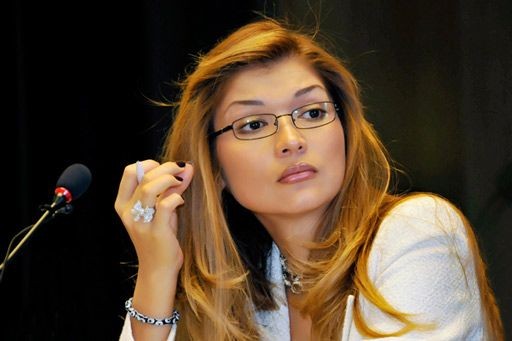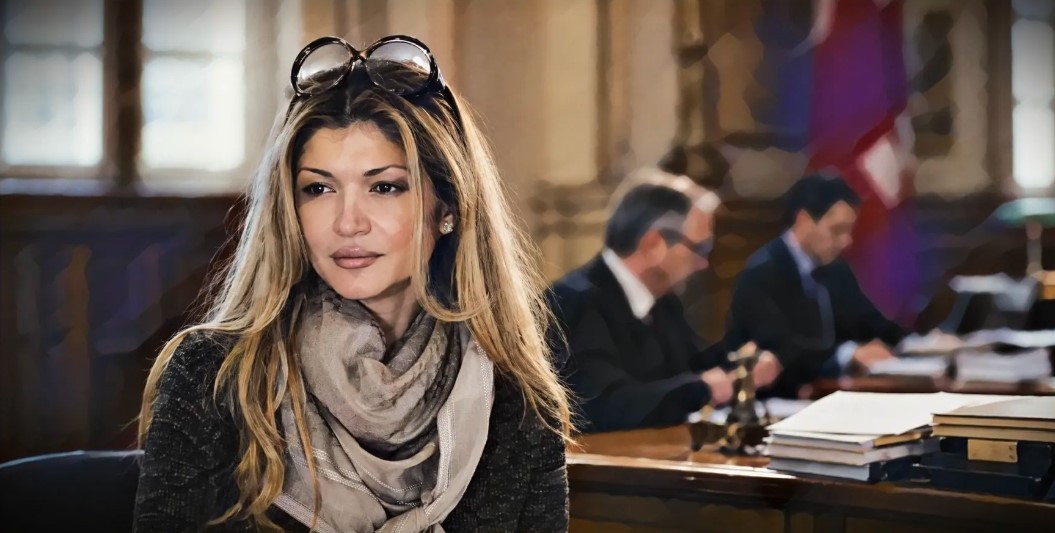
A Swiss court has suspended part of a money laundering case involving Gulnara Karimova after she failed to appear at trial. Judges at the Federal Criminal Court in Bellinzona said they had taken all possible steps to secure Karimova’s participation in the proceedings. This included a visit to Uzbekistan in August 2024, when court representatives met with the country’s Supreme Court to discuss options for her involvement. However, those efforts did not succeed, and in January 2026, Uzbekistan’s authorities formally declined the request.
As a result, the court ruled that proceedings against Karimova could not continue in her absence. The same decision was applied to her co-defendant, described by prosecutors as a close associate. In this case, judges identified a separate legal obstacle preventing the trial from moving forward.
Karimova’s lawyer, Grégoire Mangeat, described the dismissal more strongly, telling Reuters that the decision “amounts to an acquittal under Swiss law.” The court’s reasoning, however, was procedural: judges found a lasting obstacle to continuing the case because Karimova cannot attend, and no judgment is likely before the statute of limitations expires.
According to the court, the co-defendant—an Uzbek national believed to be living in exile in Russia—cannot travel to Switzerland due to outstanding international arrest warrants. While it would theoretically be possible for him to travel from Russia, the absence of direct flights between the two countries since 2022 and the risk of detention in a third country make his participation unlikely.
Judges also noted that the statute of limitations for the charges against him is set to expire in June 2027, making it effectively impossible for him to attend court before that deadline. This was described as a “permanent obstacle” to continuing proceedings against him.
Despite these developments, the overall case remains open. The court confirmed that the main proceedings will continue against a former asset manager at Lombard Odier, as well as against the bank itself. Judges said there were no barriers to continuing this part of the trial and moved forward with preliminary hearings.
The case, which has been under investigation for more than a decade, centers on allegations of money laundering and financial misconduct linked to a broader corruption network. While parts of the proceedings have now been suspended, key questions remain unresolved.
Among them is the issue of assets allegedly connected to Karimova. The court stated that the possible confiscation of these funds will still be examined as part of the ongoing trial.
The unresolved asset question is tied to a fall that has stretched across more than a decade. Once a high-profile public figure, Karimova built a vast business empire, pursued a career in fashion, and even dabbled in pop music under the name “Googoosha.” A former UN envoy and self-styled “Princess of Uzbekistan,” Karimova projected an image of glamour and influence that later collapsed under the weight of corruption cases in Uzbekistan and abroad.
A leaked U.S. diplomatic cable offered a much darker portrait, describing her as “a robber baron” and “the single most hated person in the country.” As her political ambitions became more apparent, parts of Uzbekistan’s leadership reportedly grew alarmed, and her activities were closely monitored and relayed to her father, Islam Karimov.
By 2014, Karimova had fallen from grace. She was placed under house arrest, and images of her detention were leaked to the media. After Islam Karimov died in 2016, legal proceedings against her intensified. In 2017, she was sentenced to nine years in prison on corruption charges. The Uzbek Supreme Court later extended her sentence to 13 years and four months, with the term calculated to run from August 21, 2015.
Karimova’s financial empire also became the focus of international recovery efforts. Swiss prosecutors later accused Karimova of taking bribes and running an alleged criminal organization known as “The Office,” which they said helped channel hundreds of millions of dollars from telecom companies through accounts in several countries before moving funds into Switzerland.
In 2012, Switzerland said it had frozen around 800 million Swiss francs linked to criminal proceedings against Karimova. Uzbekistan has since pursued the return of confiscated assets, including $131 million already recovered from Swiss accounts. In February 2025, Uzbekistan and Switzerland signed an agreement to repatriate an additional $182 million through the UN-administered Uzbekistan Vision 2030 Fund.
Even with proceedings against Karimova suspended, the money trail remains before the Swiss court. The latest decision leaves open the question of what happens to funds allegedly linked to her network, while the remaining proceedings continue.