• KGS/USD = 0.01144 0%
  • KZT/USD = 0.00198 -0%
  • TJS/USD = 0.10903 0.18%
  • UZS/USD = 0.00008 0%
  • TMT/USD = 0.28571 0%
  • KGS/USD = 0.01144 0%
  • KZT/USD = 0.00198 -0%
  • TJS/USD = 0.10903 0.18%
  • UZS/USD = 0.00008 0%
  • TMT/USD = 0.28571 0%
  • KGS/USD = 0.01144 0%
  • KZT/USD = 0.00198 -0%
  • TJS/USD = 0.10903 0.18%
  • UZS/USD = 0.00008 0%
  • TMT/USD = 0.28571 0%
  • KGS/USD = 0.01144 0%
  • KZT/USD = 0.00198 -0%
  • TJS/USD = 0.10903 0.18%
  • UZS/USD = 0.00008 0%
  • TMT/USD = 0.28571 0%
  • KGS/USD = 0.01144 0%
  • KZT/USD = 0.00198 -0%
  • TJS/USD = 0.10903 0.18%
  • UZS/USD = 0.00008 0%
  • TMT/USD = 0.28571 0%
  • KGS/USD = 0.01144 0%
  • KZT/USD = 0.00198 -0%
  • TJS/USD = 0.10903 0.18%
  • UZS/USD = 0.00008 0%
  • TMT/USD = 0.28571 0%
  • KGS/USD = 0.01144 0%
  • KZT/USD = 0.00198 -0%
  • TJS/USD = 0.10903 0.18%
  • UZS/USD = 0.00008 0%
  • TMT/USD = 0.28571 0%
  • KGS/USD = 0.01144 0%
  • KZT/USD = 0.00198 -0%
  • TJS/USD = 0.10903 0.18%
  • UZS/USD = 0.00008 0%
  • TMT/USD = 0.28571 0%
05 December 2025

Viewing results 1 - 6 of 34

Uzbekistan Emerges as Key Market for China’s Real Estate Giants

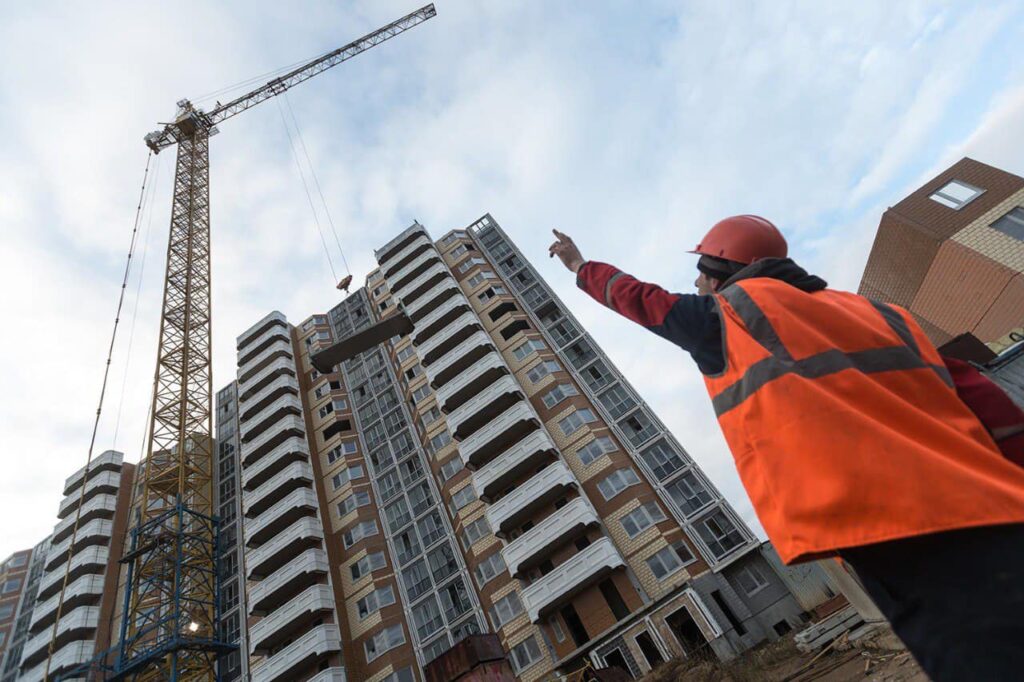
Since 2021, China’s property sector has been navigating one of the most severe downturns in its history. A combination of mounting developer debt, strict government lending rules, and a large stock of unsold housing has pushed the country’s real estate giants into prolonged distress. As speculative construction slows at home, Chinese companies are increasingly turning outward. Similar to firms in renewable energy, waste-to-energy, and electric vehicle industries, real estate developers now see foreign markets as essential for restoring balance and sustaining growth. In this broader search for new opportunities, Uzbekistan has emerged as a highly compelling destination for Chinese investment. The country offers a rare mix of rapid demographic growth and urgent housing needs that few markets can match. Uzbekistan’s population is expanding at a fast pace, and more than 60,000 new households form every year. This demographic surge is placing enormous strain on the country’s already limited housing stock. Official data shows that around 85,000 families are waiting for housing, yet annual construction increases the existing stock by only one to two percent. The result is a persistent shortage that cannot be resolved without sustained and large-scale capital investment. If this deficit remains unaddressed, it risks creating long-term social frustration. Against this backdrop, the interests of Chinese real estate developers and Uzbekistan’s housing priorities are beginning to align. Chinese firms looking for stable and high-demand markets increasingly view Uzbekistan as an attractive place to expand. Tashkent, in particular, has become a center of growing cooperation with Chinese partners. Several recent agreements illustrate this momentum. The Chinese firm TSC HK Investment is preparing a $340 million project for a residential complex and business center in the Chilanzar district of Tashkent. The city authorities have also signed agreements worth about $1 billion with CSCEC, including a major housing development valued at $440 million. Beyond the capital, another Chinese investor plans to allocate $250 million to build a modern complex covering 55 hectares in the city of Babur in the Andijan region. For Chinese companies, Uzbekistan offers a large and expanding market that helps absorb China’s massive overcapacity in construction services, heavy machinery, and industrial materials such as steel and cement. Investing in Uzbekistan not only eases domestic economic pressure but also allows Chinese firms to demonstrate their capabilities in shaping the daily lives of Uzbek families. Large residential projects provide opportunities to familiarize local communities with Chinese standards, technologies, and urban design practices. When these projects are executed successfully, they can contribute to a positive image of China and strengthen its soft power presence in the country. For Uzbekistan, China’s growing involvement brings several advantages. Chinese investment can help meet the country’s rapidly rising demand for housing and reduce the likelihood of long-term social frustration linked to shortages. Chinese developers often work with integrated models that go beyond simple residential blocks. They build high-density and multi-functional complexes combining housing, business centers, educational facilities, and public services. This approach aligns closely with Uzbekistan’s strategy to encourage sustainable urbanization, improve living conditions, and...
By End of Year, Kyrgyz Authorities Want to Insure All Houses in the Country

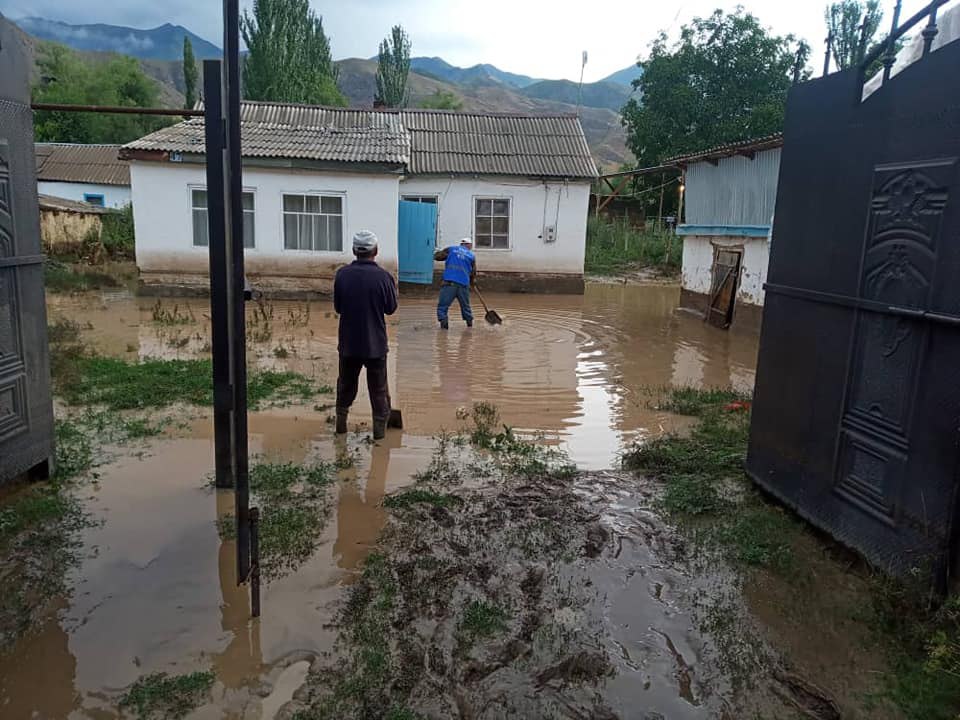
The Chairman of the Kyrgyzstan Cabinet of Ministers, Akylbek Japarov, instructed specialized government agencies to ensure the safety of all houses in the country, especially those in mudflow-prone areas. At the meeting devoted to natural disaster risk management, Japarov assigned specialized government agencies to ensure the safety of all houses in Kyrgyzstan. Thus, according to the head of the Cabinet of Ministers, the authorities will provide financial protection to citizens in case of natural disasters. This year, powerful mudslides flooded the south of Kyrgyzstan and the Issyk-Kul region. Over 5,000 households, dozens of social facilities, and hundreds of kilometers of roads were damaged. “Insurance will provide financial protection for citizens in such situations and minimize the consequences for families who lost their homes. Insurance will be an important tool to help people recover faster from natural disasters and reduce the burden on the state budget,” Japarov said. The head of the Cabinet emphasized that due to global warming, the number of natural disasters will continue to grow. Compulsory home insurance will ensure protection for citizens. It should be noted that the law on compulsory real estate insurance came into force in Kyrgyzstan on August 26, 2024. According to the law, residents must insure their real estate against fire and natural disasters. The State Insurance Organization (SIO) explained to The Times of Central Asia that legislative changes would be implemented gradually. The law on compulsory home insurance was first adopted in 2016, but the authorities postponed its implementation. There is no system of fines for lack of such insurance, at least not yet. “It is not profitable for private firms to engage in home insurance, as the rate is only 0.12%. That is, the cost of insurance is KGS 600 ($8), while payouts can be multi-million: KGS 500,000 ($6,000) for a village and KGS 1 mln ($12,000) for a city. Today in Kyrgyzstan, 143 thousand residences are insured,” the SIO noted.

Kyrgyzstan President Announces New Social Welfare Measures

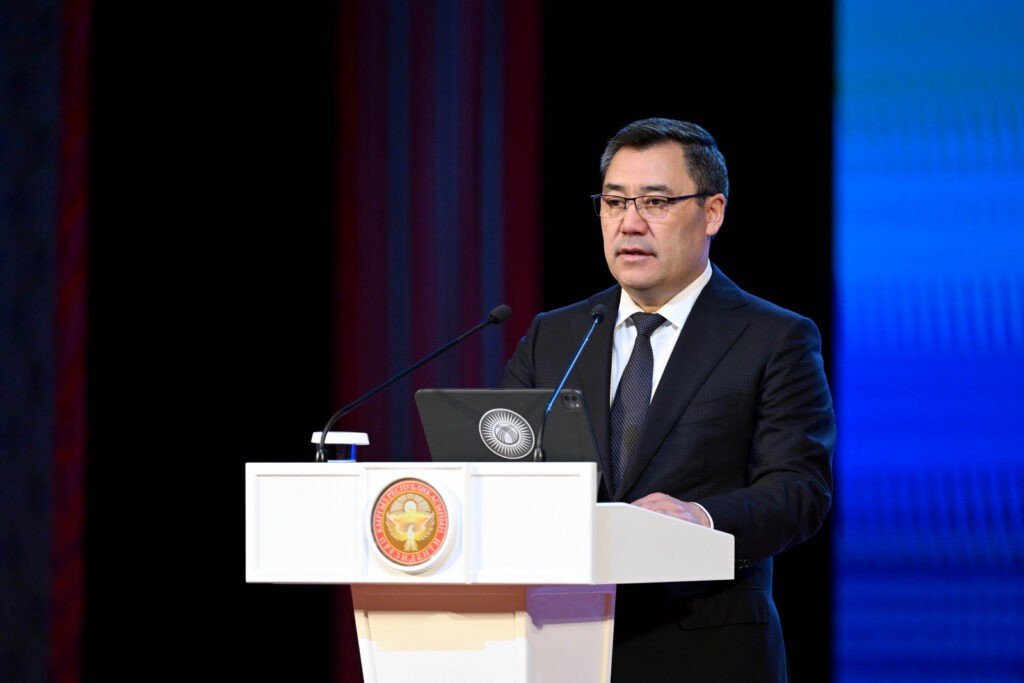
In his address at the National Congress on Social Mobilization on 22 May, Kyrgyzstan President Sadyr Japarov announced several initiatives aimed at raising the standard of living of the country’s citizens. The event was attended by participants of a nationwide Social Contract program through which the Ministry of Labor, Social Security and Migration provides grants of 100 thousand soms/ $1,130, to low-income families wishing to open small businesses. Launched three years ago, the program has enabled some 13,000 people to develop their businesses, created jobs, and generally enhanced the livelihoods of families and local communities. Highly effective, the initiative has to date, benefited over 70,000 people across the country. In addition to a government allocation of 2 billion soms to maintain the program, the president announced plans to boost the economy and improve the wellbeing of Kyrgyzstan citizens, by establishing new enterprises, industrial facilities and in turn, more jobs. President Japarov stated that the Cabinet of Ministers and local authorities had been tasked to support entrepreneurs at all levels from small workshops, fruit processing plants and retail outlets to tourist bed and breakfast services and cafes. To ease the financial burden on small and medium-sized businesses, the president announced a reduction in social tax from 27 percent to 12 percent. In addition, the president has introduced a strict moratorium on inspections of businesses to further support entrepreneurs. Referencing amendments to the Constitution made in 2021 which guaranteed that pensions would not fall below the minimum living wage, the head of state announced that from 1 October, 2024, pensions in Kyrgyzstan will exceed the minimum living wage of 6,800 soms/ $77. The president confirmed the government’s commitment to its provision affordable housing and reported that the construction of multi-storey buildings through the State Mortgage Company has enabled public sector employees and private individuals alike, to obtain mortgages on apartments. He continued by stating that 11,495 apartments are currently being built across the country and the construction of 12,000 apartments will begin before the end of this year. In the healthcare sector, the president has instructed that from 1 July, the number of doctors participating in the program to locate medics in remote areas, small towns, and villages, is to increase from 200 to 500. Regarding the shortage of doctors in the regions, the president has approved the introduction of an additional monthly payment of 20,000 soms/ $226 to paediatricians, neonatologists, surgeons, anaesthesiologists, and resuscitation doctors working outside Bishkek

Kyrgyzstan to Create New Village for Citizens Resettled from the Barak Exclave

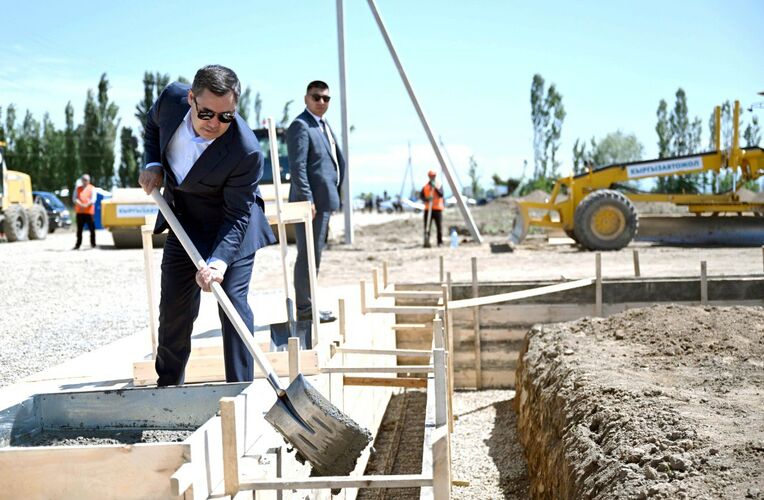
On May 6, during a visit to the southern Osh region, Kyrgyzstan’s President Sadyr Japarov launched the construction of a new village for Kyrgyz citizens resettled from the Barak exclave. Speaking at the ceremony, the head of state emphasized the historical significance of the initiative, explaining that since the village of Barak was an exclave located in Uzbekistan, its residents had spent many years in partial isolation and experienced difficulties in traveling between to and from the Kyrgyz mainland. Back in November 2022, an agreement ‘On the delimitation of certain sections of the state border between the Kyrgyz Republic and the Republic of Uzbekistan’ was signed in Bishkek. According to the document, Uzbekistan gave a portion of its land to Kyrgyzstan in exchange for the Barak exclave. The Kyrgyz government completed its plan to resettle Barak exclave residents just last month. The new village, to be known as ‘Jany-Barak’ or ‘New Barak’ and spanning 38 hectares, will comprise 101 new houses, due for completion by 31 August,. In addition, plots will be allocated for the construction of residential buildings for 164 citizens. Plans for the social infrastructure, includes a school, sports facilities, and a medical center.  

State Mortgages in Kyrgyzstan Can Now Be Obtained Without Credit History

On April 15, a law introducing a mechanism called "Shared Housing Construction" within the framework of the program, "My House 2021-2026" came into force in Kyrgyzstan. The program, as defined by the State Mortgage Company (SMC) of Kyrgyzstan, is available to all citizens. According to authorities, Kyrgyz citizens should be able to participate in collective housing developments without risks. According to the new program, citizens can apply for state mortgages without possessing a bank credit history in the country. Furthermore, those wishing to take out a mortgage will not have their incomes checked and will not have to submit to a work history. "Until today, one of the problems of housing provision [for] citizens in the republic was the lack of a state mechanism of equity financing of housing construction. In this regard, President Sadyr Japarov on January 30 this year signed a decree 'On measures to further improve the mechanisms of housing provision and construction of housing for citizens of the Kyrgyz Republic in the field of state housing policy'" - reported the SMC's website. Loans under the program will be issued under certain conditions: the down-payment should be at least 50% of the cost of the housing, the mortgage can be taken for up to 15 years at 8% per annum. Residential mortgage issuance by commercial banks in Kyrgyzstan today operates on more stringent conditions. For example, the interest rate for borrowers starts at 20% with a down-payment of at least one-third of the value of the property. Earlier, Kyrgyz President Sadyr Japarov instructed the Cabinet of Ministers to determine the list of state-owned land plots to be transferred to the SMC.

ADB loans to help improve access to housing finance in Uzbekistan

TASHKENT (TCA) — The Asian Development Bank (ADB) has approved $200 million in loans that will help the Government of Uzbekistan reform its housing finance programs and provide families with more affordable mortgage products, ADB’s Country Office in Uzbekistan said. Continue reading