• KGS/USD = 0.01144 0%
  • KZT/USD = 0.00215 0%
  • TJS/USD = 0.10599 -0.28%
  • UZS/USD = 0.00008 0%
  • TMT/USD = 0.28571 0%
  • KGS/USD = 0.01144 0%
  • KZT/USD = 0.00215 0%
  • TJS/USD = 0.10599 -0.28%
  • UZS/USD = 0.00008 0%
  • TMT/USD = 0.28571 0%
  • KGS/USD = 0.01144 0%
  • KZT/USD = 0.00215 0%
  • TJS/USD = 0.10599 -0.28%
  • UZS/USD = 0.00008 0%
  • TMT/USD = 0.28571 0%
  • KGS/USD = 0.01144 0%
  • KZT/USD = 0.00215 0%
  • TJS/USD = 0.10599 -0.28%
  • UZS/USD = 0.00008 0%
  • TMT/USD = 0.28571 0%
  • KGS/USD = 0.01144 0%
  • KZT/USD = 0.00215 0%
  • TJS/USD = 0.10599 -0.28%
  • UZS/USD = 0.00008 0%
  • TMT/USD = 0.28571 0%
  • KGS/USD = 0.01144 0%
  • KZT/USD = 0.00215 0%
  • TJS/USD = 0.10599 -0.28%
  • UZS/USD = 0.00008 0%
  • TMT/USD = 0.28571 0%
  • KGS/USD = 0.01144 0%
  • KZT/USD = 0.00215 0%
  • TJS/USD = 0.10599 -0.28%
  • UZS/USD = 0.00008 0%
  • TMT/USD = 0.28571 0%
  • KGS/USD = 0.01144 0%
  • KZT/USD = 0.00215 0%
  • TJS/USD = 0.10599 -0.28%
  • UZS/USD = 0.00008 0%
  • TMT/USD = 0.28571 0%

Viewing results 1 - 6 of 336

Tajikistan Remains in 113th Place in Global Social Progress Index

The newly released Global Social Progress Index offers a mixed assessment of Tajikistan, where improvements in water and sanitation have been overshadowed by a sharp decline in civil liberties, limiting the country's overall advancement in global rankings. Tajikistan ranks 113th out of 170 countries in the AlTi 2025 Global Social Progress Index, with a score of 58.15 points, according to the latest report from the international research initiative AlTi Global Social Progress Index. The index evaluates non-economic aspects of quality of life, including healthcare, education, rights, and freedoms. Covering data from 2011 to 2024, the report shows Tajikistan has improved its overall score by 5.98 points over the period. However, the country was classified as having “stagnant indicators” in 2024, reflecting a lack of measurable progress in the past year. One of the most significant achievements noted in the report is Tajikistan’s improvement in access to water and sanitation. Since 2011, this component has risen by 38.83 points, placing the country among the global leaders in this area. The report notes that investments in water and sanitation infrastructure have long-term impacts on public health, education, and social well-being, contributing meaningfully to the country’s overall index score. Conversely, the most concerning decline has been in the Rights & Voice category, which includes measures of political rights, freedom of speech, media independence, academic freedom, and equality before the law. Tajikistan's score in this area has dropped by 15.94 points since 2011, placing it among the ten countries with the worst downward trends in civil liberties worldwide. According to the report, this deterioration in rights and freedoms is the primary barrier to further social progress in Tajikistan. Within the Central Asia region, which has generally seen upward trends since 2011, Tajikistan ranks lowest. Kazakhstan currently ranks 58th, Uzbekistan 76th, and Kyrgyzstan 81st. The report concludes that sustainable social progress in the region is impossible without significant improvements in civil rights and freedoms. While infrastructure development and educational gains are important, they cannot offset systemic issues related to political and civil liberties.

Turkmenistan Denies Early Release to Activist Mansur Mingelov Despite Serious Illness

Turkmenistan’s Ministry of Internal Affairs has rejected a request to initiate early release procedures for imprisoned human rights activist Mansur Mingelov, despite his confirmed serious medical diagnosis and the legal provisions that would permit such action. According to an official response dated October 20, the Department for the Enforcement of Sentences under the Ministry of Internal Affairs concluded there were “no grounds” for early release. The response followed appeals by Mingelov’s family to the Prosecutor General’s Office and the Ministry of Internal Affairs, citing his deteriorating health and referencing multiple legal articles supporting their request. Mingelov, who has been imprisoned since 2012, was convicted after defending his own rights and those of the Baloch minority in Turkmenistan. His family cited Article 76 of the Criminal Code (“Release from punishment due to serious illness”) and Article 166 of the Criminal Enforcement Code (“Grounds for release from serving a sentence”), as well as Presidential Decree No. 202 of May 11, 2017, which outlines the medical criteria for such releases. In mid-2024, a commission from the Ministry of Health officially diagnosed Mingelov with tuberculous arthritis in both knees, a condition that, according to doctors, cannot be treated inside Turkmenistan. He is currently being held at the MR-B/15 prison hospital. Notably, Vepa Hajiyev, Turkmenistan’s permanent representative to the United Nations, publicly acknowledged Mingelov’s diagnosis and affirmed that national legislation provides for the release of prisoners with serious illnesses upon court approval. Under existing law, a court can only consider such cases after receiving a joint submission from the prison monitoring commission and the sentencing authority - a process Mingelov’s family attempted to initiate but which authorities declined to advance. Despite the official diagnosis and detailed legal framework, no follow-up medical examination or formal review of Mingelov’s health condition has been conducted, according to the independent outlet, turkmen.news. Mingelov's relatives argue that the Ministry’s refusal is not based on medical or legal grounds, but rather political calculation. They note that Mingelov has served more than half of his sentence, one they consider to be politically motivated and unlawful, and that his condition meets all criteria for early release. In their view, the key decision lies with Turkmen President Serdar Berdimuhamedov. Human rights organizations and family members suggest that releasing Mingelov, along with other political prisoners, could help improve Turkmenistan’s international standing by showing a willingness to respect its own laws and humanitarian obligations. For now, the contradiction remains stark: the illness is acknowledged, the law is in place, and the legal procedure is defined, yet no action has been taken.

Turkmenistan Marks 30 Years of Neutrality

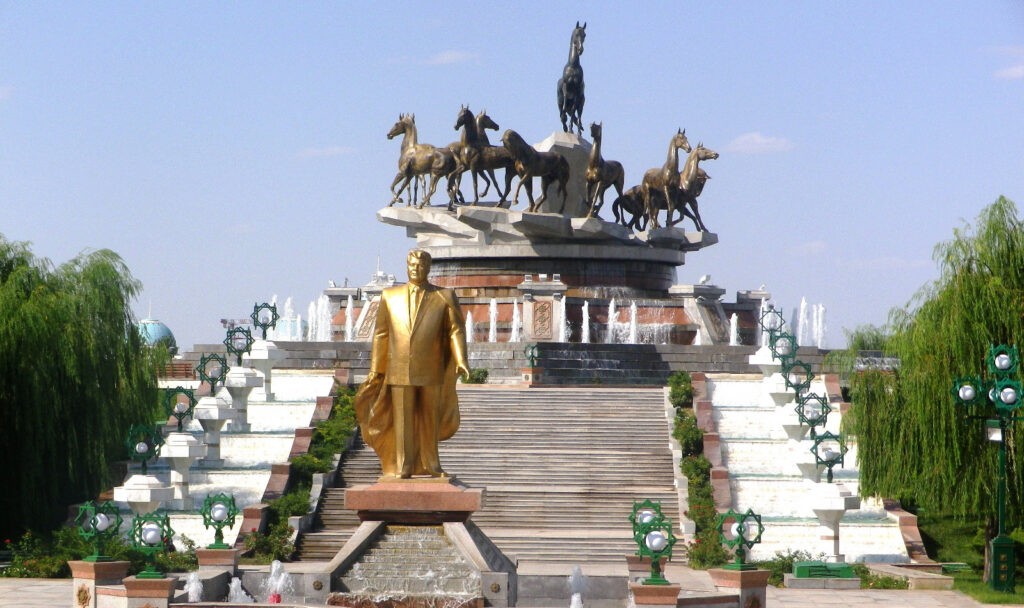
On December 12, 2025, Turkmenistan marks the 30th anniversary of a UN decision granting Turkmenistan the status of a neutral country. Defining what “permanent neutrality” means for Turkmenistan is impossible, as it is a flexible term used to justify a range of policies, both domestic and foreign. This vague special status has not provided many benefits, but has helped Turkmenistan’s leadership isolate the country and create one of the most bizarre and repressive forms of government in the world today.   Last Item on the Day’s Agenda On Tuesday, December 12, 1995, the UN General Assembly’s (UNGA) 90th plenary meeting reconvened at 15:20 to consider items 57 to 81 on its agenda. Item 81 was the draft resolution on “permanent neutrality of Turkmenistan.” The UNGA president at that time, Freitas do Amaral, noted to the Assembly that the draft resolution “was adopted by the First Committee without a vote,” and asked if the Assembly wished “to do likewise.” The Assembly did, and after a few brief remarks about the next Assembly meeting on December 14, the session ended at 18:05. That is how the UN officially granted Turkmenistan the status of neutrality. A Great Event The passing of the resolution on Turkmenistan’s neutrality status might have been a case of going through the motions at the UN, but it was a huge event in Turkmenistan. Turkmenistan’s first president, Saparmurat Niyazov, had been campaigning internationally for his country to have “positive” neutrality status since 1992. After this was accomplished, Niyazov often proclaimed this special UN recognition as a great achievement for the country and for himself personally. [caption id="attachment_40725" align="aligncenter" width="2560"] Ashgabat’s Independence Square, previously known as Neutrality Square and originally as Karl Marx Square; image: TCA, Stephen M. Bland[/caption] December 12 was quickly announced as a national holiday. On the first anniversary of the UN decision in 1996, the former Karl Marx Square in Ashgabat was renamed “Neutrality Square.” Shortly after, an olive branch motif was added to Turkmenistan’s national flag, symbolizing the country’s neutral status. In 1998, on the third anniversary of UN-recognized neutrality, the 75-meter-high Arch of Neutrality was unveiled in Ashgabat. A 12-meter gold statue of Niyazov that rotated to face the direction of the sun crowned the structure. Niyazov died in December 2006, and in 2010, the Arch of Neutrality was moved from the city center to the outskirts of the Turkmen capital and unveiled again on December 12, 2011. It has been undergoing renovation and will be unveiled yet again on the 30th anniversary of neutrality. [caption id="attachment_40726" align="aligncenter" width="2099"] Former-President Niyazov's likeness atop the Arch of Neutrality; image: TCA, Stephen M. Bland[/caption] In 2002, Niyazov pushed through a law changing the names of the months of the year and days of the week. December became “Bitaraplyk,” the Turkmen word for neutrality, and continued to officially be called that until 2008, when Niyazov’s successor finally revoked the changes and restored the traditional names. That successor, Gurbanguly Berdimuhamedov, embraced the special permanent neutrality status and, in...

New CIVICUS Report Warns of Mounting Restrictions on Freedoms in Turkmenistan

The global civil society alliance CIVICUS has published an updated report on the worsening state of rights and freedoms in Turkmenistan. The document, compiled by the International Partnership for Human Rights (IPHR) and the Turkmen Initiative for Human Rights (TIHR), covers the period from June to November 2025 and outlines several disturbing trends. According to the report, Turkmen authorities continue to target individuals they deem politically “inconvenient.” This includes former political prisoners, who, despite their release, remain under tight surveillance and face ongoing restrictions. The report highlights an intensifying crackdown on freedom of expression. While state-controlled media project an image of national prosperity, the country is, in reality, grappling with a prolonged socio-economic crisis and widespread human rights abuses. One section focuses on the growing phenomenon of transnational repression. Human rights groups report that Turkmenistan’s security services have increased pressure on dissidents living abroad. These efforts include attempts to forcibly repatriate activists with the cooperation of foreign governments, most notably in Turkey and Russia. CIVICUS also draws attention to expanding internet restrictions. The report suggests that these limitations are not solely politically driven but are also linked to corruption. Cybersecurity officials are alleged to intentionally disrupt internet access to boost demand for censorship circumvention tools, tools that are often monetized through state-controlled channels. Another concern is the continued practice of compulsory mobilization for public events. Citizens are routinely forced to participate in state-organized gatherings, with those who refuse facing threats of punitive measures. Earlier this year, The Times of Central Asia reported that in the lead-up to Turkmenistan’s celebration of the 30th anniversary of its status as a permanently neutral state on 12 December, international human rights organizations had urged Ashgabat to release civil society activists jailed on politically motivated charges.

Human Rights Groups Urge Turkmenistan to Release Activists Ahead of Neutrality Anniversary

As Turkmenistan prepares to mark the 30th anniversary of its policy of permanent neutrality, international human rights organizations are urging the government to commemorate the occasion by releasing civil society activists imprisoned for peacefully expressing their views. In a joint appeal, the International Partnership for Human Rights (IPHR), the Turkmen Initiative for Human Rights (TIHR), Turkmen.News, and the Norwegian Helsinki Committee (NHC) called on Turkmen authorities to use the milestone as an opportunity to take a humanitarian step by pardoning activists jailed on politically motivated charges. The organizations emphasized that presidential pardons remain the only available legal mechanism for early release in Turkmenistan. Including these cases in the official pardon process, they argue, would demonstrate the country’s willingness to align with international human rights standards. Among the prisoners named in the appeal is Mansur Mingelov, a human rights activist who has been incarcerated since 2012. He is serving a 22 year sentence after publicly denouncing the abuse of ethnic Baloch people. Another activist, Murat Dushemov, was sentenced to four years for publicly criticizing the government and its handling of the COVID-19 pandemic. He was expected to be released in the summer of 2025. The rights groups also expressed growing concern about activists and citizen journalists who were detained abroad and reportedly subjected to forced return to Turkmenistan, where they face prosecution under opaque legal processes. Citizen journalists Alisher Sakhatov and Abdulla Orusov were detained in Turkey in April 2025 on charges of “threatening public safety.” Farhat Meymankuliev was deported from Turkey in 2023 and, according to human rights monitors, subsequently imprisoned following a closed trial. In another case, Malikberdy Allamyrradov was secretly transferred from Russia to Turkmenistan in December 2023 and later charged with assaulting a cellmate. Saddam Gulamov was also forcibly returned from Russia and sentenced to a prison colony in the Lebap region. The human rights groups argue that freeing these individuals would send a strong message of goodwill during a major national celebration and offer a concrete signal of Turkmenistan’s readiness to uphold its international obligations.

Kazakhstan Considers Restricting Photography and Filming Without Consent

Kazakhstan’s Ministry of Culture and Information is considering new regulations on photography and video recording of individuals without their prior consent. The initiative was announced by Minister Aida Balaeva, who addressed potential amendments to the Law “On Mass Media.” According to Balaeva, the proposal does not entail a ban but rather seeks to clarify the rules for filming in public spaces. Responding to media inquiries, she noted that the ministry regularly receives complaints from citizens concerned about being recorded without permission, particularly in content used for pranks or misleading narratives. While current legislation allows individuals to contest the unauthorized use of their image, the ministry is exploring whether additional legal provisions are warranted. Balaeva invited journalists to join a working group to evaluate the matter further. The minister dismissed claims that the proposed changes are intended to shield public officials. The speculation follows the recent circulation of a video on social media showing deputies appearing inattentive during President Kassym-Jomart Tokayev’s address. “We are already used to being filmed everywhere. But we are citizens of this country too, and we also have the right to privacy,” Balaeva stated. She emphasized that the objective is not to hinder journalistic work but to address rising concerns over misuse. Earlier drafts of the proposed regulation suggested requiring journalists and bloggers to obtain explicit consent before publishing an individual’s image, including online. In cases of republication, editing, or adding commentary, renewed consent would be necessary. However, exceptions are proposed for filming public events, documenting official functions, and materials deemed in the public interest. Gulmira Birzhanova, a lawyer at the Legal Media Center, warned that the measure could lead to excessive bureaucracy and potential abuse. She argued that the initiative contradicts existing legislation and Kazakhstan’s Constitution. As previously reported by The Times of Central Asia, earlier this year the ministry also proposed strengthening penalties for inciting interethnic and interreligious discord.