• KZT/USD = 0.00223
  • TJS/USD = 0.10860
  • UZS/USD = 0.00008
  • TMT/USD = 0.29850
  • KZT/USD = 0.00223
  • TJS/USD = 0.10860
  • UZS/USD = 0.00008
  • TMT/USD = 0.29850
  • KZT/USD = 0.00223
  • TJS/USD = 0.10860
  • UZS/USD = 0.00008
  • TMT/USD = 0.29850
  • KZT/USD = 0.00223
  • TJS/USD = 0.10860
  • UZS/USD = 0.00008
  • TMT/USD = 0.29850
  • KZT/USD = 0.00223
  • TJS/USD = 0.10860
  • UZS/USD = 0.00008
  • TMT/USD = 0.29850
  • KZT/USD = 0.00223
  • TJS/USD = 0.10860
  • UZS/USD = 0.00008
  • TMT/USD = 0.29850
  • KZT/USD = 0.00223
  • TJS/USD = 0.10860
  • UZS/USD = 0.00008
  • TMT/USD = 0.29850
  • KZT/USD = 0.00223
  • TJS/USD = 0.10860
  • UZS/USD = 0.00008
  • TMT/USD = 0.29850
07 November 2026

Viewing results 1 - 6 of 2

Chinese Firm Proposes $95 Million Kyrgyzstan Waste-to-Energy Plant

A subsidiary of the state-owned China Energy Conservation and Environmental Protection Group (CECEP) is considering a $95 million waste-to-energy plant in southern Kyrgyzstan. CECEP Environmental Protection’s proposal comes as Chinese companies play a growing role in turning municipal waste into electricity and heat in the country. Company representatives discussed the proposal on November 3 with Ravshanbek Sabirov, director of the National Investment Agency under the President of the Kyrgyz Republic. The proposed complex would initially process 800 metric tons of waste per day, equivalent to 292,000 tons annually if operated continuously. Capacity could eventually rise to 2,000 tons per day. The city of Manas, formerly Jalal-Abad, and the nearby Suzak district are being considered as possible locations. Feasibility and environmental studies are still needed to establish the project’s final design and cost. The agency announced neither an investment agreement nor a construction timetable. In December 2025, Bishkek opened what authorities described as Central Asia’s first operational waste-to-energy plant. Built by China’s Hunan Junxin Environmental Protection at a cost of $95 million, the facility was designed to process 1,000 metric tons of municipal waste daily and generate up to 30 megawatts of electricity. The plant operates at Bishkek’s main landfill, where decades of accumulated waste have created environmental problems for surrounding communities. It was developed under a 35-year concession agreement, after which it is to be transferred to the state. Construction of a second phase began in June 2026. The expansion is intended to raise total processing capacity to 3,000 tons per day and electricity generation capacity to 90 megawatts. Hunan Junxin is also involved in a waste-to-energy plant under construction in Osh and a project in the Issyk-Kul region. A groundbreaking ceremony for the latter was held in Karakol in October 2025, with initial facilities planned for the Ak-Suu district and Balykchy. Waste-to-energy plants reduce the volume of material sent to landfills, but incineration is not recycling. Recovering reusable materials such as plastics and paper requires separate collection and sorting systems. Environmental performance also depends on emissions controls and the treatment of ash and other residues. In an earlier interview with The Times of Central Asia, Chinara Sultanalieva, founder of the UpKel recycling project, said contaminated plastic and inadequate collection infrastructure made it difficult for recycling businesses to secure reliable supplies of usable material.

Bishkek Launches Second Phase of Waste-to-Energy Plant

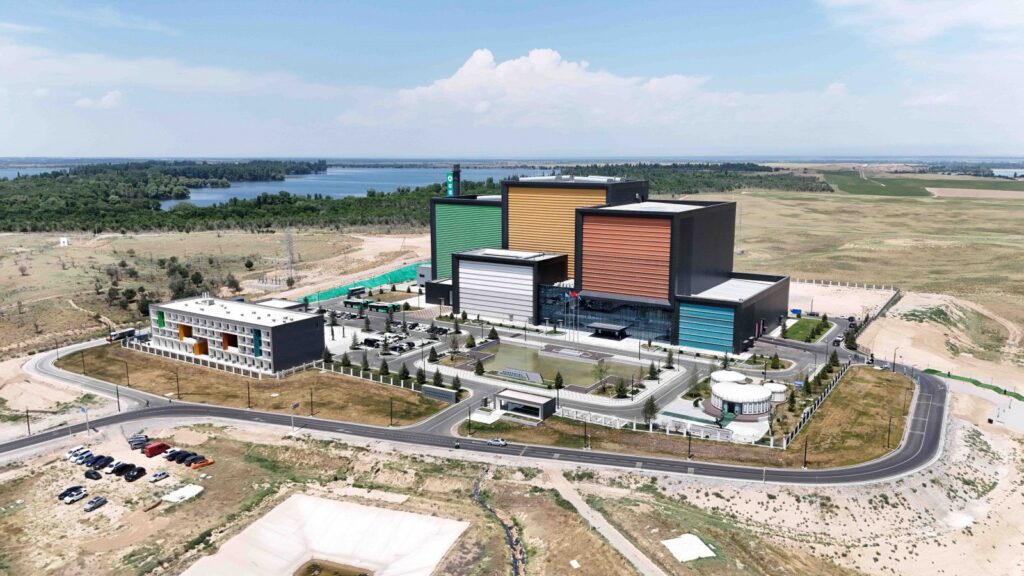
Bishkek has begun construction of the second phase of its waste-to-energy plant, a project city officials say will significantly expand waste processing capacity and add to the Kyrgyz capital’s energy supply. The groundbreaking ceremony took place on June 11. The facility, located at Bishkek’s main sanitary landfill, is the first waste-to-energy plant in Central Asia. Its first phase was officially inaugurated in December 2025 and was designed to process 1,000 tons of municipal solid waste per day. The plant was built by China’s Hunan Junxin Environmental Protection Co., Ltd., which invested $95 million in the project. The second phase will include a second production unit with capacity of up to 2,000 tons of waste per day and a 60-megawatt power generation complex. According to Bishkek’s city administration, once the second phase is completed, the facility will generate around 307 million kilowatt-hours of electricity annually, enough to supply roughly 100,000 homes. Officials say the project uses modern thermal waste processing technologies and a multi-stage emissions treatment system that complies with international environmental standards. The expansion is expected to improve waste management in Bishkek, reduce pressure on the city’s overburdened landfill, and improve environmental conditions in the capital. Construction of the second phase is expected to take three years. Once fully completed, the plant will be able to process up to 3,000 tons of municipal solid waste per day and generate up to 90 megawatts of electricity. The launch ceremony was attended by Kyrgyz Prime Minister Adylbek Kasymaliev, Bishkek Mayor Aibek Junushaliev, and Chinese Ambassador to Kyrgyzstan Liu Jiangping. Kasymaliev described the project as strategically important for Bishkek’s environmental future. “The start of the second phase continues a large-scale initiative aimed at radically improving the environmental situation in Bishkek and creating a green, clean and modern metropolis,” he said. Kasymaliev said the project would help solve Bishkek’s waste disposal problem while adding a source of green energy and improving air quality and public health. He also said the second phase is expected to reduce annual carbon dioxide emissions by approximately 312,000 tons. The project forms part of Kyrgyzstan’s efforts to modernize urban infrastructure and address environmental challenges as Bishkek’s population and waste volumes continue to rise.