• KGS/USD = 0.01144 0%
  • KZT/USD = 0.00213 0%
  • TJS/USD = 0.10767 0.09%
  • UZS/USD = 0.00008 0%
  • TMT/USD = 0.28490 0%
  • KGS/USD = 0.01144 0%
  • KZT/USD = 0.00213 0%
  • TJS/USD = 0.10767 0.09%
  • UZS/USD = 0.00008 0%
  • TMT/USD = 0.28490 0%
  • KGS/USD = 0.01144 0%
  • KZT/USD = 0.00213 0%
  • TJS/USD = 0.10767 0.09%
  • UZS/USD = 0.00008 0%
  • TMT/USD = 0.28490 0%
  • KGS/USD = 0.01144 0%
  • KZT/USD = 0.00213 0%
  • TJS/USD = 0.10767 0.09%
  • UZS/USD = 0.00008 0%
  • TMT/USD = 0.28490 0%
  • KGS/USD = 0.01144 0%
  • KZT/USD = 0.00213 0%
  • TJS/USD = 0.10767 0.09%
  • UZS/USD = 0.00008 0%
  • TMT/USD = 0.28490 0%
  • KGS/USD = 0.01144 0%
  • KZT/USD = 0.00213 0%
  • TJS/USD = 0.10767 0.09%
  • UZS/USD = 0.00008 0%
  • TMT/USD = 0.28490 0%
  • KGS/USD = 0.01144 0%
  • KZT/USD = 0.00213 0%
  • TJS/USD = 0.10767 0.09%
  • UZS/USD = 0.00008 0%
  • TMT/USD = 0.28490 0%
  • KGS/USD = 0.01144 0%
  • KZT/USD = 0.00213 0%
  • TJS/USD = 0.10767 0.09%
  • UZS/USD = 0.00008 0%
  • TMT/USD = 0.28490 0%

Viewing results 1 - 6 of 8

Forced Labor in Turkmenistan the Target of New EU-ILO Project

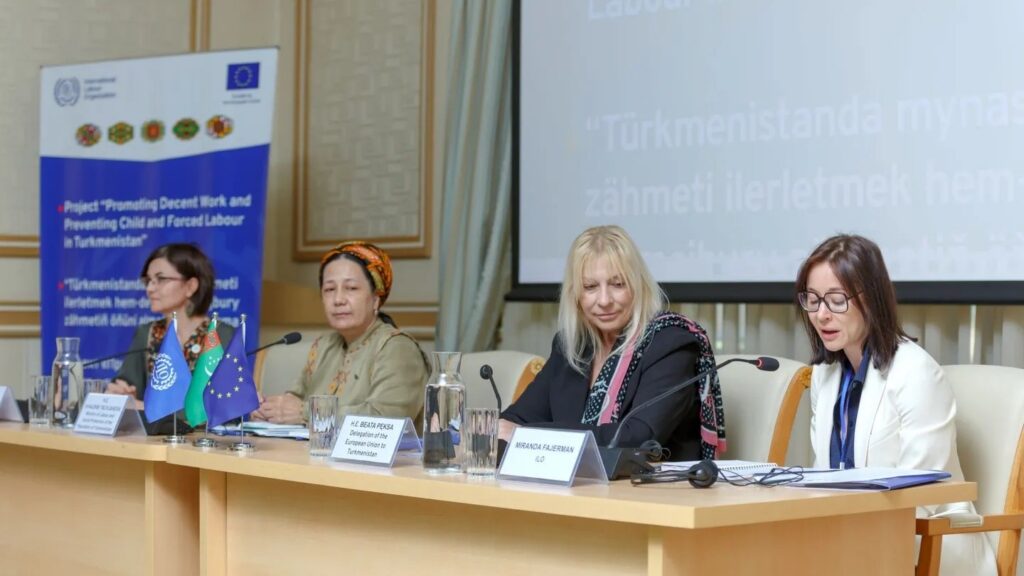
A new joint project is being launched by the International Labour Organization (ILO) and the European Union aimed at combating child and forced labor in Turkmenistan. Its focus is primarily on the country’s cotton sector, which has long faced criticism from human rights groups and international companies. The ILO announced the initiative on May 13. The program, titled Promoting Decent Work and Preventing Child and Forced Labour in Turkmenistan, is scheduled to run from 2026 to 2027 with the project’s budget estimated at approximately €2 million ($2.3 million). The initiative will focus on three main areas: updating labor legislation, implementing international labor standards, and strengthening institutional oversight mechanisms for the protection of workers’ rights. Organizers say the project’s ultimate goal is to prevent labor rights violations and create a more sustainable system for monitoring working conditions across the country. The initiative is directly linked to longstanding concerns over forced labor during Turkmenistan’s annual cotton harvest. Human rights organizations including turkmen.news, the Turkmen Initiative for Human Rights, Progres Foundation, and the Cotton Campaign previously released a joint report alleging that Turkmen authorities have only partially fulfilled commitments to reform the sector. According to the report, despite an official ban on child labor, minors continue to participate in cotton harvesting campaigns. Rights groups say some children assist relatives in meeting production quotas, while others work in the fields because of difficult economic conditions facing their families. The report also alleged that teachers, medical workers, utility employees, and other public-sector staff continue to be mobilized for cotton harvesting under state direction. The launch of the new project was discussed during a special event in Ashgabat attended by Turkmen Deputy Labor and Social Protection Minister Halbibi Tachjanova. “This project reflects Turkmenistan’s strong commitment to preventing child and forced labor, especially in the cotton sector, and to promoting decent working conditions,” Tachjanova said. European Union Ambassador to Turkmenistan Beata Pexa said the initiative should contribute to protecting labor rights and supporting sustainable economic development. However, it remains unclear whether the program will include mechanisms allowing workers subjected to forced labor to safely file complaints without fear of retaliation. The issue carries not only social but also economic significance for Turkmenistan. Cotton and textile products remain among the country’s key exports and an important source of foreign currency revenue. Both state authorities and private companies have been seeking to expand access to Western markets. In May, the textile company Batly Gadam from Balkanabat held talks with British retailer Primark and signed a memorandum of cooperation with Somerbond in London. Nevertheless, many international brands continue to avoid Turkmen textiles because of allegations involving forced labor practices. Against this backdrop, the new ILO-EU project is being viewed not only as an effort to prevent forced labor in Turkmenistan but also as a step toward rebuilding trust with international partners and global markets.

Teachers in Turkmenistan Demand Money from Pupils to Hire Cotton Pickers

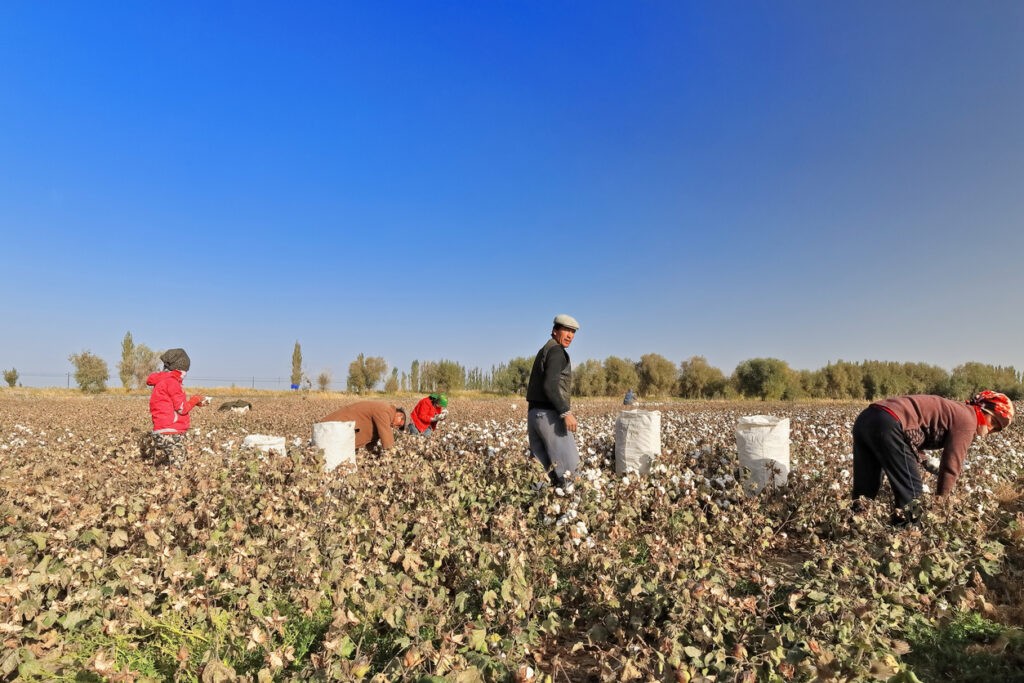
Following Turkmen President Serdar Berdymukhamedov's recent directive to speed up the cotton-picking campaign, the Chronicles of Turkmenistan has  reported that schools in Lebap province have started collecting money from students to hire workers for the task. The established daily norm for each class is 200-300 kilograms of cotton, depending on the number of students. Based on the requirements, schools must hire 5-6 pickers, each of whom must pick at least 50 kg of cotton daily. In addition to schools, health facilities have also been obliged to provide workers under the cotton-picking campaign. However, despite the ban on collecting money from their subordinates, teachers and medical workers have to look for laborers among the local population, offering payment of 35-40 TMT per day ($10-12). According to a roadmap signed in June by Turkmenistan and the ILO, forced labor in cotton harvesting, including the mobilization of children and government employees, should be eliminated. Nevertheless, mobilizing workers and schoolchildren to fulfil plans for the cotton harvesting campaign continues. In addition, students and civil servants, including teachers, are systematically forced to work in the cotton fields under threat of dismissal from their jobs or expulsion from educational institutions.

Uzbekistan Has Ended Forced Labor, But Cotton Industry Faces New Challenges

Global Voices reports that Uzbekistan has succeeded in phasing out forced labor in its cotton industry, but now faces new challenges. The country has made progress in ending forced labor and modernizing its cotton sector, driven by economic and political reasons. Forced labor hurts businesses and the nation’s international image, which the government has aimed to improve since 2016. Cotton production accounts for 12% of GDP. Since 2017, the government has introduced major reforms to modernize Uzbekistan’s cotton industry, led by President Shavkat Mirziyoyev after he took office in 2016. By 2018, labor control was strengthened, and the cotton cluster system, which controls the entire production process, began to take shape. Today, almost all cotton is grown through 142 clusters. Cotton quotas have been abolished by 2020, and the minimum wage will now be negotiated. The same year, the International Labor Organization reported that child labor was no longer a problem, and the international boycott was lifted in 2022. Eradicating forced labor has been hailed as “one of the most significant victories anywhere in the world in the battle against forced labor in the twenty-first century,” said Bennett Freeman, co-founder of the Cotton Campaign in 2022. This achievement was possible thanks to the diligence of organizations such as human rights defenders of Uzbekistan and the Uzbekistan Forum for Human Rights, which monitored the cotton fields and recorded violations, as well as the government's promptness in reviewing these reports. Global Voices writes that despite the progress achieved in Uzbekistan's cotton industry, there are still serious problems. The report states, “Despite abandoning forced labor, the government still continues to exert strong control over cotton production and prevents farmers from fully operating on their own terms.” Farmers receive resources and loans, but the system remains inefficient, with state-set cotton prices often differing from global rates. The government and industry need to address these ongoing issues while pursuing international standards and export opportunities to build trust and transparency.

Uzbekistan Ratifies International Labor Organization Convention

On September 21 a meeting of the Uzbek Senate passed the new law “On the ratification of the International Labor Organization Convention No. 155 on Occupational Safety and Hygiene and the Working Environment”. The Convention was adopted in Geneva in 1981, and among other Eurasian countries has also been ratified by Russia, Belarus, Ukraine, Tajikistan, Kazakhstan, and Azerbaijan. Senators noted that it is appropriate to ratify this convention, taking into account the development of cooperation between Uzbekistan and the International Labor Organization and the fact that the national labor legislation meets international labor standards. As noted, the convention's ratification will improve national labor laws, enhance safety and hygiene standards per international guidelines, and help prevent workplace accidents. The International Labor Organization has been criticizing the use of forced labor in cotton plantations in Turkmenistan for a long time.