• KGS/USD = 0.01143 0%
  • KZT/USD = 0.00202 0%
  • TJS/USD = 0.10661 -0.19%
  • UZS/USD = 0.00008 0%
  • TMT/USD = 0.28575 0%
  • KGS/USD = 0.01143 0%
  • KZT/USD = 0.00202 0%
  • TJS/USD = 0.10661 -0.19%
  • UZS/USD = 0.00008 0%
  • TMT/USD = 0.28575 0%
  • KGS/USD = 0.01143 0%
  • KZT/USD = 0.00202 0%
  • TJS/USD = 0.10661 -0.19%
  • UZS/USD = 0.00008 0%
  • TMT/USD = 0.28575 0%
  • KGS/USD = 0.01143 0%
  • KZT/USD = 0.00202 0%
  • TJS/USD = 0.10661 -0.19%
  • UZS/USD = 0.00008 0%
  • TMT/USD = 0.28575 0%
  • KGS/USD = 0.01143 0%
  • KZT/USD = 0.00202 0%
  • TJS/USD = 0.10661 -0.19%
  • UZS/USD = 0.00008 0%
  • TMT/USD = 0.28575 0%
  • KGS/USD = 0.01143 0%
  • KZT/USD = 0.00202 0%
  • TJS/USD = 0.10661 -0.19%
  • UZS/USD = 0.00008 0%
  • TMT/USD = 0.28575 0%
  • KGS/USD = 0.01143 0%
  • KZT/USD = 0.00202 0%
  • TJS/USD = 0.10661 -0.19%
  • UZS/USD = 0.00008 0%
  • TMT/USD = 0.28575 0%
  • KGS/USD = 0.01143 0%
  • KZT/USD = 0.00202 0%
  • TJS/USD = 0.10661 -0.19%
  • UZS/USD = 0.00008 0%
  • TMT/USD = 0.28575 0%
08 February 2026

Viewing results 1 - 6 of 22

Seven Killed in Kazakhstan’s Latest Mining Tragedy

A rock collapse at the Zhomart mine in Kazakhstan’s Ulytau region has claimed the lives of seven miners, the press service of Kazakhmys, the mine’s owner, reported. The workers were trapped under the rubble, with preliminary findings suggesting a natural gas explosion as the cause. The incident occurred on Monday at the Zhomart mine, located 180 kilometers from Zhezkazgan, the administrative center of Ulytau region. The mine extracts copper-sulfide ore at a depth of 700 meters using underground mining methods, with an annual production capacity of 3.6 million tons of ore. Rescue efforts began immediately after the collapse, with more than 20 rescuers, seven units of specialized equipment, and canine teams deployed to the site. However, due to damaged communication cables, there was no contact with the trapped miners. By Tuesday morning, all seven bodies had been recovered and brought to the surface. Kazakhmys stated that while a natural gas explosion is uncharacteristic for its mines, it remains a possible cause of the collapse. “According to preliminary data, there was an explosion of natural gas, which is unusual for Kazakhmys Corporation’s mines. The circumstances and causes of the incident are being investigated,” the company said in a statement. The company has pledged financial support to the victims’ families, offering compensation amounting to ten times the employees’ average annual earnings, along with an additional 2 million tenge to cover funeral expenses. Following the incident, Prime Minister Olzhas Bektenov ordered the creation of a government commission to investigate the causes of the collapse. The commission is led by Deputy Prime Minister Kanat Bozumbayev. President Kassym-Jomart Tokayev expressed his condolences to the families of the deceased and instructed the government to conduct a thorough investigation. He also directed regional authorities and specialized agencies to provide full support to the victims’ families. This marks the second fatal accident at a Kazakhmys facility this year. In January, a worker died at the company’s East Zhezkazgan mine, and in October 2023, a carbon monoxide leak at the Sayak-3 mine resulted in the deaths of two miners who were not evacuated in time. Kazakhstan’s deadliest mining accidents, however, have been linked to ArcelorMittal Temirtau (AMT). The worst industrial disaster in the country’s post-independence history occurred on October 28, 2023, at the Kostenko mine, then owned by AMT. A fire and subsequent explosion at a depth of 700 meters resulted in the deaths of 46 miners. At the time of the accident, between 227 and 252 workers were underground, with 208 successfully evacuated. On Monday, Kazakhstan’s Prosecutor General Berik Asylov announced the completion of the investigation into the Kostenko disaster, with ten individuals facing trial under Article 277 of the Criminal Code for violating mining safety regulations. Investigators determined that the fire and explosion were caused by a mechanical spark igniting methane gas. As The Times of Central Asia previously reported, the Kostenko mine tragedy led to a shift in ownership of key coal and metallurgical assets in the Karaganda region. Indian billionaire Lakshmi Mittal was replaced by...

Drone Attack on Caspian Pipeline Consortium Station: Implications for Kazakhstan

On February 17, the Caspian Pipeline Consortium (CPC) reported a drone attack on the Kropotkinskaya oil pumping station in Russia's Krasnodar region.  According to an official CPC statement, the attack involved seven drones armed with explosives and metal shrapnel. The strikes occurred at intervals, which, according to experts, suggests an intent not only to disable the facility but also to endanger personnel. Despite this, no casualties were reported. Quick action by CPC employees prevented an oil spill, though the station was taken out of operation. A commission led by CPC General Director Nikolay Gorban arrived at the site to assess the damage and determine a timeline for repairs. Currently, oil transportation along the Tengiz-Novorossiysk pipeline is operating at reduced capacity, bypassing the Kropotkinskaya station. CPC’s international shareholders, including companies from the United States and Europe, have been informed of the attack and its consequences. Temur Umarov, a researcher at the Carnegie Center for Russian and Eurasian Studies in Berlin, commented on the incident via his Telegram channel, noting that Ukraine had previously avoided targeting CPC infrastructure in Russia to avoid harming Kazakhstan and its Western partners, such as Chevron, Shell, ExxonMobil, and Eni. However, he said this latest attack underscores Kazakhstan's vulnerability, as the country relies on the CPC pipeline for 80% of its oil exports. "Whatever the consequences and reactions to this episode, it reminds Kazakhstan once again of its deep dependence on the CPC pipeline; through it, Astana can be pressured both by Russia and, as we now see, by others," Umarov wrote. The Kropotkinskaya station is the largest CPC oil pumping facility in Russia, located in Krasnodar Krai. However, according to the TCA, no Kazakh oil passes through this station. This is not the first time drones, presumably Ukrainian, have targeted infrastructure related to Kazakh oil exports via Russian territory. In December 2023, drones struck a loading point of the Druzhba pipeline in Russia’s Bryansk region, a key route for Kazakh oil exports to Europe. 

Kindergarten in Uzbekistan Stages Dangerous Show with Poisonous Cobras

A kindergarten in Uzbekistan sparked widespread outrage after staging a performance involving poisonous Central Asian cobras, a species listed in the Red Book of Uzbekistan's endangered plant and animals. Footage of the event, which was shared on social media, showed the snakes being handled in close proximity to children, raising serious concerns about safety and animal welfare. In the video, a man can be seen demonstrating two venomous snakes to a group of young children, with no apparent safety measures in place. The cobras were allowed to move freely on the floor near the children. The Uzbek language heard in the recording confirms the location as Uzbekistan, but the exact location of the kindergarten has yet to be identified. The incident has prompted public outcry, with many questioning the judgment of the organizers and the lack of safeguards for the children. So far, the Ministry of Preschool and School Education has refrained from issuing an official statement. The situation has caught the attention of the Children's Ombudsman in Uzbekistan. The Ombudsman’s press service announced that law enforcement agencies are actively working to determine the circumstances and location of the performance, as well as the identities of those responsible. A full investigation is underway, and the organizers’ actions will be subject to legal assessment once the inquiry is complete. This is not the first time unauthorized animal performances have taken place in Uzbekistan. In December of last year, a similar case was reported in the Koshrabad district of the Samarkand region. Two individuals held unauthorized shows at schools and kindergartens, featuring a tiger python. The snake was later confiscated and handed over to the regional department of ecology. These incidents highlight a recurring issue of unregulated animal performance in educational institutions, raising questions about safety, legal oversight, and the ethical treatment of wildlife.

Indian Students Involved in New Year’s Eve Brawl Deported from Kazakhstan

Six Indian students have been deported from Kazakhstan following their involvement in a mass brawl in Almaty on New Year’s Eve​. The students, enrolled at a university in Almaty, were the only individuals implicated in the altercation, with no Kazakh citizens involved. "This was an internal conflict among the students," Kazakhstan’s Minister of Science and Higher Education, Sayasat Nurbek commented. "The Almaty Police Department is conducting an investigation. We have discussed the matter with the Indian Embassy and reached a joint decision to deport the students." The altercation occurred at a café on Kok-Tobe, a popular mountain destination in Almaty​. What began as a quarrel between the students escalated into a violent mass brawl, with video footage showing participants wielding chairs, tables, and batons. The footage quickly circulated online, drawing public attention to the incident​​. According to the Almaty Police Department, all individuals involved in the fight were identified and taken to the Medeusky District Police Department for questioning.

Explosion Near Kyrgyz-Tajik Border Leaves Two Injured

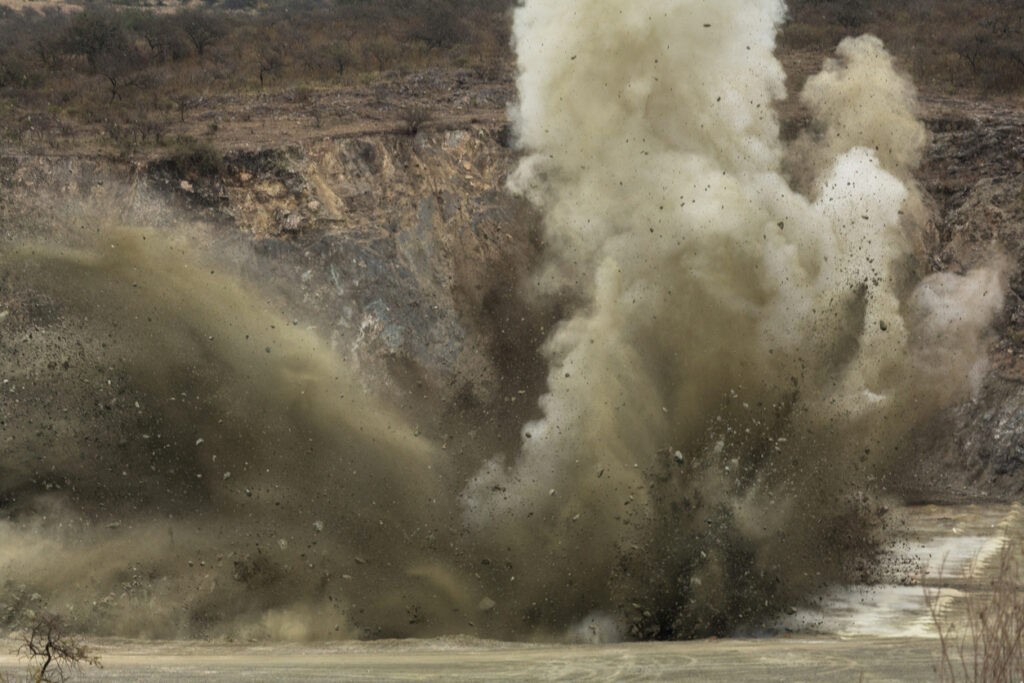
On January 5, an explosion occurred in the Kyrgyz village of Arka-2, near Kyrgyzstan's border with Tajikistan. The incident was reported by the Information and Communications Department of the Border Service under the State Committee for National Security (SCNS). According to preliminary investigations, the explosion happened while the homeowner, identified as N.A., was cleaning under his porch, where old construction materials and metal objects had been stored. During the cleaning, N.A. discovered an unknown explosive device, believed to be a shell, which then detonated. The Border Guard Service noted that N.A.'s house had previously been damaged in 2022 as a result of shelling during cross-border clashes. The explosion left N.A. and his 12-year-old daughter, who was with him at the time, with shrapnel injuries. Both victims were taken to the hospital, where they received medical treatment and are now reported to be in stable condition. Following the explosion, Border Patrol engineers quickly secured the area. Law enforcement officials have launched an extensive investigation to determine the origin and circumstances surrounding the device. On the same day, a meeting was held between representatives of the law enforcement agencies of Kyrgyzstan and Tajikistan. The Tajik side was informed about the incident, and the border service issued a call for heightened vigilance among residents of border areas. Citizens were urged not to handle or investigate suspicious objects but to immediately report them to border units or law enforcement agencies. The explosion highlights lingering risks in border regions between Kyrgyzstan and Tajikistan, which have been prone to tensions and periodic violence in recent years. Efforts to strengthen security and cooperation between the two countries remain critical in preventing further incidents and ensuring the safety of border communities.

Questions Mount After Azeri Plane Crash with Focus on Russian Air Defenses

On December 25, an Azerbaijani Embraer 190 aircraft operating a Baku-Grozny flight made a hard emergency landing near the city of Aktau, Kazakhstan. The aircraft, carrying five crew members and 62 passengers, suffered devastating consequences. Both pilots were killed, along with 36 passengers. Additionally, 29 people, including three children, were hospitalized. The aircraft disintegrated on impact, and a fire engulfed its midsection. Initial reports suggested a bird strike, but alternative theories have since emerged. Kazakhstan’s Ministry of Emergency Situations detailed the timeline: at 11:02 Astana time, the crew issued a distress signal while flying over the Caspian Sea. By 11:37, the plane made a hard landing in the steppe near Aktau. Before official rescue teams arrived, employees of a local energy company working nearby provided critical first aid and captured the first videos of the crash. They managed to pull 15 passengers from the wreckage of the tail section. Specialized rescue teams and medics, stationed at Aktau airport in anticipation of the emergency landing, arrived promptly thereafter. According to Nurdaulet Kilybay, Akim of Mangystau Region, "22 ambulance teams and six units from the Center for Disaster Medicine worked at the crash site." The regional multidisciplinary hospital had prepared “30 surgical and trauma beds, along with 10 intensive care beds” for victims. Speculations and Investigations Journalists questioned Bozumbayev during the briefing about theories which are currently circulating, including those suggesting air defense involvement. The official avoided drawing conclusions, stating: "It is impossible to establish even a preliminary cause because there are specialists for this. They will carry out work. Then it will be clear. I can't speak now. I watched what people are posting... While [the plane] fell to the ground, and turned over, a lot of things could have happened. So, I am far from reaching conclusions." Speculation on Russian Telegram channels has posited that perforations in the aircraft’s tail section resemble shelling damage. One theory links the crash to Ukrainian drone (UAV) raids over Grozny, suggesting that air defense systems mistakenly targeted the plane. The Telegram channel VChK-OGPU claimed that "Initially, the aircraft appears to have fallen victim to UAV jammers that were operating at the time because of a drone attack. As soon as the airliner started to descend for landing, its GPS stopped working and the dispatcher lost 'radar contact.' The pilot could not land the plane in such conditions and decided to fly to Baku. When he began to turn around to do so, there was an explosion nearby — all indications are that the plane was hit by air defense equipment." The report further alleges that the strike occurred over Chechnya’s Naursky District, home to military units equipped with air defense systems. Kazakh officials stressed the need for patience, as forensic and aviation experts work to analyze the wreckage and flight data, with Bozumbayev emphasizing that “An interdepartmental investigative and operational group has been set up. Both forensic experts and experts from our Aviation Administration, who investigate such air incidents, came with me. As part...