• KGS/USD = 0.01144 0%
  • KZT/USD = 0.00206 0%
  • TJS/USD = 0.10760 -0.46%
  • UZS/USD = 0.00008 0%
  • TMT/USD = 0.28571 0%
  • KGS/USD = 0.01144 0%
  • KZT/USD = 0.00206 0%
  • TJS/USD = 0.10760 -0.46%
  • UZS/USD = 0.00008 0%
  • TMT/USD = 0.28571 0%
  • KGS/USD = 0.01144 0%
  • KZT/USD = 0.00206 0%
  • TJS/USD = 0.10760 -0.46%
  • UZS/USD = 0.00008 0%
  • TMT/USD = 0.28571 0%
  • KGS/USD = 0.01144 0%
  • KZT/USD = 0.00206 0%
  • TJS/USD = 0.10760 -0.46%
  • UZS/USD = 0.00008 0%
  • TMT/USD = 0.28571 0%
  • KGS/USD = 0.01144 0%
  • KZT/USD = 0.00206 0%
  • TJS/USD = 0.10760 -0.46%
  • UZS/USD = 0.00008 0%
  • TMT/USD = 0.28571 0%
  • KGS/USD = 0.01144 0%
  • KZT/USD = 0.00206 0%
  • TJS/USD = 0.10760 -0.46%
  • UZS/USD = 0.00008 0%
  • TMT/USD = 0.28571 0%
  • KGS/USD = 0.01144 0%
  • KZT/USD = 0.00206 0%
  • TJS/USD = 0.10760 -0.46%
  • UZS/USD = 0.00008 0%
  • TMT/USD = 0.28571 0%
  • KGS/USD = 0.01144 0%
  • KZT/USD = 0.00206 0%
  • TJS/USD = 0.10760 -0.46%
  • UZS/USD = 0.00008 0%
  • TMT/USD = 0.28571 0%

Viewing results 1 - 6 of 199

Kyrgyzstan to Begin Manufacturing Helicopters

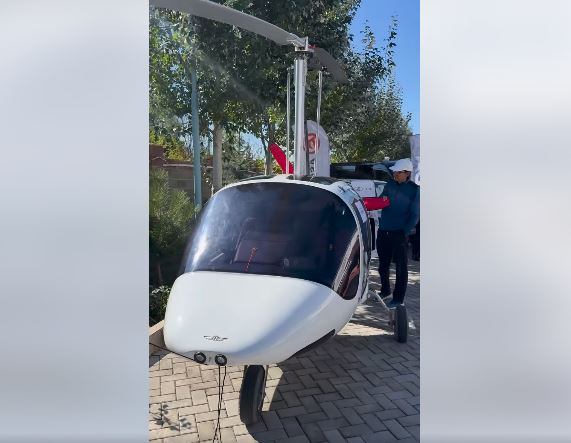
Daiyrbek Orunbekov, Head of the Information Policy Service of the Kyrgyz Presidential Administration, stated on his Facebook page that Kyrgyzstan has begun production on ultralight small-size two-seat helicopters. Describing the helicopter, he wrote: “It is a two-seater, can hold 70 liters of fuel, and flies 600 kilometers in 3 hours; pricing starts at around 60 thousand dollars." He also added that automobile, helicopter, and other manufacturing plants would soon be opening in the country. The production of helicopters in Kyrgyzstan, assembled from components supplies by Poland, is the country's first foray into the market. The helicopters can be used for various tasks, from pilot training and aerial photography to police patrols, power line control, medical personnel transport, and aerial agricultural work, and according to Orunbekov, interest has already been expressed by UAE companies in the test models. The Times of Central Asia previously reported that the German company "Linding Group" plans to invest some 10 million dollars in assembling aircraft in Almaty, Kazakhstan.

German Company to Assemble Airplanes in Almaty

The German company "Linding Group" is set to invest about $10 million in assembling airplanes in Almaty, pending necessary permits from the government. Based in the economic zone “PIT ‘Alatau", production will begin in 2026. During the first year, 20 airplanes will be assembled, rising to 50 units annually thereafter. Kazakhstan is already engaged in several joint projects with foreign enterprises in aircraft production. One such project  involves the "Russian Helicopters" company. Within the framework of the agreement with Kazakhstan's aircraft repair plant No. 405, a large-unit assembly of Mi-8AMT and Mi-171E helicopters was launched in Almaty, predominantly serving the Ministry of Emergency Situations and the National Guard of Kazakhstan. A further example of international cooperation is the contract between the Ural Civil Aviation Plant and Kazakhstan Aviation Industry (KAI) to produce the Baikal multi-purpose airplane. When fully assembled by the end of this year, the airplanes will be delivered to markets in Europe and Africa. The realization of all of these projects will both strengthen Kazakhstan's aviation industry and increase its presence in international aviation markets.

Kazakhstan Makes Strides in Agricultural Machinery Production

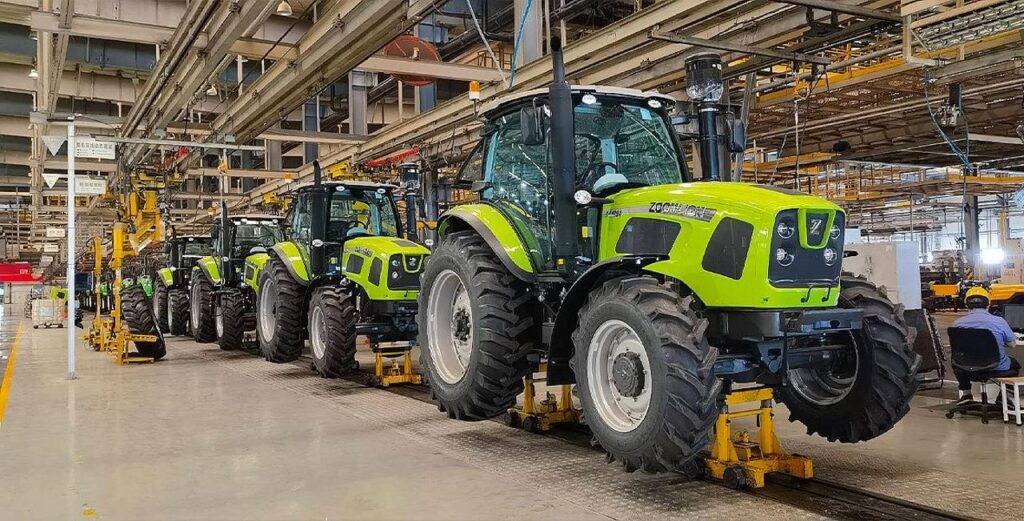
China’s Zoomlion Agriculture Machinery Co., Ltd., a leader in agricultural machinery production, is manufacturing tractors in Kazakhstan in cooperation with a local company, QazTehna. The plan is to produce up to 700 tractors per year at a plant in Saran in the Karaganda region, the Kazakh Ministry of Industry and Construction announced. Kazakhstan is one of the world's largest producers of grain crops, with a total sown area of more than 24 million hectares. The country needs sufficient agricultural machinery to ensure agricultural production in such a vast area. The renewal of outdated agricultural machinery remains a pressing challenge for Kazakhstan’s agro-industrial sector. According to the Ministry of Agriculture, there are 149,800 tractors in the country today, but the average wear of the machines is very high. According to the Ministry of Industry, the production capacity of Kazakhstan’s manufacturing plants fully meets the domestic demand for tractors and combines, with more than 80% of all tractors and combines purchased in Kazakhstan in recent years being domestic production. Kazakhstan has eight plants manufacturing more than ten brands and 120 models and modifications of tractors of different capacities, from 11 to 575 horsepower.

Rise in Trade Between Kyrgyzstan and Afghanistan

In January-August 2024, trade between Afghanistan and Kyrgyzstan reached $14 million, including $6 million worth of Afghan exports to Kyrgyzstan. According to a TOLOnews report, based on data from the Afghan Ministry of Industry and Commerce, most of Afghanistan's exports to Kyrgyzstan and Uzbekistan consist of mineral water, carpets, non-alcoholic beverages, dried fruits, fruit juices, apricots, and sesame seeds. The report was issued in the wake of an announcement on September 6, in which Kyrgyzstan's Ministry of Foreign Affairs stated, "A decision has been made to remove the Taliban from the list of prohibited organizations within the territory of the Kyrgyz Republic.” The Ministry emphasized that the removal of the Taliban, the unrecognized group that effectively controls Afghanistan, from the list of banned terrorist organizations, aims to enhance regional stability and support ongoing dialogue. Confirmation was also made of Kyrgyzstan's ongoing commitment to supporting the efforts of the international community to ensure a stable and peaceful environment in both Afghanistan and the surrounding region. Reporting on the meeting between Chairman of the Cabinet of Ministers of the Kyrgyz Republic, Akylbek Japarov and the Chargé d'Affaires of Afghanistan in Kyrgyzstan, Nurullah Amin, on September 6, the Kyrgyz government’s press service outlined the parties' discussions on furthering bilateral cooperation between the two countries. On the Kyrgyz side, Japarov expressed interest in developing trade and economic relations, and transport links with Afghanistan, engaging in the joint development of  Afghan mineral deposits, and cooperating in the energy, industry, and agriculture sectors.

Restoration of Kyrgyzstan’s Largest Hydropower Plant Nears Completion

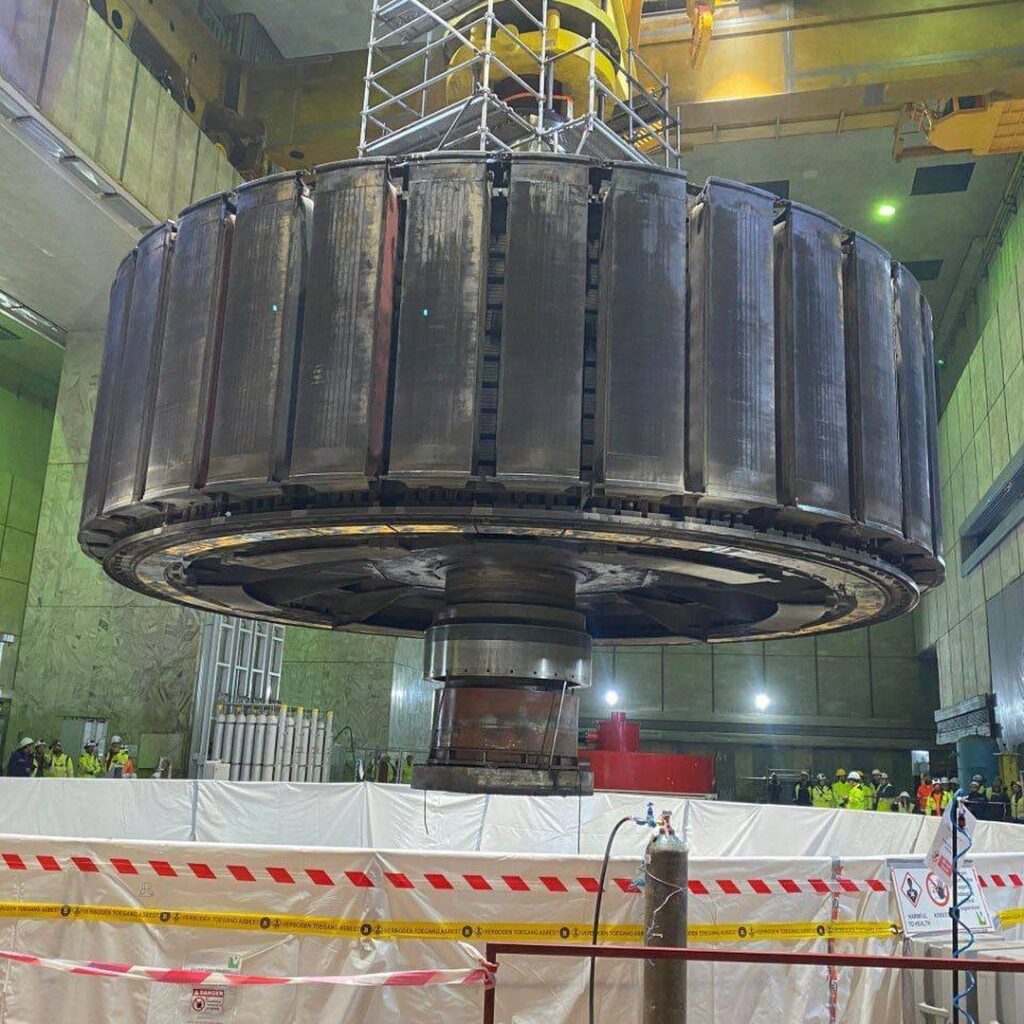
According to Kyrgyzstan's Ministry of Energy, the modernization of the country’s largest hydropower plant, Toktogul HPP, which began in March, is now 80% complete. Located on the Naryn River, the Toktogul HPP comprises four hydroelectric units and with a total generating capacity of 1320 MW, provides about 40% of the country’s electricity. The rotor at the hydro unit No. 1 has been assembled and installed and when fully modernized later in 2024, the service life of the Toktogul HPP will increase by 25-30 years, ensuring a reliable and uninterrupted power supply in autumn-winter and increase the power plant’s generating capacity by 60 MW to 1380 MW. In recent years, since Kyrgyzstan has been unable to produce enough electricity to meet the growing demand, electricity has been imported from neighboring countries. In 2023, the volume of imported electricity  amounted to 3.2 billion kWh. and  Kyrgyz Minister of Energy Taalaibek Ibrayev reported that in the first half of 2024, Kyrgyzstan imported 2.02 billion kWh of electricity, including 909.8 million kWh from Russia and Kazakhstan, 837.5 million kWh from Turkmenistan, and 275.3 million kWh from Uzbekistan. During the first half of this year, Kyrgyzstan produced 7.07 billion kWh of electricity, including 6.2 billion kWh generated by hydroelectric power plants and 870 million kWh by thermal (coal-fired) power plants. In addition to updating its current facilities, the Ministry of Energy has committed to the construction of the Kambarata-1 HPP which destined to become Central Asia's largest hydroelectric power plant, aims to end Kyrgyzstan’s power shortages. Confident in the success of such measures, Chairman of the Kyrgyz Cabinet of Ministers, Akylbek Japarov, has announced that Kyrgyzstan will become both energy-sufficient and in a position to begin exporting electricity by 2026.

Three Hydraulic Units at Tajikistan’s Kairakkum Hydropower Plant Launched After Modernization

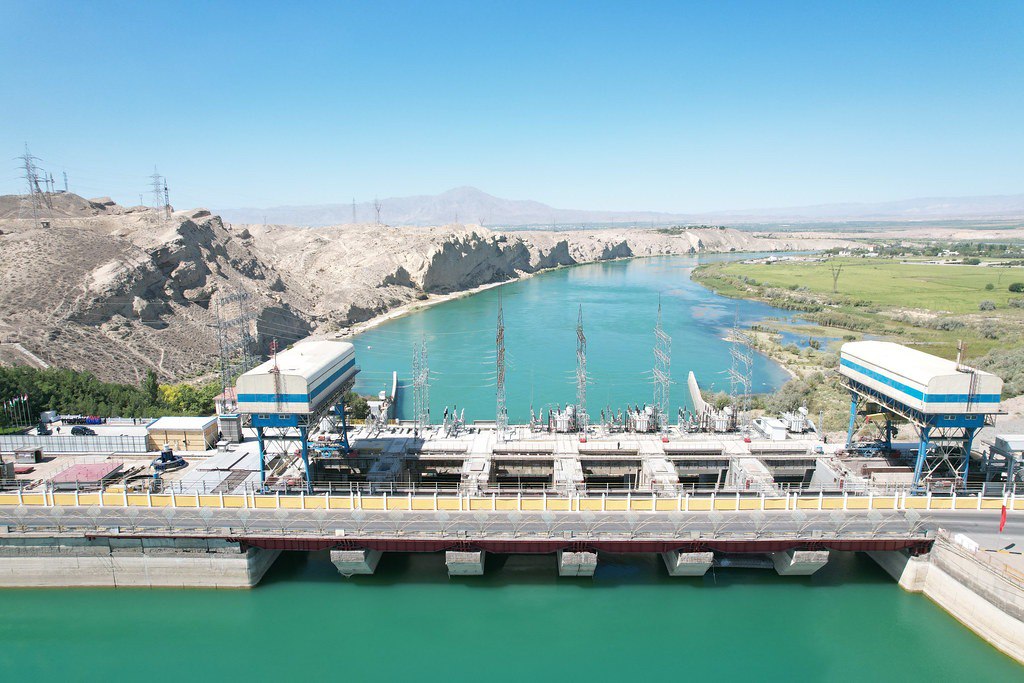
On September 7, three of the six power-generating units were put into operation after modernization at the Kairakkum hydropower plant (HPP) in the city of Guliston in Tajikistan’s northern Sughd region. Located on the Syr-Darya River, the Kairakkum HPP consists of six hydropower units, the last of which was commissioned in 1957 and has a design capacity of 21 MW. A project to modernize the aging plant was launched in August 2019. Over the past five years, hydro units Nos. 4, 5, and 6 have been completely renovated, and their capacity has increased from 19 to 29 MW. The power plant’s dam has been reinforced as part of the project. Currently, work is ongoing on rehabilitating hydro units No. 2 and 3. After the complete modernization planned for 2026, the average annual electricity production at the Kairakkum HPP will increase from 580 million kWh to 850 million kWh. It was earlier reported that the Kairakkum HPP rehabilitation project received $196 million in financing from the European Bank for Reconstruction and Development (EBRD), Green Climate Fund (GCF), Climate Investment Funds, and European Investment Bank (EIB). The financing comprised a $88 million EBRD loan, a $37 million EIB loan, a $50 million GCF loan and grant, and a $21 million Climate Investment Funds loan. In recent years, Tajikistan, which has abundant hydroenergy resources, has focused on hydropower generation projects — the largest of which is the construction of the giant Rogun dam — to solve the problem of chronic power shortages and begin electricity exports to neighbors in the region.