• KGS/USD = 0.01144 0%
  • KZT/USD = 0.00206 0%
  • TJS/USD = 0.10760 -0.46%
  • UZS/USD = 0.00008 0%
  • TMT/USD = 0.28571 0%
  • KGS/USD = 0.01144 0%
  • KZT/USD = 0.00206 0%
  • TJS/USD = 0.10760 -0.46%
  • UZS/USD = 0.00008 0%
  • TMT/USD = 0.28571 0%
  • KGS/USD = 0.01144 0%
  • KZT/USD = 0.00206 0%
  • TJS/USD = 0.10760 -0.46%
  • UZS/USD = 0.00008 0%
  • TMT/USD = 0.28571 0%
  • KGS/USD = 0.01144 0%
  • KZT/USD = 0.00206 0%
  • TJS/USD = 0.10760 -0.46%
  • UZS/USD = 0.00008 0%
  • TMT/USD = 0.28571 0%
  • KGS/USD = 0.01144 0%
  • KZT/USD = 0.00206 0%
  • TJS/USD = 0.10760 -0.46%
  • UZS/USD = 0.00008 0%
  • TMT/USD = 0.28571 0%
  • KGS/USD = 0.01144 0%
  • KZT/USD = 0.00206 0%
  • TJS/USD = 0.10760 -0.46%
  • UZS/USD = 0.00008 0%
  • TMT/USD = 0.28571 0%
  • KGS/USD = 0.01144 0%
  • KZT/USD = 0.00206 0%
  • TJS/USD = 0.10760 -0.46%
  • UZS/USD = 0.00008 0%
  • TMT/USD = 0.28571 0%
  • KGS/USD = 0.01144 0%
  • KZT/USD = 0.00206 0%
  • TJS/USD = 0.10760 -0.46%
  • UZS/USD = 0.00008 0%
  • TMT/USD = 0.28571 0%

Viewing results 1 - 6 of 199

Daewoo To Invest $730 Million in Turkmenistan

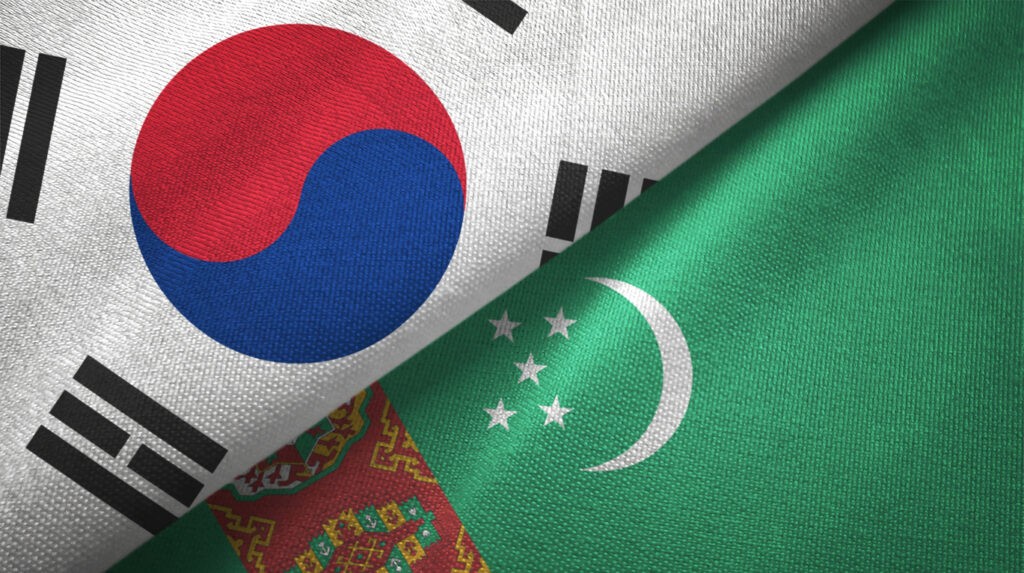
South Korean company Daewoo Engineering & Construction has won a tender to build a fertilizer plant in Turkmenistan. The project is estimated to cost a trillion won (about $730 million). According to the company, the new plant will be located in Turkmenabat, 450 km east of Ashgabat. It will have an annual capacity of 350,000 tons of phosphate fertilizer and 100,000 tons of ammonium sulfate, and will include additional auxiliary facilities. After the completion of the main contract, final data on the contract's value and implementation terms will be published. The company has stated that implementing the project will allow Daewoo E&C to strengthen its presence in Central Asia and expand its activities in the petrochemical and agricultural sectors, infrastructure, and urban projects. In the future, the company intends to offer environmentally friendly technological solutions to further cooperate with Turkmenistan. Daewoo E&C noted that winning the tender was possible thanks to the support of the South Korean government, including during the official visit of President Yun Seok Yeol to Turkmenistan in June. The company's Chairman, Jeong Won-ju, also met with the Chairman of the People's Council of Turkmenistan, Gurbanguly Berdimuhamedov, in November 2022 during his visit to South Korea. The two sides signed a memorandum of understanding, cementing an agreement on close cooperation. Jeong Won-ju has visited Turkmenistan three times since then, which helped strengthen ties and successfully conclude negotiations. Daewoo E&C is aiming to become a leader in the global EPC (engineering, procurement, and construction) market. “We strive to participate in projects that contribute to a sustainable future,” a company representative stated. Turkmenistan is implementing several major projects with the participation of South Korean companies. Hyundai Engineering has agreed with state-owned Turkmengas to expand the Galkynysh gas field. This project includes the construction of a fourth gas desulfurization facility, making it the largest in the country's history. Korean companies have also been actively constructing and developing an oil refinery in Kiyanly. Projects to create “smart cities” are also being discussed.

Accelerating Growth: Uzbekistan’s Automotive Industry Continues to Expand

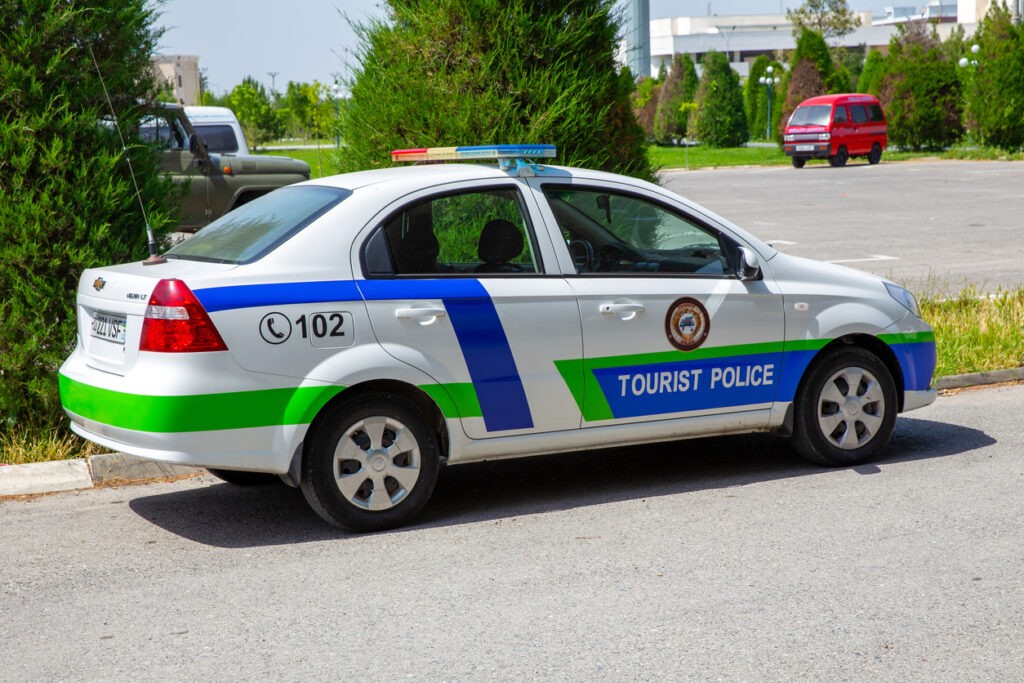
Uzbek-Singaporean company Technologies of Real-Time plans to start producing components for such famous brands as BYD, Chery, Changan, Geely, and Dongfeng, it was announced during President Mirziyoyev's visit to the Tashkent region. The project will cost $115 million and is planned to be realized by 2025. As a result, 43 new jobs will be created, and production capacity will increase from 180,000 to 280,000 units annually. The automobile industry is a critical component of the Uzbek economy, with car production growing almost threefold in recent years. By the end of this year, production volume is expected to reach 460,000 units, and by 2030, it is planned to increase this figure to 1 million. Two new private enterprises and international brands have been brought in to eliminate monopolies and promote competition in the industry, with more than 20 plants in the country producing a wide range of cars and trucks. In response to the growing demand for spare parts, more than 300 enterprises have joined a cooperative network, including Technologies of Real-Time in Zangiat. In November 2019, the President familiarized himself with the products of this enterprise at an international industrial fair, and recommended its further expansion. As a result, extensive modernization has been carried out, and new equipment from China, Russia, South Korea, Japan, and the United States has been installed in 12 workshops. Currently, more than 750 types of spare parts for 118 car models are produced here. The enterprise has created 220 jobs. Products are supplied to the domestic market, including to the Uzavto Motors plant in the Khorezm region, where 773,000 spare parts for Damas and Labo were shipped. Spare parts are also in demand abroad: last year, exports amounted to $3 million, including deliveries to Kazakhstan, Kyrgyzstan, Tajikistan, and Turkmenistan.

Changing Volumes of Gold Mined in Kazakhstan and Uzbekistan

According to data  issued by the U.S. Geological Service, in 2023, 130 tons of gold were mined in Kazakhstan and 100 tons in Uzbekistan. Kazakhstan's volume increased by 15 tons compared to 2022, whilst Uzbekistan's decreased by 4 tons. Russia produced 310 tons of gold, equivalent to that mined the previous year. Worldwide, 3,600 tons of gold were produced in 2023, 60 tons less than in 2022. The U.S. Geological Survey has yet to release the latest estimate of gold production in Kyrgyzstan but according to data, the country mined  25.3 tons in 2022. As of September 1, Uzbekistan’s international reserves reached $39.15 billion; a record indicator since data disclosure began in 2018. The National Bank of Kazakhstan counts the country’s gold and foreign exchange reserves in February 2024 at $36.1 billion. In 2014, this indicator was at $26.05 billion, meaning that over the past ten years, the volume of gross international reserves has increased by $10 billion (+38.6%).

Tajikistan and Russia Explore Joint Oil and Gas Development Opportunities

Tajikistan and Russia are studying the possibility of jointly exploiting oil and gas fields in Tajikistan. At the intergovernmental commission meeting held in Dushanbe, Tajikistan's Prime Minister, Kohir Rasulzoda, and the Deputy Chairman of the Russian Government, Marat Khusnullin, discussed the development of mines. “We have given the Russian side a list of promising oil and gas fields in Tajikistan for joint development. We propose to continue working on finding common ground to implement a mutually beneficial project in this area,” Rasulzoda said. He said the Russian side's opinions were considered when making this decision. The Statistical Agency of Tajikistan provides information that in 2023, about 18,000 tons of oil were produced in the country, which isn’t enough to supply oil refineries. In this regard, oil products are imported to Tajikistan. Russia, the leading supplier, provides gasoline and diesel to Tajikistan without customs fees.

Kyrgyzstan Plans to Stop Importing Coal and Electricity by 2027

Kyrgyzstan plans to abandon coal imports within the next two years and stop buying foreign electricity by 2027. Speaking at a parliamentary group meeting, Energy Minister Taalaibek Ibraev announced that the country is already preparing to meet these challenges by actively developing the energy sector's infrastructure. Ibraev emphasized that the problem with transformers, which was relevant earlier, will be solved next year. Repairs have already been carried out in all 56 RECs (district electric networks), and five spare transformers have been provided for each of them in case of emergencies. A tender has also been held for purchasing one thousand transformers worth $58 million, of which $25 million are loan funds, $25 million is a World Bank grant, and $8 million is a Swiss grant. In addition, 600 thousand new meters are planned to be purchased. These measures will significantly improve the reliability of the country's electricity supply. The minister also noted that the country's generating capacity deficit is 300 to 400 megawatts. To solve this problem, solar power plants will be launched, allowing the country to scale down electricity imports. In addition, Ibraev announced plans to refuse coal imports in the next two years. The country is developing projects to introduce alternative energy sources and ensure energy independence. Problems with transformers in Kyrgyzstan have been acute over the past few years due to worn-out energy infrastructure and equipment shortages. Many transformer stations needed modernization, resulting in power supply failures. The government initiated large-scale transformer replacement and repair projects in response to these challenges.

Kyrgyzstan Begins Development of Large Titanomagnetite Deposit

Kyrgyzstan has begun developing its largest titanomagnetite deposit, Kyzyl-Ompol, in the Issyk-Kul region. Speaking at the launch ceremony on September 25, the Chairman of the Kyrgyz Cabinet of Ministers, Akylbek Japarov, emphasized that the state will develop and finance this strategic deposit. "This is a very important event for Kyrgyzstan. The Kyzyl-Ompol deposit contains millions of tons of titanomagnetite. Titanium is valuable in various industries, including medicine, aviation, and space. The development of this deposit will allow us not only to increase exports but also to create new jobs, which will give an impetus to developing the country's economy," Japarov said. Japarov also emphasized the importance of an environmentally friendly approach to the deposit's development, saying that technologies used to extract titanomagnetite will guarantee the safe extraction of associated minerals such as uranium and thorium. Early in June, the Kyrgyz parliament approved a government bill lifting a ban on the mining of uranium and thorium that had been in place since 2019. The move caused environmental concerns in Kyrgyz society, as the country still works on the rehabilitation and conservation of radioactive uranium waste sites left over from the Soviet era. The ban was lifted to start the mining of titanomagnetite, which is accompanied by uranium and thorium. The government plans to process both elements at the Kara-Balta Mining Combine, some 100 km west of Bishkek.