
• KGS/USD = 0.01144 0%
  • KZT/USD = 0.00215 0%
  • TJS/USD = 0.10637 0%
  • UZS/USD = 0.00008 0%
  • TMT/USD = 0.28530 0%
  • KGS/USD = 0.01144 0%
  • KZT/USD = 0.00215 0%
  • TJS/USD = 0.10637 0%
  • UZS/USD = 0.00008 0%
  • TMT/USD = 0.28530 0%
  • KGS/USD = 0.01144 0%
  • KZT/USD = 0.00215 0%
  • TJS/USD = 0.10637 0%
  • UZS/USD = 0.00008 0%
  • TMT/USD = 0.28530 0%
  • KGS/USD = 0.01144 0%
  • KZT/USD = 0.00215 0%
  • TJS/USD = 0.10637 0%
  • UZS/USD = 0.00008 0%
  • TMT/USD = 0.28530 0%
  • KGS/USD = 0.01144 0%
  • KZT/USD = 0.00215 0%
  • TJS/USD = 0.10637 0%
  • UZS/USD = 0.00008 0%
  • TMT/USD = 0.28530 0%
  • KGS/USD = 0.01144 0%
  • KZT/USD = 0.00215 0%
  • TJS/USD = 0.10637 0%
  • UZS/USD = 0.00008 0%
  • TMT/USD = 0.28530 0%
  • KGS/USD = 0.01144 0%
  • KZT/USD = 0.00215 0%
  • TJS/USD = 0.10637 0%
  • UZS/USD = 0.00008 0%
  • TMT/USD = 0.28530 0%
  • KGS/USD = 0.01144 0%
  • KZT/USD = 0.00215 0%
  • TJS/USD = 0.10637 0%
  • UZS/USD = 0.00008 0%
  • TMT/USD = 0.28530 0%

Viewing results 1 - 6 of 5

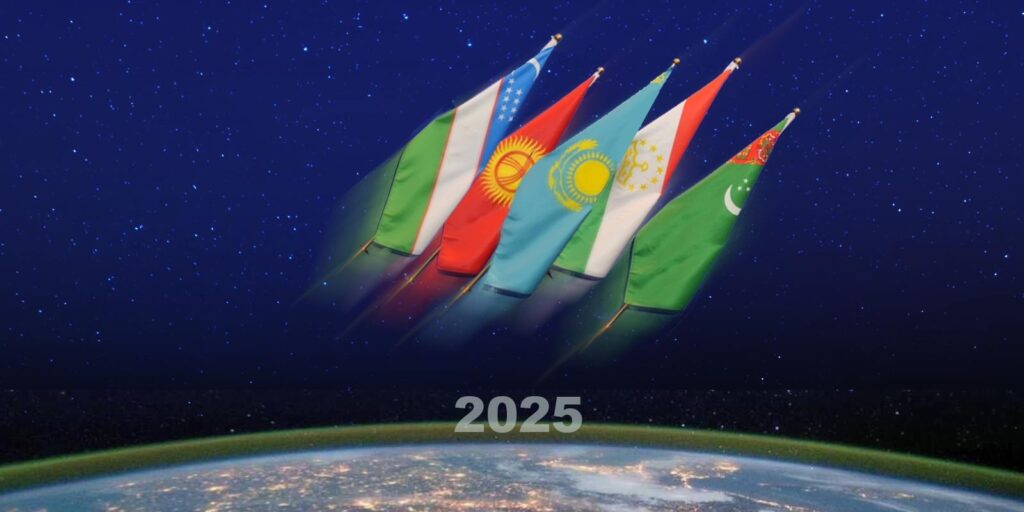
2025: The Year Central Asia Stepped Onto the Global Stage

For much of the post-Soviet era, Central Asia occupied a peripheral place in global affairs. It mattered to its immediate neighbors, but rarely shaped wider debates. In 2025, that changed in visible ways. The region became harder to ignore, largely not because of ideology or alignments, but because of assets that the world increasingly needs: energy, minerals, transit routes, and political access across Eurasia. One of the clearest signs came in April, when the European Union and the leaders of Kazakhstan, Kyrgyzstan, Tajikistan, Turkmenistan, and Uzbekistan met in Samarkand for their first summit at the head-of-state level. The meeting concluded with a joint declaration upgrading relations to a strategic partnership, with a focus on transport connectivity, energy security, and critical raw materials. The document marked a shift in how Brussels views Central Asia, moving beyond development assistance toward geopolitical cooperation, as outlined in the official EU–Central Asia summit joint declaration. European interest is rooted in necessity. Russia’s war in Ukraine has forced EU governments to rethink energy imports, supply chains, and overland trade routes. Central Asia sits astride the most viable alternatives that bypass Russian territory. It also holds resources essential to Europe’s green transition, including uranium and a range of industrial metals. The region’s leaders spent much of the year framing their diplomacy around these tangible advantages, rather than abstract political alignments. The United States followed a similar track. Through the C5+1 format, Washington deepened engagement with all five Central Asian states, with particular emphasis on economic cooperation and supply-chain resilience. A key element has been the Critical Minerals Dialogue, launched to connect Central Asian producers with Western markets. This initiative formed part of a broader U.S. effort to diversify access to strategic materials and reduce dependence on Russia and China. Russia remained a central but changing presence in Central Asia throughout 2025. Economic ties, labor migration, and shared infrastructure ensured that Moscow continued to matter across the region. At the same time, however, Russia’s war in Ukraine constrained its ability to act as the dominant external power it once was. Central Asian governments maintained pragmatic relations with Moscow, but they increasingly treated Russia as one partner among several rather than the default reference point. Trade continued, security cooperation persisted, and political dialogue remained active, yet the balance shifted toward hedging rather than dependence. Uranium sits at the center of this shift, with the United States having banned imports of certain Russian uranium products under federal law, with waivers set to expire no earlier than January 1, 2028. As Washington restructures its nuclear fuel supply chain, Central Asia’s role has grown sharply. According to the U.S. Energy Information Administration’s 2024 Uranium Marketing Annual Report, Kazakhstan supplied 24% of uranium delivered to U.S. reactor operators, while Uzbekistan accounted for about 9%. Canada and Australia remain major suppliers, but the Central Asian share is now strategic rather than marginal. That economic weight translated into political visibility. In December, U.S. President Donald Trump said he would invite Kazakhstan and Uzbekistan to attend...


From Astana to the World: Kazakhstan Expands Academic Frontier

Kazakhstan is rapidly establishing itself as a regional center for higher education, attracting students from around the world. The number of branches of foreign universities operating in the country is steadily increasing, complemented by a growing domestic academic base, especially in fields such as artificial intelligence. Today, Kazakhstan is viewed as a viable regional alternative to Russia, which has long been considered a destination for affordable, high-quality education. Expanding Options for Students In June, the Ministry of Science and Higher Education of the Republic of Kazakhstan unveiled a map of foreign university branches operating in the country. The government is positioning Kazakhstan as a leading academic hub in Central Asia by enhancing international cooperation and expanding opportunities for students. Partnerships have already been established with 39 foreign universities. Currently, 23 branches of institutions from the UK, Italy, China, Russia, the U.S., France, and South Korea operate in Kazakhstan. [caption id="attachment_36320" align="aligncenter" width="1201"] Map of foreign university partnerships; image: Ministry of Science and Higher Education of Kazakhstan.[/caption] Seven more branches are expected to open in the 2025-2026 academic year, namely Coventry University, the Moscow State Institute of International Relations (MGIMO) in Astana, Gazi University in Shymkent, Woosong University in Turkestan, Anhalt University in Almaty, Politecnico della Marche in Taldykorgan, and Dong Eui University in Kostanay. A standout example of this strategy arrived in early September: Notably, on September 3, Cardiff University opened its first campus outside the UK in Astana. It is also the first member of the prestigious Russell Group to begin operations in Kazakhstan. The Russell Group comprises 24 leading UK universities responsible for two-thirds of all research grants and contract funding in the UK, and 56% of doctoral degrees awarded. Cardiff University Kazakhstan is now accepting students for four-year bachelor’s programs in computer science, business management, civil engineering, and geology and mineral exploration. Kazakhstan has witnessed a surge in the establishment of foreign university branches since 2021. These include the Peking University of Languages and Culture at Astana International University, and the National Research Nuclear University MEPhI (Russia) at Al-Farabi Kazakh National University. Additional branches include the University of Lorraine (France) at the Kazakh National Pedagogical University named after Abai, and the University of Anhalt (Germany) at the Almaty University of Power Engineering and Telecommunications named after Gumarbek Daukeev. Other notable branches include the University of Hong Kong at Satpayev University in Almaty, Berlin Technical University in Aktau, De Montfort University (UK) in Almaty, and Queen’s University Belfast (Ireland) at Narxoz University, among others. These branches offer programs in mining, water resource management, and mineral exploration and extraction, along with biotechnology, electrical engineering, energy, mechatronics, logistics, chemical technology, robotics, and related disciplines. In 2023, Korkyt Ata University in Kyzylorda launched an Institute of Artificial Intelligence, in partnership with Seoul National University of Science and Technology. It currently offers programs in computer science, cybersecurity, software development, and information systems. An Ambitious Vision Observers note that Kazakhstan’s education drive is unfolding amid growing global competition for international students. Neighboring Uzbekistan...

Democracy’s Unsung Day Finds a Voice in Tashkent

For a holiday few have heard of, the International Day of Parliamentarism carries more weight than its quiet profile suggests. Marked each year on June 30th — the anniversary of the Inter-Parliamentary Union’s founding in 1889 — it was never intended to generate mass celebrations. Instead, it serves as a modest reminder that parliamentary institutions, often overlooked and frequently maligned, still matter. This year, the occasion arrived with more relevance than usual. In April, Tashkent hosted the 150th Assembly of the Inter-Parliamentary Union (IPU) — the first time such a gathering had taken place in Central Asia. It was Uzbekistan’s diplomatic debut on the global parliamentary stage, attracting over 1,400 delegates from 130 countries. The timing, just months before the official Day of Parliamentarism, was deliberate. For Uzbekistan, still navigating its democratic evolution, the event offered both a platform and a test. President Shavkat Mirziyoyev opened the proceedings with an appeal to the enduring value of representative institutions. “You are a powerful force,” he told lawmakers, “capable of perceiving the concerns and problems of ordinary people, elevating them, if necessary, to the regional and international level, and finding effective solutions for them.” In a country where the parliament remains largely deferential to the executive, the words were aspirational. Yet they reflected a broader ambition: to present Uzbekistan as a serious contributor to global governance conversations, and as a reformer — albeit a cautious one — at home. The assembly also put a spotlight on the International Day itself, which remains unfamiliar to many. Established by the UN in 2018, the day commemorates the founding of the IPU and serves to promote parliaments as critical pillars of democracy, lawmaking, and oversight. While few countries observe it with more than a press release, the IPU has worked to turn June 30th into a hub for discussion, experimentation, and institutional self-reflection. This year’s global theme is gender equality. Under the motto “Step by Step Toward Gender Equality,” the IPU — together with UN Women — has launched a campaign marking the 30th anniversary of the Beijing Declaration. It comes at a time when progress on women’s political representation has slowed. As of early 2025, fewer than one-third of national parliamentarians globally are women. In some regions, the numbers are falling. The campaign goes beyond slogans. It calls for legal quotas, safer working conditions, and stronger mechanisms to address harassment and political violence. In Tashkent, the initiative received an unexpected boost. President Mirziyoyev cited research estimating that global GDP could rise by over 25% if gender parity were achieved in public and economic life. His remarks were later incorporated into the Tashkent Declaration — a document that emphasized the link between inclusive representation and sustainable development. The IPU itself has taken modest but meaningful steps to promote gender balance within its ranks. Delegations without women face sanctions; forums for women parliamentarians are increasingly influential; and men are being actively recruited as allies in the push for equality. The campaign’s underlying message is clear: democracy...
