• KGS/USD = 0.01144 0%
  • KZT/USD = 0.00210 0%
  • TJS/USD = 0.10559 0%
  • UZS/USD = 0.00008 0%
  • TMT/USD = 0.28530 0%
  • KGS/USD = 0.01144 0%
  • KZT/USD = 0.00210 0%
  • TJS/USD = 0.10559 0%
  • UZS/USD = 0.00008 0%
  • TMT/USD = 0.28530 0%
  • KGS/USD = 0.01144 0%
  • KZT/USD = 0.00210 0%
  • TJS/USD = 0.10559 0%
  • UZS/USD = 0.00008 0%
  • TMT/USD = 0.28530 0%
  • KGS/USD = 0.01144 0%
  • KZT/USD = 0.00210 0%
  • TJS/USD = 0.10559 0%
  • UZS/USD = 0.00008 0%
  • TMT/USD = 0.28530 0%
  • KGS/USD = 0.01144 0%
  • KZT/USD = 0.00210 0%
  • TJS/USD = 0.10559 0%
  • UZS/USD = 0.00008 0%
  • TMT/USD = 0.28530 0%
  • KGS/USD = 0.01144 0%
  • KZT/USD = 0.00210 0%
  • TJS/USD = 0.10559 0%
  • UZS/USD = 0.00008 0%
  • TMT/USD = 0.28530 0%
  • KGS/USD = 0.01144 0%
  • KZT/USD = 0.00210 0%
  • TJS/USD = 0.10559 0%
  • UZS/USD = 0.00008 0%
  • TMT/USD = 0.28530 0%
  • KGS/USD = 0.01144 0%
  • KZT/USD = 0.00210 0%
  • TJS/USD = 0.10559 0%
  • UZS/USD = 0.00008 0%
  • TMT/USD = 0.28530 0%

Viewing results 1 - 6 of 53

World Bank Report Outlines Path to Drive Tajikistan’s Green Transition and Economic Growth

On November 7, the World Bank Group published the Tajikistan Country Climate and Development Report (CCDR), highlighting the transformative potential of climate action for Tajikistan's economy. The report suggests that addressing climate risks can drive economic renewal, create jobs, and enhance resilience against the rising frequency of extreme weather events caused by climate change. Ozan Sevimli, World Bank Group Country Manager for Tajikistan, emphasized the urgency of a strategic shift: “Tajikistan urgently needs an economic reset to tackle its numerous development challenges and the growing impacts of climate change that threaten future progress. The CCDR provides a roadmap for accelerating the transition to a green economy, supporting long-term growth.” A key finding of the report is the importance of mobilizing private-sector financing to supplement Tajikistan's limited public resources. This financing will be crucial in securing the nation’s green transition and ensuring water, food, and energy security. Despite ranking 130th globally in greenhouse gas emissions, Tajikistan is highly vulnerable to climate change impacts, notes Bahodur Sheralizoda, Chair of the Environmental Protection Committee under the Tajik government: “Although our contribution to global emissions is minimal, we are one of the most climate-vulnerable countries in the world. The CCDR advises the government to improve production efficiency, foster innovative technologies, and create green jobs to reduce our susceptibility to climate-related challenges.” The report warns that Tajikistan already faces high risks of floods, earthquakes, and landslides, with potential infrastructure and agricultural losses that could lower GDP by 5-6% by 2050. The strategic Vakhsh River Basin, which produces 90% of the country’s electricity, underscores the dual challenges of climate and development. Annual costs of land degradation are estimated at $325 million, with further increases anticipated. Additionally, air pollution remains a major health risk, accounting for 84 deaths per 100,000 people—Central Asia’s second-highest rate. A green transition could deliver substantial benefits. By 2050, reduced healthcare costs from lower air pollution, fewer road accidents, and improved road conditions could save over $3.5 billion. Investments in renewable energy, including hydro, solar, and geothermal, as well as in energy efficiency, promise new employment opportunities across sectors. The report advises the Tajik government to fast-track low-carbon development to strengthen economic growth, energy security, export potential, and job creation, all while enhancing air quality. Achieving these goals will require significant investments: Tajikistan needs around $17 billion, in addition to the $79 billion required for the government’s reform agenda from 2025 to 2050. Private sector investments, particularly in energy, industry, and agriculture, will be essential. Recognizing that the financial needs for this transformation exceed domestic resources, the report underscores the importance of external support. Tajikistan will need substantial technical and financial assistance from international bodies, climate funds, and development partners to fulfill its climate and development goals.
IFC Increases Investments in Central Asia

The International Finance Corporation (IFC), a member of the World Bank Group, says it committed $1.04 billion in Central Asia in the fiscal year 2024, which started on July 1, 2023, and ended on June 30, 2024. The funds comprised over $400 million in long-term financing from IFC’s account, $600 million in mobilization, and $35 million in short-term trade and supply-chain finance to facilitate trade flows. The funds, coupled with advisory support, aimed to increase private sector participation, create jobs, boost financial inclusion, bolster infrastructure, and support the region’s green transition. Priority sectors included finance, capital markets, renewable energy, agriculture, and infrastructure. Over the last fiscal year, IFC-supported projects in the Central Asian region created about 35,000 jobs, including more than 13,000 for women. Strengthening local financial markets is among its key objectives. To that end, the IFC invested $228 million in 10 financial institutions in Kazakhstan, Kyrgyzstan, Tajikistan, and Uzbekistan, with up to half earmarked for women entrepreneurs and rural enterprises. The IFC also supported local financial institutions in growing their micro, small, and medium enterprises (MSME) businesses, advancing climate finance and digital transformation, and issuing the first-ever sustainability, social, and green bonds. The IFC and the World Bank financed a new solar plant with the country’s first battery energy storage system to support Uzbekistan's green transition and climate action. The plant is expected to provide electricity access to approximately 75,000 households in the Bukhara region. In Tajikistan, the IFC invested in the country’s first green bond, issued by Eskhata Bank. The bond will support climate-smart projects and MSMEs undertaking environmental projects. In Kazakhstan and Kyrgyzstan, in addition to investments to increase financial inclusion, the IFC has been evaluating new advisory and investment opportunities, including PPPs in areas such as drinking water supply, renewable energy (including geothermal solutions for heating and cooling), railway projects as part of the Middle Corridor, and the first municipal green bonds in Central Asia. The IFC also supports Kazakhstan's accelerated methane mitigation efforts, which align with the Global Methane Pledge. Wiebke Schloemer, the IFC’s Director for Türkiye and Central Asia, reiterated its commitment to the region: “Over the past 20 years, the region has seen substantial development, with an average annual growth rate of 6.2 percent. Central Asia must leverage the green transition to boost private investment, strengthen connectivity, and reduce resource dependency to continue this growth. The IFC aims to address these goals and continue to deliver solutions where we are needed most — from increasing access to finance for farmers and women entrepreneurs to creating jobs to continue to help countries transition to net zero.”

American Chamber of Commerce in Kyrgyzstan: Future Development and Investment Climate

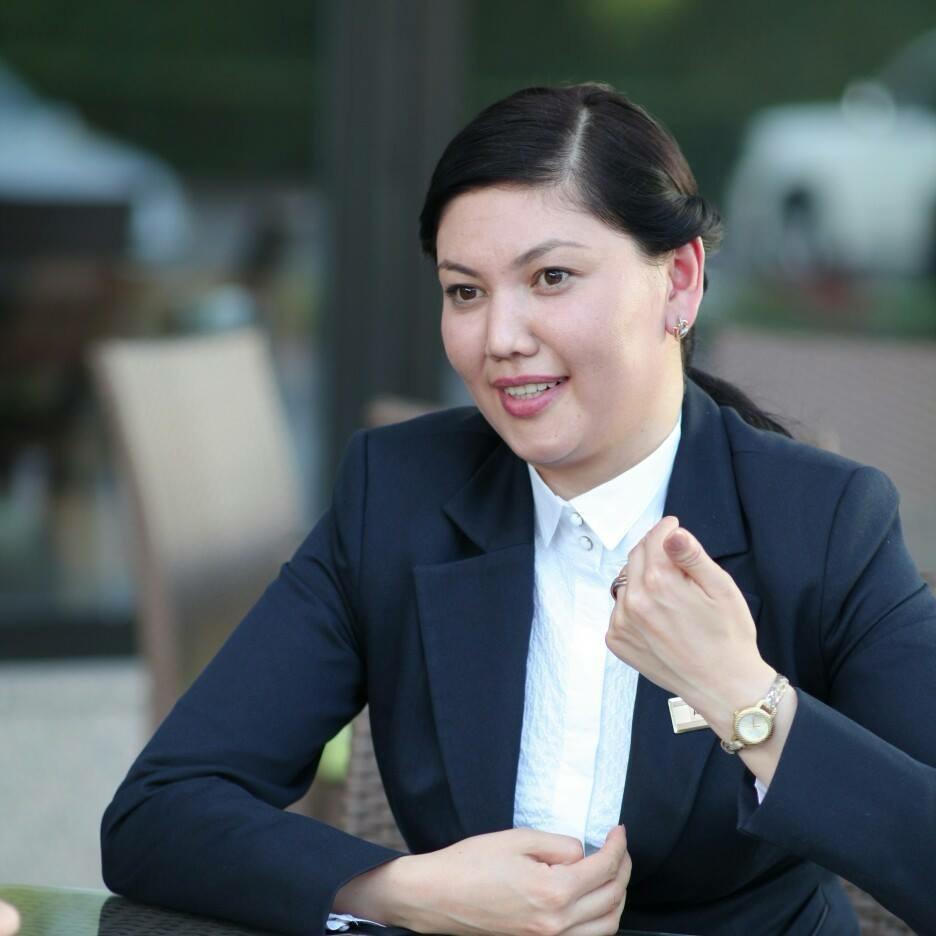
As Central Asia continues to become a regional hub for trade and innovation, The Times of Central Asia spoke with Altynai Asanova, the Executive Director of the American Chamber of Commerce in the Kyrgyz Republic, to discuss the investment climate in Kyrgyzstan, economic trends, and future development. TCA: I see that your background is primarily in hotel management and sales; how did you transition from this role to your current position? “My background includes 18 years in the hotel business. Ten years at Hyatt, starting in food and beverage and ending in the hotel sales department; then, I worked at the Orion Hotel for the pre-opening and opening stage for about three years. After this, I was hired by Sheraton, one of the Marriott chain hotels, to work on the pre-opening and opening stage for two years. I was still involved with the business audience and wanted to continue working with the stakeholders and companies who know me.” TCA: How would you describe the hospitality industry in Kyrgyzstan? Is it mainly in Bishkek or other regions? “It is developing; before, it was only the Hyatt. Now, there are three or four chain hotels in Bishkek. It is good that there are more players in the market. It is developing day by day. The development is mainly in Bishkek, but we have good perspectives for Issyk Kul as long as the roads and infrastructure are completed. The chain hotels are also becoming interested in Issyk Kul. The good thing is that enough businessmen understand and accept the market challenges in Issyk Kul. They know it will not be financially stable at launch since the busy season is only about 50 days. But if the hotels provide full service and comfort, people will travel there for the full season.” TCA: Stepping away from hospitality, what did American investment in Kyrgyzstan look like ten years ago?” “Before, there was an American base in Kyrgyzstan. During that time, the hospitality business was amazing. The rates were high considering the charter flights and pilots who needed a place to stay. Now, these rooms are listed at the lowest rates. At that time, the Hyatt was the only five-star hotel in Bishkek, so all the American guests were staying at the Hyatt. The investment climate dropped after the U.S.-Kyrgyzstan agreement ended. There is opportunity, but it goes slowly.” TCA: Since then, what has changed in the business climate? “Business-wise, if we look from the angle of the association, we do not have any purely American business; we have franchise members: KFC, Hyatt, Sheraton, and some banks. It would be nice to have purely American [businesses] here.” TCA: Who are the current major investors in the Kyrgyz market? And is competition relevant to win contracts with local companies? “China, Russia, Kazakhstan, the Netherlands, and Turkey are the main investors. Before making any contracts or tenders, we need to understand the possibilities of our market, ‘Is our country ready to accept this level of business?’ The first question...

Kazakhstan Hosts Meeting of Council of Foreign Investors

Astana's Palace of Independence hosted the 36th meeting of the Foreign Investors Council. Kazakhstan's President Kassym-Jomart Tokayev and Prime Minister Olzhas Bektenov attended the event. This year's central theme was “Kazakhstan's New Investment Cycle.” The meeting discussed strategies for the new investment cycle and the development of Kazakhstan's attractiveness to investors. Citing data from the International Institute for Management Development (IMD), Tokayev emphasized that Kazakhstan has become one of the world's top 35 competitive countries. “We set ourselves a rather ambitious goal: to attract $150 billion of foreign direct investment by 2029. To realize this goal, the Investment Headquarters under the Government is endowed with expanded powers to solve emerging problems promptly,” said the president. Tokayev noted the merits of international oil companies, which have played an essential role in the country's development. “Foreign investors have invested capital and provided advanced technologies and highly skilled labor. Their investments have contributed to the growth of our energy industry: over the past 30 years, oil production has tripled. Thanks to this, Kazakhstan has become one of the five countries with the highest oil production growth rates. Speaking about the future, we set a goal to overcome the threshold of 100 million tons per year,” he said. The meeting focused on increasing investment attractiveness in the “clean energy” sector. Specific agreements were reached with world companies such as Total, Svevind, ACWA Power, and Masdar on realizing 43 GW of “green” projects in Kazakhstan. In addition, Kazakhstan has a vast potential for developing nuclear energy, so creating an international consortium to realize the NPP construction project is under consideration. Kazakhstan focuses on the work of the Astana International Financial Center to strengthen cooperation in the financial sector. Tokayev spoke of the importance of continuing the dialog between the Council members and government agencies to improve the country's investment climate and implement new initiatives and specific projects. The meeting also included Odile Renaud-Basso, President of the EBRD; Nurlan Dosymbekov, Deputy Prime Minister and Minister of National Economy; Zhang Daowei, Chairman of the Board of the Kazakh Association “Baibazarov” and the Yerstanign Investors; Nikolai Podguzov, chairman of the EDB; Andrew Deleoni, president of Alstom for Africa, the Middle East, and Central Asia; and Vadim Vorobyov, Chief Executive Officer of PJSC Lukoil. Established in 1998, the Council of Foreign Investors is a platform for foreign investors and the government of Kazakhstan to discuss strategic objectives and find solutions to improve the business climate. From the Kazakhstani side, the Council is attended by government members and heads of several national companies and development institutions. Foreign participants include representatives of major international corporations and organizations, underscoring the global interest in investing in Kazakhstan. Last year's 35th Plenary Meeting of the Foreign Investors Council was also chaired by President Tokayev. The main topic of the meeting was “Digital Transformation of the Economy.” At the time, Tokayev emphasized that digitalization is a tremendous technological breakthrough and opportunity. The growth of digitalization is already dramatically impacting economic development and changing the game's...

Swiss Company Roche to Produce Anti-Cancer Drugs in Almaty

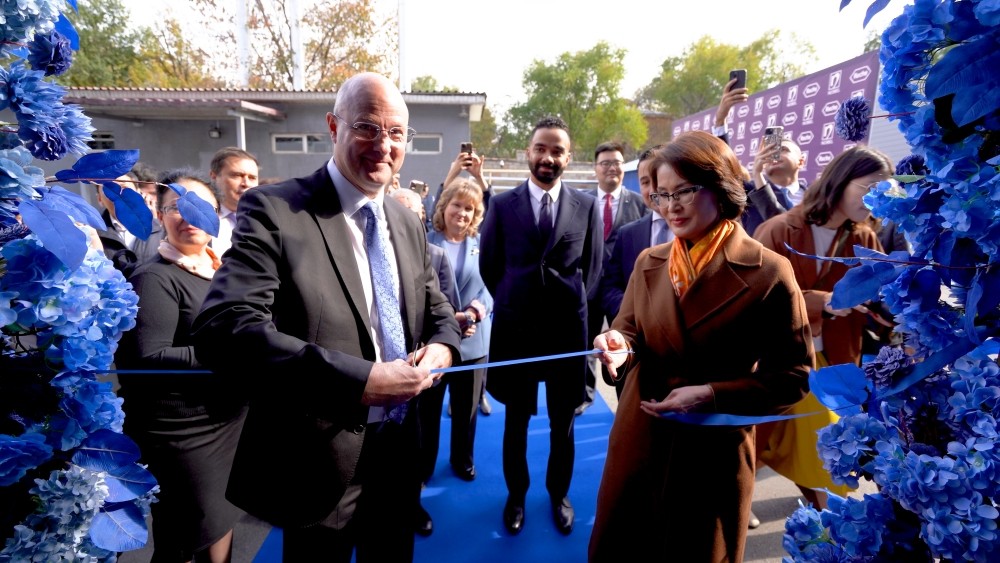
On October 24, the Swiss pharmaceutical giant F. Hoffmann-La Roche Ltd., in partnership with Nobel Almaty Pharmaceutical Factory JSC, launched the production of innovative drugs in Almaty. The project followed an agreement between Roche, Kazakhstan’s SK-Pharmacy LLP, Nobel, and the Kazakh Research Institute of Oncology and Radiology, with the support of National Company Kazakh Invest. Under the agreement, Roche committed to establishing local production of three biotechnological drugs for the treatment of HER2-positive breast cancer, an aggressive form of the disease that affects up to 20% of breast cancer patients in Kazakhstan. At the opening ceremony, Kazakhstan's Minister of Health, Akmaral Alnazarova, said: "The localization [of production] of oncological drugs by a global leader like Roche is a huge step forward for our country. This project will provide patients access to advanced treatments and significantly contribute to developing Kazakhstan's healthcare infrastructure.” The transfer of Roche's advanced technologies and production capabilities to local partners will reduce healthcare system costs in Kazakhstan and significantly expand patient access to essential medicines. Around 5,000 new cases of breast cancer are registered in the country annually, with approximately 1,200 resulting in death. This project is expected to increase the number of patients receiving therapy to 1,335 by 2026. The project is part of Kazakhstan’s plan to increase the share of domestically produced medicines and medical devices to 50%.

Warren Buffett’s Companies Expand Investment in Uzbekistan

Uz500, a wealth advisory and private sector development organization focused on Uzbekistan, Eurasia, and the wider Global South, is to analyse direct foreign investments in Uzbekistan, starting with billionaire Warren Buffett. Since 1965, Buffett has transformed Berkshire Hathaway into a trillion-dollar company, primarily investing in American businesses. Currently, Berkshire owns stakes in eight non-US companies, including five major Japanese firms and China's BYD. Notably, half of these companies have expanded their presence in Uzbekistan, launching major energy, infrastructure, and manufacturing projects. Last month, the Sumitomo Corporation announced its agreement to acquire a 49% stake in several renewable energy assets in Uzbekistan from ACWA Power, a company listed in Saudi Arabia. Through this ACWA-Sumitomo partnership, they aim to develop 2.5 GW of renewable energy (solar and wind) and 968 MW of battery storage capacity in Uzbekistan, with a total investment of $4.2 billion. In August 2024, an international consortium of TAQA Water Solutions, Marubeni, and SUEZ signed a $1 billion joint development agreement with the Government of Uzbekistan to build the CIS region’s largest wastewater treatment facility in Tashkent. Meanwhile, Mitsubishi’s advanced power equipment is responsible for 90% of Uzbekistan’s large-scale gas-fired generation, including Navoi 1, 2, and 3 and the $2.5 billion Sirdarya 1 and 2 combined-cycle gas turbine (CCGT) power projects. The first EVs were produced at the BYD Uzbekistan JV plant in June 2024. While the world’s largest EV maker announced or started building its plants in Thailand, Brazil, Turkey, and Hungary, BYD Uzbekistan became BYD’s first operational overseas plant. Uz500 predicts that Japanese companies Itochu and Mitsui, part of Berkshire Hathaway’s portfolio, will follow their peers and invest in Uzbekistan, the region's fastest-growing economy. Their investments could include acquiring renewable energy or infrastructure assets from ACWA Power or Masdar or forming joint ventures to develop uranium and mineral resources. Mitsubishi, Sumitomo, and Marubeni are also expected to increase their investments through more projects and acquisitions. As a result, Berkshire’s indirect investment in Uzbekistan (already worth several hundred million dollars) is likely to grow significantly in the coming years.