• KZT/USD = 0.00210
  • TJS/USD = 0.10810
  • UZS/USD = 0.00008
  • TMT/USD = 0.29850
  • KZT/USD = 0.00210
  • TJS/USD = 0.10810
  • UZS/USD = 0.00008
  • TMT/USD = 0.29850
  • KZT/USD = 0.00210
  • TJS/USD = 0.10810
  • UZS/USD = 0.00008
  • TMT/USD = 0.29850
  • KZT/USD = 0.00210
  • TJS/USD = 0.10810
  • UZS/USD = 0.00008
  • TMT/USD = 0.29850
  • KZT/USD = 0.00210
  • TJS/USD = 0.10810
  • UZS/USD = 0.00008
  • TMT/USD = 0.29850
  • KZT/USD = 0.00210
  • TJS/USD = 0.10810
  • UZS/USD = 0.00008
  • TMT/USD = 0.29850
  • KZT/USD = 0.00210
  • TJS/USD = 0.10810
  • UZS/USD = 0.00008
  • TMT/USD = 0.29850
  • KZT/USD = 0.00210
  • TJS/USD = 0.10810
  • UZS/USD = 0.00008
  • TMT/USD = 0.29850

Viewing results 1 - 6 of 3

Digital Tenge Receives Official Legal Status in Kazakhstan

Beginning July 18, the digital tenge will officially become a recognized digital form of Kazakhstan’s national currency. Amendments to the country’s legislation grant the National Bank of Kazakhstan the exclusive authority to issue and circulate the digital currency, establishing a comprehensive legal framework for its wider use across the financial system. Unlike many central bank digital currency (CBDC) projects around the world, which remain at the pilot or experimental stage, Kazakhstan has already moved beyond testing into practical implementation. Rather than replacing cash or bank cards, the digital tenge has been designed primarily to improve transparency in public spending, government procurement, and the monitoring of budget expenditures. By the beginning of 2026, approximately 336.6 billion tenge, or about $640 million, worth of digital tenge had been issued, and the technology had been deployed in more than 100 pilot projects. These include public procurement, the management of National Fund resources, tax administration, government subsidies, and infrastructure financing. Programmable payment technology enables authorities to track the movement of public funds almost in real time while restricting spending according to predefined conditions. The practical use of the digital tenge continues to expand. According to the National Payment Corporation of Kazakhstan, the platform was used throughout 2025 in projects involving infrastructure financing, public procurement, business support programs, and other government initiatives. The experience gained from these projects has laid the foundation for the next stage of the digital tenge’s development. Kazakhstan remains the regional leader in the development of a central bank digital currency. Elsewhere in Central Asia, governments have concentrated on digital payments and the regulation of digital assets. As previously reported by The Times of Central Asia, Kyrgyzstan is promoting the gold-backed USDKG stablecoin for cross-border transactions, while other countries in the region have yet to move toward the practical implementation of national CBDCs. The International Monetary Fund believes the next phase of the project will depend less on further technological development than on strengthening regulation, enhancing cybersecurity, and integrating the digital tenge into Kazakhstan’s existing financial architecture. According to the IMF, these factors will determine whether the project can be successfully scaled nationwide.

IMF Growth Forecast for Uzbekistan Warns of Inflation and Global Risks

Uzbekistan’s economy performed strongly in 2025, with the International Monetary Fund (IMF) reporting growth across sectors. Inflation fell and the fiscal deficit narrowed. The Fund urged policymakers to keep monetary policy tight and continue reforms as geopolitical tensions and global uncertainty add risks. Uzbekistan’s real GDP expanded by 7.7% in 2025, driven by strong domestic consumption and investment. The unemployment rate fell by 0.7 percentage points from the previous year to 4.8%. Growth was supported by rapid expansion in services and construction. Consumer price inflation declined from 9.8% at the end of 2024 to 7.3% at the end of 2025. The IMF attributed the improvement to the fading impact of energy price increases introduced in 2024 and the appreciation of the Uzbek som against the U.S. dollar. Tight monetary policy by the Central Bank also helped bring down inflation. Core inflation declined during the year. External balances improved as the current account deficit narrowed to 3.9% of GDP. Strong exports and remittance inflows supported the decline. High commodity prices also helped. International reserves remained at comfortable levels, equivalent to around 13 months of imports. The fiscal deficit fell to 2.1% of GDP, below the government’s target of 3%. The IMF expects economic growth to remain resilient in 2026, forecasting GDP growth of 6.8%. Continued reforms and investment are expected to support activity. Remittances and elevated gold prices should also help sustain growth. The Fund projects growth will moderate to around 6% in 2027 as domestic demand gradually slows. Despite the positive outlook, risks have increased because of the conflict in the Middle East and its potential impact on the global economy. Uzbekistan has limited direct trade and remittance links with countries affected by the conflict. However, higher oil prices and trade disruptions could affect the country indirectly through key trading partners. Weaker global growth could add further pressure. The IMF warned that inflation is likely to remain above the Central Bank’s 5% target in 2026. Higher global oil prices, combined with strong domestic demand, could slow disinflation. The Fund recommended that the Central Bank keep its policy rate at a restrictive level and tighten monetary policy further if inflationary pressures persist. The Fund advised the government to avoid spending increases beyond those already planned in the budget. Any support measures linked to the Middle East conflict should be temporary and targeted toward vulnerable groups, rather than broad subsidies or price controls. The IMF called for faster privatization of state-owned commercial banks and enterprises. It also recommended stronger corporate governance and continued work to improve fiscal transparency and debt management. The Fund highlighted labor market challenges, including low female labor force participation and skills mismatches. High levels of informal employment remain another concern. Further progress in governance reform and competition policy could help attract additional private investment. The IMF said Uzbekistan’s commitments linked to accession to the World Trade Organization could also support long-term economic growth. The country enters 2026 from a position of economic strength, but maintaining stability and continuing...

Kyrgyz Prime Minister Kasymaliev in Washington for IMF, World Bank Meetings

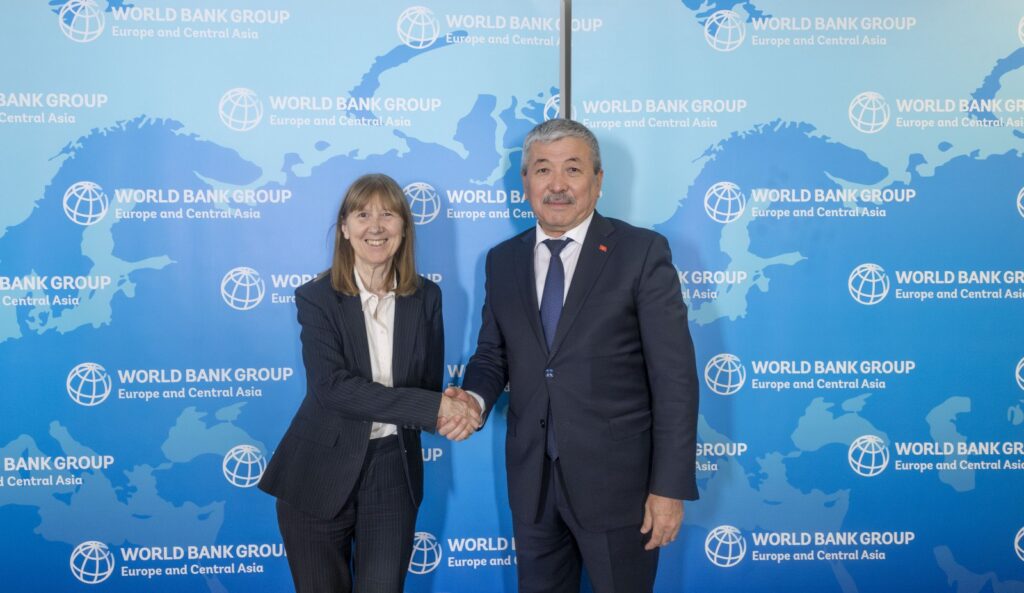
Kyrgyz Prime Minister Adylbek Kasymaliev has arrived in Washington, D.C. to participate in the Spring Meetings of the International Monetary Fund (IMF) and World Bank Group. During his visit, Kasymaliev is expected to meet with senior World Bank officials to discuss ongoing and future investment projects in Kyrgyzstan. Following the IMF and World Bank sessions, Kasymaliev is scheduled to hold high-level talks with Anna Bjerde, the World Bank’s Managing Director for Operations, and Antonella Bassani, Vice President for Europe and Central Asia. A key item on the agenda will be the planned construction of the Kambarata-1 Hydropower Plant (HPP) on the Naryn River. The Kyrgyz government hopes to secure an interest-free loan of $500 million from the World Bank to support the project, which is estimated to cost $3.6 billion in total. Kambarata-1 is seen as a strategic initiative that could make Kyrgyzstan fully self-sufficient in electricity generation. To date, approximately 4 billion Kyrgyz soms (about $46 million) have been allocated from the state budget for preliminary construction works. These funds are being used to build vital infrastructure including roads, a transportation tunnel, a bridge over the Naryn River, power lines, and temporary housing for workers. In addition to his meetings with international financial institutions, Kasymaliev will also engage with executives from leading U.S. corporations. These discussions will not only cover the hydropower sector but will also highlight other government-led investment opportunities in Kyrgyzstan across various industries. The Kyrgyz leadership has intensified efforts to attract foreign partners for its infrastructure and energy projects, as part of a broader strategy to enhance economic independence and modernize the national energy grid.