• KGS/USD = 0.01144 0%
  • KZT/USD = 0.00216 0%
  • TJS/USD = 0.10698 0%
  • UZS/USD = 0.00008 0%
  • TMT/USD = 0.28530 0%
  • KGS/USD = 0.01144 0%
  • KZT/USD = 0.00216 0%
  • TJS/USD = 0.10698 0%
  • UZS/USD = 0.00008 0%
  • TMT/USD = 0.28530 0%
  • KGS/USD = 0.01144 0%
  • KZT/USD = 0.00216 0%
  • TJS/USD = 0.10698 0%
  • UZS/USD = 0.00008 0%
  • TMT/USD = 0.28530 0%
  • KGS/USD = 0.01144 0%
  • KZT/USD = 0.00216 0%
  • TJS/USD = 0.10698 0%
  • UZS/USD = 0.00008 0%
  • TMT/USD = 0.28530 0%
  • KGS/USD = 0.01144 0%
  • KZT/USD = 0.00216 0%
  • TJS/USD = 0.10698 0%
  • UZS/USD = 0.00008 0%
  • TMT/USD = 0.28530 0%
  • KGS/USD = 0.01144 0%
  • KZT/USD = 0.00216 0%
  • TJS/USD = 0.10698 0%
  • UZS/USD = 0.00008 0%
  • TMT/USD = 0.28530 0%
  • KGS/USD = 0.01144 0%
  • KZT/USD = 0.00216 0%
  • TJS/USD = 0.10698 0%
  • UZS/USD = 0.00008 0%
  • TMT/USD = 0.28530 0%
  • KGS/USD = 0.01144 0%
  • KZT/USD = 0.00216 0%
  • TJS/USD = 0.10698 0%
  • UZS/USD = 0.00008 0%
  • TMT/USD = 0.28530 0%

Viewing results 1 - 6 of 9

Kazakhstan Central Bank Chief Eyes Deeper U.S. Investment Links

Addressing senior executives from more than a dozen Fortune 100 companies active in Kazakhstan at a U.S. Chamber of Commerce-hosted event in Washington, D.C., on April 14, Timur Suleimenov, Governor of the National Bank of Kazakhstan, laid out the country’s economic outlook and later spoke with The Times of Central Asia on a range of related issues. He was accompanied by Erzhan Kazykhan, President Kassym-Jomart Tokayev’s Special Representative for Negotiations with the United States, Deputy Foreign Minister Alibek Kuantyrov, and Kazakhstan’s Ambassador to the United States, Magzhan Ilyassov. [caption id="attachment_47306" align="aligncenter" width="1536"] Timur Suleimenov, Governor of the National Bank of Kazakhstan, with Javier Piedra[/caption] Kazakhstan’s U.S. Financial Stakes Amid Growth and Inflation Suleimenov offered a compelling case for Kazakhstan’s economy, citing steady growth, higher investment flows, and a deepening consumer market. Kazakhstan’s economy expanded 6.5% in 2025, marking a third straight year of growth above 5%. GDP per capita surpassed $15,000 – compared to approximately $3,162 in Uzbekistan and about $2,420 in Kyrgyzstan. Fixed-income investments rose 15% year-on-year, and foreign direct investment climbed to 20.5% (from 14.5%), broadening beyond oil. Suleimenov emphasized the Central Bank’s strong stewardship, citing a new tax and budget code to enhance fiscal discipline and monetary policy that supports investment, stressing that, “We will deal with inflation pressures and external shocks simultaneously while managing cryptocurrencies and private digital payments systems, which can weaken central bank control over money and policy transmission. The markets suggest that we have been doing an excellent job in a complex environment.” The government, Suleimenov said, is on track to consolidate the budget, with the deficit projected at 2.5% this year, 1.7% next year, and 0.9% by 2028, adding that this will strengthen fiscal-monetary coordination, and noting Kazakhstan’s debt-to-GDP ratio of 24% remains low compared with countries such as the United States (125%), Japan (230%), Italy (137%). As inflation declined to 11% in March 2026 from 11.7% the previous month, Suleimenov reassured TCA that officials regard it as transitory, saying that “inflation was driven by resilient domestic demand backed by fiscal and quasi-fiscal stimulation, external price pressures (Russian inflation, global food prices), increasing regulated prices (utilities and fuel), and tax reform (a VAT increase from 12% to 16%), with volatile and elevated inflation expectations. For these reasons, we responded with rate hikes and liquidity tightening, bringing inflation down to about 11%, with a further easing expected to single digits by the end of this year.” Suleimenov reaffirmed that “the United States is integral to Kazakhstan’s financial system and long-term asset strategy.” He noted that Kazakhstan manages approximately $190 billion in long-term assets, including some $75 billion in National Bank reserves, $60 billion in the National Fund, and $55 billion in the unified pension fund. Around one-third of these assets are invested in U.S. securities, while roughly $50 billion is managed by American firms, underscoring deep financial ties beyond industrial investment. TCA asked how U.S. sanctions and export controls affect Kazakhstan, a concern that was especially acute in the initial stages of the Russo-Ukrainian...

Digital Tenge: Kazakhstan Becomes a Testing Ground for Programmable Money

While developed economies from the Federal Reserve to the European Central Bank, continue to debate the risks of introducing central bank digital currencies (CBDCs), Kazakhstan has already moved into large-scale commercial deployment. By early 2026, the volume of the digital tenge in circulation had reached 336.6 billion KZT (about $700 million), positioning Central Asia as a significant testing ground for programmable money for international investors and the global fintech community. The digital tenge is already being used in tax administration, subsidy distribution, and other state-backed financial operations, extending its role beyond a purely technical innovation. This is not merely a technological upgrade of the financial system, but a fundamental shift in the interaction between the state, business, and capital. Algorithms Instead of Bureaucrats For international businesses and investors, bureaucracy has long been a major barrier in emerging markets, often freezing liquidity for extended periods. The introduction of the digital tenge aims to address this by enabling faster transactions through smart contracts. One of the most notable pilot cases in 2025-2026 was the implementation of a “digital VAT” mechanism. Traditionally, exporters waited up to 90 days for value-added tax refunds, often relying on short-term borrowing to bridge cash flow gaps. With the integration of the digital tenge into tax administration, the VAT refund period has been reduced to five business days. A smart contract analyzes the digital supply chain and, if no discrepancies are identified, initiates payment automatically without the involvement of tax officials. For multinational companies, improved liquidity enhances Kazakhstan’s attractiveness as a manufacturing destination. Similar mechanisms have also been introduced for distributing government business subsidies through development institutions. Financial Bridge: The Digital Silk Road Bypassing SWIFT The current international money transfer system remains relatively slow and costly, as transactions pass through multiple intermediary banks, each charging fees. Under sanctions pressure, such transfers may also carry additional risks. In this context, the role of the digital tenge extends beyond the domestic market. Kazakhstan is positioning its CBDC as a tool that could reshape the architecture of Eurasian trade. Research by the Bank for International Settlements suggests that digital currencies can significantly accelerate cross-border payments. Given Kazakhstan’s substantial trade with China, which is advancing its digital yuan (e-CNY), the creation of direct digital payment corridors between the two countries appears increasingly plausible. For global markets, this could enable near-instant, round-the-clock settlements between Asia and Europe, reducing reliance on traditional systems such as SWIFT. Kazakhstan is thus seeking to position itself as an emerging digital financial hub, with the potential to lower transaction costs and mitigate certain external risks. The Flip Side of the Digital Coin One of the most debated aspects of Kazakhstan’s digital currency initiative is the level of transparency enabled by “coloring” (or marking) technology. This system allows authorities to track how funds are used and ensure they are spent for their intended purpose. If budget funds are allocated for infrastructure or agricultural equipment, their use can be limited accordingly. At the macroeconomic level, this could help reduce Kazakhstan’s...

Tokayev Criticizes Banks Over Slow Adoption of Kazakhstan’s Digital Financial Infrastructure

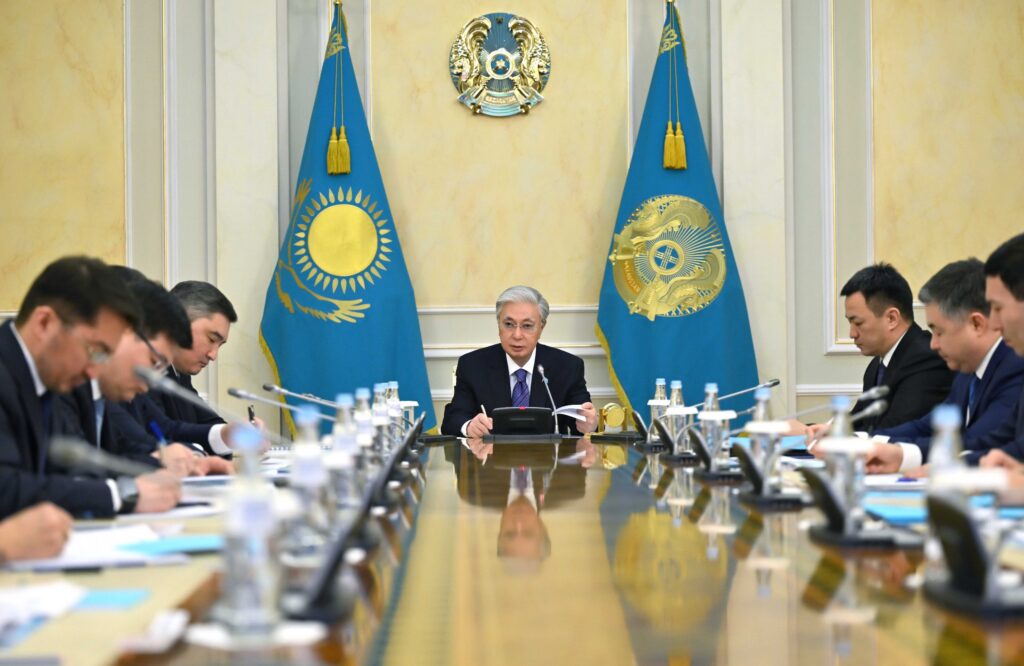
Kazakhstan’s President Kassym-Jomart Tokayev has criticized the country’s banks for their slow adoption of state-developed digital financial infrastructure. He made the remarks during a meeting on the implementation of the Digital Qazaqstan project. During the meeting, the heads of ministries and government agencies presented reports on the rollout of digital solutions in public administration and the economy. In his comments, the president stressed the need for more active deployment of artificial intelligence in industry, as well as progress in developing digital payment infrastructure. According to Tokayev, the National Bank has already created a digital financial ecosystem that includes interbank QR payments and transfers, as well as settlements using the digital tenge. “This significantly reduces costs by shortening the chain of payment intermediaries. The requirement for all banks to connect to this infrastructure is enshrined in law, but the largest banks are delaying compliance,” the president said. Since September 2025, a unified QR code system for interbank payments has been operating in Kazakhstan. The service allows users to pay for goods and services through mobile banking applications. Customers simply scan a QR code at a merchant’s terminal and confirm the transaction. Initially, the service was available to clients of three banks. At present, 15 banks have signed participation agreements, although only six have completed technical integration with the system. The remaining institutions are required to connect by July 18, 2026. Speaking in November 2025, National Bank Chairman Timur Suleimenov said the rollout had been slowed by both technical and market issues, adding that large financial ecosystems were reluctant to share payment traffic. He also described the digital tenge as a tool for transparency and control in public spending rather than a competitor to commercial banks’ own payment products. Tokayev also emphasized that the widespread adoption of artificial intelligence technologies in the real economy is a strategic priority. He linked this goal to the country’s technological sovereignty and called for accelerating the digitalization of the state apparatus. According to the president, more than 90% of public services in Kazakhstan have already been moved online, yet many government information systems remain insufficiently integrated. “Speed and quality must be the priority at every stage. It is data that needs to flow, not people,” Tokayev said. He added that digital transformation is incompatible with outdated bureaucratic practices. “Digitalization and bureaucracy are as incompatible as ice and fire. We cannot force modern technologies to fit into old administrative models,” the president stated. Tokayev also expressed concern about the pace of Kazakhstan’s digital transformation. “I read news about the development of artificial intelligence; it is advancing so rapidly that I am becoming anxious about Kazakhstan’s digital future. It seems to me that the digitalization process is slowing down,” he noted. The Times of Central Asia previously reported that the adoption of artificial intelligence technologies in the financial sector across Central Asia remains uneven, although Kazakhstan is currently regarded as the regional leader.