• KGS/USD = 0.01144 0%
  • KZT/USD = 0.00201 0%
  • TJS/USD = 0.10433 0%
  • UZS/USD = 0.00008 0%
  • TMT/USD = 0.28571 0%
  • KGS/USD = 0.01144 0%
  • KZT/USD = 0.00201 0%
  • TJS/USD = 0.10433 0%
  • UZS/USD = 0.00008 0%
  • TMT/USD = 0.28571 0%
  • KGS/USD = 0.01144 0%
  • KZT/USD = 0.00201 0%
  • TJS/USD = 0.10433 0%
  • UZS/USD = 0.00008 0%
  • TMT/USD = 0.28571 0%
  • KGS/USD = 0.01144 0%
  • KZT/USD = 0.00201 0%
  • TJS/USD = 0.10433 0%
  • UZS/USD = 0.00008 0%
  • TMT/USD = 0.28571 0%
  • KGS/USD = 0.01144 0%
  • KZT/USD = 0.00201 0%
  • TJS/USD = 0.10433 0%
  • UZS/USD = 0.00008 0%
  • TMT/USD = 0.28571 0%
  • KGS/USD = 0.01144 0%
  • KZT/USD = 0.00201 0%
  • TJS/USD = 0.10433 0%
  • UZS/USD = 0.00008 0%
  • TMT/USD = 0.28571 0%
  • KGS/USD = 0.01144 0%
  • KZT/USD = 0.00201 0%
  • TJS/USD = 0.10433 0%
  • UZS/USD = 0.00008 0%
  • TMT/USD = 0.28571 0%
  • KGS/USD = 0.01144 0%
  • KZT/USD = 0.00201 0%
  • TJS/USD = 0.10433 0%
  • UZS/USD = 0.00008 0%
  • TMT/USD = 0.28571 0%

Viewing results 1 - 6 of 95

Kazakhstan to Launch AI-Powered Imam App

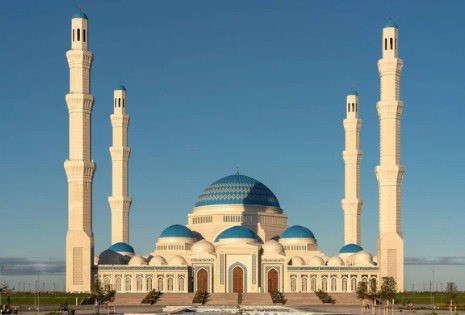
Kazakhstan’s Spiritual Administration of Muslims (DUMK) is set to integrate artificial intelligence into religious practice with the launch of Imam AI, a mobile application designed to provide believers with instant, Sharia-compliant answers to religious questions. The initiative aims to ease the burden on clergy and offer verified religious guidance in a digital format. According to DUMK, the adoption of AI reflects growing public demand for fast and reliable religious information. “In line with modern requirements, we need to systematically introduce the capabilities of artificial intelligence into the religious sphere,” the organization stated in a post on the muftyatkz Instagram page. The Imam AI app will be built on AI technology and will draw from authenticated sources of Islamic knowledge. Supreme Mufti Nauryzbay Kazhy Taganuly stated that the platform would comply fully with Sharia law while providing accessible, on-demand religious consultations. This development is part of a broader effort to digitally transform religious institutions in Kazakhstan. The country has already begun incorporating AI into public administration, notably with the introduction of SKAI, a neural network based on a national language model used in state and quasi-state management. As a further step, DUMK plans to draft a Digital Development Concept for 2026-2028, which will set priorities for the digitalization of religious activities. The Supreme Mufti stressed that failing to adapt to technological change means falling behind the needs of contemporary society. “We are living in an era of technology and digital opportunity. Our responsibility is the systematic and widespread use of digital solutions and artificial intelligence in religious practice, in full accordance with Sharia law,” Taganuly noted. Another key initiative involves the creation of an Islamic finance sector under DUMK. The Mufti stated that growing religious awareness and a desire for ethical earnings have fueled demand for financial products that align with Islamic principles. The new sector will offer Sharia reviews of financial instruments and issue fatwas related to leasing, insurance, investments, bonds, digital assets, and electronic payment systems. Together, the launch of Imam AI and the institutionalization of Islamic finance mark a broader convergence of religion, technology, and economics in Kazakhstan. A recent joint report by the Eurasian Development Bank, the Islamic Development Bank Institute, and the London Stock Exchange forecasts steady growth in Islamic finance across Central Asia. For Kazakhstan, the digitalization of the religious sphere is becoming a key component of its broader modernization agenda, positioning AI not as a novelty but as a practical tool for improving access and meeting evolving societal expectations.

Kyrgyz Government Opens Islamic Academy to Strengthen Religious Education

On September 15, Kyrgyzstan inaugurated a state-funded Islamic Academy in the town of Tokmok, approximately 60 kilometers east of Bishkek. Established by presidential decree, the institution is designed to accommodate 400 students and aims to offer structured training in Islamic theology, as well as courses in Islamic finance and banking. Speaking at the opening ceremony, President Sadyr Japarov emphasized that global threats of extremism and radicalism, including in Central Asia, underscore the need for “objective, scientifically grounded religious education aligned with traditional Islamic values”.  He stated that the academy would serve as a regional hub for training imams and promoting spiritual development. Japarov also urged Kyrgyz youth to pursue religious education domestically, arguing that the academy removes the necessity of studying abroad. The launch comes amid increasingly stringent state regulation of religious activity. In January 2025, Japarov signed amendments to the Law “On Freedom of Religion and Religious Associations,” introducing restrictions on face coverings in public offices, coercion in religious conversion, ceremonies in closed institutions, and political or foreign-funded religious activities. As of 2024, Kyrgyzstan had 3,593 mosques and 220 registered religious schools, most of them located in the southern Osh region.

Balancing Secularism and Belief: Central Asia Grapples with Rising Islamization

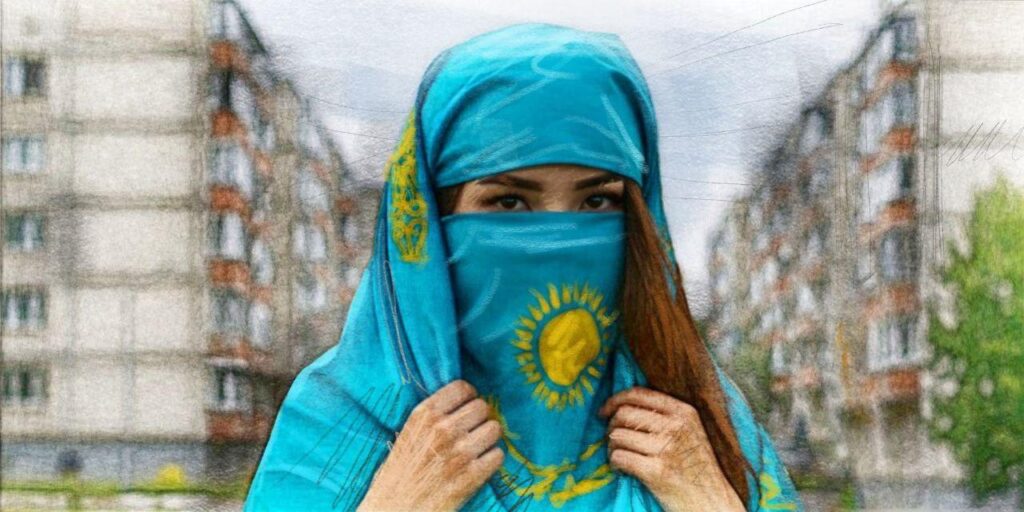
Although the Central Asian republics officially uphold secular governance, they may be experiencing a subtle, creeping Islamization beneath the surface. While state-controlled media across the region maintain that religious movements are well-managed, occasional incidents suggest a growing divergence between official narratives and societal realities. One such incident recently drew attention in Kazakhstan, where a photo circulated online showing girls in burkas holding a Kazakh flag inscribed with Arabic script. The image prompted Mazhilis Deputy Yermurat Bapi to call on the government to intensify efforts against radical religious movements. “Our attention was drawn to the fact that the inscriptions on the flag in Arabic script were produced with a special printing tool. This is not just hooliganism or inappropriate behavior. It is a direct challenge to our society, our statehood, and our national traditions,” Bapi said. Citing "national interests, traditions, and culture," Bapi has previously campaigned for a ban on religious clothing, specifically hijabs and niqabs, in public places. On social media, proponents of a Central Asian caliphate have railed against national traditions, denouncing Nauryz, criticizing local costumes and instruments, and rejecting pre-Islamic cultural heritage. Since President Shavkat Mirziyoyev took office in 2016, Uzbekistan has cautiously liberalized its religious policy. However, strict state control persists. Imams must be approved by the Muftiate, unregistered religious groups are banned, and mosque inspections are routine. The state endorses the Hanafi madhhab as the “national form of Islam” and recognizes Naqshbandi Sufism as part of its cultural heritage. Salafi and extremist movements are actively suppressed, and while former “black lists” of suspected extremists are being revised, some religious prisoners are being rehabilitated. Islamic education is expanding through madrasas, Islamic colleges, and the Islamic Academy of Uzbekistan. Tajikistan has pursued an aggressive campaign to secularize public life. The Islamic Renaissance Party, once a legal political force, was banned in 2015 as “extremist.” The state restricts youth access to mosques, prohibits the hijab in schools and public offices, and has shuttered over 1,500 mosques since 2011. As previously reported by TCA, a 2024 law bans “foreign clothing” - widely interpreted as targeting Arabic attire, including the hijab - to promote national dress. Islam is framed as a cultural element within state ideology, with the Committee on Religious Affairs closely monitoring clerics. Kyrgyzstan is widely viewed as the most religiously open state in the region. Post-Soviet liberalization allowed Islam to grow organically, with little initial oversight. Today, numerous Islamic groups, including Salafis, operate within the country. Rural communities and youth increasingly identify with Islam. Private madrasas and Islamic NGOs are flourishing, and hijab adoption is on the rise. Though the government has begun tightening oversight following incidents of radicalization, Salafi influence continues to grow. By 2023, there were 130 Islamic educational institutions, including 34 madrasas for girls. In Turkmenistan, one of the world’s most closed societies, religious freedom is strictly curtailed. All religious activity is monitored, and Islamic institutions are intertwined with nationalist and presidential cult rhetoric, often referred to as “Turkmen Islam.” Unregulated Islamic movements and foreign...

Afghanistan as Part of Central Asia: Expectations, Reality, Challenges, and Threats

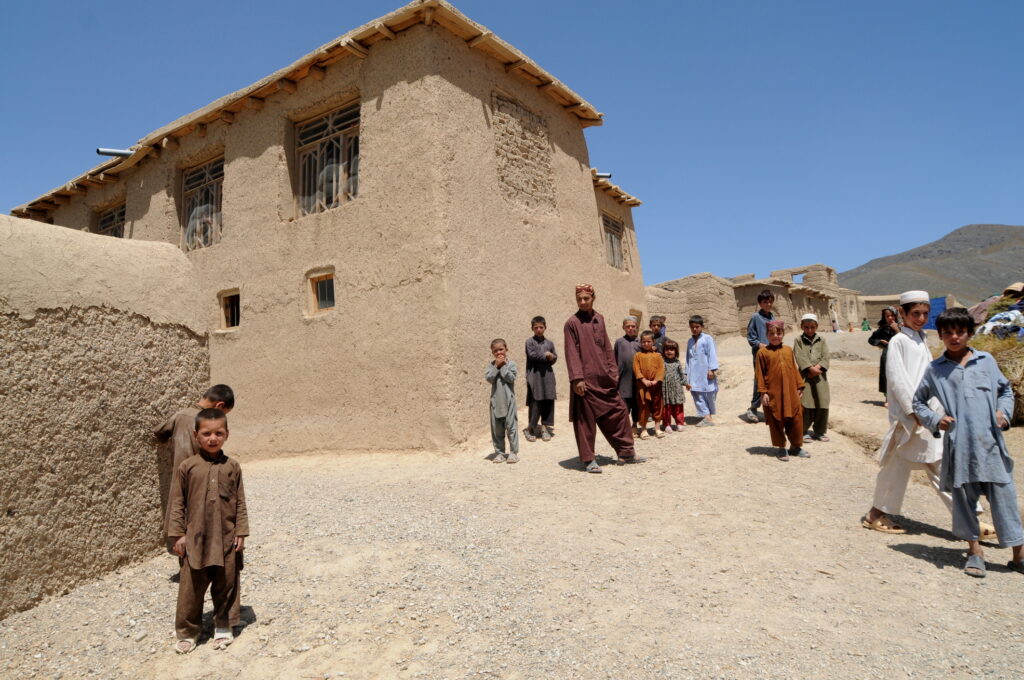
Afghanistan has increasingly been regarded in expert and journalistic circles as part of Central Asia, which is justifiable from a physical-geographical perspective. However, given current regional realities, it is still premature to classify the country as part of Central Asia in terms of being internationally recognized as such. The outcome of the 19th-century rivalry between the British and Russian Empires for influence in Central Asia, known as the "Great Game," not only established the modern southern borders of the region but also set Afghanistan and its northern neighbors on entirely different social and historical paths. The countries differ in value systems, ideologies, public consciousness, and, of course, economic development. At the same time, experts from the Russian Institute for Central Asian Studies note that "In the early 21st century, approaches to analyzing regional realities shifted towards geo-economics. The spatial dimension of Central Asia began to be seen as a zone for pipeline transit." This perspective is hard to argue against — Afghanistan’s current geopolitical interests and challenges are largely tied to the economic interests of countries at the regional level. This includes India, Iran, China, the UAE, Pakistan, Russia, Turkey, and the Central Asian states, for whom Afghanistan's prospects are evident. Chiefly, these prospects concern its transit potential as a territory connecting various parts of Asia. Four out of the six logistics corridors under the Asian Development Bank’s Central Asia Regional Economic Cooperation Program (CAREC) pass through Afghanistan into Uzbekistan, Tajikistan, and Turkmenistan. Other relevant projects include the "China–Pakistan Economic Corridor" under the "One Belt One Road" initiative, the "Trans-Afghan Corridor," and the TAPI Gas Pipeline. However, Afghanistan's current situation, particularly given the stagnant Afghan-Pakistani conflict, casts doubt on the feasibility of these and other major projects involving Afghanistan. As previously stated by TCA, the future of these large-scale projects involving Central Asian countries, as well as regional stability, a fundamental condition for steady economic development, depends directly on whether an understanding is reached between these two nations. Thus, a geo-economic approach to redefining Central Asia’s new boundaries still requires a different reality. Meanwhile, within Central Asia itself, there is little enthusiasm for political rapprochement with Taliban-ruled Afghanistan. The primary focus is on trade/economic and humanitarian cooperation, with no broader agenda, particularly at a regional level. Tajikistan’s position is significant here, as its authorities continue to view the Taliban as a threat and tread cautiously in building relations with them.  What Prevents Central Asian Countries from Accelerating Relations with Afghanistan? The answers lie not only in different developmental trajectories and scenarios. First and foremost, Afghanistan is still associated with "uncertainty" and numerous risks, particularly in terms of security. According to many assessments, the Afghan-Pakistani zone will, in the long term, remain a source of terrorist and religious-extremist threats to Central Asia. These conclusions are based on a retrospective analysis of escalating tensions, current processes in Afghanistan, and the geopolitical confrontation of global powers in the area. For example, the Soviet invasion in 1979 fostered the consolidation of the Afghan mujahideen,...

Kazakhstan to Build Religious Memorial on Site of Stalin-Era Executions

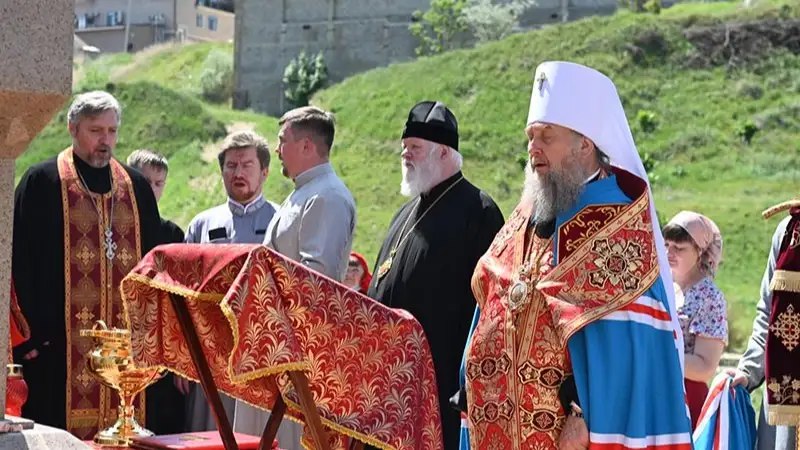
Kazakh President Kassym-Jomart Tokayev has approved the construction of a mosque and an Orthodox chapel at the historic Lisya Balka site in Shymkent, a location associated with mass executions during the years of political repression. Metropolitan Alexander, head of the Orthodox Church of Kazakhstan, announced at a press conference that the initiative was proposed by Patriarch Kirill of Moscow and All Russia. He highlighted that Lisya Balka is the final resting place for victims of repression, including representatives of Kazakhstan’s two major religious communities - Islam and Orthodoxy. “The initiative of His Holiness was considered and approved by President Kassym-Jomart Tokayev,” Metropolitan Alexander stated, adding that the chapel project has already received official approval. Lisya Balka was a site of mass shootings during 1937–1938, one of the darkest periods of Stalinist repression. Victims included individuals from various religious backgrounds, notably around 60 exiled Orthodox priests and ministers of the Russian Orthodox Church. After the Soviet Union’s collapse, the Kasiret (“Sorrow”) memorial complex was established at the site to honor those who perished. The Orthodox Church canonized several of those executed at Lisya Balka, referring to them as “innocent sufferers for Orthodoxy.” However, historians emphasize that the victims included adherents of diverse religions, such as Islam, Catholicism, Judaism, and Buddhism. The construction of the mosque and chapel seeks to preserve the memory of these tragic events while fostering interfaith harmony in Kazakhstan. By commemorating the innocent victims of various faiths, the project aligns with the country’s broader efforts to promote unity among its multi-religious population.

Kyrgyzstan Cracks Down on Major Religious Extremist Organization

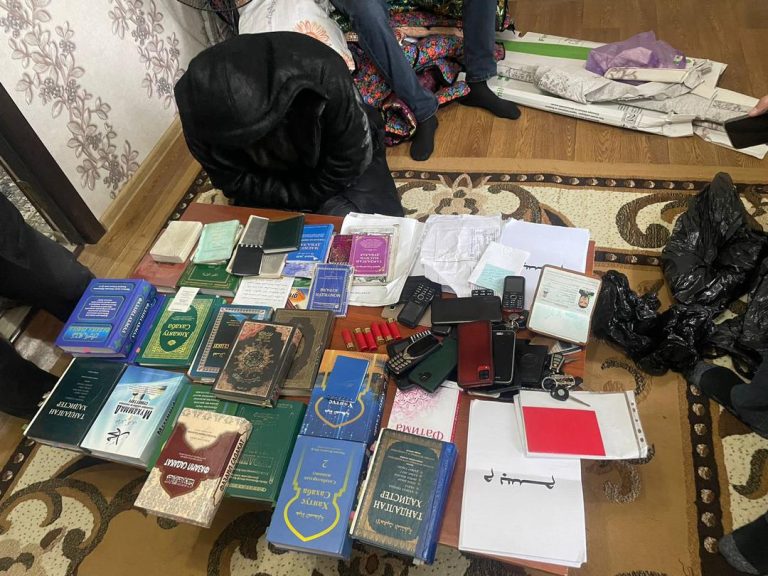
In Jalal-Abad, officers of Kyrgyzstan's State Committee for National Security (SCNS) neutralized one of the largest structural networks of the banned religious extremist organization Hizb ut-Tahrir. According to the SCNS press service, 22 active members of the organization were detained, including the leader (“masul”), five spiritual leaders (“nakibs”), and eight teachers (“mushrifs”) who taught extremist ideology to small groups of 3-5 students in clandestine settings. The SCNS reported that the detainees had been actively spreading destructive ideas, recruiting supporters, and distributing extremist materials for several years. During the operation, authorities discovered an underground printing house where extremist materials were being produced. A large cache of literature, as well as computers and copying equipment, was seized. The SCNS also noted that members of the network used drones to ensure the security of their meetings by detecting possible surveillance by law enforcement agencies. The detainees are currently being held in the SCNS detention center, and investigations are ongoing to identify additional members of the network and their activities. Hizb ut-Tahrir is an international religious extremist organization banned in Kyrgyzstan since 2003. Its goal is to establish a global Islamic caliphate by overthrowing secular governments. The organization is particularly active in Kyrgyzstan's southern regions, where it promotes extremist ideology and recruits new members. Kyrgyz authorities have been proactive in combating Hizb ut-Tahrir, regularly detaining its members and working to suppress its activities.