• KGS/USD = 0.01143 0%
  • KZT/USD = 0.00205 0%
  • TJS/USD = 0.10724 0.09%
  • UZS/USD = 0.00008 0%
  • TMT/USD = 0.28571 0%
  • KGS/USD = 0.01143 0%
  • KZT/USD = 0.00205 0%
  • TJS/USD = 0.10724 0.09%
  • UZS/USD = 0.00008 0%
  • TMT/USD = 0.28571 0%
  • KGS/USD = 0.01143 0%
  • KZT/USD = 0.00205 0%
  • TJS/USD = 0.10724 0.09%
  • UZS/USD = 0.00008 0%
  • TMT/USD = 0.28571 0%
  • KGS/USD = 0.01143 0%
  • KZT/USD = 0.00205 0%
  • TJS/USD = 0.10724 0.09%
  • UZS/USD = 0.00008 0%
  • TMT/USD = 0.28571 0%
  • KGS/USD = 0.01143 0%
  • KZT/USD = 0.00205 0%
  • TJS/USD = 0.10724 0.09%
  • UZS/USD = 0.00008 0%
  • TMT/USD = 0.28571 0%
  • KGS/USD = 0.01143 0%
  • KZT/USD = 0.00205 0%
  • TJS/USD = 0.10724 0.09%
  • UZS/USD = 0.00008 0%
  • TMT/USD = 0.28571 0%
  • KGS/USD = 0.01143 0%
  • KZT/USD = 0.00205 0%
  • TJS/USD = 0.10724 0.09%
  • UZS/USD = 0.00008 0%
  • TMT/USD = 0.28571 0%
  • KGS/USD = 0.01143 0%
  • KZT/USD = 0.00205 0%
  • TJS/USD = 0.10724 0.09%
  • UZS/USD = 0.00008 0%
  • TMT/USD = 0.28571 0%

Viewing results 1 - 6 of 24

Uzbekistan AI adoption Trails Global Average, Microsoft Report Finds

Only 7.2% of people aged 15 to 64 in Uzbekistan used generative artificial intelligence tools during the first quarter of 2026, according to Microsoft’s latest Global AI Diffusion Report. The figure places Uzbekistan below the global average, as the share of generative AI users worldwide rose from 16.3% in the second half of 2025 to 17.8% in the first quarter of 2026. It also highlights a persistent gap in Central Asia between governments’ digital ambitions and current levels of public uptake. Among Central Asian countries, Kazakhstan recorded the region’s highest adoption rate at 15.9%, followed by Kyrgyzstan at 9.5%. Uzbekistan ranked third, ahead of Tajikistan and Turkmenistan, both at 6.1%. However, the report also showed that Uzbekistan is not standing still. Its AI user share rose from 5.7% in the first half of 2025 to 7.2% in the first quarter of 2026, while Kazakhstan, Kyrgyzstan and Uzbekistan were all listed among the fastest-growing economies for AI adoption since June 2025. The report identified the United Arab Emirates as the global leader in generative AI usage, with 70.1% of the working-age population using such technologies. Singapore ranked second at 63.4%, while Norway, Ireland and France also placed among the top five. Microsoft researchers said the global spread of AI technologies remains uneven because of differences in internet access, electricity reliability, digital infrastructure and levels of digital literacy. For Uzbekistan, the findings point to a familiar problem: public adoption is still catching up with the country’s digital ambitions. At the GSMA M360 Eurasia summit in Samarkand in May, Digital Technologies Minister Sherzod Shermatov said Uzbekistan was promoting mass education among young people through the “5 Million AI Leaders” program, while GSMA data projected that more than 40% of mobile connections in Uzbekistan could use 5G by 2030. The comparison with Kazakhstan remains instructive. TCA has previously reported that Kazakhstan is already testing AI-linked systems in state administration, including the KEDEN customs platform, which has cut declaration processing times to under one minute, and Smart Cargo, a planned single digital window for logistics services. Microsoft’s figures suggest that Kazakhstan’s more advanced public uptake is beginning to match its state-backed digital push, while Uzbekistan is still building the skills and infrastructure needed to broaden AI use.

Uzbekistan AI and 5G Push in Focus at GSMA M360 Eurasia

Policymakers, telecom executives, investors and technology leaders gathered in Samarkand on May 20-21 for GSMA M360 Eurasia 2026, a regional summit focused on digital transformation, artificial intelligence, connectivity and the future of telecommunications across Eurasia. The event brought together government representatives and industry figures to discuss how countries in Central Asia and neighboring regions can translate expanding mobile connectivity into long-term economic growth. Questions surrounding 5G deployment, AI infrastructure, education, startup ecosystems and digital skills featured prominently throughout the discussions. In an interview with The Times of Central Asia, Tair Ismailov, Strategic Engagement Director at the GSMA, discussed what governments should realistically expect from 5G, the challenges of building AI ecosystems and why education may ultimately determine whether countries benefit from rapid technological change. His comments come as Uzbekistan expands investment in telecommunications, data infrastructure and AI education while positioning itself as one of Central Asia’s fastest-growing digital economies. Why 5G May Matter More to Industry Than Consumers For many governments, 5G deployment has become a symbol of technological progress. Yet Ismailov said the economic benefits differ significantly depending on how countries adopt the technology. “Each country has its own path,” he said. “There are countries that have been pioneers in 5G, for example the U.S., South Korea and China, because they have ecosystems of equipment that they need to produce and drive.” Other countries, he argued, may benefit from moving later. “Sometimes it’s better for developing countries not to be in the avant-garde, but rather to follow examples and learn from existing cases,” he said. According to Ismailov, one of 5G’s most immediate functions is helping networks manage growing internet demand. Digital consumption patterns have changed dramatically over the last decade, he noted. “Back in the day, we never streamed videos, now we take it for granted,” Ismailov said. “Average internet consumption in the region is around 17GB per month per user. These are big numbers.” As traffic increases, networks require greater efficiency and capacity. “For networks simply to cope with this traffic, they need to be more productive, and 5G brings this productivity,” he explained. However, he suggested that the technology’s most significant economic impact may emerge outside consumer markets. “If you look at China and other markets, the biggest 5G benefits are granted to the B2B sector,” Ismailov said. “Businesses benefit from low latency and higher speeds.” Consumers may not immediately notice improvements, he added, but industries relying on automation, logistics, manufacturing or cloud services could see larger gains. “On the consumer side, you might not notice it,” he said, “but when you don’t have it, you start noticing it.” [caption id="attachment_49335" align="aligncenter" width="2560"] Image: TCA/Sadokat Jalolova[/caption] Building AI Requires More Than Data Generation As artificial intelligence expands globally, governments have begun viewing data as a strategic resource. Asked whether Uzbekistan has enough high-quality and accessible data to build a meaningful AI ecosystem, Ismailov argued that generating information is no longer the primary challenge. “I don’t think the question is generating data,” he said. “The question is...

Global Tech Weekend Brings International Investors and Startups to Uzbekistan

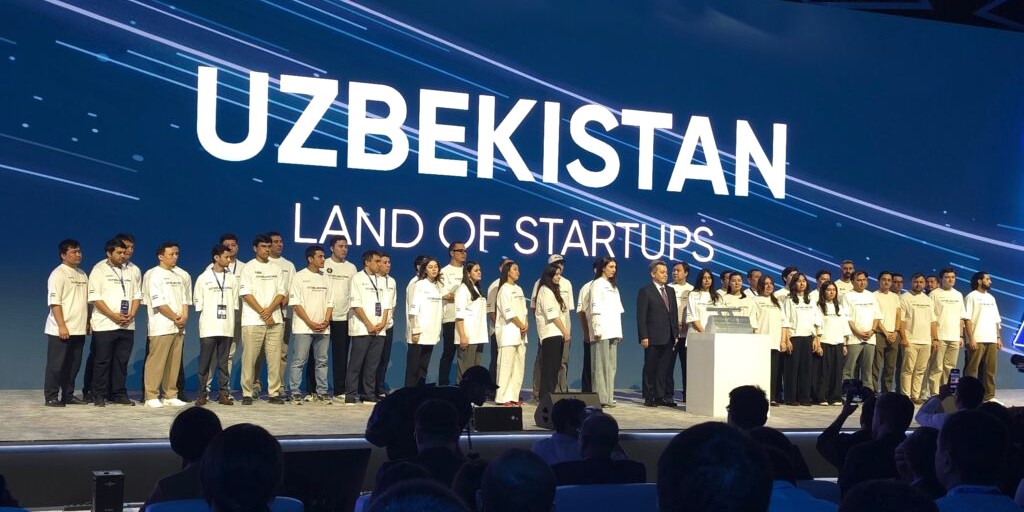
More than 2,500 startup founders, investors, developers, venture capital representatives, and technology experts gathered in Uzbekistan’s capital from May 15-17 for the inaugural Global Tech Weekend × TECH FEST, an event organizers say reflects the region’s growing role in the international innovation economy. Held in partnership with IT Park Uzbekistan, the three-day festival featured more than 40 events and over 120 speakers from Central Asia, Europe, the Middle East, and the United States. Discussions covered artificial intelligence, venture capital, gaming, digital transformation, startup scaling, and cross-border investment. The event marks Global Tech Weekend’s first edition in Uzbekistan. Founded in Los Angeles in 2024, the event debuted in Tbilisi in 2025 before expanding in 2026 to Tashkent, Tbilisi, and Baku as flagship host cities. “You have everything you need to achieve your goals. IT Park and the government provide strong support. I wish every country had this level of support,” said Jaba Kikvidze, co-founder of Global Tech Weekend, during the festival. “My advice to founders in Uzbekistan is to work hard, look beyond the local market, explore new opportunities, and make use of the ecosystem being built around you,” he added. [caption id="attachment_49077" align="aligncenter" width="300"] @IT Park Uzbekistan[/caption] One of the recurring themes of the event was how Central Asian startups can move beyond domestic markets and attract international investment. During a panel titled “Roots: Local Playbooks on Investing and Building within Central Asia,” regional investors discussed how funding strategies and startup expectations are evolving across emerging economies. Representatives from global accelerators and investment networks also highlighted growing international interest in founders from less traditional technology hubs. Speaking to The Times of Central Asia, Farrukh Erkinov, head of the Startup Ecosystem Development Department at IT Park Uzbekistan, said one of the festival’s main objectives was to create direct links between local entrepreneurs and global investors. “One of the most important factors in today’s startup ecosystem is connection to the global community,” Erkinov said. “Through Global Tech Weekend, we aimed to create a direct platform for startups in Uzbekistan to interact with international investors, accelerators, and technology partners.” [caption id="attachment_49078" align="aligncenter" width="300"] @IT Park Uzbekistan[/caption] Artificial intelligence was another major focus of the festival. Speakers including Ethan Pierse, a partner at Borderless Ventures whose work focuses on the AI economy, argued that traditional investment models are becoming less effective as AI reshapes industries and shortens startup development cycles. The event also included startup pitch competitions featuring projects from Uzbekistan and neighboring countries, mentorship sessions with international experts, and esports tournaments centered on PUBG MOBILE and Mobile Legends. Organizers said the festival is intended to connect Central Asia more closely with the Caucasus and other neighboring regions. “We believe we can unite Central Asia and the Caucasus,” Global Tech Weekend co-founder Guri Koiava told The Times of Central Asia. “This means friendship, bridges between countries, joint investments, and new business opportunities. Here I see a strong drive from young people. They believe in what they are building."

Uzbekistan Startups Win Two Honors at Global Startup Awards

Uzbekistan’s startup ecosystem received international recognition this week after two projects from the country won top honors at the Global Startup Awards Grand Finale, held during the EU-Startups Summit in Valletta, Malta. The event brought together startup founders, investors, and technology leaders from more than 54 countries. The Global Startup Awards is considered one of the world’s leading platforms for recognizing innovation ecosystems, selecting finalists through regional and national competitions across multiple continents. According to organizers, Uzbek representatives won in two global categories. Rakhimakhon Nugmanova, founder of the startup Peritech, received the “Ecosystem Hero of the Year” award, while Catextra was named “Best Greentech Startup of the Year.” Speaking to Times of Central Asia, Nugmanova said the recognition carried special meaning because it reflected support from the international startup community itself. “For me, this award is very important because it means people themselves chose me,” she said. “It shows that the work we are doing to develop the ecosystem has been noticed and appreciated by the people it is meant for.” She added that representing both Uzbekistan and Central Asia on the global stage was significant at a time when the region is drawing increasing international attention. “I think people were able to feel my sincerity and my passion for this work,” Nugmanova told The Times of Central Asia. “For many years, I have worked at the intersection of education, technology, and the public sector, and I hope I am making a meaningful contribution to people’s lives, from children to adults.” The success in Malta follows the Global Startup Awards Central Asia regional final held in Tashkent during ICT Week in September 2025 with support from IT Park Uzbekistan. The event helped regional startups connect with investors and international technology networks. Catextra’s victory highlighted growing international interest in sustainable technologies developed in Uzbekistan. The platform focuses on transparency and traceability in the textile industry, helping manufacturers track every stage of their supply chains and verify compliance with international ethical and production standards. A member of the Catextra team, Amal Isamukhamedov, told The Times of Central Asia that the award demonstrated international confidence in an idea developed in Uzbekistan. “For our team, winning at the Global Startup Awards means recognition and trust from European technology structures in our Uzbek idea,” he said. “We realized that our idea can work not only in our region, but also beyond it.” According to Isamukhamedov, the platform is designed to help textile and agricultural exporters from Uzbekistan and Central Asia access higher-value markets in Europe, the United States, and Asia, where buyers increasingly demand proof of product origin and transparent supply chains. “Our platform helps local producers export faster, more cheaply, and more easily,” he said. He also credited growing state support for the startup sector, including initiatives backed by President Shavkat Mirziyoyev and IT Park Uzbekistan, with helping local startups enter international markets. “Five years ago, these ideas and this political will were only beginning to form,” he said. “Now a new generation of...

INMerge Tashkent Showcases Rise of Uzbekistan as Regional Innovation Hub

On April 30, investors, founders and corporate leaders gathered in Uzbekistan’s capital, Tashkent, for the latest incarnation of the INMerge Innovation Summit. The traveling series followed an earlier session in Istanbul and will lead into the main summit scheduled for October 8-9 in Baku. In Tashkent, discussions centered on a question that continues to define Uzbekistan’s digital trajectory: how to turn rapid growth into a sustainable, interconnected ecosystem capable of competing beyond national borders. Two core discussions framed the agenda. The first focused on how companies are building digital ecosystems around everyday user needs. The second addressed a more structural issue: whether capital alone is enough to build what some participants called a “Digital Silk Road,” or whether deeper foundations are required. A Rising Regional Star The series of summits has been organized by PASHA Holding, an Azerbaijani conglomerate owned by the ruling Aliyev and Pashayev families. For Tughra Musayeva, Head of Innovations at PASHA Financial Holding and Managing Partner at INMerge Ventures, Uzbekistan stands out as a "rising star of the region". “It’s rich in human talent and capital, and increased political support for innovation and tech infrastructure is already showing results," she told The Times of Central Asia on the sidelines of the event. "In the coming years, we’re going to see many interesting startups and projects emerging from Uzbekistan.” Musayeva challenged a common assumption about emerging tech markets – that they remain dependent on foreign expertise. In her view, Tashkent already has most of the elements needed to sustain growth internally. “What we see right now is a very self-sufficient platform. There is infrastructure and the right actors are in place. The next step is about scaling, especially across borders,” she said, pointing to her ambition to increase cross-border collaboration between Central Asia and the Caucasus. A similar emphasis on connectivity came from her colleague Ulviyya Mehraliyeva, innovation events manager at PASHA Financial Holding and a member of the INMerge team. For her, the Tashkent gathering was part of a broader effort to link ecosystems that often develop in isolation. “What differentiates us is our focus on connecting ideas, people, ecosystems, and talent with opportunities," she told TCA. “We believe Tashkent has huge potential. There has been significant investment and development in the startup ecosystem.” To her, the city is already emerging as a regional hub, but she cautioned that Uzbekistan still has a lot to learn from outside. “It’s both building your own ecosystem while also learning from others. This is a stage of development. Every region goes through it,” she said. “We believe that collaboration between countries like Azerbaijan and Uzbekistan will only strengthen that.” [caption id="attachment_48170" align="aligncenter" width="2560"] Image: TCA[/caption] The View from the Ground Practitioners working within Uzbekistan’s tech sector were more circumspect. Dalerkhon Nodirov, CEO of IT Park Ventures, offered a more measured view of the country’s technological independence, particularly in the field of artificial intelligence. “We don’t yet have our own AI models,” he said. “At this stage, we still depend...

Karakalpakstan to Become Data Center Hub Under Uzbekistan’s Digital Strategy

Uzbek President Shavkat Mirziyoyev has launched the second phase of the IT Park Uzbekistan innovation complex in Tashkent’s Mirzo-Ulugbek district, signaling a major advance in the country’s digital transformation agenda. Speaking to Uzbekistan 24, Minister of Digital Technologies Sherzod Xotamovich said the next stage of digital development will prioritize AI integration. Mirziyoyev has directed that AI technologies be embedded in the expansion of IT Park to foster a comprehensive national innovation ecosystem. The new phase of IT Park will accommodate AI-focused startups and modern data centers equipped with high-performance graphic processors capable of handling large-scale data processing. A flagship project is a 12-megawatt data center under construction by Saudi firm DataVolt, which is set to become the largest facility of its kind in Central Asia, purpose-built for AI applications. DataVolt intends to expand its investments in Uzbekistan, with the total capacity of future data centers expected to reach 500 megawatts. This would position Uzbekistan as a leading regional hub for data storage and processing. Mirziyoyev also identified Karakalpakstan as a strategic location for energy-intensive digital projects. He proposed transforming the region into a large-scale data center hub, offering major incentives to investors contributing more than $100 million. These include tax breaks and infrastructure support, as well as a preferential electricity tariff of five cents per kWh, significantly lower than the current average rate of about eight cents. Authorities are targeting global tech firms such as Google, Microsoft, Meta, and Amazon to establish data operations in Uzbekistan. The initiative is designed to strengthen the country’s position as a regional digital hub and accelerate the integration of AI across key sectors of the economy.