
Policymakers, telecom executives, investors and technology leaders gathered in Samarkand on May 20-21 for GSMA M360 Eurasia 2026, a regional summit focused on digital transformation, artificial intelligence, connectivity and the future of telecommunications across Eurasia.
The event brought together government representatives and industry figures to discuss how countries in Central Asia and neighboring regions can translate expanding mobile connectivity into long-term economic growth. Questions surrounding 5G deployment, AI infrastructure, education, startup ecosystems and digital skills featured prominently throughout the discussions.
In an interview with The Times of Central Asia, Tair Ismailov, Strategic Engagement Director at the GSMA, discussed what governments should realistically expect from 5G, the challenges of building AI ecosystems and why education may ultimately determine whether countries benefit from rapid technological change.
His comments come as Uzbekistan expands investment in telecommunications, data infrastructure and AI education while positioning itself as one of Central Asia’s fastest-growing digital economies.
Why 5G May Matter More to Industry Than Consumers
For many governments, 5G deployment has become a symbol of technological progress. Yet Ismailov said the economic benefits differ significantly depending on how countries adopt the technology.
“Each country has its own path,” he said. “There are countries that have been pioneers in 5G, for example the U.S., South Korea and China, because they have ecosystems of equipment that they need to produce and drive.”
Other countries, he argued, may benefit from moving later.
“Sometimes it’s better for developing countries not to be in the avant-garde, but rather to follow examples and learn from existing cases,” he said.
According to Ismailov, one of 5G’s most immediate functions is helping networks manage growing internet demand.
Digital consumption patterns have changed dramatically over the last decade, he noted.
“Back in the day, we never streamed videos, now we take it for granted,” Ismailov said. “Average internet consumption in the region is around 17GB per month per user. These are big numbers.”
As traffic increases, networks require greater efficiency and capacity.
“For networks simply to cope with this traffic, they need to be more productive, and 5G brings this productivity,” he explained.
However, he suggested that the technology’s most significant economic impact may emerge outside consumer markets.
“If you look at China and other markets, the biggest 5G benefits are granted to the B2B sector,” Ismailov said. “Businesses benefit from low latency and higher speeds.”
Consumers may not immediately notice improvements, he added, but industries relying on automation, logistics, manufacturing or cloud services could see larger gains.
“On the consumer side, you might not notice it,” he said, “but when you don’t have it, you start noticing it.”
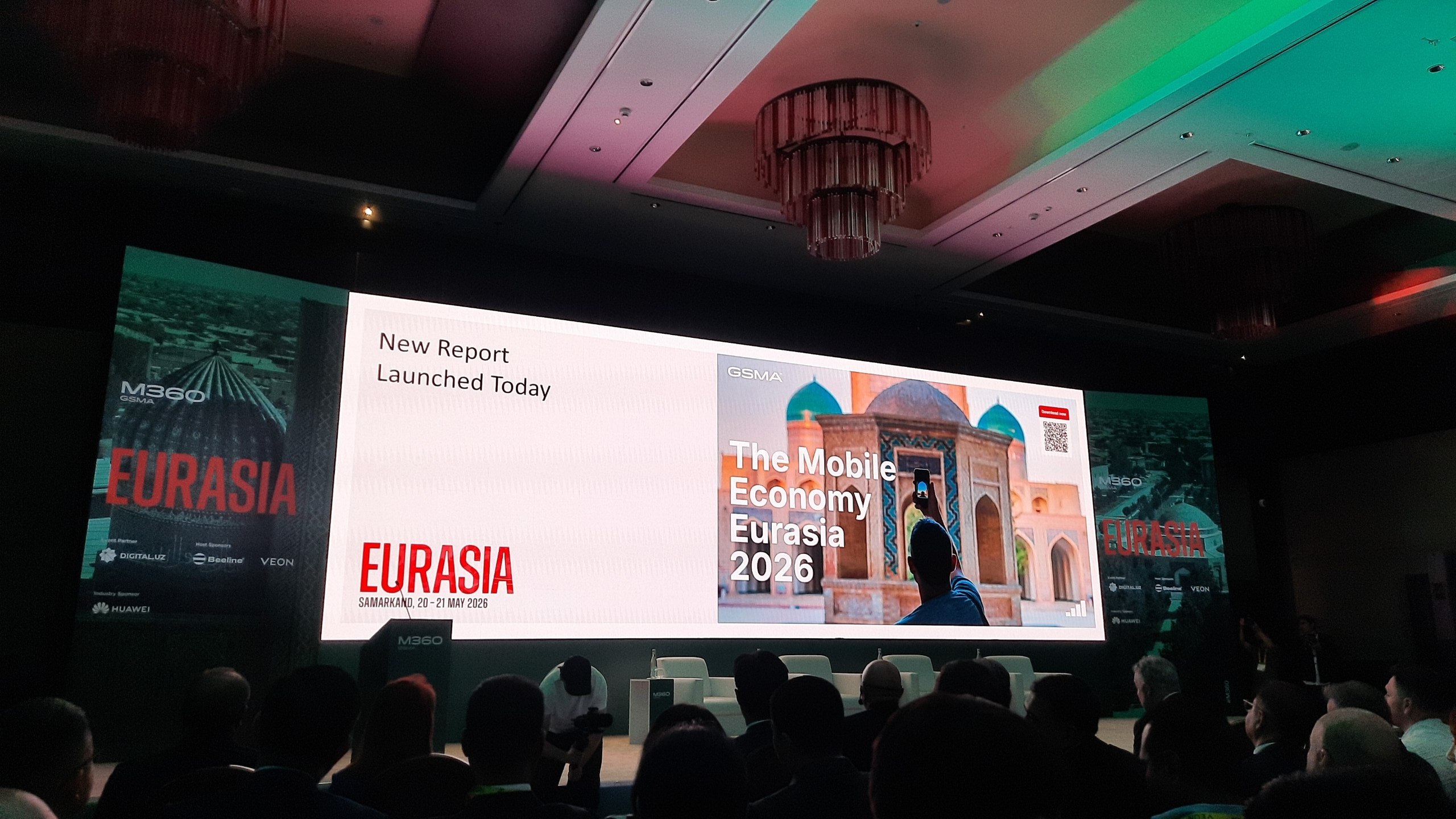
Image: TCA/Sadokat Jalolova
Building AI Requires More Than Data Generation
As artificial intelligence expands globally, governments have begun viewing data as a strategic resource. Asked whether Uzbekistan has enough high-quality and accessible data to build a meaningful AI ecosystem, Ismailov argued that generating information is no longer the primary challenge.
“I don’t think the question is generating data,” he said. “The question is whether you can process this data.”
Instead, he pointed to infrastructure limitations including computing power, storage capacity and access to advanced chips. Ismailov noted that countries are increasingly competing to develop data centers capable of supporting AI systems.
Ismailov referenced projects in Uzbekistan involving data center development and national efforts aimed at strengthening digital infrastructure.
“The first thing is resolving technical issues,” he said. “The second is how you process the data and whether you have language models appropriate for this.”
Language remains a major issue in AI adoption, particularly in countries where local languages have historically been underrepresented in global technology systems. Ismailov pointed to examples including language models being developed in Uzbek and Kazakh.
“It’s not only about creating enough content or models that can process international languages like English or Russian,” he said. “It’s also about having content for local languages.”
Companies investing in local-language AI tools, he suggested, are helping countries develop domestic expertise rather than relying entirely on imported technologies.
At the same time, infrastructure remains a constraint.
“Storage and compute power are limited,” Ismailov said. “Countries need resources to invest in this and proper infrastructure to store data and process it.”
Meanwhile, data creation itself continues expanding rapidly.
“Traffic growth across the region is increasing exponentially; around 30% year over year,” he said. “We generate a lot of traffic. The question is what we do with this data.”
National AI Ecosystems Are Developing Through Both Local and Global Partnerships
Asked whether Uzbekistan is building its own AI ecosystem or relying primarily on foreign platforms, Ismailov rejected the idea that the two approaches are mutually exclusive.
“I think there is no answer of A or B,” he said. “The government is doing both – global partnerships with international players whilst also trying to build its own competence. But of course you need international partners for developing infrastructure.”
Asked whether dependence on foreign technology represents a problem, Ismailov described it as part of a broader development process.
“No,” he said. “I think it’s a stage of development that every country goes through.”

The Uzbekistan AI and 5G push was a key element of Tair Ismailov’s speech. Image: TCA/Sadokat Jalolova
Education May Matter More Than Specialization
Uzbekistan has increasingly prioritized digital education and AI skills.
The country has also introduced measures intended to attract more young people into IT fields and improve digital competencies linked to higher-income professions.
The initiatives include the launch in November 2025 of the “Five Million Artificial Intelligence Leaders” program, described as a continuation of the earlier “One Million Uzbek Programmers” project.
The program plans annual national competitions recognizing top-performing participants. Awards include financial prizes for teachers, international study trips, laptops for hundreds of young participants and incentives for educational institutions.
In an earlier interview with The Times of Central Asia, Sherzod Shermatov, Uzbekistan’s Minister of Digital Technologies, said government initiatives increasingly focus on AI education and language training.
“We are promoting mass education among youth, we are implementing the “Five Million Artificial Intelligence Leaders” program, as well as promoting foreign language education among youth,” Shermatov said.
Ismailov was cautious when asked whether Uzbekistan’s education system is currently producing AI-ready specialists.
“It’s hard for me to evaluate because I haven’t interacted with graduates of these programs,” he said.
Still, he said that strong foundational education may ultimately be more important than narrowly targeting specific technologies.
“It’s important to have really good education in the country starting from school up to university,” he said.
Rapid technological change means specialized skills can quickly lose relevance.
“Some time ago everybody was saying we need to teach people to become software developers,” Ismailov said. “Now we see a lot of junior positions being replaced by AI in coding and software development. If you have a strong foundation, then it’s easier for the country and population to adapt to new challenges and technological cycles.”
Advice to Young Founders: Start Locally Before Expanding Globally
Uzbekistan’s startup ecosystem has expanded rapidly in recent years, drawing increased attention from investors and international organizations.
Asked what advice he would give young entrepreneurs aiming for international markets, Ismailov encouraged them to start with local demand.
“It’s important to start with something,” he said.
Ambitions for global expansion are valuable, he noted, but building products domestically may provide a stronger basis for long-term growth.
“Uzbekistan is attractive because you have a big population and it’s growing,” Ismailov said. “Almost 40 million people; it’s a really big market.”
For startups, he argued, domestic scale can become a testing ground.
“You can start in this market,” he said. “If you are successful at this scale, then it’s easier to go international and scale outside the country.”