More than 450 participants from business and government, representing over 45 countries, gathered in Tashkent on July 24–25 for the Global Business Services Forum 2026. The event centered on Uzbekistan’s effort to become a regional center for global business services and business process outsourcing (BPO), with artificial intelligence (AI) also a major focus. Organizers described it as Central Asia’s largest international forum devoted to global business services and the digital economy.
The forum follows May’s Global Tech Weekend in Tashkent, which brought more than 2,500 technology and investment professionals to the capital.
Opening the forum, Uzbekistan’s Minister of Digital Technologies Sherzod Shermatov said recent reforms had improved conditions for international technology companies considering investment or expansion in the country.
Shermatov said companies could draw on qualified specialists and modern digital infrastructure while reaching a fast-growing regional market. He also invited international firms to invest and develop long-term partnerships.
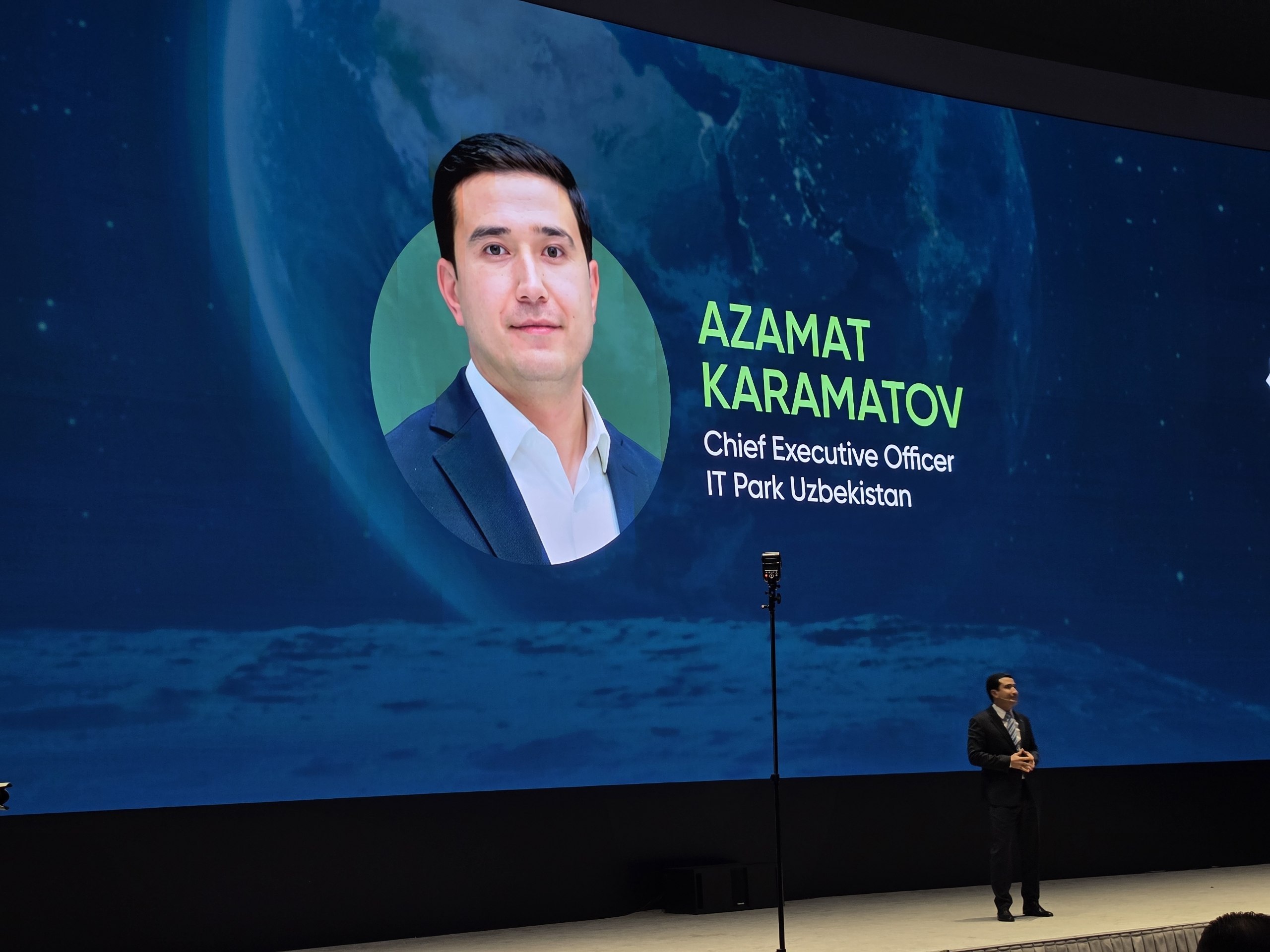
Azamat Karamatov, CEO of IT Park Uzbekistan, said the organization now has more than 3,800 resident companies, including over 1,000 international businesses. Exports of technology services have surpassed $1 billion.
He said IT Park gives foreign companies a route into Uzbekistan’s technology sector while helping develop local talent.
Sessions examined AI and talent development. Other discussions covered international investment and outsourcing. Speakers also outlined tax incentives and support available to foreign companies entering the Uzbek market. The Soft Landing program and Zero Risk initiative are among the available schemes. Key Account Management services provide additional assistance.
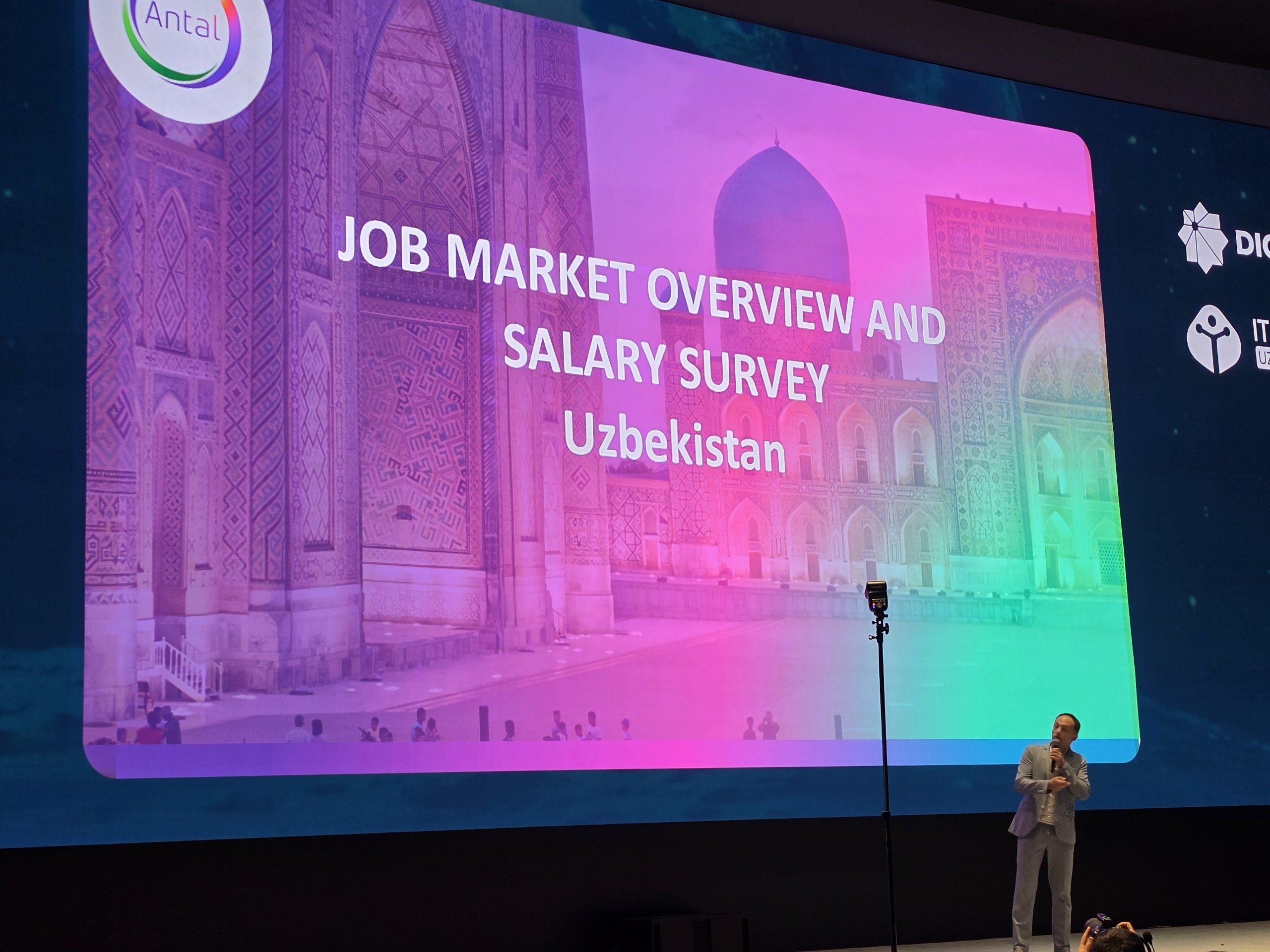
One speaker was Arseny Kucheryuk, an expert at Antal Uzbekistan, part of the British recruitment company Antal International. He drew on the firm’s recruitment work and salary surveys to describe changes in the labor market.
Kucheryuk, who moved to Uzbekistan nearly five years ago, said employers once struggled to find highly qualified candidates. The market has since become more balanced, although strong candidates can still receive several offers within weeks.
He said companies seeking experienced professionals often need to offer salaries well above candidates’ current income. Antal research found that more than 60% of candidates expect an increase of at least 20% when changing jobs.
Kucheryuk added that pay alone does not determine retention. Career prospects and management quality also influence whether skilled staff remain with an employer. He said workplace culture is especially important when addressing religion or family.
Speaking to The Times of Central Asia after his presentation, Kucheryuk said foreign investment was creating career opportunities in Tashkent and elsewhere in Uzbekistan.

He attributed Uzbekistan’s appeal to cooperation between the government and private sector, which he said helps international companies enter the market and supports local businesses.
Kucheryuk advised foreign investors to understand local business culture before entering the market. Although companies may bring senior executives from abroad, he said operational roles requiring knowledge of local law and business practice should generally be filled in Uzbekistan.
Iyad Hafez, CEO and managing partner of Staff Arabia, said his first visit to Uzbekistan exceeded expectations.
“I’m positively surprised,” he told The Times of Central Asia. “Very good infrastructure, very good people, a strong workforce, and lots of support from the government.”
Hafez said Uzbekistan needed greater visibility in the global outsourcing industry and expected the forum to bring new business and jobs.
Asked whether AI could reduce employment, Hafez compared the debate with earlier concerns about the internet.
“When the internet started, people said technology would reduce jobs,” he said. “Actually, it didn’t. It changed the nature of jobs.”
He said AI could create jobs of a different kind and that education must prepare younger workers for changing requirements.
Rami Sweis, global chief operating officer of iSONXperiences, said his company was considering opening operations in Uzbekistan.
“We manage global business process outsourcing across Africa, the Middle East, and Asia, and we are here today to explore setting up a new location in Uzbekistan,” he said.
Sweis cited tax advantages and a three-year extension of government support. He also welcomed plans to expand IT Park into additional cities.
Sweis described Uzbekistan as a mature IT market and said, “If you have the IT capabilities, it becomes easier to adopt AI.”
He said universities were helping prepare a new generation of AI specialists.
Sweis identified cloud infrastructure and data protection as areas that still require attention. The government, he said, is developing new guidelines and regulatory frameworks.
Talent was his main consideration when assessing a new location, and he pointed to Uzbekistan’s large pool of IT graduates.
He also cited the country’s international connections and the infrastructure available through IT Park.
Sweis said investment near IT Park in a data center valued at nearly $5 billion indicated long-term government commitment to AI.
Several companies at the forum said they were actively considering operations in Uzbekistan.
The event presented Uzbekistan as an increasingly credible option for international technology and outsourcing companies. Foreign executives praised the available workforce and government support. They also identified gaps in market visibility and regulation.