• KGS/USD = 0.01144 0%
  • KZT/USD = 0.00204 0%
  • TJS/USD = 0.10584 -0.09%
  • UZS/USD = 0.00008 0%
  • TMT/USD = 0.28571 0%
  • KGS/USD = 0.01144 0%
  • KZT/USD = 0.00204 0%
  • TJS/USD = 0.10584 -0.09%
  • UZS/USD = 0.00008 0%
  • TMT/USD = 0.28571 0%
  • KGS/USD = 0.01144 0%
  • KZT/USD = 0.00204 0%
  • TJS/USD = 0.10584 -0.09%
  • UZS/USD = 0.00008 0%
  • TMT/USD = 0.28571 0%
  • KGS/USD = 0.01144 0%
  • KZT/USD = 0.00204 0%
  • TJS/USD = 0.10584 -0.09%
  • UZS/USD = 0.00008 0%
  • TMT/USD = 0.28571 0%
  • KGS/USD = 0.01144 0%
  • KZT/USD = 0.00204 0%
  • TJS/USD = 0.10584 -0.09%
  • UZS/USD = 0.00008 0%
  • TMT/USD = 0.28571 0%
  • KGS/USD = 0.01144 0%
  • KZT/USD = 0.00204 0%
  • TJS/USD = 0.10584 -0.09%
  • UZS/USD = 0.00008 0%
  • TMT/USD = 0.28571 0%
  • KGS/USD = 0.01144 0%
  • KZT/USD = 0.00204 0%
  • TJS/USD = 0.10584 -0.09%
  • UZS/USD = 0.00008 0%
  • TMT/USD = 0.28571 0%
  • KGS/USD = 0.01144 0%
  • KZT/USD = 0.00204 0%
  • TJS/USD = 0.10584 -0.09%
  • UZS/USD = 0.00008 0%
  • TMT/USD = 0.28571 0%
17 February 2026

Viewing results 1 - 6 of 6

From Rupture to Resilience: Kazakhstan’s Political Recalibration After January 2022

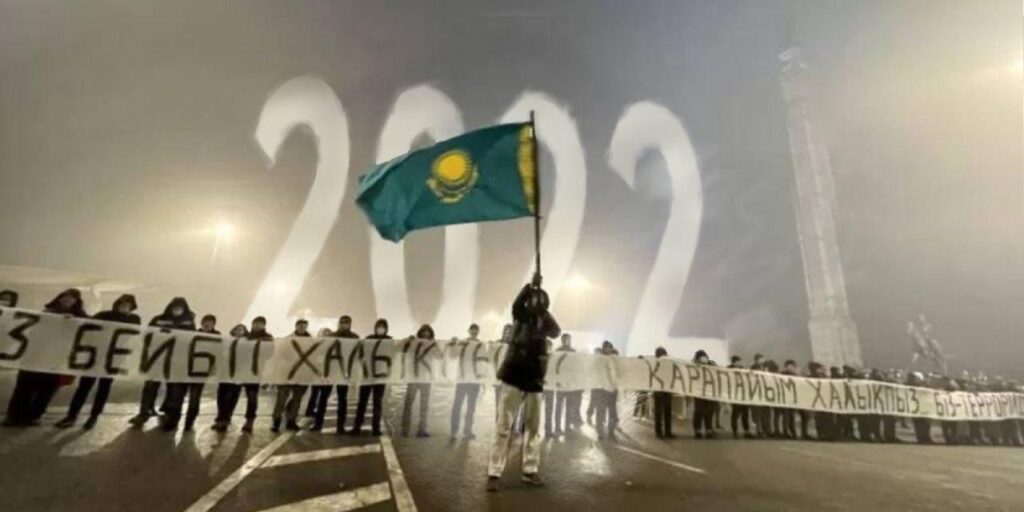
The upcoming anniversary of the events that started on 2 January 2022 in Kazakhstan invites a measured reflection rather than simple retrospection. The protests and subsequent violence marked a decisive turning point in the country’s recent history, exposing deep structural challenges and forcing a reassessment of the relationship between state and society.  More than merely presenting an occasion to recall a time of crisis, this anniversary should also serve as an opportunity to assess how Kazakhstan has since evolved — specifically, whether the lessons of that rupture have been translated into durable political reforms and have created a more resilient path forward. Remembering the onset and evolution of the events The January 2022 protests were triggered by a sudden surge in liquefied petroleum gas prices, a critical cost for many households, particularly in western regions of Kazakhstan. The immediate economic shock quickly gave rise to broader demands rooted in long-standing grievances over rising living costs, inequality, corruption, and the concentration of political power. The violent escalation also unfolded against resistance from some political elites to President Kassym-Jomart Tokayev’s emerging reform agenda. As Svante E. Cornell of the Washington D.C.-based Central Asia Caucasus Institute notes, efforts to curb entrenched patronage networks and rebalance authority had already generated opposition within the ruling elite, and the January crisis exposed these internal fractures. This context helps explain why the unrest moved beyond socioeconomic protests to a direct challenge to constitutional order. Initially peaceful, the demonstrations deteriorated as state authority weakened and organized groups linked to the old political elite exploited the unrest, transforming socioeconomic protest into coordinated violence. While the relative roles of spontaneous escalation, elite manipulation, and institutional failure remain contested, armories were raided, government buildings set ablaze, and security forces attacked in a coordinated manner, most notably in Almaty. Official figures put the death toll at at least 238, including 19 law-enforcement officers, marking a clear rupture between legitimate protest and armed unrest driven by criminal networks, intra-elite contestation, and failures of command and control. Had the violent seizure of power by non-constitutional means succeeded, it would likely have entrenched authority through force, foreclosed institutional reform, and plunged Kazakhstan into prolonged instability and isolation. Investigations followed the January 2022 violence, but key aspects—including the sequence of events and responsibility for deaths of peaceful civilians—have not been fully clarified in a comprehensive public account. While the state restored order and proceeded with reforms, dissatisfaction persists, particularly from some of the families of the deceased. Subsequent reforms and policy shifts After January 2022, President Tokayev moved quickly to stabilize the country and initiate a series of political and constitutional reforms. The unrest exposed longstanding structural imbalances in governance and state–society relations, reinforcing the rationale for a reform agenda centered on a “Fair and Just Kazakhstan” and a state more responsive to citizens’ needs.  Significant constitutional changes adopted by referendum in June of 2022 were a key part of this process. These reforms reduced the concentration of presidential power, strengthened parliament, limited presidential terms, eased...
Former Justice Minister From ‘Old Kazakhstan’ Sentenced to Nine Years in Prison

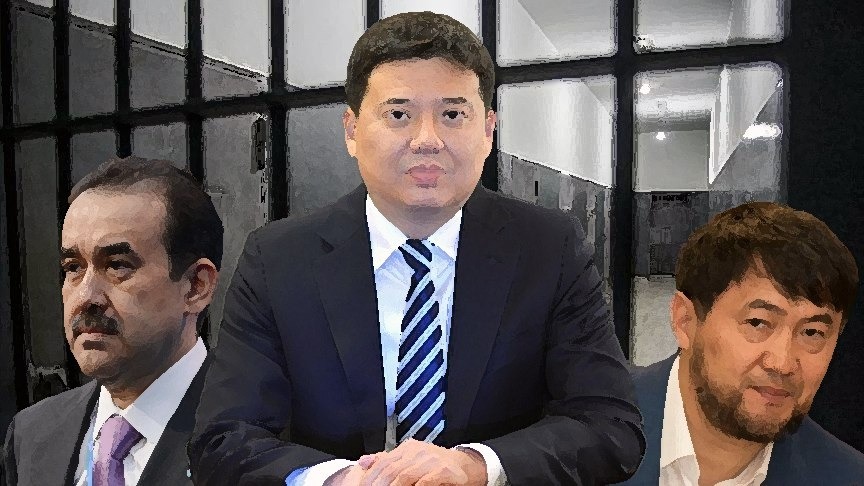
Former Minister of Justice Marat Beketayev has been sentenced to nine years in prison with confiscation of property for crimes linked to large-scale corruption. Beketayev is widely regarded as a representative of the "Old Kazakhstan" of the first president, Nursultan Nazarbayev, a term widely used to describe officials removed from power in the wake of the January 2022 unrest and associated with systemic corruption. Verdict Handed Down The Anti-Corruption Service of Kazakhstan announced on June 30 that Beketayev was convicted of fraud, embezzlement on an especially large scale, and illegal participation in entrepreneurial activities. Details of the case remain classified. The charges were formally submitted to the court in March 2025. Beketayev served as Minister of Justice from 2016 until early 2022. Following the January unrest, he was appointed as an advisor to the Prime Minister but was quietly dismissed in December 2022, a fact that only became public knowledge in February 2023. He was detained in October 2023 while allegedly attempting to flee the country. According to investigators, he abused his office by lobbying for the interests of an affiliated company and awarding it annual contracts for unnecessary services, actions that reportedly inflicted significant financial damage on the state. Fallout from the January Events Beketayev’s dismissal came immediately after the events known in Kazakhstan as "Bloody January" (Qantar), when protests initially triggered by rising liquefied gas prices escalated into nationwide unrest. From January 3-7, 2022, major cities were engulfed in chaos. Government buildings, law enforcement agencies, and military units were attacked; 238 people were reportedly killed, including children and police officers. The worst violence occurred in Almaty, where protesters stormed the city administration, the president’s residence, and the airport. Order was restored on January 8 with the intervention of the Collective Security Treaty Organization (CSTO), at the request of President Kassym-Jomart Tokayev. Open-source information and official investigations suggest the unrest was orchestrated by supporters of former president Nursultan Nazarbayev, who had stepped down in 2019 after nearly 30 years in power. In the aftermath, many high-ranking officials were removed or prosecuted. Among them was former Prime Minister and National Security Committee (KNB) Chairman Karim Massimov, who was sentenced to 18 years in prison for orchestrating what authorities describe as a coup attempt. Nazarbayev’s nephews, Samat Abish and Kairat Satybaldy, also faced charges. Abish received an eight-year suspended sentence due to his "sincere repentance," while Satybaldy, accused of economic crimes, paid approximately 700 billion tenge ($1.5 billion) in restitution and was released. The post-Qantar purge extended to numerous grassroots organizers and ordinary citizens involved in the unrest. In political discourse, the divide between Tokayev's supporters and the remnants of Nazarbayev’s influence is often described as a split between "New Kazakhstan" and "Old Kazakhstan." Beketayev’s Legacy and Links to Major Scandals Beketayev is considered an ally of Massimov and thus part of the old power structure. He was also involved in one of Kazakhstan’s most controversial international legal disputes, the case involving Moldovan businessmen Anatol and Gabriel Stati. In 2017, $22...

Kazakhstan to Report to UN on Events of January 2022 Unrest

Kazakhstan will report to the United Nations (UN) Committee against Torture on measures taken after the events of bloody January (Qantar) 2022. This is according to the Deputy Chairwoman of the International Bureau for Human Rights, Roza Akylbekova, who added that information on urgent recommendations, which primarily concern Qantar, should be provided no later than May 12th, 2024 "This is information about what happened, how many people were affected, and, of course, about deaths in closed institutions and how Kazakhstan is investigating them," Akylbekova said at a news conference at the office of the Kazakhstan International Bureau for Human Rights and the Rule of Law. In addition, according to the human rights activist, the Ministry of Defense of Kazakhstan will have to prepare information on the deaths of conscripts. It has been 25 years since Kazakhstan joined the UN Convention against Torture, since which time the Coalition of NGOs of Kazakhstan against Torture and the National Preventive Mechanism for the Prevention of Torture have been established created. Furthermore, Kazakhstan added an article on torture to the criminal code and opened up a path for individual appeals regarding torture directly to the UN Committee. At the same time, however, torture remains a pressing problem in the country. According to the Kazakhstan International Bureau for Human Rights and the Rule of Law, 200-250 people apply to the Coalition of NGOs against Torture every year. In 2022, 190 appeals were received in connection with the January events, and another 88 episodes that had no connection to the mass riots of that year. Since Qantar, the number of complaints has not fallen, with 283 appeals in 2023, during which year over 20 systemic recommendations were issued to Kazakhstan. Earlier this year, the European Union (EU) funded a three-year project by Kazakhstani human rights defenders that aims to eradicate torture. As part of this project, the Kazakhstan NGO Coalition against Torture and the Prison Reform International (PRI) office will analyze individual cases of criminal prosecution for torture which do not reach trial. However, these cases are difficult to identify and prosecute. "In Kazakhstan such crime as torture is adjacent to other articles of the Criminal Code: in addition to 'torture,' the concepts of 'ill-treatment' and 'abuse of power' are used. Therefore, the official statistics on those prosecuted for 'torture' (Article 146) do not give an understanding of how many cases are actually hidden behind the lighter articles. At the same time, Article 146 itself has been divided into two parts: 'torture,' which will be investigated by the prosecutor's office, and 'cruel and inhuman treatment,' which is left to the Interior Ministry, whose employees are most often the beneficiaries of torture," the press service of the Kazakhstan International Bureau for Human Rights and Rule of Law reported. The UN Committee against Torture was established in January 1987. It consists of 10 independent experts, who currently represent the United States, Turkey, China, Japan, Russia, France, Morocco, Moldova, Latvia, and Mexico. They monitor the implementation of the Convention...

Kazakhstan: Convicted Former Security Chief Massimov Faces New Charges

New charges of money laundering and taking a bribe have been levelled at the imprisoned former chief of Kazakhstan’s National Security Committee (KNB), Karim Massimov. On November 14th, the KNB's press service said that Massimov is currently in a pretrial detention center in Astana awaiting trial on the new charges. No further details regarding the charges were provided. In April, Massimov, a close ally of former President Nursultan Nazarbayev, was sentenced to 18 years over his role in the deadly events which followed unprecedented anti-government protests in January 2022. His deputies, Anuar Sadyqulov and Daulet Erghozhin, were sentenced to 16 years and 15 years in prison in respectively. A court in Astana found all three men guilty of high treason, attempting to seize power by force, and the abuse of their offices and power. Another former deputy of Massimov, Marat Osipov, was sentenced to three years in prison on a charge of abuse of office at the same trial. Massimov's first deputy, Samat Abish, a nephew of Nazarbayev, was dismissed from his post, but did not face any charges. The 58-year-old Massimov was arrested days after the initially peaceful protests turned into widespread violent unrest and coordinated attacks on government installations which left at least 238 people, including 19 law enforcement officers, dead. The protests began in the southwestern town of Zhanaozen early January 2022 over a sudden hike in the price of fuel, before demonstrations quickly spread into broader unrest against corruption, and perceived injustice.