• KGS/USD = 0.01144 0%
  • KZT/USD = 0.00213 0%
  • TJS/USD = 0.10562 0%
  • UZS/USD = 0.00008 0%
  • TMT/USD = 0.28530 0%
  • KGS/USD = 0.01144 0%
  • KZT/USD = 0.00213 0%
  • TJS/USD = 0.10562 0%
  • UZS/USD = 0.00008 0%
  • TMT/USD = 0.28530 0%
  • KGS/USD = 0.01144 0%
  • KZT/USD = 0.00213 0%
  • TJS/USD = 0.10562 0%
  • UZS/USD = 0.00008 0%
  • TMT/USD = 0.28530 0%
  • KGS/USD = 0.01144 0%
  • KZT/USD = 0.00213 0%
  • TJS/USD = 0.10562 0%
  • UZS/USD = 0.00008 0%
  • TMT/USD = 0.28530 0%
  • KGS/USD = 0.01144 0%
  • KZT/USD = 0.00213 0%
  • TJS/USD = 0.10562 0%
  • UZS/USD = 0.00008 0%
  • TMT/USD = 0.28530 0%
  • KGS/USD = 0.01144 0%
  • KZT/USD = 0.00213 0%
  • TJS/USD = 0.10562 0%
  • UZS/USD = 0.00008 0%
  • TMT/USD = 0.28530 0%
  • KGS/USD = 0.01144 0%
  • KZT/USD = 0.00213 0%
  • TJS/USD = 0.10562 0%
  • UZS/USD = 0.00008 0%
  • TMT/USD = 0.28530 0%
  • KGS/USD = 0.01144 0%
  • KZT/USD = 0.00213 0%
  • TJS/USD = 0.10562 0%
  • UZS/USD = 0.00008 0%
  • TMT/USD = 0.28530 0%

Viewing results 1 - 6 of 88

Kyrgyzstan Proposes Controversial Criminal Code Changes Targeting Recidivism, Limiting Official Liability

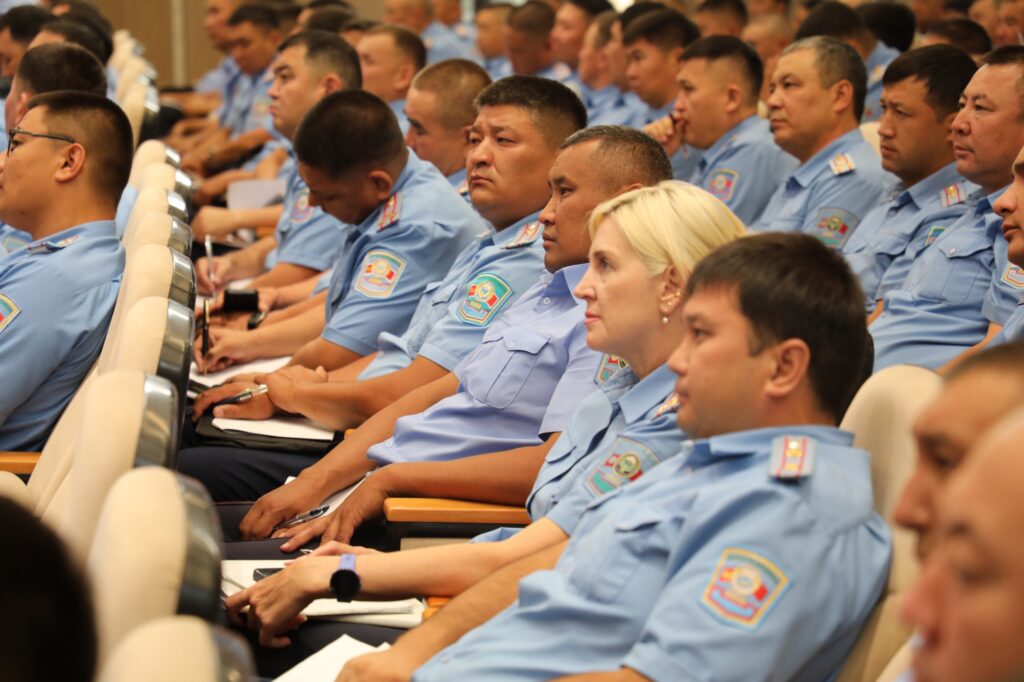
Kyrgyzstan’s Interior Ministry has submitted a bill aimed at restoring the concept of recidivism to the Criminal Code and limiting the liability of civil servants if their actions are deemed to protect national security. The proposal has sparked heated debate in both parliament and the public. Proposed Changes The draft law would reintroduce harsher penalties for repeat offenders. Recidivism, abolished in 2019 to ensure fairer treatment of convicted criminals, would once again become a legal category. According to the explanatory note, the earlier reform failed to yield the desired outcomes. "The abolition of the concept of recidivism did not have the expected effect," the note states. "Excluding harsher liability for members of organized criminal groups, who are often repeat offenders, has enabled them to consolidate and expand their influence." According to the bill's proponents, nearly 90% of inmates in Kyrgyzstan have prior convictions. They argue that current parole and probation policies treat repeat offenders too leniently. Combating organized crime has been a major priority in recent years. Dozens of so-called 'thieves-in-law' have been detained or neutralized, and suspects are now publicly compelled to renounce their criminal status. President Sadyr Japarov has already signed a law criminalizing the support or financing of criminal organizations. "Organized crime poses a serious threat to national security and affects virtually all sectors of society," the Cabinet said. Under the proposed legislation, penalties for recidivism would be no less than half the maximum sentence for a given crime. In cases of “particularly dangerous recidivism,” the minimum would be two-thirds. Moreover, reconciliation between victim and perpetrator would no longer be grounds for dismissal of charges. Authorities claim the measures will deter crime and diminish the appeal of criminal subcultures, particularly among young people. Public Criticism The most controversial element of the bill, however, is a provision that would exempt individuals from criminal liability if their actions were taken in defense of national sovereignty, the constitutional order, or environmental, economic, informational, or other forms of security. Former MP Felix Kulov criticized the vague language of the proposal on social media, warning it could lead to legal abuse. He cited a hypothetical case in which an environmental activist seriously injures or kills a litterer, arguing the act could be wrongly justified as "defending environmental security." "Such additions clearly do not belong in Article 18 of the Criminal Code," Kulov wrote. "The code already includes provisions for exceeding the limits of necessary defense and abuse of authority, and these new clauses would contradict them." Current MP Dastan Bekeshev reacted more bluntly: "This is crazy. If the law is passed, what is the point of justice at all?" The draft law is now under review in the parliament. If adopted, it would represent one of the most significant overhauls of Kyrgyzstan’s criminal legislation in recent years.

Tajik Influencer Abduroziq Egamov Reportedly Detained in Dubai on Theft Allegations

Tajik singer and social media personality Abduroziq Egamov was reportedly detained by authorities at Dubai International Airport on July 12, according to the UAE-based Khaleej Times. The 21-year-old influencer's production team confirmed his arrest to the newspaper, though official details remain scarce. Khaleej Times reported that Abduroziq was taken into custody around 5 a.m., shortly after arriving in Dubai from Montenegro. Dubai officials have not disclosed the nature of the charges. “All we can say is that he was detained on suspicion of theft,” a spokesperson for Abduroziq told the publication. However, conflicting accounts have emerged. Speaking to Asia-Plus, Abduroziq’s uncle, Muboraksho Egamov, categorically denied the detention. “All of this is fiction with no basis in reality,” he said. Abduroziq, who holds a UAE golden visa, has lived in Dubai for several years. He rose to fame with a mix of musical performances, viral online videos, and appearances on shows such as Bigg Boss 16. In 2024, he expanded his public profile by launching his restaurant brand, Habibi, in the United Kingdom. Prior Security Concerns and Alleged Financial Theft In June 2025, Abduroziq publicly stated that his social media accounts, Instagram, YouTube, and TikTok, had been hacked. He also reported that all the money in his bank accounts had been withdrawn. The loss was estimated at over $1 million. A police complaint was filed in Dubai. By late June, he managed to regain access to his Instagram account with legal assistance, but the stolen funds had not been recovered.

Kazakhstan Engaged in Legal Disputes with 20 Foreign Companies

Kazakhstan is currently involved in 20 legal disputes with foreign companies, a decrease from 26 cases in 2023, according to Yerlan Musabayev, Acting Director of the Department for the Protection of State Property Rights under the Ministry of Justice. “As of now, the Ministry is handling 20 cases involving claims totaling more than $7.5 billion,” Musabayev stated during a briefing in Astana. Of these, 13 are under review in international arbitration, five are in foreign courts, and two are in the pre-litigation stage. The reduction in the number of disputes reflects progress made over the past year, he noted. Among the Ministry's recent successes, Musabayev highlighted a key ruling by the High Court of Justice in London in favor of Kazakhstan in a case filed by Canadian uranium company World Wide Minerals (WWM). The dispute originated from Kazakhstan’s 1997 decision to deny WWM an export license for uranium and terminate a trust management contract for the Tselinograd Mining and Chemical Plant (now the Stepnogorsk Mining and Chemical Plant). The High Court ruling, issued on February 28, 2025, overturned a 2024 decision that had awarded WWM approximately $65 million. “Under the 2025 decision, the Republic of Kazakhstan has no obligations toward World Wide Minerals. It’s worth noting that the bar for appeals in UK courts is exceptionally high, fewer than 2% succeed,” Musabayev said. Another legal victory came in a case involving the Kazakh-Italian construction joint venture Todini Impregilo Kazakhdorstroy. The company had sought $20 million in claims, but the International Chamber of Commerce Arbitration Court in Paris dismissed all demands and ordered the joint venture to reimburse $277,000 in legal costs. Enforcement of the ruling required compulsory measures. “The Ministry of Justice is actively working to further reduce the number of disputes with foreign entities. Through coordinated efforts with other state bodies and the Government’s legal advisors, we’ve saved considerable budgetary resources, preserved Kazakhstan’s investment attractiveness, and strengthened the country’s international reputation,” Musabayev concluded. As previously reported by The Times of Central Asia, Kazakhstan resolved a long-standing legal battle with Anatolie and Gabriel Stati’s Tristan Oil in 2024, following protracted litigation over the nationalization of oil assets. Meanwhile, early reviews of certain production-sharing agreements in the oil sector could lead to new legal proceedings in the near future.

Former Justice Minister From ‘Old Kazakhstan’ Sentenced to Nine Years in Prison

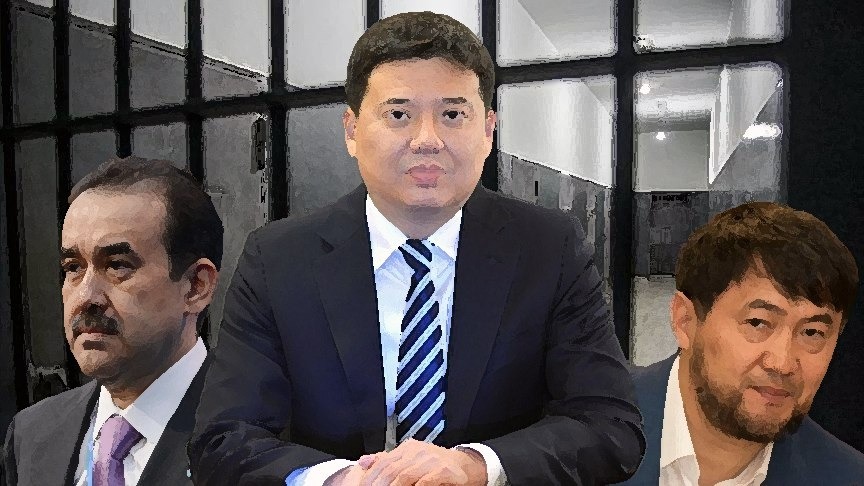
Former Minister of Justice Marat Beketayev has been sentenced to nine years in prison with confiscation of property for crimes linked to large-scale corruption. Beketayev is widely regarded as a representative of the "Old Kazakhstan" of the first president, Nursultan Nazarbayev, a term widely used to describe officials removed from power in the wake of the January 2022 unrest and associated with systemic corruption. Verdict Handed Down The Anti-Corruption Service of Kazakhstan announced on June 30 that Beketayev was convicted of fraud, embezzlement on an especially large scale, and illegal participation in entrepreneurial activities. Details of the case remain classified. The charges were formally submitted to the court in March 2025. Beketayev served as Minister of Justice from 2016 until early 2022. Following the January unrest, he was appointed as an advisor to the Prime Minister but was quietly dismissed in December 2022, a fact that only became public knowledge in February 2023. He was detained in October 2023 while allegedly attempting to flee the country. According to investigators, he abused his office by lobbying for the interests of an affiliated company and awarding it annual contracts for unnecessary services, actions that reportedly inflicted significant financial damage on the state. Fallout from the January Events Beketayev’s dismissal came immediately after the events known in Kazakhstan as "Bloody January" (Qantar), when protests initially triggered by rising liquefied gas prices escalated into nationwide unrest. From January 3-7, 2022, major cities were engulfed in chaos. Government buildings, law enforcement agencies, and military units were attacked; 238 people were reportedly killed, including children and police officers. The worst violence occurred in Almaty, where protesters stormed the city administration, the president’s residence, and the airport. Order was restored on January 8 with the intervention of the Collective Security Treaty Organization (CSTO), at the request of President Kassym-Jomart Tokayev. Open-source information and official investigations suggest the unrest was orchestrated by supporters of former president Nursultan Nazarbayev, who had stepped down in 2019 after nearly 30 years in power. In the aftermath, many high-ranking officials were removed or prosecuted. Among them was former Prime Minister and National Security Committee (KNB) Chairman Karim Massimov, who was sentenced to 18 years in prison for orchestrating what authorities describe as a coup attempt. Nazarbayev’s nephews, Samat Abish and Kairat Satybaldy, also faced charges. Abish received an eight-year suspended sentence due to his "sincere repentance," while Satybaldy, accused of economic crimes, paid approximately 700 billion tenge ($1.5 billion) in restitution and was released. The post-Qantar purge extended to numerous grassroots organizers and ordinary citizens involved in the unrest. In political discourse, the divide between Tokayev's supporters and the remnants of Nazarbayev’s influence is often described as a split between "New Kazakhstan" and "Old Kazakhstan." Beketayev’s Legacy and Links to Major Scandals Beketayev is considered an ally of Massimov and thus part of the old power structure. He was also involved in one of Kazakhstan’s most controversial international legal disputes, the case involving Moldovan businessmen Anatol and Gabriel Stati. In 2017, $22...

Kazakhstan to Grant Amnesty to More Than 15,000 Inmates and Offenders

Kazakhstan’s Senate has passed a bill granting amnesty to more than 15,000 individuals in connection with the 30th anniversary of the country’s Constitution. The draft law, which has been approved by both chambers of parliament, will take effect once it is signed by President Kassym-Jomart Tokayev. According to the bill, approximately 4,100 individuals currently serving sentences will be fully released from criminal liability, while the sentences or penalties of an additional 11,000 convicts will be reduced or softened. However, only a small fraction of those covered by the amnesty, fewer than 1,000, are expected to be released from prison. As explained by MP Abzal Kuspan, 632 of those eligible for full release are currently incarcerated. The remaining 3,500 individuals to be released are to be placed under the supervision of the probation service and are serving non-custodial sentences. The amnesty targets individuals convicted of minor or moderate offenses, particularly those who have not caused harm or who have compensated for any damage caused. It also applies to socially vulnerable groups. Among those eligible are 833 women, of whom 109 will be released and 724 will have their sentences reduced. Only four of the 75 convicted minors in Kazakhstan will be granted amnesty, due to the fact that most underage offenders are serving sentences for serious or particularly serious crimes. “The reason is that minors in our country are mostly convicted of serious and particularly serious offenses,” Kuspan explained. The amnesty explicitly excludes individuals convicted of serious or particularly serious crimes, including corruption, terrorism, extremism, crimes against the sexual integrity of minors, torture, repeat offenses, and those serving life sentences. Currently, 624 people in Kazakhstan are imprisoned for corruption-related crimes, 294 for terrorism, 96 for extremism, and 48 for torture. In total, over 40,000 individuals are held in the country’s criminal justice system, which includes 63 penal institutions and 16 pre-trial detention centers. Of these, approximately 33,000 are convicted prisoners, while 7,000 are awaiting trial. In recent years, the Kazakh authorities have introduced a series of reforms aimed at strengthening the protection of the rights of detainees and convicts. These efforts are part of a broader push to improve transparency and accountability in the justice system.

Humans Group Files Arbitration Against Uzbekistan Over Alleged Investment Violations

Humans Mobile Ltd, a subsidiary of the Singapore-based Humans Group, has initiated arbitration proceedings against Uzbekistan at the World Bank’s International Centre for Settlement of Investment Disputes (ICSID). The case, registered under ARB/25/24, alleges that Uzbekistan violated a 2003 bilateral investment treaty between the two countries. According to an official statement published by Bilaterals, Humans Mobile seeks compensation for damages it claims were caused by the actions of several Uzbek state authorities. The company argues that these actions disrupted its operations and compromised the rule of law in the country. “We have always believed in Uzbekistan and its citizens,” said Vladimir Dobrynin, CEO and founder of Humans Group. “But transformation efforts must be supported by fair and predictable rules. Arbitration is a standard process to protect investors against unfair treatment.” Dobrynin added that the arbitration aims not only to secure compensation but also to promote legal stability and strengthen the investment climate in Uzbekistan. Humans Group operates in the United States, Uzbekistan, Poland, Singapore, and Germany. Its Uzbek venture, Humans.uz, functions as a “super app” combining financial services, mobile communications, grocery delivery, and online retail. Market Dispute with Uzbektelecom In a separate but related development, Humans filed a complaint on May 8, 2025, with Uzbekistan’s Antimonopoly Committee, requesting an investigation into the state-owned telecom operator Uzbektelecom. The company accuses Uzbektelecom of abusing its dominant market position by maintaining high internet prices. As a Mobile Virtual Network Operator (MVNO), Humans relies on Uzbektelecom’s infrastructure under a contract signed in May 2020. According to the complaint, while global internet prices have declined since 2021, Uzbektelecom has not adjusted its rates accordingly. Humans argues that despite lowering its own prices to stay competitive, unchanging infrastructure costs now account for 58% of its total service costs, making its business model unsustainable. “There is no economic reason to maintain such high prices. Uzbektelecom is receiving unjustified profit at the expense of infrastructure users like us,” the company stated in its complaint, as quoted by Spot. Humans also revealed that it has incurred significant debt due to what it describes as “monopoly-level pricing.” In a March 27, 2024, warning letter, Uzbektelecom demanded repayment of 532 billion Uzbek soums, comprising 361 billion in outstanding payments and over 170 billion in penalties. The company warned that internet speeds would be throttled starting March 1, 2025, with full disconnection by June 1 if the debt remains unpaid. Legal action may also follow. Uzbekistan’s Track Record in Arbitration This is not the first time Uzbekistan has faced international arbitration. The Times of Central Asia previously reported that Uzbekistan won a case brought by Turkish textile firm Bursel Tekstil, which had sought $700 million in damages over alleged breaches of cotton pricing and tax policy commitments. The tribunal ultimately ruled in favor of Uzbekistan and ordered Bursel to pay legal costs. In another high-profile case reported by The Times of Central Asia, the ICSID ruled in May 2024 that Kyrgyzstan must return four resorts to Uzbekistan. The tribunal found that Kyrgyzstan...