• KGS/USD = 0.01144 0%
  • KZT/USD = 0.00213 0%
  • TJS/USD = 0.10562 0%
  • UZS/USD = 0.00008 0%
  • TMT/USD = 0.28530 0%
  • KGS/USD = 0.01144 0%
  • KZT/USD = 0.00213 0%
  • TJS/USD = 0.10562 0%
  • UZS/USD = 0.00008 0%
  • TMT/USD = 0.28530 0%
  • KGS/USD = 0.01144 0%
  • KZT/USD = 0.00213 0%
  • TJS/USD = 0.10562 0%
  • UZS/USD = 0.00008 0%
  • TMT/USD = 0.28530 0%
  • KGS/USD = 0.01144 0%
  • KZT/USD = 0.00213 0%
  • TJS/USD = 0.10562 0%
  • UZS/USD = 0.00008 0%
  • TMT/USD = 0.28530 0%
  • KGS/USD = 0.01144 0%
  • KZT/USD = 0.00213 0%
  • TJS/USD = 0.10562 0%
  • UZS/USD = 0.00008 0%
  • TMT/USD = 0.28530 0%
  • KGS/USD = 0.01144 0%
  • KZT/USD = 0.00213 0%
  • TJS/USD = 0.10562 0%
  • UZS/USD = 0.00008 0%
  • TMT/USD = 0.28530 0%
  • KGS/USD = 0.01144 0%
  • KZT/USD = 0.00213 0%
  • TJS/USD = 0.10562 0%
  • UZS/USD = 0.00008 0%
  • TMT/USD = 0.28530 0%
  • KGS/USD = 0.01144 0%
  • KZT/USD = 0.00213 0%
  • TJS/USD = 0.10562 0%
  • UZS/USD = 0.00008 0%
  • TMT/USD = 0.28530 0%

Viewing results 1 - 6 of 88

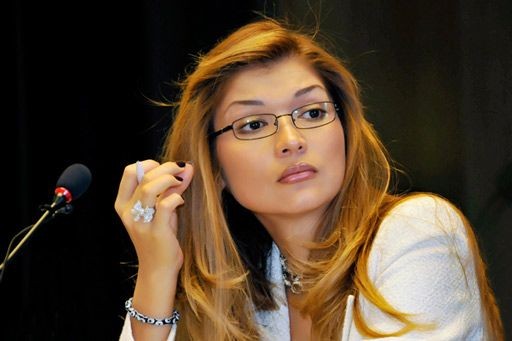
Switzerland to Return $182 Million in Confiscated Gulnara Karimova Assets to Uzbekistan

On February 6, in Tashkent, Uzbekistan’s Minister of Justice, Akbar Tashkulov, and Switzerland’s Ambassador to Uzbekistan, Konstantin Obolensky, signed an agreement on the repatriation of confiscated assets, the Uzbek Ministry of Justice reported. Under the agreement, approximately $182 million will be returned to Uzbekistan. These funds were illegally obtained by certain Uzbek citizens and were fully confiscated in 2012 by the Swiss Prosecutor General’s Office as part of criminal proceedings against Gulnara Karimova, the eldest daughter of former President Islam Karimov. The money will be transferred through the United Nations Uzbekistan Vision 2030 Fund Multi-Partner Trust Fund. This is not the first such agreement. In August 2022, Uzbekistan and Switzerland signed a similar agreement in Bern, outlining principles and mechanisms for returning illegally acquired assets. That agreement confirmed that the returned funds would be used for the benefit of Uzbekistan’s population through the UN trust fund. Under the 2022 agreement, Uzbekistan was set to receive around $131 million. With this latest deal, the total amount of repatriated funds will now reach $313 million. The Uzbekistan Vision 2030 Fund will allocate these funds to socially significant projects, particularly in healthcare and education.

Sentencing of Journalist Rukhshona Khakimova Draws Outrage in Tajikistan

Tajikistan’s Supreme Court has convicted journalist Rukhshona Khakimova of high treason and sentenced her to eight years in prison. Her lawyer criticized the ruling, noting that the court failed to take into account her status as a mother. Meanwhile, Tajikistan’s journalistic community has condemned the sentence as "excessively harsh" and "shocking." Khakimova’s relatives plan to appeal the verdict. The court’s decision was announced on February 5 during a closed hearing held at the Dushanbe detention center, alongside other verdicts in the “coup d’état case." Khakimova is the niece of Shokirjon Khakimov, the first deputy chairman of the Social Democratic Party of Tajikistan, who was sentenced to 18 years in prison. Khakimova was first charged seven months ago but was allowed to remain free due to her responsibilities as a mother of two young children. However, her documents were confiscated, preventing her from leaving her place of residence. Following the verdict, she was immediately taken into custody inside the courtroom. Tajikistan’s journalistic community has raised serious concerns about the fairness of the trial, particularly due to the lack of transparency surrounding the case. The authorities have refused to comment, citing state secrecy. Khakimova’s prosecution is believed to be linked to her investigation into China’s influence in Tajikistan. As part of her research, she reportedly interviewed several defendants in the coup case, including former MP Saidjafar Usmonzoda, who was sentenced to 27 years in prison. The prosecution had initially sought a 17-year prison sentence for Khakimova, but the court reduced it to eight years under Article 63 of the Criminal Code. However, lawyer Turob Dilayev noted that the court failed to consider the legal provision allowing for sentence postponement for women with young children. As a result, Khakimova’s two children — a two-year-old and a nine-month-old — have been placed in the care of relatives. The court also seized the family's savings, originally intended for buying a home. The National Association of Independent Media of Tajikistan has strongly criticized the ruling. Its head, Nuriddin Karshiboyev, stated that journalists had hoped for justice but were left “shocked” by the harsh sentence. Khurshed Atovullo, director of the Centre for Journalist Studies of Tajikistan, called the ruling excessive, arguing that conducting a survey should not be grounds for criminal prosecution. Gulnora Amirshoeva, head of the Coalition of Women Journalists of Tajikistan, expressed outrage, particularly over Khakimova’s separation from her children. She voiced hope that the case would be reviewed and that the execution of the sentence would be suspended. International human rights organizations have also condemned the verdict. Siynat Sultonalieva, Human Rights Watch’s representative for Central Asia, stated that Tajikistan continues to persecute journalists and human rights defenders. She noted that Khakimova is the ninth journalist to receive a long-term sentence and called on authorities to end the pressure on the press.

Tajikistan Sentences Defendants in Alleged Coup Attempt Case

Tajikistan's Supreme Court handed down sentences on February 5 in a high-profile coup attempt case, convicting former high-ranking officials, politicians, and journalists. Among those sentenced are a former foreign minister, a former chairman of the Supreme Soviet, and retired security officials. Sentences and Key Defendants Former Tajik Foreign Minister Hamrokhon Zarifi received a 27-year prison sentence. Shokirjon Khakimov, the first deputy leader of the Social Democratic Party of Tajikistan, and Ahmadshokh Komilzoda, former deputy chairman of the Democratic Party, were each sentenced to 18 years. Journalist Rukhshona Khakimova, the niece of Khakimov, was sentenced to eight years on charges of treason. However, details of the charges against her remain undisclosed, as the case is classified. The trial was conducted behind closed doors at a pre-trial detention center. Lack of Transparency and Denials by Defendants Authorities have not disclosed details of the trial, citing national security concerns. Relatives of the defendants were barred from attending, and defense lawyers have refrained from commenting due to non-disclosure agreements. According to sources, many of the convicted individuals denied the charges during their final statements. In particular, Akbarsho Iskandarov and Ahmadshokh Komilzoda argued that the verdicts were issued without sufficient evidence. The trial began on November 14, 2024, following a wave of arrests that started in mid-2024 with the detention of Saidjafar Usmonzod. The defendants have consistently pleaded not guilty, and in December 2024, they formally rejected charges of treason and attempted seizure of power.

Uzbek National Arrested in Florida Voter Fraud Case

An Uzbek national residing in Florida been arrested for allegedly submitting fraudulent voter registration applications, the U.S. Department of Justice has announced. According to U.S. authorities, Sanjar Jamilov, a 33-year-old Uzbek citizen living in the Florida town of St. Petersburg, conspired to file 132 false applications with election officials in Pinellas County in early 2023. The fraudulent applications, submitted under different names, exhibited clear signs of irregularity, including identical formatting, repeated birth dates, and nearly sequential Social Security numbers. The suspects also directed election-related mail to addresses they controlled. Jamilov has been charged with conspiracy to commit voter registration fraud and providing false information during registration. If convicted, he faces up to five years in prison. The arrests come shortly after the U.S. presidential election in November 2024, in which Republican candidate Donald Trump won and has recently begun his second term. Authorities have emphasized that investigations are ongoing, and that all defendants are presumed innocent until proven guilty in court.

Riot in Tajik Prison Leaves Several Inmates Dead

On February 3, a riot broke out in Tajikistan's Vahdat Penitentiary No. 3/2, 15 miles from Dushanbe, resulting in the deaths of several prisoners. According to Tajikistan’s Ministry of Justice, the incident occurred when nine inmates - convicted over links to Islamic State and the Jihadi Salafi movement - launched an armed attack on prison staff using improvised weapons. “As a result of the attack, three guards were seriously injured,” the ministry’s statement said. The prisoners, armed with makeshift knives, refused to comply with prison authorities and attempted to kill security personnel in an escape attempt. According to the authorities, the prison guards responded with firearms, killing three of the attackers and detaining the others. The injured staff members received medical treatment and were reported to be in stable condition. Authorities also confirmed that security at the facility has been fully restored. While official reports initially listed three inmate fatalities, some sources suggest that the actual number of prisoner deaths may be higher. Condemning the treatment of detainees by officials at the prison, the Civil Committee for the Rescue of Hostages and Political Prisoners of Tajikistan (CCHP) stated that “at least 10 prisoners were killed and a number were injured as a result of guards shooting at prisoners.” Despite reports that the detainees had briefly raised the Islamic State flag over the prison, CCHP claimed that those killed were political prisoners who had no connection to ISIS or any other banned group.   History of Prison Riots in Tajikistan This is not the first violent uprising within Tajikistan’s penitentiary system. In May 2019, inmates in the same facility armed with knives took three staff members hostage and killed them. They also executed five fellow prisoners before security forces suppressed the riot. Among those killed was Behruz Halimov, son of Gulmurod Halimov, a former Tajik special forces officer who later joined ISIS. The riot left 29 prisoners dead, and Tajikistan’s Supreme Court subsequently increased the sentences of 28 convicts involved in the incident. ISIS claimed responsibility for the riot. In November 2018, a similar riot occurred in a high-security prison in Khujand, where 21 inmates and two prison staff members were killed. Five guards were also injured. Following an investigation, 33 prisoners stood trial, and nine prison officials, including the warden, received prison sentences for negligence. Broader Security Concerns In recent years, Tajikistan has witnessed numerous escape attempts from detention facilities, though nearly all have ended in failure. Most escape organizers have either been killed during apprehension or recaptured. These recurring incidents highlight ongoing security challenges within the country’s prison system and underscore the need for further reforms to prevent future outbreaks of violence.

Prisons Being Relocated from Kyrgyzstan’s Major Cities

Construction of a new detention center has begun in Kyrgyzstan’s Chuy region as part of a broader effort to relocate prisons from major urban areas. The facility will replace the aging SIZO-1, which has operated for 50 years in the center of Bishkek. Deputy Chairman of the Correctional Service Kemel Sydykov announced the initiative during a parliamentary session. Many of Kyrgyzstan’s prisons and detention centers were built in the 1950s and 1960s and no longer meet modern standards for housing inmates. In addition to their outdated infrastructure, these facilities occupy valuable city land, prompting authorities to systematically phase them out. “Construction work has begun on the relocation of SIZO-1. The new detention center will be situated in the Issyk-Ata district of Chuy region. We have been given strict deadlines—to complete construction by the end of the year. The vacated land will be transferred to the state,” Sydykov told MPs. Nationwide Prison Relocation Efforts The Correctional Service has been implementing similar projects across the country. Last year, a new detention center was commissioned in the city of Jalal-Abad, designed to meet modern incarceration standards. Sydykov also confirmed that remand centers in Karakol and Osh are set to be relocated, with land already allocated and construction work expected to begin soon. A few years ago, authorities in Bishkek demolished Colony No. 47, which was located on the city's western outskirts. The site was redeveloped into a residential microdistrict with 900 apartments. Notably, former Kyrgyz President Almazbek Atambayev served part of his sentence in that facility. As previously reported by The Times of Central Asia, many detention facilities in Kyrgyzstan fail to meet international standards, underscoring the urgent need for modernized infrastructure.