• KGS/USD = 0.01143 -0%
  • KZT/USD = 0.00198 -0%
  • TJS/USD = 0.10899 0.65%
  • UZS/USD = 0.00008 -0%
  • TMT/USD = 0.28490 -0.28%
  • KGS/USD = 0.01143 -0%
  • KZT/USD = 0.00198 -0%
  • TJS/USD = 0.10899 0.65%
  • UZS/USD = 0.00008 -0%
  • TMT/USD = 0.28490 -0.28%
  • KGS/USD = 0.01143 -0%
  • KZT/USD = 0.00198 -0%
  • TJS/USD = 0.10899 0.65%
  • UZS/USD = 0.00008 -0%
  • TMT/USD = 0.28490 -0.28%
  • KGS/USD = 0.01143 -0%
  • KZT/USD = 0.00198 -0%
  • TJS/USD = 0.10899 0.65%
  • UZS/USD = 0.00008 -0%
  • TMT/USD = 0.28490 -0.28%
  • KGS/USD = 0.01143 -0%
  • KZT/USD = 0.00198 -0%
  • TJS/USD = 0.10899 0.65%
  • UZS/USD = 0.00008 -0%
  • TMT/USD = 0.28490 -0.28%
  • KGS/USD = 0.01143 -0%
  • KZT/USD = 0.00198 -0%
  • TJS/USD = 0.10899 0.65%
  • UZS/USD = 0.00008 -0%
  • TMT/USD = 0.28490 -0.28%
  • KGS/USD = 0.01143 -0%
  • KZT/USD = 0.00198 -0%
  • TJS/USD = 0.10899 0.65%
  • UZS/USD = 0.00008 -0%
  • TMT/USD = 0.28490 -0.28%
  • KGS/USD = 0.01143 -0%
  • KZT/USD = 0.00198 -0%
  • TJS/USD = 0.10899 0.65%
  • UZS/USD = 0.00008 -0%
  • TMT/USD = 0.28490 -0.28%
07 December 2025

Viewing results 1 - 6 of 79

Kazakhstan’s Path to Judicial Reform and Transparency

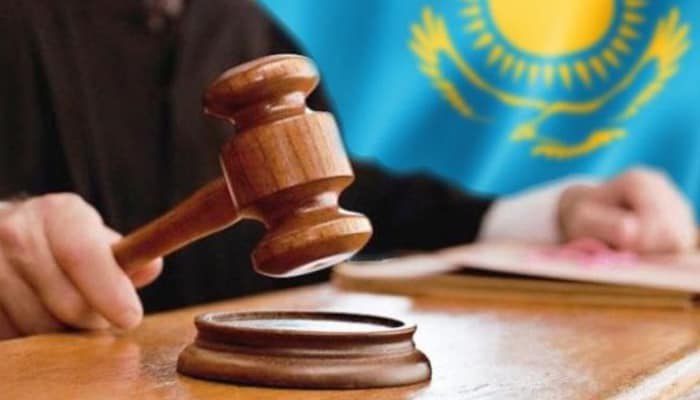
Kazakhstan is implementing reforms to enhance judicial independence, modernize its institutions, and address contemporary challenges according to Aslambek Mergaliev, Chairman of the Supreme Court of Kazakhstan, who detailed these initiatives aimed at strengthening the rule of law and increasing transparency in the judicial system. Strengthening Judicial Independence Central to these reforms is ensuring judges’ independence by depoliticizing their roles and holding them accountable only to the law. Judges are prohibited from affiliating with political parties, and personnel matters have been fully transferred to the Supreme Judicial Council. Key advancements include transparent selection procedures for judges and the introduction of new professional standards. A pivotal guarantee of independence is the new funding model, which allocates at least 6.5% of the state apparatus budget to the judiciary, reducing financial dependence on other government branches. Judges’ professional performance is now evaluated by their peers, supported by the "Electronic File of a Judge," an automated service designed to minimize bias. Additionally, the authority to approve special operational and investigative measures against judges has been transferred to the Prosecutor General. Introduction of Administrative Justice Kazakhstan established an administrative justice system in 2021, primarily aimed at protecting citizens' rights and improving public administration. This system has significantly increased the number of cases involving housing, tax, and land disputes, reflecting growing public trust in the judiciary. The percentage of court decisions in favor of citizens has risen from 15% to over 60%. Jury trials have also expanded, with the number of cases tried by jury more than doubling in recent years. Digital Transformation of the Judiciary Kazakhstan is leveraging digital technology to modernize its judicial processes, earning the country 4th place among 47 nations in reviews conducted by the European Commission for the Efficiency of Justice (CEPEJ) on the judicial systems of Council of Europe member states. Tools such as Digital Analytics of Judicial Practice and a robotic assistant help reduce judges’ workloads, predict case outcomes, and optimize adjudication. Additionally, the Supreme Court has initiated the broader use of electronic surveillance as an alternative to detention, favoring house arrest with electronic bracelets. International Recognition At the IX Congress of Judges in October 2024, President Kassym-Jomart Tokayev engaged with representatives from CEPEJ and the International Association for Court Administration (IACA) to discuss the progress of judicial reforms. Special emphasis was placed on expanding cooperation in human rights protection. The Union of Judges of Kazakhstan has established partnerships with organizations such as UNDP, OSCE, the Council of Europe, USAID, and the International Bar Association, among others. Future Steps Looking ahead to 2025, Kazakhstan plans to establish three courts of cassation and introduce a “continuous cassation” system. The Supreme Court will prioritize ensuring uniformity in judicial practice, with cases reviewed only at the initiative of the highest judicial authority.


Kyrgyz Businessman Tashov, Accused of Plot to Seize Power, Attempts Suicide in Court

Imamidin Tashov, a Kyrgyz businessman and owner of the KG Group construction company, reportedly attempted suicide during court proceedings in his high-profile case involving allegations of plotting a violent seizure of power. According to media reports, Tashov attempted to slit his throat, prompting an immediate response from those present. Journalists and relatives were swiftly removed from the courtroom, and emergency medical personnel were called to the scene. Eyewitnesses reported that Tashov was carried out of the courthouse to receive medical attention. However, details about his condition and the specific circumstances of the incident remain unclear at this time. Tashov was detained in April 2024 by SCNS officers after illegally crossing the border between Kazakhstan and Kyrgyzstan. Authorities allege that he was on his way to the town of Kara-Balta to establish a temporary headquarters and mobilize supporters for protests aimed at seizing power. This is not the first time Tashov has engaged in self-harm. Earlier this year, he injured himself in the abdomen, reportedly sustaining two cuts. His lawyer, Samat Matsakov, claimed that these acts were deliberate attempts to attract public attention. The State Committee for National Security (SCNS) similarly described the previous incident as premeditated and aimed at garnering sympathy. Adding to the controversy, Tashov has accused individuals claiming to be SCNS officers of kidnapping him and demanding a ransom of 100 million Kyrgyz soms ($1.15 million). These allegations have further polarized public opinion and drawn widespread attention to his case. On November 29, Tashov’s lawyer Matsakov was arrested on charges of fraud and document forgery, as reported by The Times of Central Asia. The legal troubles surrounding Tashov and his defense team have only added to the public and media interest in the case. The dramatic developments in Tashov’s case reflect the tensions surrounding his high-profile trial. As questions persist about his actions and the broader implications of his allegations, the case continues to attract significant attention across Kyrgyzstan.

From Hero to Exile: Kyrgyz Rescuer Sultan Abdumalikov Deported from Russia

Sultan Abdumalikov, a Kyrgyz citizen hailed for his bravery during a fire in Yekaterinburg, Russia, has been deported due to issues with his documentation. Abdumalikov gained attention on November 18 for rescuing patients and staff during a fire at Polyclinic No. 2, where he risked his own life to evacuate victims from the burning building. He suffered from smoke inhalation during the incident, which also brought him to the notice of law enforcement. A subsequent document check revealed that Abdumalikov lacked the required labor contract to legally remain in Russia. While police officers praised his heroism, a decision was made to deport him. Abdumalikov had hoped to resolve his legal issues and remain in the country but was ultimately unsuccessful. Upon his return to Kyrgyzstan, Abdumalikov faced significant challenges. Blacklisted for violating Russian immigration laws, he has been unable to secure stable employment. Providing for his family, including four children, has become increasingly difficult.

Prosecutor General’s Office Issues Statement on Allamjonov Assassination Attempt

A month ago, reports emerged of an assassination attempt on Komil Allamjonov, the former head of the Presidential Department in Uzbekistan. Some media outlets speculated that Chechen leader Ramzan Kadyrov might be connected to the case. In response, the Prosecutor General’s Office has released an official statement addressing the incident. According to the statement, material evidence linked to the case was discovered during the inspection of the crime scene, searches of vehicles used by the suspects, and investigations at their residences. These findings have been crucial in advancing the case. So far, investigative efforts have identified seven individuals involved in the crime. Five of them have been placed under preventive detention, while two remain wanted by authorities. One suspect, identified as K.S., was located in Kazakhstan, where investigative procedures were carried out. Another suspect, Javlon Yunusov, was arrested in South Korea and subsequently deported to Uzbekistan. The investigation is still ongoing, and further details are expected as the case develops.

Uzbek Nationals Arrested in UAE Over Murder of Israeli Rabbi Zvi Kagan

The Times of Central Asia has reported that three Uzbek nationals are suspected in the murder of Rabbi Zvi Kagan, an Israeli-Moldovan citizen and prominent figure in the Jewish religious movement Chabad. The UAE Ministry of Interior announced the arrest of the suspects, identified as Olimpi Toirovich (28), Makhmudjon Abdurakhim (28), and Azizbek Kamlovich (33). A ministry-released photo showed the suspects blindfolded and shackled, underscoring the seriousness of the case. Authorities have transferred the investigation to the prosecutor’s office but have yet to disclose the specific charges or motive behind the murder. Rabbi Kagan, a UAE resident, was reported missing on November 21, prompting a swift search by local authorities. His body was discovered on November 24, leading to the identification and arrest of the suspects. A respected member of the UAE’s Jewish community, Kagan assisted the country’s chief rabbi and managed a kosher supermarket, Rimon, in Dubai. His contributions were pivotal in supporting the Jewish community in the region. The case has drawn significant attention due to Kagan’s prominent role and the mystery surrounding the crime. UAE officials have stated that the investigation is ongoing, with further details expected to emerge as it progresses.

United Arab Emirates: 3 Uzbek Citizens Arrested in Rabbi Killing

Authorities in the United Arab Emirates have arrested three Uzbek citizens in the killing of an Israeli-Moldovan rabbi, the UAE’s Ministry of Interior said Monday. Israel described the killing as an act of antisemitic terrorism. The suspects in the death of Zvi Kogan were identified as Olympi Tohirovich and Makhmodjon Abdulraheem, both 28, as well as 33-year-old Azizbek Kamlovich, according to the UAE ministry. It said a murder investigation was underway and the matter will be referred to public prosecutors. The ministry commended security forces for “their efficiency in addressing attempts to undermine the safety and stability of the UAE community.” The ministry posted photos of the suspects, showing them blindfolded, handcuffed and wearing blue detention clothing. Kogan, the envoy of the ultra-Orthodox Chabad-Lubavitch movement to Abu Dhabi in the United Arab Emirates, was killed after being abducted on Thursday and his body was recovered early Sunday morning, according to Chabad.org. Kogan’s funeral was held in Israel on Monday. “The murder of Zvi Kogan, of blessed memory, is an abhorrent act of antisemitic terrorism,” Israel said in a statement. “The State of Israel will use all means and will deal with the criminals responsible for his death to the fullest extent of the law.” There were no immediate public statements from Uzbek authorities.