• KZT/USD = 0.00210
  • TJS/USD = 0.10820
  • UZS/USD = 0.00008
  • TMT/USD = 0.29760
  • KZT/USD = 0.00210
  • TJS/USD = 0.10820
  • UZS/USD = 0.00008
  • TMT/USD = 0.29760
  • KZT/USD = 0.00210
  • TJS/USD = 0.10820
  • UZS/USD = 0.00008
  • TMT/USD = 0.29760
  • KZT/USD = 0.00210
  • TJS/USD = 0.10820
  • UZS/USD = 0.00008
  • TMT/USD = 0.29760
  • KZT/USD = 0.00210
  • TJS/USD = 0.10820
  • UZS/USD = 0.00008
  • TMT/USD = 0.29760
  • KZT/USD = 0.00210
  • TJS/USD = 0.10820
  • UZS/USD = 0.00008
  • TMT/USD = 0.29760
  • KZT/USD = 0.00210
  • TJS/USD = 0.10820
  • UZS/USD = 0.00008
  • TMT/USD = 0.29760
  • KZT/USD = 0.00210
  • TJS/USD = 0.10820
  • UZS/USD = 0.00008
  • TMT/USD = 0.29760

Viewing results 1 - 6 of 88

Prosecutor General’s Office Issues Statement on Allamjonov Assassination Attempt

A month ago, reports emerged of an assassination attempt on Komil Allamjonov, the former head of the Presidential Department in Uzbekistan. Some media outlets speculated that Chechen leader Ramzan Kadyrov might be connected to the case. In response, the Prosecutor General’s Office has released an official statement addressing the incident. According to the statement, material evidence linked to the case was discovered during the inspection of the crime scene, searches of vehicles used by the suspects, and investigations at their residences. These findings have been crucial in advancing the case. So far, investigative efforts have identified seven individuals involved in the crime. Five of them have been placed under preventive detention, while two remain wanted by authorities. One suspect, identified as K.S., was located in Kazakhstan, where investigative procedures were carried out. Another suspect, Javlon Yunusov, was arrested in South Korea and subsequently deported to Uzbekistan. The investigation is still ongoing, and further details are expected as the case develops.

Uzbek Nationals Arrested in UAE Over Murder of Israeli Rabbi Zvi Kagan

The Times of Central Asia has reported that three Uzbek nationals are suspected in the murder of Rabbi Zvi Kagan, an Israeli-Moldovan citizen and prominent figure in the Jewish religious movement Chabad. The UAE Ministry of Interior announced the arrest of the suspects, identified as Olimpi Toirovich (28), Makhmudjon Abdurakhim (28), and Azizbek Kamlovich (33). A ministry-released photo showed the suspects blindfolded and shackled, underscoring the seriousness of the case. Authorities have transferred the investigation to the prosecutor’s office but have yet to disclose the specific charges or motive behind the murder. Rabbi Kagan, a UAE resident, was reported missing on November 21, prompting a swift search by local authorities. His body was discovered on November 24, leading to the identification and arrest of the suspects. A respected member of the UAE’s Jewish community, Kagan assisted the country’s chief rabbi and managed a kosher supermarket, Rimon, in Dubai. His contributions were pivotal in supporting the Jewish community in the region. The case has drawn significant attention due to Kagan’s prominent role and the mystery surrounding the crime. UAE officials have stated that the investigation is ongoing, with further details expected to emerge as it progresses.

United Arab Emirates: 3 Uzbek Citizens Arrested in Rabbi Killing

Authorities in the United Arab Emirates have arrested three Uzbek citizens in the killing of an Israeli-Moldovan rabbi, the UAE’s Ministry of Interior said Monday. Israel described the killing as an act of antisemitic terrorism. The suspects in the death of Zvi Kogan were identified as Olympi Tohirovich and Makhmodjon Abdulraheem, both 28, as well as 33-year-old Azizbek Kamlovich, according to the UAE ministry. It said a murder investigation was underway and the matter will be referred to public prosecutors. The ministry commended security forces for “their efficiency in addressing attempts to undermine the safety and stability of the UAE community.” The ministry posted photos of the suspects, showing them blindfolded, handcuffed and wearing blue detention clothing. Kogan, the envoy of the ultra-Orthodox Chabad-Lubavitch movement to Abu Dhabi in the United Arab Emirates, was killed after being abducted on Thursday and his body was recovered early Sunday morning, according to Chabad.org. Kogan’s funeral was held in Israel on Monday. “The murder of Zvi Kogan, of blessed memory, is an abhorrent act of antisemitic terrorism,” Israel said in a statement. “The State of Israel will use all means and will deal with the criminals responsible for his death to the fullest extent of the law.” There were no immediate public statements from Uzbek authorities.

Turkmenistan Forcibly Hospitalizes Human Rights Activist to Prevent Her Traveling

Veteran journalist and human rights defender Soltan Achilova was forcibly hospitalized in Turkmenistan, an apparent attempt by authorities to prevent her from leaving the country for an international event in Geneva. The incident was highlighted in a recent article by Rachel Denber, Deputy Director of the Europe and Central Asia Division of Human Rights Watch. Achilova, aged 75, was set to attend an event organized by the Martin Ennals Foundation in recognition of her nomination in 2021 as a finalist for the award. On the morning of November 20, hours before her flight from Ashgabat, four men in medical uniforms arrived at her home. Claiming suspicion of an infectious disease, they forcibly removed her from her residence, confiscated her keys, and transported her to an infectious disease hospital. Shortly after, Achilova's daughter and son-in-law arrived at the scene, only to find one of the men still at the apartment, who demanded they undergo medical examinations due to "contact" with the allegedly infected Achilova. At the hospital, Achilova was subjected to a blood test but was not informed of the specific illness she was purportedly carrying. Officials later declared the test "positive," requiring her indefinite hospitalization. Achilova, along with her daughter and son-in-law, remained at the hospital overnight. This incident reflects a long-standing pattern of repression by Turkmen authorities, who frequently use such tactics to restrict human rights activists from traveling abroad. In 2023, Achilova and her daughter were also barred from traveling to Geneva when officials claimed their passports were damaged. International organizations and human rights defenders have called on Turkmenistan's government to release Achilova and her relatives immediately, cease their forced hospitalization, and allow her to travel freely. Achilova’s ordeal is emblematic of the systemic harassment faced by independent journalists and human rights activists in Turkmenistan. Over the years, she has endured various forms of intimidation: being followed near her home, having her property vandalized, and suffering physical assaults, including attacks by police and unidentified individuals. Achilova's unwavering commitment to human rights has made her a target of state repression. Despite ongoing threats, she continues to raise awareness about the plight of ordinary citizens under Turkmenistan’s authoritarian regime led by President Serdar Berdimuhamedov.

Tajik MMA Fighter Chorshanbiev, Imprisoned For Criticizing Authorities, Faces New Charges

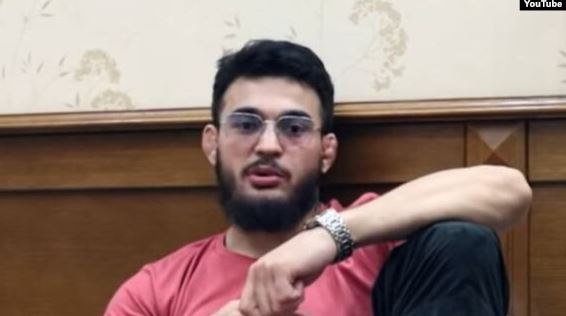
In Tajikistan, the well known MMA fighter and prominent blogger Chorshanbe Chorshanbiev, already serving an 8.5-year prison sentence, has been handed an additional four years on new charges. Journalist Anora Sarkorova reported the development on November 18, which was later confirmed by sources at Radio Ozodi. Chorshanbiev, known for criticizing Tajik authorities in the Gorno-Badakhshan Autonomous Region while residing in Russia, was deported to Tajikistan in December 2021. By May 2022, he was convicted of “public calls for violent change of the constitutional order” and sentenced to 8.5 years in prison. Details of the additional sentence remain unclear, but it is speculated to be related to either violations of prison regulations or involvement in a fight. Recently, Chorshanbiev was transferred from a penal colony in Khujand to a pre-trial detention center in Dushanbe. Chorshanbiev’s legal troubles began in December 2021 when he was deported from Russia for traffic violations. Upon his arrival in Dushanbe, he was arrested, and the Tajik prosecutor's office initiated charges against him, alleging incitement of social and national discord and calls to overthrow the state system. However, during the investigation, the first charge was dropped. His trial garnered significant public attention. Prominent athletes in Russia voiced their support for him, and his defense team argued that the case rested on a single piece of evidence: a video recorded in November 2021. In the video, Chorshanbiev commented on violent clashes in Khorog, during which three people were killed and dozens injured. The prosecution claimed his statements amounted to incitement of protests against the government. A political scientist’s analysis, presented during the trial, characterized Chorshanbiev’s remarks as a call for rebellion. However, his lawyers contested this interpretation and requested a re-evaluation of the video. In court, Chorshanbiev maintained that he had no intention of destabilizing the country. Despite the divided expert opinion, Chorshanbiev was convicted, and his case continues to provoke debate.

Out With the Old and in With the New: From Politicians to Felons: Part Two

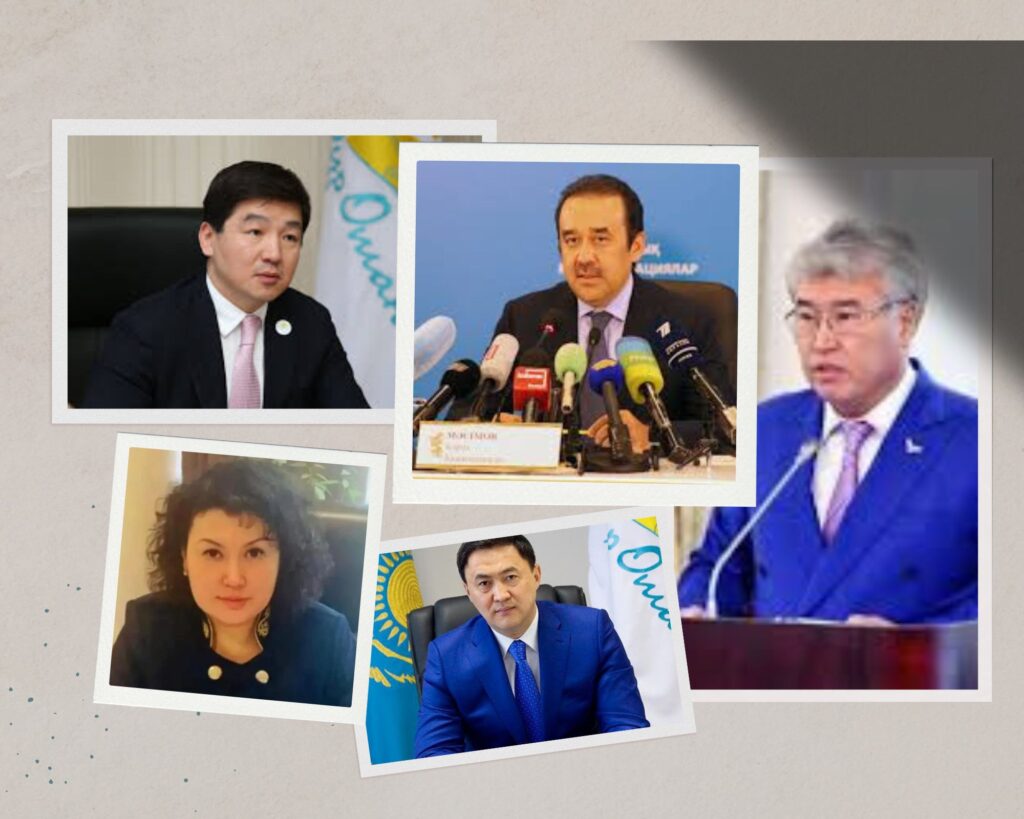
The end of the first president of Kazakhstan, Nursultan Nazarbayev’s era coincided with a wave of mass protests across the country. The widely-accepted cause was the death of five children in a fire in a dilapidated annex to a private house, the like of which there are many in the suburbs of Astana. This tragedy occurred on the night of February 4, 2019, when the girls, with ages ranging from a baby to twelve years old, were left home alone. The event sparked furious complaints from mothers of children across the country, and on March 19 of the same year, Nazarbayev resigned, handing power to the next in the constitutional hierarchy, Kassym-Jomart Tokayev, the speaker of the Senate (Kazakhstan's upper house of parliament). High-profile cases of the transition period From that moment until the events of January 2022, the country went through a transitional period, which is often spoken of as having been a time of dual power. By analogy with the “Kremlin Towers” (a popular theory about clans in Vladimir Putin's Russia being engaged in an irreconcilable struggle for resources and influence), the new president's entourage began to be called “Akorda” - after the head of state's residence in Astana. Supporters of Nazarbayev and the idea of his return to the presidency, meanwhile, were known as the “Library” – a reference to the Library of the First President. It was believed that the officials Tokayev inherited from his predecessor were more likely to run reports to the Library than to the Akorda. This division serves to explain how the new president was bound in his ability to implement changes. Tokayev initially announced a course of political, economic and social reforms, but only the latter were implemented, while the rest were sabotaged. Even support from the general public, which Tokayev managed to garner in the National Council of Public Trust, did not help matters.Even under such constraints, however, it was possible to begin a purge of the establishment. For example, in 2020, the country was shaken by the first high-profile criminal case under Tokayev, when Bulat Bakauov, akim of the Pavlodar region and a bellwether of high-profile scandals under Nazarbayev, was accused of abusing his authority and arrested. However, the influence of Nazarbayev's entourage remained strong, so the sentence handed down to the former Akim turned out to be a meagre restriction of freedom for 3.5 years. The court obliged Bakauov to refrain from leaving his residence and regularly report to the probation service. In addition, Bakauov was obliged to engage in a hundred hours of public labor, ordered to return $10,000, and banned from holding public office. In the same year, there was a glimmer of hope that the former Akim of Almaty, Bauyrzhan Baibek - who was elevated to the height of political power by his father's childhood friendship with Nursultan Nazarbayev – would be held to account. Urban legends still circulate about the illegal earnings of Baibek and his team from the reconstruction of the center of...