• KGS/USD = 0.01143 0%
  • KZT/USD = 0.00206 0%
  • TJS/USD = 0.10811 -0.18%
  • UZS/USD = 0.00008 0%
  • TMT/USD = 0.28571 0%
  • KGS/USD = 0.01143 0%
  • KZT/USD = 0.00206 0%
  • TJS/USD = 0.10811 -0.18%
  • UZS/USD = 0.00008 0%
  • TMT/USD = 0.28571 0%
  • KGS/USD = 0.01143 0%
  • KZT/USD = 0.00206 0%
  • TJS/USD = 0.10811 -0.18%
  • UZS/USD = 0.00008 0%
  • TMT/USD = 0.28571 0%
  • KGS/USD = 0.01143 0%
  • KZT/USD = 0.00206 0%
  • TJS/USD = 0.10811 -0.18%
  • UZS/USD = 0.00008 0%
  • TMT/USD = 0.28571 0%
  • KGS/USD = 0.01143 0%
  • KZT/USD = 0.00206 0%
  • TJS/USD = 0.10811 -0.18%
  • UZS/USD = 0.00008 0%
  • TMT/USD = 0.28571 0%
  • KGS/USD = 0.01143 0%
  • KZT/USD = 0.00206 0%
  • TJS/USD = 0.10811 -0.18%
  • UZS/USD = 0.00008 0%
  • TMT/USD = 0.28571 0%
  • KGS/USD = 0.01143 0%
  • KZT/USD = 0.00206 0%
  • TJS/USD = 0.10811 -0.18%
  • UZS/USD = 0.00008 0%
  • TMT/USD = 0.28571 0%
  • KGS/USD = 0.01143 0%
  • KZT/USD = 0.00206 0%
  • TJS/USD = 0.10811 -0.18%
  • UZS/USD = 0.00008 0%
  • TMT/USD = 0.28571 0%

Viewing results 1 - 6 of 22

An Exploration of Identity by Kazakh Artist Gulnur Mukazhanova

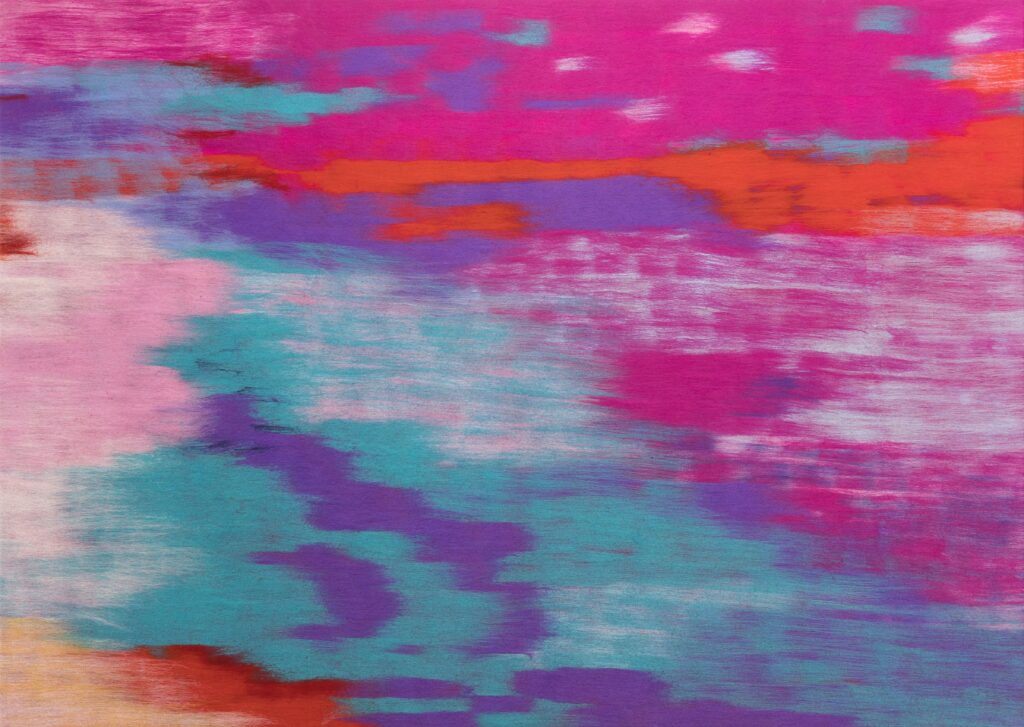
There are some abstract works that can feel like a spiritual encounter. We are all familiar with the work of Mark Rothko, a master in materializing emotions and bringing viewers to transcendence through simple hues, nuances, and color gradients. Far fewer people however, will be aware of Gulnur Mukazhanova, a Kazakh artist whose felt paintings are imbued with a tenderness that offers viewers solace and comfort, and grounded in hope, open new horizons. When I first saw the artist’s work at the Parisian art fair ‘Asia Now’ two years ago, I was immediately struck by her unique use of wool and felt in the creation of abstract art. Delicate and evocative at once, her work successfully elevates craft to the status of fine art. [caption id="attachment_21715" align="alignnone" width="732"] Photo: Estefania Landesmann: Gulnar at work[/caption] Born in Semipalatinsk, Kazakhstan, shortly before the end of the USSR, the artist has been working with textiles since beginning her practice, and influenced by Kazakh traditions, employs felt as a primary material. Mukazhanova studied at the Art Academy in Almaty and later, at the Kunst Hochschule in Berlin Weißensee. She has now lived and worked in Berlin for many years and it was here, that she started to process her Kazakh origins, heritage, and the state of society, with an international audience in mind. Spiritual and emotional, her abstractions are informed by issues concerning identity and the transformation of traditional values of her  native culture in the age of globalization. TCA caught up with Gulnur to discuss her latest work, her creative process, and how her Kazakh origins continue to influence her art. TCA: What initially drew you to art and how did your journey begin? GM: My earliest memories involve drawing animals when I was around five years old. My cousin, also an artist, had a significant influence on me and was the first person to open my eyes to the world of art. I studied art at the university in Kazakhstan and then moved to Berlin, initially to study textile design. However, I quickly realized that design wasn’t my path and so, shifted my focus to more experimental approaches with textiles. By the end of my studies in Berlin, I was fully immersed in working with felt and it has remained a central part of my practice ever since. [caption id="attachment_21716" align="alignnone" width="2500"] Photo: Thierry Bal : Öliara & the Dark Moon[/caption] TCA: Your work often carries deep emotional and historical weight, as illustrated by your series “Öliara: The Dark Moon” and your abstract self-portraits. How do you approach abstraction in these works? GM: “Öliara: The Dark Moon” was a solo show in Mimosa House in London that dealt with dark periods in Kazakh history, particularly the tragic events of "Bloody January" 2022. The series reflects on life, death, and the fragile nature of existence; themes that are unfortunately all too relevant in our world today. The felt pieces in this series are abstract allowing them a deep emotional resonance which would not be afforded by a...

Decolonial Futurism: A Focus on Kazakhstan’s Pavilion at the 60th Venice Biennale

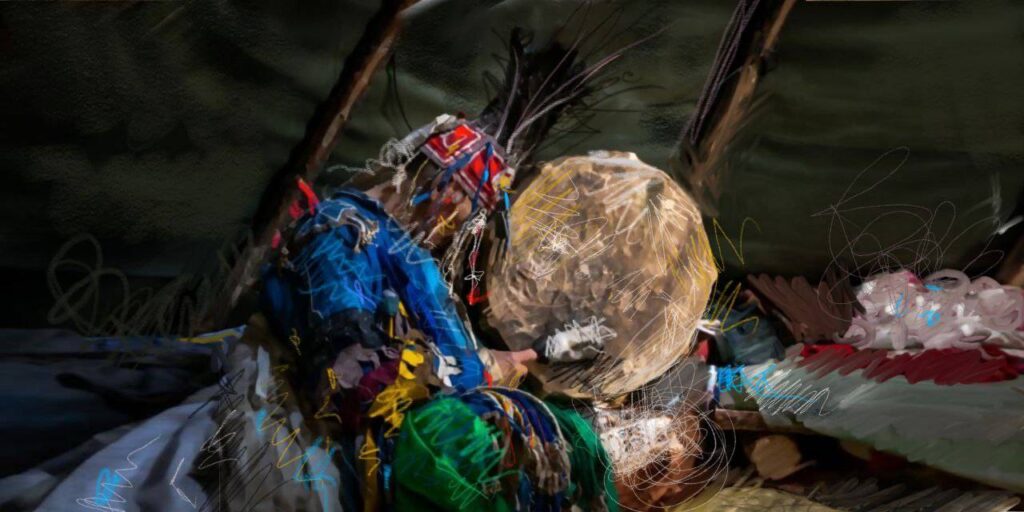
Kazakh artists have traditionally been marginalized in the global art scene due to political intricacies and a complex cultural identity. With historical influences and colonization by both Russia and China, Kazakh artists are now carving out a unique artistic identity and sharing it with international audiences. The Kazakh pavilion "Jerūiyq: Journey Beyond the Horizon" at the 60th International Art Exhibition of the Venice Biennale, from April 20 to November 24, represents a major milestone in changing perceptions of Kazakh art. Staged in the Naval Historical Museum, the exhibition reinterprets the ancient legend of Jerūiyq, drawing inspiration from Kazakh myths and the visionary journey of the 15th-century philosopher Asan Kaigy. The word "kaigy" means "pain" in Kazakh, symbolizing the nation's traumatic encounters with modernity's darker aspects: the devastating famine of the 1930s, the craters left by nuclear tests in Semey, the shrinking of the Aral Sea, and the wounds inflicted on the Kazakh landscape. The exhibition traces the evolution of Kazakh utopian imagination from the 1970s to today through artists’ visions of ideal worlds, where their utopian imagination merges with the artistic movement of "decolonial futurism." On behalf of TCA, Naima Morelli interviewed curator Anvar Musrepov on the concept and significance of Kazakhstan's participation in the Venice Biennale. TCA: How did the idea for the Kazak pavilion “Jerūiyq: Journey Beyond the Horizon” evolve? A.M: In our curatorial research, we found that the theme of utopia and futuristic imagination has concerned several generations of Kazakhstan's artists since the 1970s. Using this as a starting point, we decided to establish, in chronological order, a collection of works by multiple generations of artists. Divided by decades, the collection manifested a wave of Kazakh futurism, including themes of spirituality, cosmism, nomadism, and utopian ideas. This in turn, will help formulate a term to comprehensively describe and unite all these intuitions that have concerned Kazakh artists in different historical periods. [caption id="attachment_18933" align="aligncenter" width="522"] Sergey Maslov, "Baikonur" at the Venice Biennale [/caption]   TCA: The exhibition’s title alludes to the ancient legend of Jerūiyq. What is it about and  how have you interpreted it? A.M: Jeruiq is an ancient legend about a utopian land that according to many myths, was sought by Asan Kaigy, advisor to the first Kazakh khans Zhanibek and Kerey. Legend describes it as a land that has fermented, a place where time has stopped, a land full of vividness, devoid of disease or longing. We found in this ancient Kazakh legend, an ideal metaphor to unite all the intuitions presented in the exhibition and manifest the chronology of post-nomadic futuristic imagination. If established, the definition of this unique phenomenon, could become a movement in Kazakh art. TCA: What can you tell us about the philosopher Asan Kaigy? A.M: Asan Kaigy is a quasi-historical character who features in Kazakhstan’s rich oral tradition where history and memory are passed down from mouth to mouth. Every region of Kazakhstan has local legends about miracles performed by Asan Kaigy. One such legend says that he found...