• KGS/USD = 0.01143 0%
  • KZT/USD = 0.00206 0%
  • TJS/USD = 0.10811 -0.18%
  • UZS/USD = 0.00008 0%
  • TMT/USD = 0.28571 0%
  • KGS/USD = 0.01143 0%
  • KZT/USD = 0.00206 0%
  • TJS/USD = 0.10811 -0.18%
  • UZS/USD = 0.00008 0%
  • TMT/USD = 0.28571 0%
  • KGS/USD = 0.01143 0%
  • KZT/USD = 0.00206 0%
  • TJS/USD = 0.10811 -0.18%
  • UZS/USD = 0.00008 0%
  • TMT/USD = 0.28571 0%
  • KGS/USD = 0.01143 0%
  • KZT/USD = 0.00206 0%
  • TJS/USD = 0.10811 -0.18%
  • UZS/USD = 0.00008 0%
  • TMT/USD = 0.28571 0%
  • KGS/USD = 0.01143 0%
  • KZT/USD = 0.00206 0%
  • TJS/USD = 0.10811 -0.18%
  • UZS/USD = 0.00008 0%
  • TMT/USD = 0.28571 0%
  • KGS/USD = 0.01143 0%
  • KZT/USD = 0.00206 0%
  • TJS/USD = 0.10811 -0.18%
  • UZS/USD = 0.00008 0%
  • TMT/USD = 0.28571 0%
  • KGS/USD = 0.01143 0%
  • KZT/USD = 0.00206 0%
  • TJS/USD = 0.10811 -0.18%
  • UZS/USD = 0.00008 0%
  • TMT/USD = 0.28571 0%
  • KGS/USD = 0.01143 0%
  • KZT/USD = 0.00206 0%
  • TJS/USD = 0.10811 -0.18%
  • UZS/USD = 0.00008 0%
  • TMT/USD = 0.28571 0%

Viewing results 1 - 6 of 22

Future Nostalgia: Alexander Ugay’s Parisian Debut at NIKA Project Space

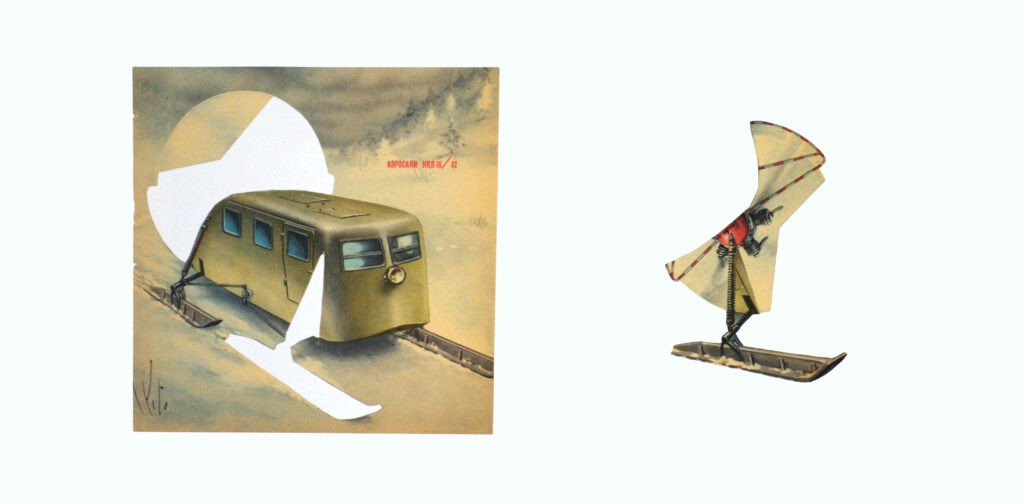
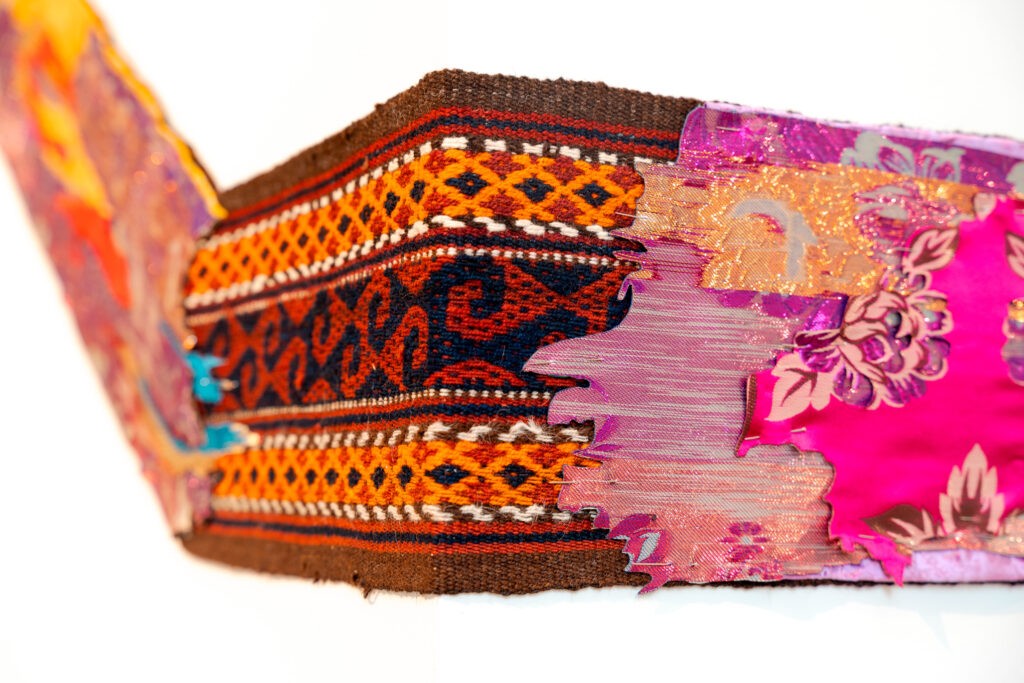
Have you ever had that feeling of “Future Nostalgia” - as Dua Lipa would put it – when looking at old sci-fi movies that imagined a future that never came to pass? The fact that this future didn’t materialise might be as might be seen as both a blessing and a disappointment, as artist Alexander Ugay has us reflecting upon with his Parisian debut. Born in Kazakhstan to a Korean family deported under Stalin’s regime, Ugay’s work is heavily inspired by his own experience and is layered with echoes of ancestral trauma, the faded promise of Soviet modernity, and the flickering ghost of a future once imagined but that never fully came to fruition. A child of engineers and inventors, Ugay grew up among circuits and cyanotypes, and in his art, he uses materials such as 8mm film and VHS tape. With this vintage spirit, his body of work looks at the past to speak of the present, and posits a critique of the techno-utopianism of the Soviet 1970s, as much as today's AI-driven image culture. In his new show, More than Dreams, Less than Things, at NIKA Project Space Paris, Ugay looks at the origins of image-making both literally and philosophically. Inspired by Ibn al-Haytham’s Book of Optics, the artist reanimates the ancient camera obscura, letting light seep through the book’s pages to birth abstract images: faded records of a presence. The exhibition, which opened on March 16, explores the tension between technological progress and the way this can be disrupted by the power of imagination and poetry - eminently human things - by looking at the intersection of photography, technology, and diasporic memory. His show, curated by Elena Sorokina, situates an emergence of Central Asian narratives coming more and more to the forefront of the international art and cultural world of Europe. Through the lens of Soviet futurism, Ugay explores a broader vision of seeing in an age where so much remains invisible. TCA spoke with Ugay about the way he approaches his art, his sources, and how he conceives images not as finished objects but as processes — mutable, unstable, and deeply human. [caption id="attachment_30561" align="aligncenter" width="2560"] 03_Alexander Ugay, More than Dreams, Less than Things. Courtesy of the artist[/caption] TCA: Where does the title for your new show, More than Dreams, Less than Things, come from? The title came about after reading Henri Bergson's book, Matter and Memory. I really liked the idea that an image is not only the relationship between absence and presence but also intensity and density. This idea made up for my dissatisfaction with the notion of resolution in photography. The title, in this case, is not just a definition of the image but a key to understanding its substantive basis. The image is the surface of the ‘grand contract’ between necessity and freedom, memory and matter, entropy and being. TCA: In More than Dreams, Less than Things, you use the camera obscura technique. How does this historical process relate to your exploration...

Kazakh Theatrical Performance Breaks Annual Record

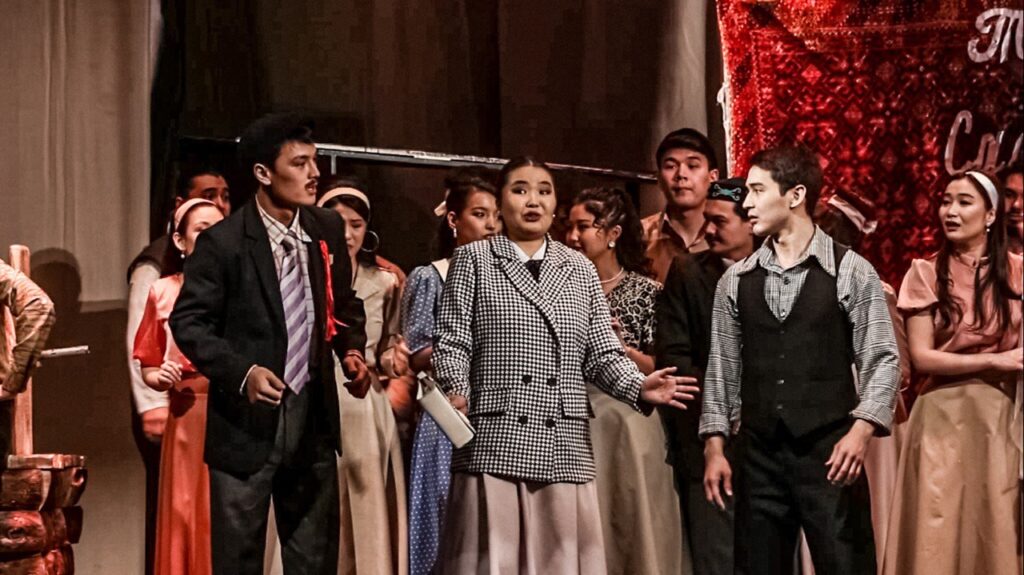
The play Gauhartas, directed by Kazakhstani theater artist Askhat Maemirov, has been staged over 250 times within a year, marking a record achievement in Kazakhstan’s theater industry. This widely acclaimed production is an adaptation of a work by esteemed Kazakh writer, Dulat Isabekov. His story depicts the life of a Kazakh family during the Soviet period, shedding light on the struggles of ethnic minorities under an authoritarian regime. In 1975, the Kazakhfilm studio produced a movie based on this work.   With every show selling out, the play has already drawn nearly 75,000 spectators. It has been performed in several major cities across Kazakhstan, including Aktau, Atyrau, Oral, Taldykorgan, and Almaty. Plans are now in place to present the production on an international stage. “In this production, we emphasize the significance of family and cultural values in Kazakh society,” said the director of the musical drama. “We examine the roles of mothers and fathers, questioning their responsibilities and influence. By portraying the life of an ordinary Kazakh family, we aim to reflect deeper human emotions. At its core, the play conveys the importance of safeguarding love and happiness within the home.” Though Gauhartas was first introduced to readers fifty years ago, its themes remain highly relevant today. The dynamics of family life and the bond between parents and children continue to be timeless subjects in literature and theater, and currently, many young people in Kazakhstan are coming to watch this play. [caption id="attachment_29683" align="aligncenter" width="1023"] Image: TCA, Duisenali Alimakyn[/caption] This work was written by the recently deceased Kazakh writer, Dulat Isabekov, when he was 25 years old while serving in the military near Moscow. Depicting Kazakh society, including one family’s internal resistance to the system and the impact of Soviet society on people, this work became one of the author’s timeless creations. The play offers a fresh perspective to Kazakh audiences by addressing the issue of women’s equality. It delves into the fractured relationship between society, a father, and a son, highlighting their inability to connect and understand one another, ultimately leading to tragedy. In essence, this work looks back at the past, aligns with the present, and paves the way for a hopeful future.

Amre Kashaubaev and the Mystery of an Old Photograph

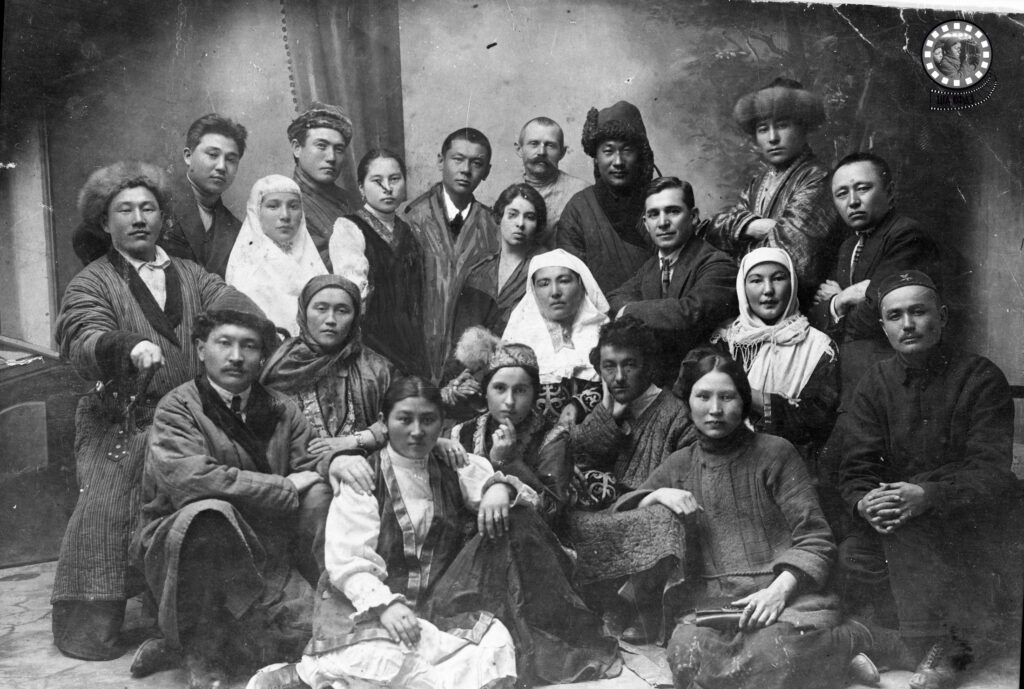
In Kazakhstan, the musical talent of Amre Kashaubaev is well known. Thanks to him, European audiences were introduced to the live melodies of Kazakh music when Kashaubaev performed Kazakh songs at the International Exhibition of Modern Decorative and Industrial Arts of 1925 in Paris. As previously reported by The Times of Central Asia, the first recordings of Kazakh music were made between 1903 and 1909 during the travels of the German explorer Richard Karutz in Turkestan. His book, Among the Kirghiz and Turkmens in Mangyshlak, published in 1911 in Russia, was edited by Vasily Radlov, a renowned ethnographer, archaeologist, and educator of German origin, who was also a pioneer in Turkology. However, it was only in 1925, thanks to Kashaubaev’s talent, that Europeans could hear Kazakh folk songs performed live. The fate of this man is very similar to the destinies of thousands of talented individuals in the early years of the Soviet Union, whose creative works could not fit into the "Procrustean bed" of communist ideology. [caption id="attachment_27972" align="aligncenter" width="1279"] Amre Kashaubaev and his wife Orazke, Kzyl-Orda, 1926.[/caption] Amre Kashaubaev was born in 1888 in the Abraly district of the Semipalatinsk region. His first professional attempt to become a singer was a public performance at a fair near the village of Koyandy, not far from the modern city of Petropavlovsk, at a festival of Kazakh oral art. Through his songs, Kashaubaev’s art became famous throughout Kazakhstan. Anatoly Lunacharsky, then the People’s Commissar for Education, personally invited him to participate in concerts at the International Exhibition in Paris. Kashaubaev also actively participated in the creation of the first Kazakh professional theater. In April 1927, he gave a concert in Moscow, followed by a performance in Frankfurt. He frequently performed on the radio, singing Kazakh folk songs and enchanting listeners with the beauty and depth of his voice. His theatrical performances also garnered great interest. Today, archival institutions and museums in Kazakhstan hold only a few photographs and documents depicting Kashaubaev. This is because many documents were destroyed by his colleagues and relatives due to his political persecution by the Bolsheviks. His trip to Paris proved to be fatal for the singer since it drew the attention of the Soviet state security agencies. During the Paris exhibition, the talented singer met Kazakh political dissident Mustafa Shokay, who in 1917 had been the Chairman of the Kokand Autonomy — a state entity that lasted for six months in the Turkestan region of the Russian Empire. Moreover, Shokay was an active member of the Alash Party, which the Soviets deemed bourgeois and whose members were subjected to repression. Although Kashaubaev was not imprisoned for his ties with political opponents of the Bolsheviks, he faced significant pressure from the authorities. On December 6, 1934, he was found dead on the streets of Alma-Ata. The cause of his death remains unknown. Within the archival fonds of The Central State Archive of Film, Photo Documents, and Sound Recordings of the Republic of Kazakhstan, we believe there...

Art and Inspiration: Capturing the Essence of Almaty

With colorful illustrations of landmarks, natural monuments, and city-life moments, Aidana Niyazalieva’s postcards of Almaty stand out. TCA spoke with the artist to learn more about her inspiration, creative process, and challenges behind her postcards and the Almaty arts scene. TCA: What inspired you to start making postcards of Almaty? I've been drawing since I can remember; everything surrounding me – my room, the streets, and the buildings – inspires me. This led me to study architecture. However, after working as an architect, I realized that my passion for drawing was stronger. I decided to try it, eventually devoting myself to illustration and turning this hobby into a profession. I started with the city I grew up in, Almaty, and created a few postcards of the views I walked past the most. This became a way to combine everything I love - art, architecture, and my love for the city. TCA: How do you decide which landmarks, views, or themes to feature in your postcards? I choose places and themes close to me that evoke an emotional connection in people. Usually, the ideas come from my walks around the city. During my walks, I take many photos for possible drawings. Sometimes, a few buildings of the same type could grow into a series of illustrations, as in the “Houses“ postcard set that was united by the old houses of the Soviet period located in a Golden Square area. Also, I might get requests from people about places they would like to see, as happened with the Kazakhstan Hotel or Esentai River illustrations. TCA: What is your favorite spot in Almaty to capture in your art, and why? My favorite place in Almaty is the old city center. Its unique architecture, with characteristic features from different periods from neoclassical to modernist buildings, and its streets with cafes and terraces have always attracted my attention. Those buildings keep their history, whether these are old houses with sophisticated details or monumental facades of theaters and institutes. When I'm there, I always look closely at small elements like the carved balconies, window frames, mosaics, and patterns on the facades – I try to capture them in every illustration. TCA: Are there specific stories or personal memories behind some of your postcard designs? As a local, I have a personal connection to almost every location I illustrate. Capturing a place authentically requires more than just visual reference - it also needs an emotional connection. That’s why I barely draw locations I’ve never visited. Behind almost every illustration is a moment tied to the place. For example, the Kasteyev Museum holds a special place in my heart. My grandma used to take me there often when I was little, and it’s where I first took art lessons. So, I decided to create this illustration to capture the architecture of the museum and the memories connected to the place. TCA: Can you walk us through the creative process behind designing a postcard? Firstly, after the location is...

UAE Embracing the Silk Road Narrative: Central Asia at Art Abu Dhabi 2024

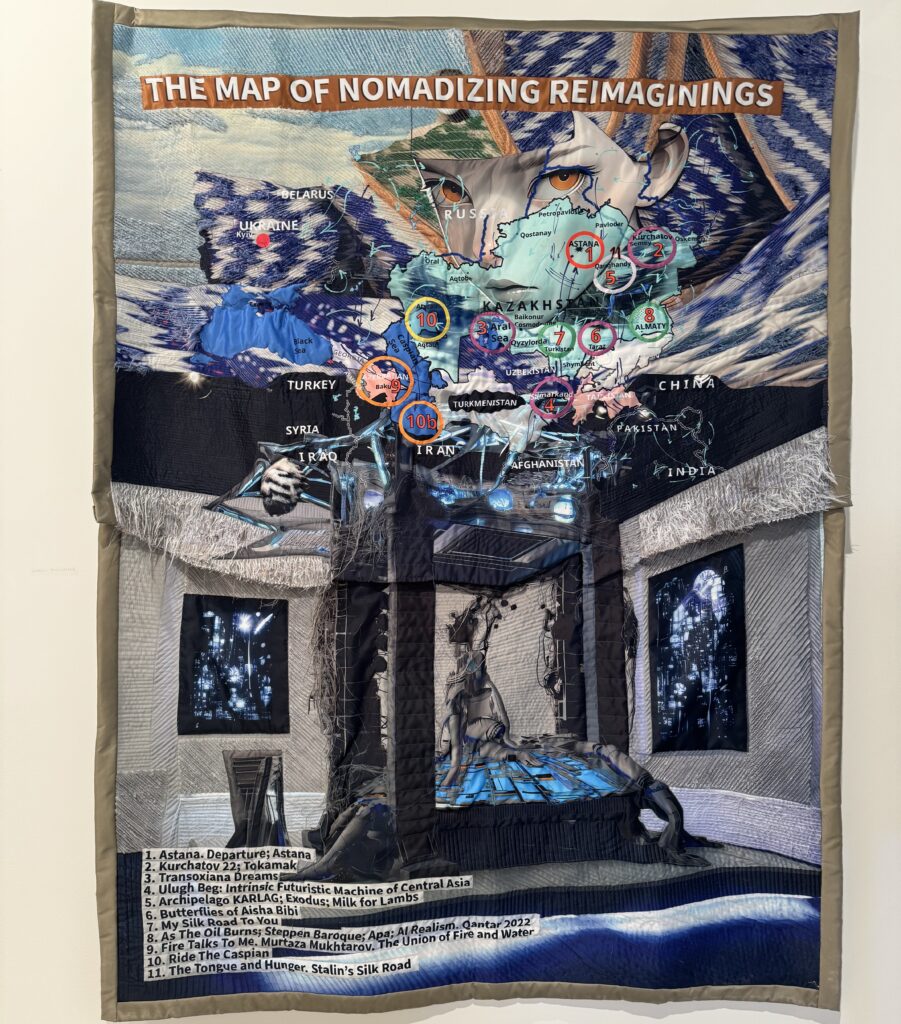
More than at any other time in recent history, the entire art world is this year tackling geopolitical identity issues. And while we usually delegate Biennales and non-commercial art events to take the pulse of our contemporary reality, this time an art fair took up this task: Art Abu Dhabi. This year the fair was bigger than ever and had a hugely relevant Central Asian and Caucasus section, curated by Elvira Eevr Djaltchinova-Malec, which was aptly called “Drifting identities.” Founder of the Warsaw Institute for Modern and Contemporary Asian Art (WIMCAA) Foundation - based on the spreading of Asian and global art – Djaltchinova-Malec was invited by the fair's artistic director, Dyala Nusseibeh, to curate a section that presented different aspects of the rich cultural tapestry of the region without shying away from the political concerns and instability which often characterize this part of the world. [caption id="attachment_26543" align="aligncenter" width="928"] From left to right, Abdelmonem Alserkal - prominent art patron based in Dubai, founder of the Alserkal Avenue, Alserkal Foundation, Elvira Eevr Djaltchinova-Malec, Almagul Menlibayeva, and Danagul Tolepbay image: Elvira Eevr Djaltchinova-Malec[/caption] Djaltchinova-Malec has been working on this concept of the Silk Road in different shows – namely Silk Road 2.0 - Artists re-loaded conference in Warsaw, Silk Road 2.0 - New Opportunities panel for art for 021 Art fair in Shanghai - adapting it to the changing geopolitical landscape of the region. "Our foundation was established in 2016, and already, eight years ago, we started to explore the topic of the Silk Road,” Djaltchinova-Malec told TCA. “We wanted to understand the desire of China and countries who joined Chinese projects for the New Silk Road, and we invited artists and art professionals from Vietnam, the United Kingdom, Central Asia, Kazakhstan, Germany, Tibet, France, and Ukraine for the foundation’s first conference.” The Belt and Road Initiative, sometimes referred to as the New Silk Road, is a global infrastructure development strategy adopted by the Chinese government in 2013 to invest in more than 150 countries and international organizations. [caption id="attachment_26545" align="aligncenter" width="2560"] Tapestry by Almagul Menlibayeva; image: Elvira Eevr Djaltchinova-Malec[/caption] It’s the first time that the curator is presenting these artistic geographies in the context of the Gulf. On one hand, this is opening up Central Asian narratives to an Arab public that might be curious to learn more about art in this region. On the other hand, it is helping to open markets and create access to a different pool of new collectors. Thanks to an individual outreach which started well before the fair, the experiment proved successful. "Fortunately, many collectors from the Gulf already know artists from Central Asia, as there are a few art galleries in the UAE which represent them, as well as institutions like the Sharjah Foundation,” Djaltchinova-Malec stated. In addition, many collectors and artists from Russia who are knowledgeable about Central Asian narratives and sensitive to colonization issues, are now based in the UAE. “We tried to involve as many collectors from other circles as...

Gods and Demons of Central Asia

In today's dynamic world, Central Asia is emerging as a trendsetter in fashion, culture, lifestyle, and worldview. The ancient Tengrian faith, deeply rooted in Central Asian mythology and superstitions, may soon resurface creatively among the region's people, though it is unlikely to be reinstated as an official religion. While some in Kazakhstan attempt to distance themselves from Abrahamic religions, Tengrism remains a vital part of the cultural heritage, featuring gods, demigods, and dark entities that shaped the beliefs of our ancestors during the pre-Islamic era.   [caption id="attachment_22010" align="aligncenter" width="167"] photo: pininterest: Tengri's domain[/caption]   Divine entities According to Tatar scientist and writer Gali Rahim, shamanism attributes significant roles to various spirits and deities. Among the Turkic peoples, the supreme deity is Tengri, the eternal blue sky. Rahim's lectures on “The Folklore of the Kazan Tatars,” presented at the East Pedagogical Institute in the 1920s, describe Tengri as the primary god in Turkic cosmology, with the earth and humanity emerging from the union of the sky and the earth. Umai, the goddess associated with motherhood and children, stands next in importance. Ancient Turkic inscriptions and symbolic artifacts, such as the stone carving discovered in 2012 in the Zhambyl district of Almaty, Kazakhstan, depict her as a protective figure for children. Teleut pagans represented her as a silver-haired, young woman who descended from heaven on a rainbow to guard children with a golden bow, and the Kyrgyz appealed for her help during childbirth and when children fell ill. Motifs dedicated to Umai by Shorian shamans, were positioned around cradles. Boys' cradles were pierced with an arrow,  girls' with a spindle, and wooden arrows were placed within the those of both. Another prominent character common to Turkic, Mongolian, and Altaic mythology is Erlik or Yerlik Khan. Ruler of the underworld, the horned deity presides over the realm of the dead from a palace of black mud or blue-black iron on the bank of the Toibodym, a river of human tears. A single horsehair bridge is guarded by monsters known as dyutpa whilst the palace is protected by Erlik’s sentries or elchi, brandishing pike poles known as karmak. His breath, carried by a tan, a light warm breeze, was believed to paralyze anyone who inhaled it, which is why the Khakas term for paralysis, tan sapkhany, literally means “wind blow.” Kudai (Khudai), also known as Ulgen, is another central deity who, alongside his brother Erlik, created the land, its vegetation, mountains, and seas. Kudai created man from clay, and Erlik gave him his soul. Kudai created a dog but it was Erlik who clothed it in hair. Whilst Kudai created the first animals, the horse, the sheep, and the cow, Erlik created the camel, the bear, the badger, and the mole. Kudai brought down lightning from the sky and commanded thunder. In a dispute over who was the mightiest creator, Kudai won. The brothers parted ways, and after producing nine sons, from whom the tribes of Kpchak, Mayman, Todosh, Tonjaan, Komdosh, Tyus, Togus,...