
• KGS/USD = 0.01144 0%
  • KZT/USD = 0.00201 0%
  • TJS/USD = 0.10470 -0.19%
  • UZS/USD = 0.00008 0%
  • TMT/USD = 0.28490 0%
  • KGS/USD = 0.01144 0%
  • KZT/USD = 0.00201 0%
  • TJS/USD = 0.10470 -0.19%
  • UZS/USD = 0.00008 0%
  • TMT/USD = 0.28490 0%
  • KGS/USD = 0.01144 0%
  • KZT/USD = 0.00201 0%
  • TJS/USD = 0.10470 -0.19%
  • UZS/USD = 0.00008 0%
  • TMT/USD = 0.28490 0%
  • KGS/USD = 0.01144 0%
  • KZT/USD = 0.00201 0%
  • TJS/USD = 0.10470 -0.19%
  • UZS/USD = 0.00008 0%
  • TMT/USD = 0.28490 0%
  • KGS/USD = 0.01144 0%
  • KZT/USD = 0.00201 0%
  • TJS/USD = 0.10470 -0.19%
  • UZS/USD = 0.00008 0%
  • TMT/USD = 0.28490 0%
  • KGS/USD = 0.01144 0%
  • KZT/USD = 0.00201 0%
  • TJS/USD = 0.10470 -0.19%
  • UZS/USD = 0.00008 0%
  • TMT/USD = 0.28490 0%
  • KGS/USD = 0.01144 0%
  • KZT/USD = 0.00201 0%
  • TJS/USD = 0.10470 -0.19%
  • UZS/USD = 0.00008 0%
  • TMT/USD = 0.28490 0%
  • KGS/USD = 0.01144 0%
  • KZT/USD = 0.00201 0%
  • TJS/USD = 0.10470 -0.19%
  • UZS/USD = 0.00008 0%
  • TMT/USD = 0.28490 0%

Viewing results 1 - 6 of 9

TCA Interview: Musician Merey Otan on the Reinvention of Kazakh Musical Instruments

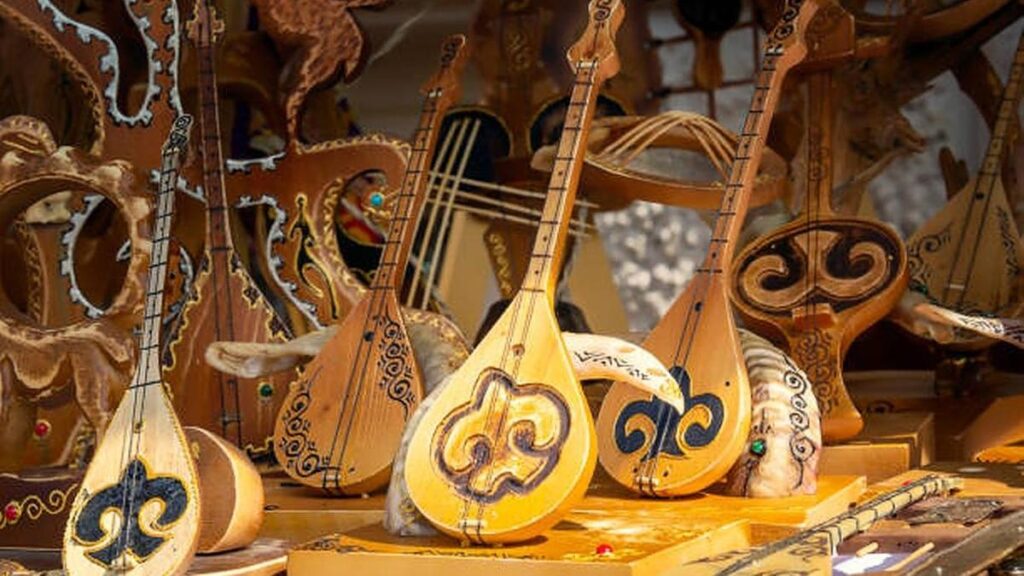
Until recently, Kazakh national instruments were largely associated with school concerts, folk ensembles, and official ceremonies. The dombra (a long-necked, two-stringed plucked instrument), kobyz (a bowed string instrument with two horsehair strings), and sybyzgy (a wooden end-blown flute traditionally made from apricot wood) seemed to occupy a separate cultural space: symbolically important, yet detached from everyday life. “Before, the dombra was for me only part of school concerts,” recalls Sanzhar Uvashev, 24, a sales specialist from Almaty. “It was brought out on holidays, people dressed in national costumes, played a couple of obligatory songs, and that was it. I never thought this instrument could sound different, or be part of contemporary music.” Today, that distance is steadily narrowing. The sound of the dombra is increasingly featured in contemporary original music, electronic compositions, film scores, and social media. Young musicians are not abandoning tradition, but they are no longer treating it as something frozen in time. To understand how this rethinking is taking place, and why tradition need not remain 'untouched', The Times of Central Asia spoke with Merey Otan, a researcher and musician who works with Kazakh instruments in a modern cultural context. ТCA: Merey, how did your study of national instruments begin? Was it a deliberate decision? MO: It started during my master’s studies, when I was writing a thesis on contemporary music in Kazakhstan. As part of that research, I interviewed the ethno-rock band Aldaspan and kobyz player Almat Saizhan. I was especially interested in how the dombra and kobyz were being transformed and modernized and eventually devoted a whole chapter of my work to this topic. So yes, it was a conscious choice. TCA: People often argue that tradition should be preserved in its original form. What’s your take on that? MO: I’ve heard that view often, especially from traditional musicians. Some believe, for example, that an electronic dombra desecrates the instrument. Given the sacred meaning of the dombra and kobyz, I understand that stance. In sociology, these people are sometimes called purists. But I disagree. The world is changing, and some traditions from the nomadic era have lost their relevance or even become barriers. I believe traditions can, and sometimes should, evolve. If modifying an instrument helps engage younger generations, why not? TCA: Where do you personally draw the line between respect for heritage and experimentation? MO: I see nothing wrong with experimentation. On the contrary, bands like Steppe Sons show deep respect for heritage. Their members have formal musical education and a strong grounding in tradition. However, it's important to consider the concept of cultural appropriation from postcolonial theory. This occurs when privileged groups use the culture of marginalized communities for personal gain. In music, this might look like a Western artist profiting from Kazakh instruments without acknowledging Kazakh musicians. That, in my view, is disrespectful. TCA: Is there still criticism about the “incorrect” use of traditional instruments? MO: Yes, certainly. When Aldaspan introduced the electronic dombra, public figures like Bekbolat Tleukhan were highly critical....

Kazakhstan’s Yenlik Brings Her Sound to COLORS

Kazakhstani singer and songwriter Yenlik has made history by becoming the first artist from Kazakhstan to be featured on the international music platform COLORSxSTUDIOS. Founded in Berlin in 2016, COLORSxSTUDIOS, commonly known as COLORS, has grown from a small creative experiment into one of YouTube’s most influential music platforms. Recognized for its minimalist visual style, each performance is filmed against a single-color backdrop without set design or special effects, placing the focus squarely on the music, the voice, and the artist. The channel now counts more than 8.2 million subscribers and over 3.5 billion views, cementing its status as a global tastemaker in contemporary music. Over the years, COLORS has showcased a wide range of talent, from emerging artists to international stars such as Billie Eilish, Drake, Doja Cat, and Joji. The platform describes its mission as an effort to “connect people, countries, and cultures on a creative and emotional level,” framing its global, genre-spanning approach as a form of cultural exchange as much as a musical one. Yenlik’s Voice: Rooted in Culture, Reaching Beyond Borders Yenlik, born Enlik Kurarbek, is one of the most prominent figures in Kazakhstan’s emerging musical wave. Her sound blends alternative pop with modern R&B influences, creating a style that feels both personal and closely tied to her cultural identity. The Kazakh language plays a central role in her work, not as a folkloric reference but as a contemporary form of expression. Her music reflects a broader shift in which Kazakh is increasingly present in global pop contexts without being confined to traditional or ethnic frameworks. Yenlik’s authorial sound, shaped by contemporary production and subtle national influences, is paired with an emotionally restrained vocal delivery that has become her signature. Observers suggest it was this originality that drew the attention of the COLORS curators. Known for prioritizing authenticity over commercial success, the platform seeks artists with strong individuality and a distinctive voice, qualities that align closely with Yenlik’s creative vision. From Rejection to Recognition For Yenlik, the invitation from COLORS marked a long-awaited milestone. She had previously applied to the project without receiving a response, making the eventual outreach from the platform all the more meaningful. “When the invitation came, I was overjoyed and burst into tears,” she recalled. “This project always felt so distant. Two years ago, we submitted an application with no response. And now, COLORS reached out to us first.” The performance was filmed outside Kazakhstan and completed within a few hours. Yenlik was struck by the production’s simplicity, defined by an absence of elaborate sets and large crews, and by the quiet intimacy that has become a hallmark of COLORS. The team fostered a welcoming atmosphere, and she was even able to choose the episode’s background color, which she described as symbolizing “true gentle strength,” a visual reflection of the emotional tone of her performance. Rising Digital Momentum Yenlik’s digital presence has continued to grow steadily, with her music gaining traction among younger audiences on social media. Her songs often circulate...

Q-Pop Is Back. Is Kazakhstan Ready This Time?

Around 2015, Kazakhstan saw the rise of Q-pop, led by the boy band Ninety One. A decade on, the cultural tension remains: while youth artists enjoy greater visibility, many observers argue that freedom of expression is still shaped by a silent boundary — ‘you can make music, but not stir too much controversy. A little over a decade ago, five young men in earrings and pastel clothes released “Aıyptama!” (“Don’t blame me”) - a slick, catchy track in Kazakh, with a video that looked like it came straight out of Seoul. The group, Ninety One, was born out of a reality TV show modeled on the K-pop system. At the time, Kazakh-language pop had little presence on mainstream radio or TV, where Russian-language and Western hits dominated. Much of the Kazakh-language music most people heard came from weddings and folk performances rather than commercial pop charts. Occidental pop, rock and Russian-language hip hop ruled the charts. So, when Azamat Zenkaev (AZ), Dulat Mukhamedkaliev (Zaq), Daniyar Kulumshin (Bala), Batyrkhan Malikov (Alem), and Azamat Ashmakyn (Ace) debuted as a group, they looked and sounded like nothing the local music scene had ever seen. Their appearance sparked outrage. In Karaganda, a 2016 concert was canceled after protests. “We are against them because they dye their hair and wear earrings!” a demonstrator shouted, captured in the 2021 documentary Men Sen Emes (Sing Your Own Songs) by Katerina Suvorova. “No parent would want their son to look like a woman,” a conservative activist added. Even their producer, Yerbolat Bedelkhan, noted, “They shook up Kazakh show business with their unusual looks.” And yet, their rise was unstoppable. Despite boycotts and online abuse, Ninety One topped national charts. Each video release became an event. Over time, their success helped make gender-fluid aesthetics more visible in Kazakhstan’s pop scene — and made singing in Kazakh fashionable again among young audiences. But their aesthetics stood in sharp contrast to the state-promoted model of Kazakh masculinity. [caption id="attachment_37776" align="aligncenter" width="770"] Ninety One; image: JUZ Entertainment[/caption] Revival and Restriction: The State’s Masculine Ideal In 2017, then-President Nursultan Nazarbayev launched Rukhani Zhangyru – a sweeping state program for “spiritual renewal.” Its goal was to forge a unified Kazakh national identity after decades of Soviet domination, largely by reigniting traditional values. Streets were renamed after historical khans, a National Dombra Day was established, and the country began shifting from Cyrillic to the Latin alphabet. But the cultural revival came with a gender script. School textbooks were rewritten, according to a 2021 Rutgers University study, to cast masculinity as a blend of strength, rationality, and emotional restraint. The ideal Kazakh man - the Batyr - was reimagined as a stoic warrior of the steppes. In this context, Ninety One’s aesthetics didn’t fit in. “Many thought Q-pop artists didn’t act like ‘real Kazakhs’,” Merey Otan, a musician and PhD candidate at Nazarbayev University told The Times of Central Asia. “Wearing makeup, earrings, or bright clothes, expressing emotions or sexuality – these all clashed with a...
