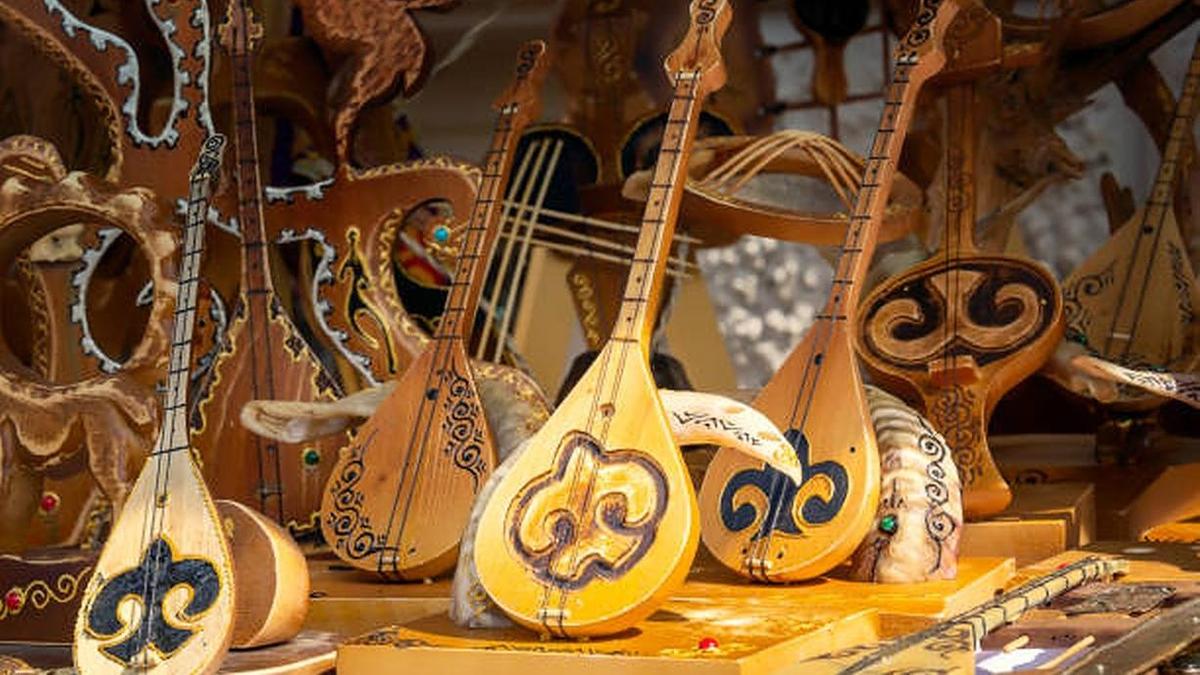
Until recently, Kazakh national instruments were largely associated with school concerts, folk ensembles, and official ceremonies. The dombra (a long-necked, two-stringed plucked instrument), kobyz (a bowed string instrument with two horsehair strings), and sybyzgy (a wooden end-blown flute traditionally made from apricot wood) seemed to occupy a separate cultural space: symbolically important, yet detached from everyday life.
“Before, the dombra was for me only part of school concerts,” recalls Sanzhar Uvashev, 24, a sales specialist from Almaty. “It was brought out on holidays, people dressed in national costumes, played a couple of obligatory songs, and that was it. I never thought this instrument could sound different, or be part of contemporary music.”
Today, that distance is steadily narrowing.
The sound of the dombra is increasingly featured in contemporary original music, electronic compositions, film scores, and social media. Young musicians are not abandoning tradition, but they are no longer treating it as something frozen in time.
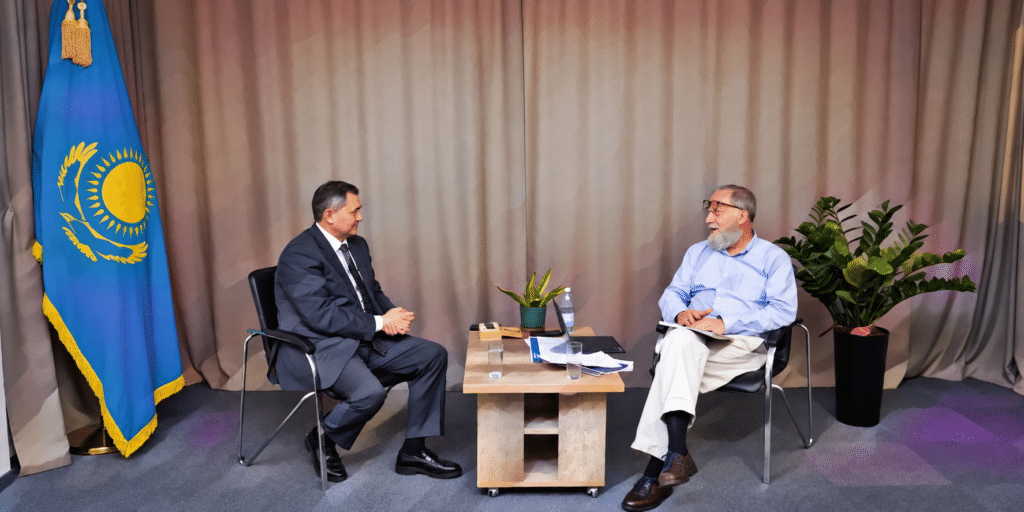
To understand how this rethinking is taking place, and why tradition need not remain ‘untouched’, The Times of Central Asia spoke with Merey Otan, a researcher and musician who works with Kazakh instruments in a modern cultural context.
ТCA: Merey, how did your study of national instruments begin? Was it a deliberate decision?
MO: It started during my master’s studies, when I was writing a thesis on contemporary music in Kazakhstan. As part of that research, I interviewed the ethno-rock band Aldaspan and kobyz player Almat Saizhan. I was especially interested in how the dombra and kobyz were being transformed and modernized and eventually devoted a whole chapter of my work to this topic. So yes, it was a conscious choice.
TCA: People often argue that tradition should be preserved in its original form. What’s your take on that?
MO: I’ve heard that view often, especially from traditional musicians. Some believe, for example, that an electronic dombra desecrates the instrument. Given the sacred meaning of the dombra and kobyz, I understand that stance. In sociology, these people are sometimes called purists.
But I disagree. The world is changing, and some traditions from the nomadic era have lost their relevance or even become barriers. I believe traditions can, and sometimes should, evolve. If modifying an instrument helps engage younger generations, why not?
TCA: Where do you personally draw the line between respect for heritage and experimentation?
MO: I see nothing wrong with experimentation. On the contrary, bands like Steppe Sons show deep respect for heritage. Their members have formal musical education and a strong grounding in tradition.
However, it’s important to consider the concept of cultural appropriation from postcolonial theory. This occurs when privileged groups use the culture of marginalized communities for personal gain. In music, this might look like a Western artist profiting from Kazakh instruments without acknowledging Kazakh musicians. That, in my view, is disrespectful.
TCA: Is there still criticism about the “incorrect” use of traditional instruments?
MO: Yes, certainly. When Aldaspan introduced the electronic dombra, public figures like Bekbolat Tleukhan were highly critical. But I think this is just a matter of time. Remember how electric bass guitars were once seen as controversial; now no one bats an eye.
TCA: Why are young audiences drawn to ethnic sounds again?
MO: In Kazakhstan, the issue of decolonization is very prominent. A generation born after independence sees the world and its place in it differently. Young people are re-evaluating the Soviet legacy, language, history, and culture. In music, this shows up as a search for something distinctly Kazakh, something ethnically rooted.
ТCA: Do perceptions of the dombra and kobyz change when they’re heard outside traditional settings?
MO: Definitely. For example, the band The Buhars has used traditional instruments in its music, and their tracks “Teniz” with Jeltoksan and “Undeme” with Me and My Invisible Orchestra became hugely popular.
The group Irina Kairatovna included a dombra melody in the film Kok Tu, which went viral on social media. When contemporary artists use traditional instruments, they suddenly become “cool” and reignite interest in cultural heritage.
ТCA: How do you see the future of Kazakh national instruments?
MO: I believe the whole world will hear them. Recently, the Kazakh artist Yenlik performed on the international Colors platform alongside globally recognized musicians. Not long ago, that would’ve seemed impossible. That’s why I’m confident our instruments can become part of the global stage.
ТCA: Can we say tradition is no longer the past, but the present?
MO: I’d refer to the book The Invention of Tradition, which shows that many so-called “ancient” traditions are in fact relatively recent. The modern form of the dombra was largely shaped during the Soviet era. Historically, each instrument was made for an individual musician, with unique tuning and natural strings. Standardization has inevitably altered its sound. So tradition is never entirely “past”, it always exists in the present.
Today, Kazakh national instruments are transcending familiar perceptions. They sound different, appear in unexpected contexts, and provoke debate and resistance, which means they continue to live. Perhaps the real question is no longer how to preserve tradition, but how to let it evolve without silencing its voice.