
• KZT/USD = 0.00213
  • TJS/USD = 0.10810
  • UZS/USD = 0.00008
  • TMT/USD = 0.29760
  • KZT/USD = 0.00213
  • TJS/USD = 0.10810
  • UZS/USD = 0.00008
  • TMT/USD = 0.29760
  • KZT/USD = 0.00213
  • TJS/USD = 0.10810
  • UZS/USD = 0.00008
  • TMT/USD = 0.29760
  • KZT/USD = 0.00213
  • TJS/USD = 0.10810
  • UZS/USD = 0.00008
  • TMT/USD = 0.29760
  • KZT/USD = 0.00213
  • TJS/USD = 0.10810
  • UZS/USD = 0.00008
  • TMT/USD = 0.29760
  • KZT/USD = 0.00213
  • TJS/USD = 0.10810
  • UZS/USD = 0.00008
  • TMT/USD = 0.29760
  • KZT/USD = 0.00213
  • TJS/USD = 0.10810
  • UZS/USD = 0.00008
  • TMT/USD = 0.29760
  • KZT/USD = 0.00213
  • TJS/USD = 0.10810
  • UZS/USD = 0.00008
  • TMT/USD = 0.29760
07 August 2026

Viewing results 1 - 6 of 3

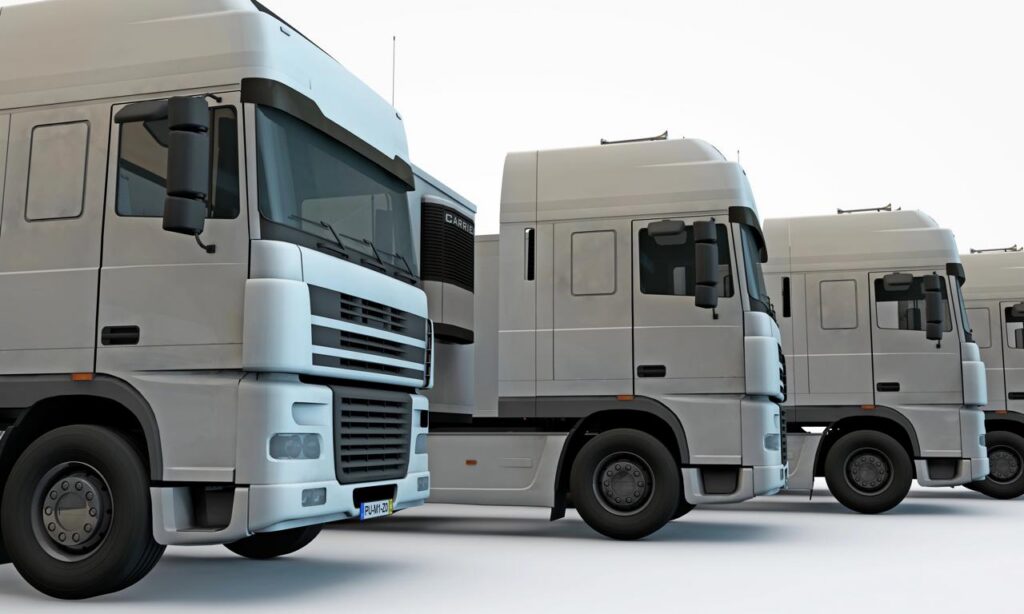
Kazakhstan to Produce SITRAK Autonomous Heavy Trucks

Kazakhstan plans to begin producing autonomous SITRAK heavy-duty tractor units within three years as it expands domestic vehicle manufacturing and industrial cooperation with China. Industry and Construction Minister Yersayin Nagaspayev announced the plan at a government meeting on July 21. Nagaspayev said the project was among the agreements reached during President Kassym-Jomart Tokayev’s July 15–17 visit to China. "By 2028, Kazakhstan plans to implement new projects to expand passenger and commercial vehicle production. Agreements reached during the presidential visit to China include the organization of production for Li Auto, Omoda, and Jaecoo vehicles, the manufacture of autonomous Sitrak tractor units, and the development of a nationwide network of high-speed charging stations together with BYD," Nagaspayev said. SITRAK is the premium heavy-truck brand developed between 2009 and 2011 by Chinese manufacturer Sinotruk in partnership with Germany's MAN. The brand’s C7H tractor units, available in 4×2, 6×2, and 6×4 configurations, together with its heavy-duty construction dump trucks, are among the most popular Chinese commercial vehicles in Kazakhstan. The minister did not disclose the planned production site or expected manufacturing capacity. Kazakhstan already assembles Scania and HOWO heavy trucks at an automotive plant in Saran, near the central city of Karaganda. Nagaspayev said Kazakhstan's automotive sector is expected to produce 190,000 vehicles of all types in 2026, surpassing the previous record of more than 171,000 vehicles set in 2025. The government also plans to increase the share of locally made automotive components. Domestic producers already make tires and engine components, as well as batteries and bus parts. Seats and multimedia systems are also produced locally. New projects are underway to manufacture bumpers and wiring harnesses, along with wheels and automotive paint. To support further industrial development, Kazakhstan recently adopted legislation introducing the legal concept of an industrial cluster. The country's largest automotive and manufacturing clusters are currently located in Kostanay, Saran, and Almaty, according to the minister. Artificial intelligence is also playing an increasingly important role in Kazakhstan's manufacturing sector. Nagaspayev said all 11 operating automobile plants in the country have introduced AI-based systems for quality control and industrial safety. An AI-powered situational center has also been established to monitor manufacturing operations, analyze information from surveillance cameras, sensors, and industrial information systems, detect potential emergencies and operational risks, and help factory managers respond before incidents occur. As previously reported by The Times of Central Asia, Kazakhstan and Russia launched a pilot cross-border driverless freight transport corridor in May, marking another step toward the wider adoption of autonomous commercial transport across the region.

Kazakhstan and China Launch IBI Digital Economy Hub in Almaty

Kazakhstan and China have opened the IBI Digital Economy Hub in Almaty, establishing a new platform aimed at expanding bilateral cooperation in digital trade, investment, industrial development, and cross-border logistics. According to Kazakhstan’s Ministry of Trade and Integration,the new hub is designed to serve as a focal point for cooperation in the digital economy, e-commerce, trade, investment, industrial collaboration, and transport and logistics between the two countries. The opening ceremony was attended by Vice Minister of Trade and Integration Aidar Abildabekov, along with representatives of government agencies from Kazakhstan and China, development institutions, national companies, financial organizations, and private businesses. Officials said the platform would help companies from both countries develop joint investment projects and connect with international partners. It is also intended to expand digital commerce and online services while improving cross-border supply chains. The hub will support industrial cooperation and transport and logistics projects. It will also help companies deploy technology and localize production, with better access to markets in both countries. A central component of the initiative is the development of a large high-tech industrial park, which is expected to be built in phases over the next five to eight years. Potential locations include the Zhambyl, Almaty, and Karaganda regions, as well as the Khorgos International Centre for Boundary Cooperation on the Kazakhstan-China border. Infrastructure investment in the project is estimated at $2 billion. Once fully operational, the industrial park is expected to generate more than $10 billion in annual economic activity, while the joint venture managing the project is projected to earn more than $1 billion in annual revenue. Between five and ten major industrial and manufacturing companies are expected to become anchor tenants. Speaking at the launch, Abildabekov pointed to record growth in bilateral trade. “Trade between Kazakhstan and China reached a record $48.7 billion in 2025. During the first five months of 2026, bilateral trade totaled $22 billion, up 27% year-on-year. Our task now is not only to increase trade volumes but also to improve their quality through digitalization, industrial cooperation, and the creation of modern production and logistics chains,” he said. Abildabekov described the IBI headquarters as an important addition to the digital infrastructure supporting international trade and investment. "We see this project not simply as an expansion of Chinese business in Kazakhstan, but as a contribution to the development of the country's digital ecosystem. The new platform will become an effective center for cooperation between government, business, and the expert community, helping implement joint projects and introduce advanced digital solutions," he added. China remains one of Kazakhstan’s largest trading and investment partners. According to the Ministry of Trade and Integration, Chinese foreign direct investment reached a record $2.826 billion in 2025, while cumulative Chinese investment in Kazakhstan since 1993 has exceeded $30.7 billion. The hub adds a commercial element to Kazakhstan’s technology ties with China. As previously reported by The Times of Central Asia, President Kassym-Jomart Tokayev offered Astana as the venue for the first meeting of the World AI Cooperation Organization...

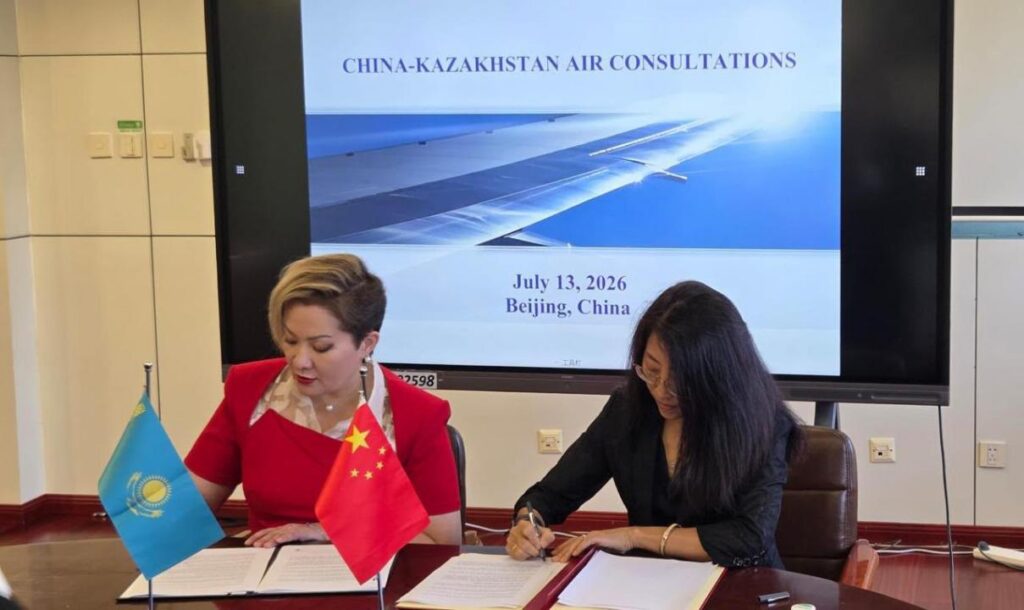
Kazakhstan and China Agree to Expand Scheduled Air Services

Kazakhstan and China have agreed to significantly expand scheduled air services between the two countries following aviation consultations held in Beijing between Kazakhstan’s Civil Aviation Committee and the Civil Aviation Administration of China. According to Kazakhstan’s Ministry of Transport, the talks focused on bilateral cooperation in civil aviation. The two sides agreed to increase the number of scheduled passenger flights operated by airlines of both countries from 124 to 152 flights per week. They also expanded the list of major Chinese destinations available for air services with Kazakhstan to 11 cities, adding Chongqing, one of southwestern China’s largest industrial, logistics, and transportation hubs, with a population of more than 32 million. The consultations also covered plans to launch direct flights between Astana and Shanghai, with airlines from both countries expected to participate. Another key issue was the creation of a third international air corridor between Kazakhstan and China. The new route is expected to increase the capacity of regional airspace, optimize flight paths, reduce congestion on existing air routes, and support further growth in passenger and cargo traffic between the two countries. The parties also discussed the allocation of airport slots for Kazakh airlines at Chinese airports, expanded access to Chinese airspace for Kazakh carriers operating international transit flights, and the conclusion of an interagency agreement on civil aviation search-and-rescue cooperation. “The two sides confirmed their mutual interest in further developing cooperation in civil aviation and agreed to continue joint efforts aimed at expanding air connectivity, improving transport links, and strengthening the strategic partnership between Kazakhstan and China,” the Ministry of Transport said. The agreement comes as Kazakhstan continues to expand its international aviation network. Earlier this month, Kazakhstan’s low-cost carrier FlyArystan announced the launch of a new Atyrau-Batumi route to Georgia beginning July 14, with weekly flights operated by Airbus A320 aircraft. From August 2026, Turkish carrier AJet will also increase frequencies on both the Astana-Ankara and Almaty-Ankara routes from two to seven weekly flights. As previously reported by The Times of Central Asia, Hong Kong’s flagship carrier Cathay Pacific plans to launch scheduled cargo services to Astana in August 2026, followed by regular passenger flights between Hong Kong and Almaty in January 2027.
