Kazakhstan and China have opened the IBI Digital Economy Hub in Almaty, establishing a new platform aimed at expanding bilateral cooperation in digital trade, investment, industrial development, and cross-border logistics.
According to Kazakhstan’s Ministry of Trade and Integration,the new hub is designed to serve as a focal point for cooperation in the digital economy, e-commerce, trade, investment, industrial collaboration, and transport and logistics between the two countries.
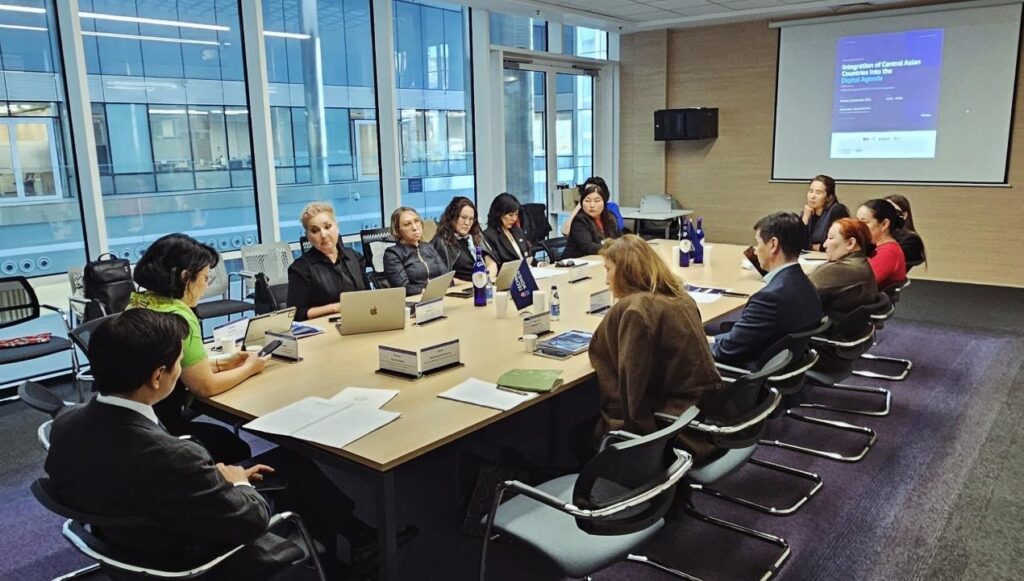
The opening ceremony was attended by Vice Minister of Trade and Integration Aidar Abildabekov, along with representatives of government agencies from Kazakhstan and China, development institutions, national companies, financial organizations, and private businesses.
Officials said the platform would help companies from both countries develop joint investment projects and connect with international partners. It is also intended to expand digital commerce and online services while improving cross-border supply chains. The hub will support industrial cooperation and transport and logistics projects. It will also help companies deploy technology and localize production, with better access to markets in both countries.
A central component of the initiative is the development of a large high-tech industrial park, which is expected to be built in phases over the next five to eight years. Potential locations include the Zhambyl, Almaty, and Karaganda regions, as well as the Khorgos International Centre for Boundary Cooperation on the Kazakhstan-China border.
Infrastructure investment in the project is estimated at $2 billion. Once fully operational, the industrial park is expected to generate more than $10 billion in annual economic activity, while the joint venture managing the project is projected to earn more than $1 billion in annual revenue. Between five and ten major industrial and manufacturing companies are expected to become anchor tenants.
Speaking at the launch, Abildabekov pointed to record growth in bilateral trade. “Trade between Kazakhstan and China reached a record $48.7 billion in 2025. During the first five months of 2026, bilateral trade totaled $22 billion, up 27% year-on-year. Our task now is not only to increase trade volumes but also to improve their quality through digitalization, industrial cooperation, and the creation of modern production and logistics chains,” he said.
Abildabekov described the IBI headquarters as an important addition to the digital infrastructure supporting international trade and investment.
“We see this project not simply as an expansion of Chinese business in Kazakhstan, but as a contribution to the development of the country’s digital ecosystem. The new platform will become an effective center for cooperation between government, business, and the expert community, helping implement joint projects and introduce advanced digital solutions,” he added.
China remains one of Kazakhstan’s largest trading and investment partners. According to the Ministry of Trade and Integration, Chinese foreign direct investment reached a record $2.826 billion in 2025, while cumulative Chinese investment in Kazakhstan since 1993 has exceeded $30.7 billion.
The hub adds a commercial element to Kazakhstan’s technology ties with China. As previously reported by The Times of Central Asia, President Kassym-Jomart Tokayev offered Astana as the venue for the first meeting of the World AI Cooperation Organization during the World Artificial Intelligence Conference in Shanghai.