• KGS/USD = 0.01144 0%
  • KZT/USD = 0.00208 0%
  • TJS/USD = 0.10442 0.19%
  • UZS/USD = 0.00008 0%
  • TMT/USD = 0.28530 0%
  • KGS/USD = 0.01144 0%
  • KZT/USD = 0.00208 0%
  • TJS/USD = 0.10442 0.19%
  • UZS/USD = 0.00008 0%
  • TMT/USD = 0.28530 0%
  • KGS/USD = 0.01144 0%
  • KZT/USD = 0.00208 0%
  • TJS/USD = 0.10442 0.19%
  • UZS/USD = 0.00008 0%
  • TMT/USD = 0.28530 0%
  • KGS/USD = 0.01144 0%
  • KZT/USD = 0.00208 0%
  • TJS/USD = 0.10442 0.19%
  • UZS/USD = 0.00008 0%
  • TMT/USD = 0.28530 0%
  • KGS/USD = 0.01144 0%
  • KZT/USD = 0.00208 0%
  • TJS/USD = 0.10442 0.19%
  • UZS/USD = 0.00008 0%
  • TMT/USD = 0.28530 0%
  • KGS/USD = 0.01144 0%
  • KZT/USD = 0.00208 0%
  • TJS/USD = 0.10442 0.19%
  • UZS/USD = 0.00008 0%
  • TMT/USD = 0.28530 0%
  • KGS/USD = 0.01144 0%
  • KZT/USD = 0.00208 0%
  • TJS/USD = 0.10442 0.19%
  • UZS/USD = 0.00008 0%
  • TMT/USD = 0.28530 0%
  • KGS/USD = 0.01144 0%
  • KZT/USD = 0.00208 0%
  • TJS/USD = 0.10442 0.19%
  • UZS/USD = 0.00008 0%
  • TMT/USD = 0.28530 0%

Viewing results 1 - 6 of 17

Italy’s Eni Expands Energy Projects in Kazakhstan with Hybrid Power Plant

The Italian energy company Eni is accelerating the expansion of its projects in Kazakhstan. By the end of the year, the company plans to complete construction of a hybrid power plant in Zhanaozen, one of the country’s key oil and gas centers. The 247-MW project combines three energy sources: solar, wind, and gas generation. The approach is expected to reduce the carbon footprint while providing a more stable energy supply in a region where strategically important production assets are concentrated Construction is proceeding in stages. The first component is already operational. In September 2025, a solar power plant with 80,000 panels was commissioned. Full completion of the complex is scheduled for the end of 2026, following the launch of gas and wind generation facilities. According to the Ministry of Energy, the project is intended to strengthen energy security for major enterprises in the Mangistau region, including Ozenmunaygaz and the Kazakh Gas Processing Plant. In a region that regularly experiences power shortages, this is a significant development. The project was discussed during a meeting between Kazakhstan’s Minister of Energy Yerlan Akkenzhenov and Italy’s Ambassador to Kazakhstan Antonello De Riu. Italian companies are gradually expanding their presence in Kazakhstan’s energy sector, from upstream production to processing and power generation. Cooperation extends beyond electricity generation. In January 2026, QazaqGaz and Eni moved to the practical phase of exploration at the Kamenkovsky block in the Caspian Basin. Work is also continuing at the Yuzhny Shu-Sarysu and Bereke blocks. Another major initiative is the gas-chemical complex under construction in the Atyrau region. The polyethylene project, with a planned capacity of 1.25 million tons per year and an estimated cost of $7.5 billion, has already entered the construction phase. The project is being implemented by KMG PetroChem, with Italy’s MAIRE group (through its subsidiary Tecnimont) serving as a key contractor. At the same time, conventional power generation projects are advancing. Cooperation with Italian power engineering company Ansaldo Energia has enabled the installation of new gas turbines at Almaty CHPP-3, with equipment deliveries completed in January 2026. However, this expanding cooperation is taking place amid legal uncertainty. Earlier, Eni and Shell, partners in the development of the Karachaganak field, lost a key stage of arbitration proceedings in London and may be required to pay Kazakhstan between $2 billion and $4 billion. While this could affect future investment decisions, it has not so far slowed the growth of Italian companies’ activities in the country.
Jet Fuel Shortages Threaten Kazakhstan’s Aviation Growth Despite Expansion Plans

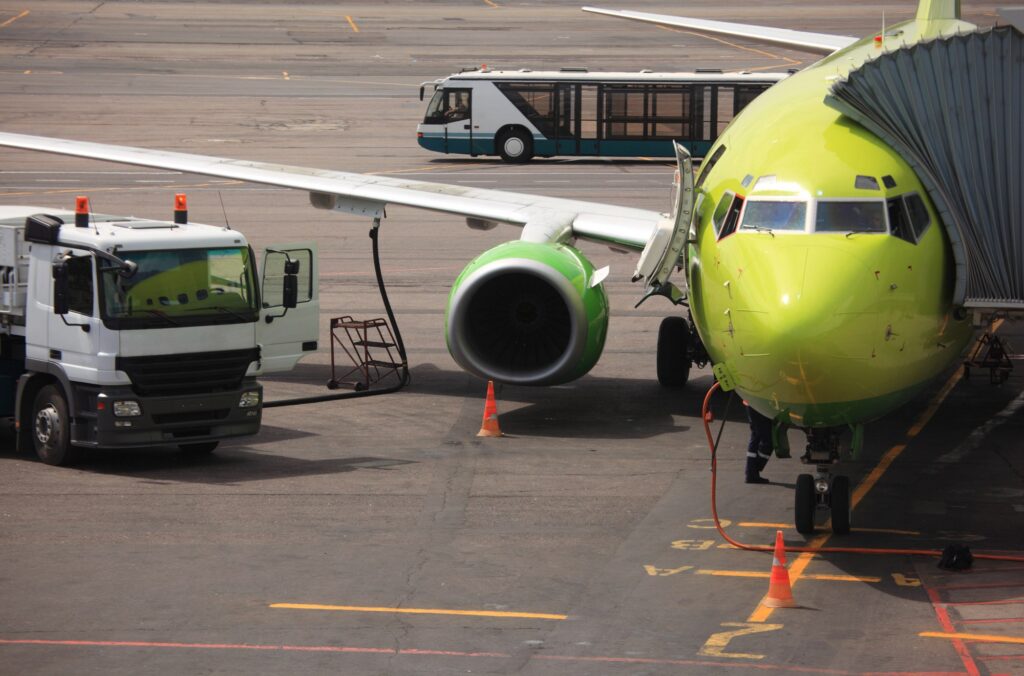
Kazakhstan’s aviation industry is demonstrating steady growth. By the end of 2025, the country’s airports had served 31.8 million passengers, up from 29.7 million in 2024, and handled 173,300 tons of cargo compared with 170,900 tons a year earlier. Total airline passenger traffic reached 20.7 million, and more than 35 new international routes were launched. The government plans to expand regional transport links and attract investment into the aviation sector. It also aims to increase the number of international routes. The industry is working to develop airport hubs and accommodate growing passenger demand, while positioning Kazakhstan as a transit country. These plans will depend in part on the availability of aviation fuel. Shortages of aviation kerosene in Kazakhstan have moved beyond an industry concern and are becoming an issue of energy and transport policy, as well as a potential source of economic risk. Despite being one of the world’s major oil producers, Kazakhstan continues to rely on imports of petroleum products. Of roughly 100 million tons of oil produced annually, only about 18 million tons are refined domestically. Although refining volumes and petroleum product output increased in 2025, the country still imports diesel and jet fuel at higher prices. According to Argus data, the cost of imported jet fuel at the Russian-Kazakh border averaged $765 per ton at the beginning of 2025. By early summer, the price had fallen to $610 per ton, before rising by nearly 60% in November to $975 per ton, excluding VAT. In 2026, the domestic supply situation may become more complicated. In addition to volatility in global markets, including tensions in the Middle East, scheduled maintenance shutdowns at oil refineries are expected to affect output. This year, all three major refineries, Atyrau Oil Refinery, Pavlodar Petrochemical Plant, and PetroKazakhstan Oil Products, are scheduled for maintenance, which will temporarily reduce fuel production. According to data provided by the national oil and gas company KazMunayGas, Kazakhstan’s refineries produced 726,000 tons of jet fuel last year. Under the Ministry of Economy’s indicative plan, output is expected to reach 750,000 tons in 2026. Demand for jet fuel is rising due to the active development of the air transport market and an increase in flight frequency. KazMunayGas is implementing measures to expand production and introduce new technologies. By 2030, refinery modernization is expected to increase jet fuel output. Deputy Minister of Energy Kaiyrkhan Tutkyshbaev told The Times of Central Asia that plans are being considered to increase jet fuel production from the current 0.7 million tons to 1.7 million tons per year through phased refinery capacity expansion from 17 million to 27.7 million tons by 2030. This includes expanding the Shymkent refinery from 6 million to 12 million tons of crude per year, the Pavlodar refinery from 5.5 million to 9 million tons in two phases and increasing secondary refining capacity at the Atyrau refinery by 0.7-1.2 million tons. Additionally, domestic jet fuel production is expected to grow by 50,000 tons annually between 2026 and 2028. With consumption projected at 1.18...

Kazakhstan and China Launch Project to Double Capacity of Shymkent Oil Refinery

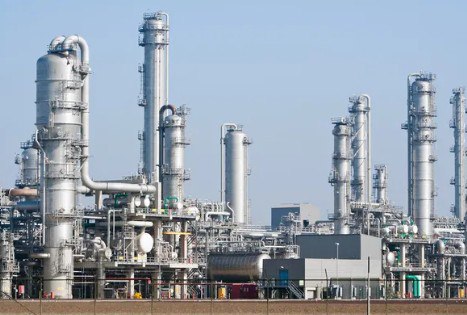
Kazakhstan and China have agreed on the basic parameters of a major expansion project at the Shymkent oil refinery, which will double its processing capacity from over 6 million to 12 million tons of oil per year. According to national oil company KazMunayGas, the Shymkent refinery became Kazakhstan’s leading facility in 2025 in terms of processing volume, handling 6.23 million tons of oil. By comparison, the Pavlodar Petrochemical Plant processed 5.76 million tons, and the Atyrau Oil Refinery 5.47 million tons. Shymkent also topped production output, delivering over 2.28 million tons of gasoline and more than 2.1 million tons of diesel fuel. The refinery is jointly owned by KazMunayGas JSC and China National Petroleum Corporation (CNPC). The two partners plan to expand the plant’s production capacity by constructing new processing infrastructure. A delegation from Kazakhstan’s Ministry of Energy, led by Daulet Arykbayev, Director of the Oil Transportation and Refining Department, participated in a strategic meeting in Qingdao, China, to prepare a feasibility study for the expansion. Following the meeting, both sides approved the project’s basic framework. A central decision was the adoption of the “6+6” configuration: two processing lines, each with a 6-million-ton annual capacity, fully integrated into the refinery’s existing operations. Officials stressed the importance of meeting project deadlines, with the core feasibility work scheduled for completion by 2032 under the framework agreement. The Ministry of Energy also noted that, under Kazakhstan’s broader refinery modernization program, the goal is to increase total national processing capacity from 18 million to 39 million tons of oil per year. Simultaneously, the government is seeking investors for the construction of a new refinery with an annual capacity of up to 10 million tons. The Times of Central Asia previously reported on state plans to attract foreign investment for a proposed fourth major refinery. Government estimates suggest that expanding the three existing refineries to 39 million tons will require investments of $15-19 billion. In March 2025, the Agency for the Protection and Development of Competition recommended partial privatization of the Pavlodar and Atyrau plants to boost efficiency and attract private capital. However, in December, Energy Minister Yerlan Akkenzhenov stated that KazMunayGas currently has no plans to privatize these assets.

Slippery Slope: How Volatile Oil Prices Threaten Kazakhstan’s Energy Giant

With global oil markets in flux and prices dipping below $70 per barrel, Kazakhstan’s state oil company faces mounting financial strain. If KazMunayGas (KMG) fails to adapt, it risks edging toward a fiscal cliff. Yet, political constraints, exacerbated by the ongoing specter of potential social unrest, have hindered the company’s ability to implement reforms. OPEC+ Fuels Market Uncertainty The global oil market is entering a new period of turbulence reminiscent of the pandemic era. Despite prolonged efforts by OPEC+ to manage output and stabilize prices, the alliance’s fragile consensus unraveled this April, when Saudi Arabia and Russia led an unexpected increase in production, undermining earlier commitments and tipping the market into oversupply. Meanwhile, U.S. shale producers have continued to expand their output and export aggressively, squeezing traditional suppliers out of lucrative Asian markets. A decelerating Chinese economy, the world’s largest oil importer, adds further downward pressure. As a result, Brent crude fell below $70 per barrel in early May and briefly traded under $65. For Kazakhstan, where oil exports are a key source of budgetary and foreign exchange income, this trend spells trouble, and KMG is particularly exposed. The “Black Hole” in KMG’s Finances Public data shows that KMG’s production costs vary from $40 to $70 per barrel, depending on the field. However, factoring in transportation, taxes, and social obligations, the real breakeven point nears $90 per barrel. Aging infrastructure in the Mangistau region, reliant on constant technical upkeep and subsidies, only adds to the burden. KMG’s debt load compounds the challenge. At the end of 2024, its total debt exceeded 4 trillion tenge ($7.87 billion). With export revenues dwindling, debt servicing is becoming untenable. Even short-term dips to $60-65 per barrel could have systemic consequences, stalling new investments, triggering layoffs, and slashing social spending. A key drain is OzenMunayGas (OMG), KMG’s subsidiary in Zhanaozen, where production costs reportedly hit $90 per barrel. “OzenMunayGas exemplifies how populism, inflated promises, and stagnant reforms can turn a major asset into a financial sinkhole,” Arman Bataev, a former internal auditor at KMG has stated. On his Telegram channel, Finmentor.kz, Bataev warned that a $90 production cost versus Brent at $59 is “not a temporary hardship but a dead end.” OMG required 30 billion KZT in financial aid last year, and Bataev predicts it may require 60-70 billion KZT in 2025. KMG Downplays Risks KazMunayGas officials maintain that the company is “prepared for all scenarios” and holds “sufficient reserves.” At a May press briefing, Deputy Chairman Aset Magauov emphasized that 70% of KMG’s output is sold domestically, insulating it somewhat from global price volatility. “Analysts expect prices to average $65 per barrel this year, but forecasts are inherently uncertain,” Magauov said. “We have contingency plans and cost-optimization measures ready. We are equipped to handle price fluctuations.” Magauov also noted that domestic oil prices are lower than export prices, and products like gasoline and diesel, refined at KMG’s three facilities, are now sold at market rates following the end of state price controls. He added...

KazMunayGas Sees No Risk from Falling Oil Prices, Prepares for Market Fluctuations

Kazakhstan’s national oil company KazMunayGas (KMG) has developed contingency strategies to manage volatility in global hydrocarbon markets and says it is fully prepared for any changes in oil prices. As of the morning of May 5, Brent crude had dropped to $59.30 per barrel and WTI to $56.19, the lowest levels since April 9, following the OPEC+ decision to increase production. In response to questions at a media briefing, KMG Deputy Chairman Aset Magauov said the company foresees no significant risks despite this sharp decline. “Analysts expect oil prices to average around $65 per barrel this year, though no one can predict with certainty,” Magauov stated. “We don’t see any risks for KazMunayGas. We have prepared for various scenarios and identified measures to optimize our expenses. In principle, we are ready for any fluctuations.” KMG, which accounts for 26% of Kazakhstan’s total oil production and 80% of the domestic refining market, supplies roughly 70% of its crude oil to the domestic market. This oil is processed at Kazakhstan’s major refineries to ensure stable fuel and lubricant supplies. According to Magauov, the cost of domestic supply remains well below export prices, insulating KMG from international volatility. “Even while export prices fluctuate, domestic prices remain stable and significantly lower than the lowest export benchmarks,” Magauov said. “Therefore, the majority of our sales, around 70%, are unaffected by global market movements. Moreover, exports of gasoline and diesel are limited, with nearly all production sold domestically.” Magauov also noted ongoing discussions with Russian energy firm Tatneft on the potential joint development of the Atyrau refinery. As previously reported by The Times of Central Asia, Kazakhstan’s antitrust agency proposed privatizing state-owned stakes in the Pavlodar and Atyrau oil refineries, moves that could reshape the sector’s competitive landscape. Meanwhile, Energy Minister Yerlan Akkenzhenov announced in April that Kazakhstan aims to double its domestic oil refining capacity by 2040, from 17.9 million tons in 2024 to 38 million tons annually.

Kazakhstan Aims to Double Oil Refining Capacity by 2040

Kazakhstan plans to double its oil refining capacity to 38 million tons by 2040, according to the country’s Minister of Energy, Yerlan Akkenzhenov. The announcement came during a recent meeting with executives from the national oil company KazMunayGas and representatives from the country’s four main refineries: Atyrau, Pavlodar, Shymkent, and the Aktau-based Caspi Bitum plant. Akkenzhenov said the goal is enshrined in Kazakhstan’s new Oil Refining Industry Development Concept for 2025-2040, which aims to significantly boost the share of refined oil, improve resource efficiency, and increase the production of value-added petroleum products. Key objectives of the strategy include: Increasing the depth of refining to 94%, aligning with global best practices; A full transition to high environmental standard fuels, such as K5 gasoline and Jet A-1 jet fuel; Expanding the production of petrochemical products for both domestic and international markets; Enhancing the technological sophistication and operational efficiency of Kazakhstan’s refineries. “We must not just supply the domestic market with fuel today but lay the foundation for technological sovereignty and sustainable development for decades to come,” Akkenzhenov said. “The successful realization of this concept depends on our ability to work efficiently, make bold decisions, and take responsibility for them. There is no time for hesitation, the country expects concrete results: modern plants, quality products, and reliable power supply.” As part of the initiative, the minister urged the accelerated development of a feasibility study to double the capacity of the Shymkent refinery and called for swift agreement signings with potential partners. He also stressed the need for the Pavlodar petrochemical plant to begin work on its next expansion phase. Meanwhile, the Atyrau refinery is to focus on implementing approved projects while preparing for further capacity growth. The Caspi Bitum plant has been tasked with completing post-modernization commissioning and ensuring stable operations. Kazakhstan’s three major oil refineries are located in: Pavlodar (northeast); Atyrau (west); Shymkent (south). As previously reported by The Times of Central Asia, the national antimonopoly agency proposed in March to privatize state stakes in the Pavlodar and Atyrau refineries, a move that could reshape the sector’s ownership landscape.