• KGS/USD = 0.01144 0%
  • KZT/USD = 0.00207 0%
  • TJS/USD = 0.10456 0.19%
  • UZS/USD = 0.00008 0%
  • TMT/USD = 0.28490 -0.28%
  • KGS/USD = 0.01144 0%
  • KZT/USD = 0.00207 0%
  • TJS/USD = 0.10456 0.19%
  • UZS/USD = 0.00008 0%
  • TMT/USD = 0.28490 -0.28%
  • KGS/USD = 0.01144 0%
  • KZT/USD = 0.00207 0%
  • TJS/USD = 0.10456 0.19%
  • UZS/USD = 0.00008 0%
  • TMT/USD = 0.28490 -0.28%
  • KGS/USD = 0.01144 0%
  • KZT/USD = 0.00207 0%
  • TJS/USD = 0.10456 0.19%
  • UZS/USD = 0.00008 0%
  • TMT/USD = 0.28490 -0.28%
  • KGS/USD = 0.01144 0%
  • KZT/USD = 0.00207 0%
  • TJS/USD = 0.10456 0.19%
  • UZS/USD = 0.00008 0%
  • TMT/USD = 0.28490 -0.28%
  • KGS/USD = 0.01144 0%
  • KZT/USD = 0.00207 0%
  • TJS/USD = 0.10456 0.19%
  • UZS/USD = 0.00008 0%
  • TMT/USD = 0.28490 -0.28%
  • KGS/USD = 0.01144 0%
  • KZT/USD = 0.00207 0%
  • TJS/USD = 0.10456 0.19%
  • UZS/USD = 0.00008 0%
  • TMT/USD = 0.28490 -0.28%
  • KGS/USD = 0.01144 0%
  • KZT/USD = 0.00207 0%
  • TJS/USD = 0.10456 0.19%
  • UZS/USD = 0.00008 0%
  • TMT/USD = 0.28490 -0.28%

Viewing results 1 - 6 of 16

Kazakhstan Restructures Oil Exports Amid Disruptions at CPC

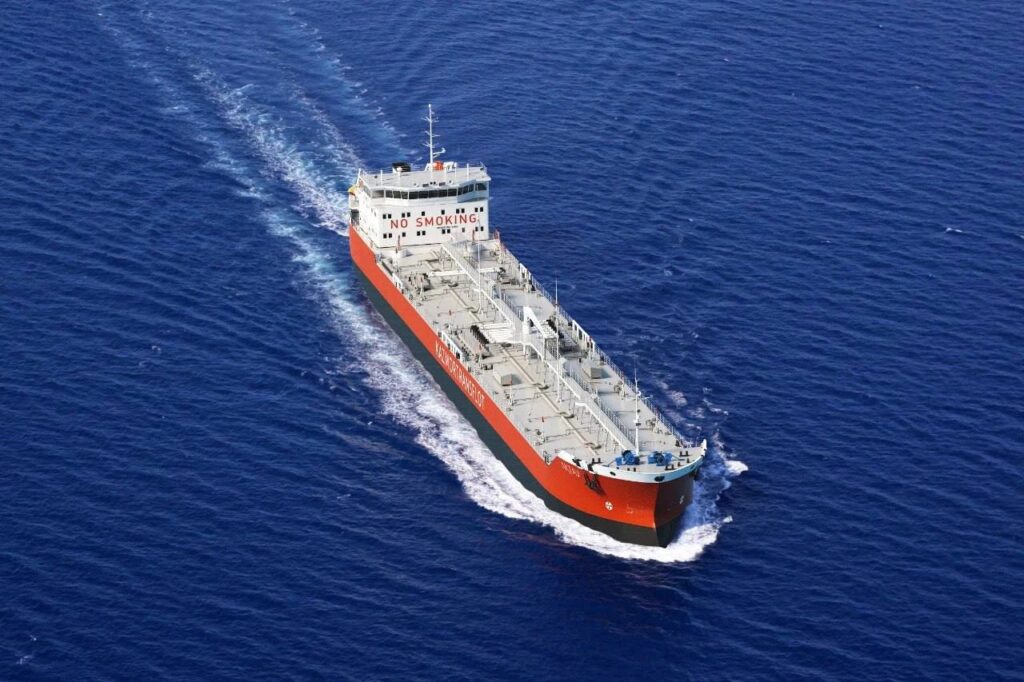
Kazakhstan is rapidly restructuring its oil export routes in response to disruptions affecting the Caspian Pipeline Consortium (CPC), a critical channel for the country’s crude shipments. To maintain export volumes and avoid production slowdowns, authorities have turned to alternative infrastructure. According to a statement from KazMunayGas, the national oil company, approximately 300,000 tons of oil were rerouted in December 2025 after restrictions limited the CPC’s intake capacity. In coordination with KazTransOil JSC (KTO), the country redirected oil flows to other export corridors. These rerouted volumes were exported to Germany, China, and via the Baku-Tbilisi-Ceyhan (BTC) pipeline, with shipments also handled through the ports of Novorossiysk and Ust-Luga. As CPC restrictions remained in place into January 2026, the redirection strategy continued. Amid these challenges, Kazakhstan’s use of alternative routes gained momentum. KazMunayGas reported that oil deliveries to Germany’s Schwedt refinery totaled 2.1 million tons by the end of 2025, with projections indicating a rise to 2.5 million tons in 2026. Exports through the port of Aktau to the BTC pipeline reached 1.3 million tons in 2025 and are expected to grow to 1.6 million tons this year. Shipments to China remained stable, with 1.1 million tons delivered by the end of 2025. These developments reflect a gradual shift aimed at reducing Kazakhstan’s dependency on the CPC which has faced repeated operational setbacks. The CPC disruptions stem from a series of security incidents. In February and March 2025, the Kropotkinskaya station was targeted in drone attacks. On 29 November, a strike on the consortium’s remote mooring device caused damage to its marine terminal. Following the November incident, Kazakhstan’s Ministry of Energy stated that the CPC pipeline is an international energy project and warned that “any forceful impact on its facilities poses direct risks to global energy security.” After another attack on 13 January 2026, when drones targeted three oil tankers near the CPC terminal in the Black Sea, the Ministry of Foreign Affairs issued a sharper response. In emergency consultations with European partners, the U.S., and other stakeholders, Kazakhstan called for reinforced protection of hydrocarbon transportation routes and maritime corridors, emphasizing the need for adherence to international law.

China’s Power Play in Central Asia’s Energy Sector

China is steadily expanding its influence in Central Asia’s oil and gas sector through multi-billion-dollar investments, long-term supply agreements, and a growing network of strategic partnerships. From Kazakhstan to Turkmenistan, Beijing’s state-backed companies are securing key upstream and midstream assets, financing new petrochemical and pipeline projects, and positioning themselves as indispensable players in the region’s resource development. This expansion is driven not only by China’s rising energy demand, but also by Beijing’s ambition to establish durable overland energy corridors that reduce reliance on maritime routes vulnerable to disruption. Central Asia’s existing and planned pipelines provide China with rare direct access to oil and gas fields across its western frontier, making the region a focal point of its broader energy-security strategy and a cornerstone of Beijing’s efforts to diversify supply while deepening political and economic footholds across Eurasia. Kazakhstan Eyes Chinese Investment Amid Lukoil Sanctions Kazakhstan may seek to transfer Russian company Lukoil’s stake in the offshore Kalamkas-Khazar oil and gas project to a new partner, with some industry channels, including the Telegram channel Energy Monitor, speculating about possible Chinese interest. Lukoil, which has been targeted by Western sanctions, is reportedly planning to exit Kalamkas-Khazar Operating LLP, a joint venture with KazMunayGas (KMG). Each company currently holds a 50% stake. Some commentators have suggested that a Chinese investor could step in, but no replacement has been officially confirmed. Seconded engineers from KMG Engineering are expected to be withdrawn from the project as of January 1, 2026, with several Kalamkas-Khazar staff members temporarily reassigned to other KMG subsidiaries until a new partner is confirmed. The project is considered highly promising, with earlier estimates citing reserves of 81 million tons of oil and 22 billion cubic meters of gas. New exploration has identified additional oil-bearing structures. A final investment decision (FID) worth more than $6.5 billion was originally expected by the end of 2025. However, U.S. sanctions against Lukoil have delayed progress. Located 120 km from the Kashagan field in the North Caspian Basin, the Kalamkas-Khazar block comprises the Kalamkas-More and Khazar fields. The site is situated in Kazakhstan’s Mangistau Region, 60 km from the Buzachi Peninsula. KazMunayGas Chairman Askhat Khasenov previously confirmed that production was expected to begin in 2028-2029, with peak output reaching four million tons annually. Lukoil was sanctioned by the UK on October 15, followed by the U.S., complicating ongoing negotiations. Despite this, major projects where Lukoil holds minority stakes, such as Tengiz, Karachaganak, and the Caspian Pipeline Consortium, have not been impacted. A Lukoil withdrawal would create a rare opening for China to secure its first significant offshore position in the North Caspian, a zone historically dominated by Western majors and Russian firms. Such an entry would represent a notable shift in Kazakhstan’s offshore partnership landscape. Beijing's Billion-Dollar Energy Deals in Kazakhstan In September 2025, President Kassym-Jomart Tokayev announced a series of energy deals with China valued at $1.5 billion. During his official visit to China, more than 70 commercial agreements totaling approximately $15 billion were signed, several...

KMG Pushes Back on Reports of European Asset Sale Amid Romania Refinery Losses

KazMunaiGaz (KMG) says it has no concrete plans to sell any of its European assets, though pressure is building to at least sell off some of the Kazakh company’s shares in oil refineries in Romania. Reports on November 21 said KMG was looking to privatize up to 50% of its shares in its subsidiary KMG International’s (KMGI) European operations in Europe. The reports were based on a list of recommendations from Kazakhstan’s Agency for the Protection and Development of Competition (APDC), which proposed, as part of the 2026-2027 strategy, that KMGI should have a two-stage tender to sell up to 50% of its stakes. On November 26, KMG denied making any decisions about KMGI businesses in Europe, adding that the APDC’s list of recommendations “includes assets from different sectors, but this in itself does not automatically trigger a sale.” Rompetrol KMGI has 28 companies operating in seven countries, four of them European, but the focus of reports was on the two oil refineries KMGI owns in Romania. KMGI purchased 75% of the shares in the Romanian oil company Rompetrol in 2007, and in 2009 bought the remaining 25% of shares in the company. That sale included the Petromidia oil refinery, with a capacity of some five million tons annually, and the smaller Vega refinery, with a capacity of some 350,000 tons that Rompetrol owns. KMGI also took ownership of the oil terminal near Constanta on the Black Sea coast, some 20 kilometers from the Petromidia refinery. The terminal imports mainly Kazakh oil. KMGI invested billions of dollars in upgrades and modernization of the refineries and the terminal, and finally, in 2017, operations of subsidiary Rompetrol Rafinare (54.63% KMGI and 44.7% Romanian state through the energy Ministry) showed a profit - $80 million. By 2022, profits had slightly increased to $90.3 million, but in December that year, the Romanian authorities changed tax regulations, and in 2023, Rompetrol Rafinare registered a net loss of some $270.5 million, and in 2024, a loss of $78 million. In the first six months of 2025, the company lost $53 million and paid some $771 million in taxes to the Romanian government. Rompetrol Rafinare has complained to the Romanian government that the tax burden is preventing the company from investing in new projects and has brought a legal challenge to the solidarity tax in court. In such a situation, it seems unlikely KMG would easily find a party interested in buying up to 50% of KMGI’s Romanian operation, unless the price was very low. Opponents of the proposed arrangement point to the $7 billion in investment KMG has made over nearly 20 years into upgrading the Romanian refineries as a reason to be patient for a while longer. KMGI KMG has subsidiaries operating in Switzerland, Bulgaria, Turkey, Moldova, and Georgia, as well as in Romania and Kazakhstan. At the start of 2025, there were reports that KMG was considering the acquisition of an oil refinery in Bulgaria from Russia’s LUKoil, so it appeared the Kazakh company...

Germany Increases Imports of Kazakh Oil Amid Shift Away from Russian Supplies

Germany has significantly increased its imports of Kazakh oil, receiving 225,000 tons via the Druzhba pipeline in October, 25% more than in September, according to Deutsche Welle. Regular deliveries of Kazakh crude to Germany began in 2023, following Berlin’s decision to halt Russian oil imports in response to the war in Ukraine and EU sanctions. In 2024, Germany imported 1.5 million tons of oil from Kazakhstan. By the end of 2025, Berlin aims to raise that figure to 1.7 million tons, with potential growth to 2.5 million tons annually. In October, KazMunayGas (KMG) Chairman Askhat Hasenov and Johannes Bremer, CEO of Rosneft Deutschland GmbH, signed an agreement extending the oil supply arrangement through the end of 2026. The updated deal increases monthly volumes from 100,000 to 130,000 tons. The additional crude will come from the Karachaganak field, with Germany also set to begin receiving oil from the Kashagan field in 2024 and the Tengiz field in 2025. According to KMG, approximately 1.5 million tons of Kazakh oil were delivered to Germany’s Schwedt refinery between January and September 2025. Rosneft Deutschland GmbH, which manages a stake in the Schwedt refinery and ranks as Germany’s third-largest oil refiner, is currently under German government control. The move was part of Berlin’s strategy to reduce reliance on Russian energy following the invasion of Ukraine. The Druzhba pipeline, which originates in Samara, Russia, splits after Bryansk and Mozyr. Its northern branch runs through Belarus to Poland and Germany, while the southern branch passes through Ukraine to Hungary, Slovakia, and the Czech Republic.

Kazakhstan Oil Output Projected to Reach 100 Million Tons Annually

Kazakhstan is projected to reach an annual oil production level of 100 million tons in the coming years and sustain that output over the long term, according to Askat Khasenov, Chairman of the Board of the national oil and gas company KazMunayGas (KMG). The Ministry of Energy initially forecast oil production at 96.2 million tons for 2025, later adjusting the estimate to 96 million tons. In 2024, Kazakhstan produced 87 million tons of oil, with growth driven by the Tengiz expansion and the development of the Karachaganak and Kashagan projects in western Kazakhstan and the Caspian shelf. In November 2024, the ministry announced plans to surpass 100 million tons annually starting in 2026. KMG believes this level can be maintained for the foreseeable future. “The government officially plans to produce more than 100 million tons of oil per year, and I believe this plateau will last for a long time. New geological projects will allow us to maintain this level in the long term,” Khasenov said during Kazakhstan Energy Week 2025 in Astana. “Our company is actively developing exploration under a strategy focused on the sustainable replenishment of the country’s mineral resource base. Currently, KMG’s portfolio includes 13 exploration projects, implemented both independently and in partnership with international companies such as Eni, Lukoil, CNOOC, Sinopec, and Tatneft. Our goal is to achieve an increase in reserves of up to 200 million tons of oil in the short term.” Khasenov also noted that KMG is conducting geological studies in underexplored regions of Kazakhstan, with eight new projects already initiated. The overall potential of ongoing exploration is estimated at 800 million tons of oil equivalent. In parallel, the company is applying enhanced oil recovery techniques to sustain production at mature fields. Another strategic priority for KMG is oil refining. The company aims to fully meet domestic demand for gasoline, diesel, and other fuels while expanding its petrochemical footprint to produce polymers and carbamide, boosting Kazakhstan’s non-resource exports. Temirlan Urkumbaev, Director of the Department of Petrochemistry and Technical Regulation at the Ministry of Energy, emphasized that petrochemicals are becoming a cornerstone of economic diversification. “Petrochemistry is not just about new sources of revenue. It brings new jobs, export income, and sustainable development. For Kazakhstan, the transition from a raw-material model to deep processing is a strategic necessity,” Urkumbaev said. The ministry has developed a 2024-2030 Roadmap for the petrochemical industry, which includes six major projects worth approximately $15 billion and expected to create more than 19,000 jobs. Among these is a polyethylene plant with an annual capacity of 1.25 million tons, scheduled to begin operations in 2029. The facility will produce over 20 grades of polyethylene, including premium types, and is projected to account for around 1% of the global market. Other planned projects include the production of butadiene, carbamide, and alkylate. In 2022, Kazakhstan launched one of the world’s largest polypropylene plants KPI Inc. with an annual capacity of 500,000 tons. As previously reported by The Times of Central Asia, the Kazakh...

U.S. Company to Support Kazakhstan’s Production of Sustainable Aviation Fuel

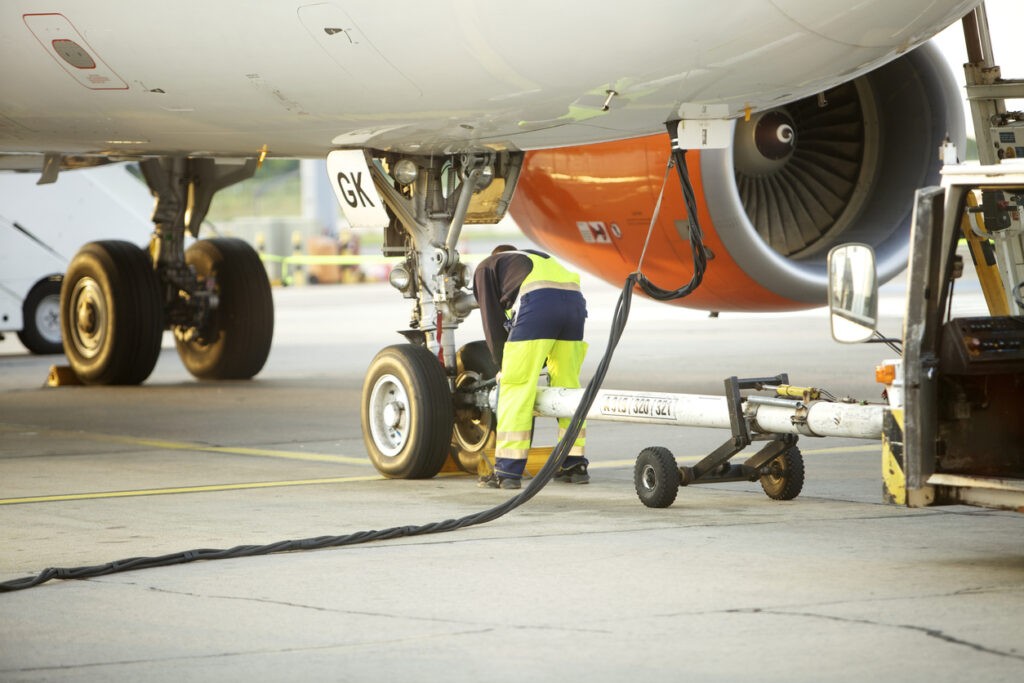
Kazakhstan’s national oil and gas company KazMunayGas (KMG) and the American technology company LanzaJet have signed a memorandum of cooperation for a strategic partnership in the production of environmentally sustainable aviation fuel (SAF) in Kazakhstan. While in the United States from August 5-7, KMG Chairman of the Board Askhat Khassenov visited the American company’s laboratory in Chicago and met with LanzaJet CEO Jimmy Samartzis. Khassenov noted that KMG aims to reduce its carbon footprint by 15% by 2031, compared to 2019 levels, and developing the country's biofuels market will support Kazakhstan's goal of carbon neutrality. He then stated that in response to the current rise in the global demand for SAF, his company is considering its production in Kazakhstan. LanzaJet CEO, Jimmy Samartzis, emphasized the importance of Kazakhstan's initial steps towards producing environmentally friendly jet fuel and expressed readiness to provide full technological support. LanzaJet specializes in SAF production technology from ethanol (ethanol-to-jet or alcohol-to-jet) and has long-term off-take agreements with major airlines. In January 2024, the company launched the world's first commercial-scale LanzaJet Freedom Pines Fuels plant for SAF production from ethanol. KMG earlier said that a preliminary feasibility study for the possible construction of a SAF production facility in Kazakhstan had already been completed by KMG and Air Astana with financial assistance from the European Bank for Reconstruction and Development (EBRD). SAF (Sustainable Aviation Fuel), an alternative to conventional jet fuel, represents a promising tool for decarbonizing the aviation industry. SAF can be derived from bioethanol (ethanol) produced from plants and other renewable sources, and compared to traditional jet fuel, reduces carbon emissions by 80%. In Europe, all jet fuel must contain 2% SAF from 2025 onwards, and the use of eco-friendly jet fuel must rise to 63% by 2050.