After Bishimbayev, Kazakhstan’s Domestic Violence Laws Face an Enforcement Test
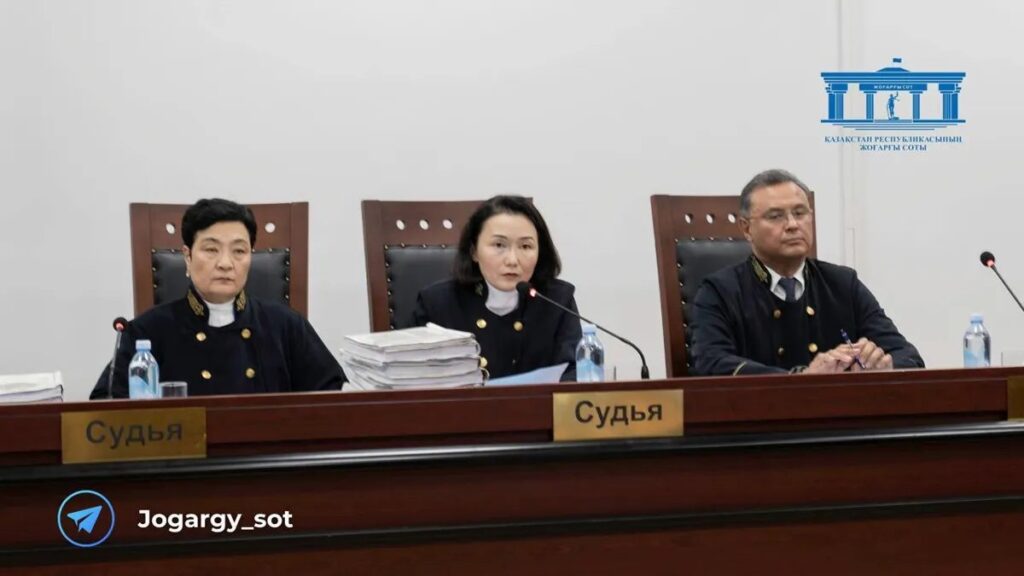
The release of Bakhytzhan Baizhanov, a cousin of former Kazakhstan Economy Minister Kuandyk Bishimbayev, following an amnesty has renewed public attention to one of the country’s most pressing social problems: domestic violence. The trial of Bishimbayev and Baizhanov attracted widespread attention in Kazakhstan and abroad. Bishimbayev was convicted of torturing and murdering his common-law wife. The proceedings were broadcast online and closely followed by journalists and the public. Bishimbayev was sentenced to 24 years in prison, while Baizhanov received a four-year sentence for concealing the crime. Amid the public outcry, Kazakhstan adopted legislation strengthening penalties for domestic violence. The legislation is commonly known as “Saltanat’s Law,” after the victim, Saltanat Nukenova. Observers say the new provisions allow tougher sanctions to be imposed on domestic abusers. However, the legislation was only a first step. Kazakhstan still needs effective mechanisms to prevent violence and better support services for victims.” The Country Followed the Trial Saltanat Nukenova died on November 9, 2023, at Bau, a restaurant inside the Gastro Center complex in Astana. Baizhanov was the director of the establishment. Bishimbayev was detained that day. An Astana court delivered its verdict on May 13, 2024. Bishimbayev was found guilty of murder committed with particular cruelty and of torture. Baizhanov was convicted of concealing the crime. Bishimbayev was sentenced to 24 years in a maximum-security prison. The court treated the fact that he had minor children as a mitigating circumstance. Aggravating circumstances included dangerous recidivism and intoxication at the time of the crime. In 2018, Bishimbayev had been sentenced to 10 years in prison for corruption offenses but was later pardoned. Baizhanov was sentenced to four years in a medium-security prison. The proceedings prompted a strong public response. Activists held demonstrations in Kazakhstan and abroad, while foreign correspondents attended the hearings. Kazakhstani and international media covered the case extensively. Public interest remains high. Many people in Kazakhstan continue to watch closely for any indication that Bishimbayev could be released before completing his sentence. Relatives of both Nukenova and Bishimbayev have also continued to make public statements. Baizhanov Disputed the Verdict Baizhanov’s early release under an amnesty has drawn mixed reactions. During the trial, he said he had not known how seriously Nukenova had been injured and denied that he was guilty of concealing the crime. His sentence had previously been reduced by one-third, and he had been expected to leave prison in November 2026. However, on July 22, his lawyer said the Stepnogorsk City Court had applied an amnesty act and ordered his immediate release. Baizhanov will remain under probation supervision following his release. He has also been placed under administrative supervision for six years. New Law, Old Problems On April 15, 2024, Kazakhstan adopted legislation amending several laws concerning women’s rights and children’s safety. Although the legislation had been drafted before Nukenova’s murder, the public attention surrounding her death and Bishimbayev’s trial led to it becoming informally known as “Saltanat’s Law.” The law expanded legal protections for women and children. Battery and the...