• KGS/USD = 0.01144 0%
  • KZT/USD = 0.00212 0%
  • TJS/USD = 0.10543 -0.09%
  • UZS/USD = 0.00008 0%
  • TMT/USD = 0.28530 0%
  • KGS/USD = 0.01144 0%
  • KZT/USD = 0.00212 0%
  • TJS/USD = 0.10543 -0.09%
  • UZS/USD = 0.00008 0%
  • TMT/USD = 0.28530 0%
  • KGS/USD = 0.01144 0%
  • KZT/USD = 0.00212 0%
  • TJS/USD = 0.10543 -0.09%
  • UZS/USD = 0.00008 0%
  • TMT/USD = 0.28530 0%
  • KGS/USD = 0.01144 0%
  • KZT/USD = 0.00212 0%
  • TJS/USD = 0.10543 -0.09%
  • UZS/USD = 0.00008 0%
  • TMT/USD = 0.28530 0%
  • KGS/USD = 0.01144 0%
  • KZT/USD = 0.00212 0%
  • TJS/USD = 0.10543 -0.09%
  • UZS/USD = 0.00008 0%
  • TMT/USD = 0.28530 0%
  • KGS/USD = 0.01144 0%
  • KZT/USD = 0.00212 0%
  • TJS/USD = 0.10543 -0.09%
  • UZS/USD = 0.00008 0%
  • TMT/USD = 0.28530 0%
  • KGS/USD = 0.01144 0%
  • KZT/USD = 0.00212 0%
  • TJS/USD = 0.10543 -0.09%
  • UZS/USD = 0.00008 0%
  • TMT/USD = 0.28530 0%
  • KGS/USD = 0.01144 0%
  • KZT/USD = 0.00212 0%
  • TJS/USD = 0.10543 -0.09%
  • UZS/USD = 0.00008 0%
  • TMT/USD = 0.28530 0%

Viewing results 1 - 6 of 24

Historic Khujand Summit Paves Way for Peace in the Ferghana Valley

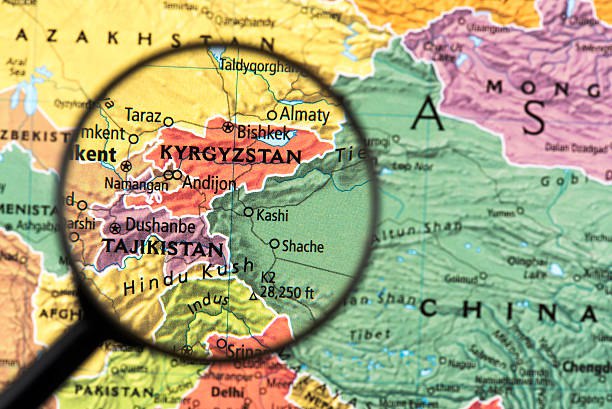
The presidents of Kyrgyzstan, Tajikistan, and Uzbekistan gathered in the northern Tajik city of Khujand on March 31 for a meeting that is decades overdue. Among the agreements the three signed were one fixing the border where their three countries meet. Prior to Uzbek President Shavkat Mirziyoyev’s arrival, Kyrgyzstan’s President Sadyr Japarov and Tajikistan’s President Emomali Rahmon exchanged ratified documents of the border agreement between the two countries. Rahmon and Japarov, via video link, also launched the Datka-Sughd power transmission line, a major step in the CASA-1000 project that aims for both their countries to supply electricity to Afghanistan and Pakistan. These agreements might not seem monumental, but they represent a major departure from the troubled past the three governments have had in their border areas. Trouble in Paradise The three countries share the Ferghana Valley, an area roughly the size of Costa Rica that is home to more than 20% of Central Asia’s population. Since the Central Asian states became independent in late 1991, the Ferghana Valley has also been the region’s hotbed of tension. The Ferghana Valley is the cradle of ancient Central Asian civilization. Some living there today say it was the location of the Garden of Eden, and it is not difficult to see why. The Valley is abundant in fruits and vegetables and has extensive arable and grazing land. It is surrounded by mountains to the north, east, and south, and the rivers that flow from these mountains supply ample water. Since independence, the Ferghana Valley has been the most dangerous place in all of Central Asia. The arbitrary borders Soviet mapmakers drew to divide Kyrgyzstan, Tajikistan, and Uzbekistan left many problems for the three after they became independent states. Agreement on where Kyrgyz-Uzbek border is came only in late 2022, and Kyrgyzstan and Tajikistan just signed the agreement on delimitation of their border on March 12. The Islamic Movement of Uzbekistan The roots of Islam lie deep in the Ferghana Valley. There were already calls for Shari’a law in Uzbekistan’s section of the valley just months after Uzbekistan declared its independence. The most serious security threat to Central Asia to date originated in the Ferghana Valley in 1999 and 2000. In early August 1999, a group of some 20 armed militants from the Islamic Movement of Uzbekistan (IMU) appeared in southern Kyrgyzstan, captured a village, and took the villagers and subsequent government negotiators hostage. The IMU leaders were from the eastern Uzbek city of Namangan. They were connected to the protests in Uzbekistan in late 1991 and later joined the Islamic opposition in neighboring Tajikistan’s 1992-1997 civil war. The peace accord that ended the civil war called for opposition fighters to either join the Tajik armed forces or disarm. There was no longer any need for the opposition’s foreign fighters, and the final phase of disarmament was underway by the summer of 1999. In mid-August, the Kyrgyz government paid a ransom for the hostages’ release and the departure of the IMU militants, but this...
Tajik Entrepreneurs Return to Kyrgyz Markets

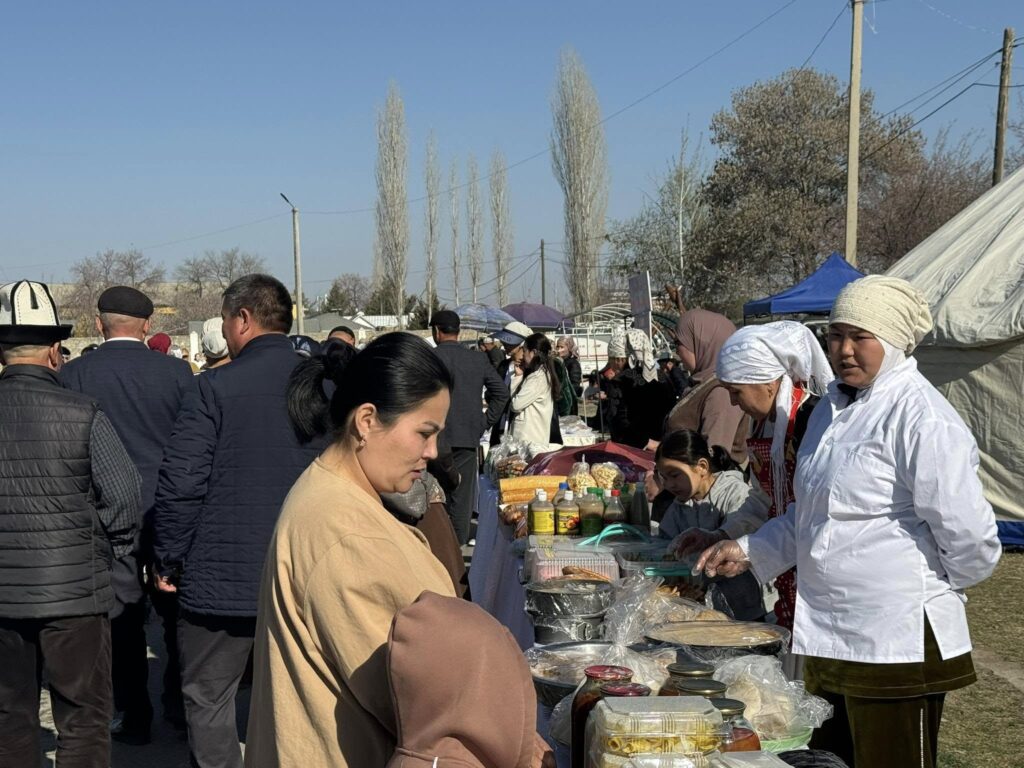
Following the reopening of the Kyrgyz-Tajik border, Tajik entrepreneurs have resumed visits to markets in Batken Oblast, Kyrgyzstan. Local media report that residents are welcoming the return of their southern neighbors​. Once a week, the market in Ak-Turpak village becomes a hub of activity, drawing sellers and buyers from across the region and neighboring countries. A major draw is Batken rice, which resellers purchase in bulk for export to Uzbekistan and Russia. According to local vendors, the market can sell up to 200 tons of rice on a busy day. Rice is cultivated across 3,000 hectares in this border region and remains a vital source of income for many farmers. With the border now open and economic ties restored, buyers from Isfara, Tajikistan, have begun frequenting the Ak-Turpak market, offering a welcome boost to Kyrgyz vendors. As previously reported by The Times of Central Asia, residents of Batken’s border districts also benefit from cross-border trade, often finding it more economical to purchase certain fruits and vegetables in Tajikistan than in Kyrgyzstan’s oblast centers. On March 13, 2025, following the signing of bilateral agreements, the Kairagach and Kyzyl-Bel border checkpoints in Batken Oblast officially reopened. According to Kyrgyzstan’s Border Guard Service, approximately 5,000 people crossed the Kyrgyz-Tajik border between March 13 and 17. An additional 500 individuals crossed by air. Prior to the agreement, all crossings had remained closed since 2021.

A New Chapter of Peace and Cooperation in Central Asia: The Kyrgyz-Tajik Border Agreement

On March 13, 2025, a historic milestone was achieved with the signing of the Kyrgyz-Tajik border agreement. This long-anticipated treaty, signed by Kyrgyzstan's President Sadyr Japarov and Tajikistan’s President Emomali Rahmon, resolved a long-running dispute over the 984-kilometer boundary between the two nations. Clashes in 2021 and 2022 left scores dead, hundreds wounded, and thousands displaced. The resolution marked not only the end of an enduring source of regional tension but also the beginning of a prospective era of peace and collaboration. The significance of this agreement is substantial and far-reaching. For decades, the unresolved Kyrgyz-Tajik border remained a flashpoint for clashes, occasionally escalating into violence between communities living in border regions such as Batken. The new treaty now promises a peaceful future, with both leaders showing their commitment to long-term regional stability. A Diplomatic Achievement The path to this agreement was anything but straightforward, with Kyrgyz President Japarov characterizing the land exchanges involved in the treaty as a “tough but necessary decision.” During Nauryz celebrations in Osh, Japarov praised the expert teams who worked for four years to reach a settlement that balanced the interests of both sides. Japarov emphasized the benefits of the treaty for border-area communities, specifically in Batken, where tensions have been acute. The “lives of our citizens in border areas of the Batken region will be peaceful from now on,” he stated, promising new homes for residents displaced during past conflicts. The treaty aims to bring not only peace but also economic development, as secure frontiers pave the way for cross-border trade and infrastructure investment. For Tajikistan's President Rahmon, the agreement not only resolved a geopolitical challenge but reinforced the shared value of cooperation in the region. His message during Nauryz to President Japarov symbolized the optimism underpinning their new relationship. “I am confident that our countries, relying on the high universal values of this ancient holiday, will continue their joint efforts to enrich the content of their multifaceted relations,” Rahmon wrote. Messages of Support on a Symbol of Renewal The signing of the treaty aligned closely with Nauryz, the ancient festival that symbolizes renewal, prosperity, and unity across Central Asia. World leaders also viewed the timing as auspicious, with U.S. President Donald Trump extending his congratulations to President Rahmon in a message of goodwill on the occasion of Nauryz. “This is a major achievement that will bring great economic benefits and security to both countries," Trump wrote, highlighting the agreement's potential to stabilize the region. Trump also reaffirmed America's support for Tajikistan’s sovereignty, underscoring the importance of ongoing cooperation. His words echoed a broad international sentiment celebrating the Kyrgyz-Tajik agreement as a step toward enhanced regional partnerships. Regional Cooperation on the Rise The Kyrgyz-Tajik border agreement forms part of a broader trend of strengthening ties among Central Asian nations. Recently, Kyrgyzstan resolved a similar border issue with Uzbekistan, setting a precedent for peaceful dispute resolution. Now, Japarov has suggested taking the next step by creating a visa-free travel regime and even a unified regional...

Kyrgyz-Tajik Border Agreement Seeks to End Years of Hostility

Kyrgyzstan and Tajikistan signed an agreement on March 13 that aims to put an end to tensions that have made their border the deadliest area in Central Asia for more than a decade. Underscoring the significance of this breakthrough was Tajikistan President Emomali Rahmon making his first state visit in nearly twelve years to the Kyrgyz capital Bishkek to sign the deal on the delimitation of the Kyrgyz-Tajik border. A Long-Standing Dispute Marking the border in the mountainous, sparsely inhabited eastern section of the two countries’ border was not difficult, and by 2011, some 520 kilometers had been demarcated. Reaching a final agreement on the western 487 kilometers, located in the Ferghana Valley and more densely populated, however, was far more complicated due to roads and canals that passed through both countries’ territories. Rahmon’s visit in May 2013 came a month after hundreds of residents of border communities clashed near the Kyrgyz village of Ak-Sai and Tajikistan’s Vorukh enclave. Such incidents were increasing, though at that time they were limited to fistfights, throwing sticks and stones, and vandalism of property, usually vehicles. In May 2013, Rahmon and then Kyrgyz President, Almazbek Atambayev, discussed measures to ease tensions along the border, but along the frontier, the meeting of the two presidents in the Kyrgyz capital made little difference. In January 2014, a Kyrgyz construction crew started work on a bypass road around the Tajikistan’s Vorukh enclave, and an argument broke out between border guards of the two countries. Insults led to an exchange of fire, during which Tajik border guards reportedly used grenade launchers and mortars. Five Kyrgyz and two Tajik border guards were wounded in the fighting. It was the first time weapons were used during border conflicts, but from that time on, disputes increasingly involved gunfire, increasing the number of casualties and sometimes resulting in deaths. Both governments sent additional troops and military equipment to the border area, adding fuel to the fire. On July 26, 2019, four days after another clash near the Vorukh enclave left one person dead and 27 injured, Rahmon met with then-Kyrgyz President Soronbai Jeenbekov in the Vorukh enclave. Again, there were promises of new steps to defuse tensions and hasten an agreement on border delimitation, but as had happened previously, it was not long before fights erupted, adding to the growing casualty list along the Kyrgyz-Tajik border. From Bad to Worse On April 28, 2021, Kyrgyz villagers spotted a group of Tajik citizens setting up a camera on a water intake station near the Kyrgyz village of Kok-Tash. An argument quickly led to large-scale clashes that spread along several sections of the Kyrgyz-Tajik border. Armed forces from the two countries used heavy machine guns, mortars, and armored vehicles. Tajikistan even sent helicopter gunships to attack one area in Kyrgyzstan. The fighting only lasted two days, but when it was over, 54 people were dead, hundreds were wounded, thousands were forced to flee the area, and there was damage to homes and other buildings....

Kyrgyzstan and Tajikistan Finalize Historic Border Agreement, Ending Decades-Long Dispute

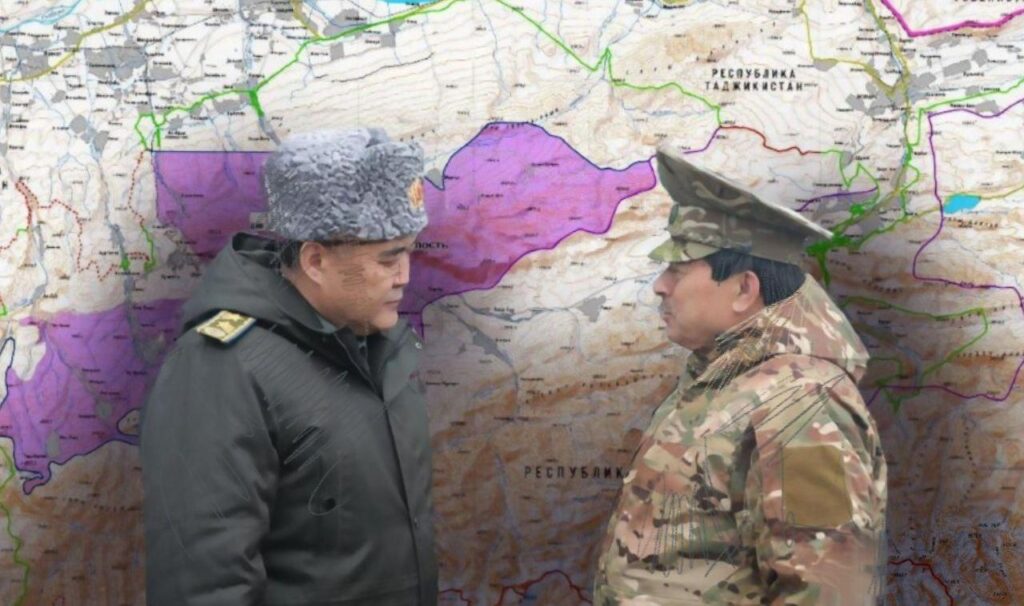
On March 13, the presidents of Kyrgyzstan and Tajikistan met in Bishkek, where Sadyr Japarov and Emomali Rahmon signed a landmark agreement on the delimitation and demarcation of the Kyrgyz-Tajik border. Following the signing, the agreement will be sent to the parliaments of both countries for consideration. Deputies must approve the ratification bill before it returns to the heads of state for final endorsement. The presidents are expected to exchange instruments of ratification on March 31 during the Fergana Valley summit, where Uzbek President Shavkat Mirziyoyev is also set to attend. Only then will the demarcation process, marking the border with physical infrastructure, begin. The Kyrgyz-Tajik border stretches 1,006 kilometers. As of 2011, only 520 kilometers had been officially defined. In the past three years, both nations have settled on an additional 487 kilometers of the border. During a recent parliamentary session, Kamchybek Tashiyev, head of Kyrgyzstan’s State Committee for National Security (GKNB) and chair of the intergovernmental commission on border negotiations, outlined key principles that guided the discussions. Notably, Tajikistan agreed to use 1991 documents to define border territories instead of relying on maps from 1924-1927. The negotiations aimed to balance both nations' interests while avoiding unilateral decisions that could lead to renewed tensions. Beyond the border agreement, both governments also signed intergovernmental deals on cooperation between their Foreign Ministries, as well as agreements on water and energy management and road transportation infrastructure.  Additionally, the two sides agreed to officially reopen the Kairagach (Leilek district) and Kyzyl-Bel (Batken district) border checkpoints, which had been closed for nearly four years. Both checkpoints resumed operations on March 13.

Kyrgyzstan Hails Border Deal with Tajikistan as Major Diplomatic Success

Kamchybek Tashiyev, head of Kyrgyzstan's State Committee for National Security (GKNB), addressed parliament for the first time regarding the Kyrgyz-Tajik border agreements. He clarified the terms of the final agreement and explained the territorial concessions Kyrgyzstan made to prevent future border conflicts. The document has sparked mixed reactions in Kyrgyz society, with some deputies expressing dissatisfaction with the delimitation results, while ordinary citizens hope for lasting peace between the two countries. Final Agreement Tashiyev stated that the border agreement was based on the 1991 accords, countering earlier Tajik proposals to rely on documents from 1924-27. Years of work by geographers enabled both sides to reach mutual compromises. The Kyrgyz-Tajik border spans 1,006 kilometers. By 2011, 520 kilometers had been delineated, while the remaining 486 kilometers were settled over the past three years. “We have prepared several documents for signing by the presidents of both countries, including an agreement on the state border, an agreement on water resources—a previous water dispute in 2022 led to armed conflict—as well as agreements on cross-border road use and new infrastructure projects,” Tashiyev said. Over the past three years, the two nations have held numerous bilateral meetings, resulting in the signing of 45 protocols. Tashiyev noted that the process could be finalized within a month, as the Kyrgyz parliament has already approved the agreement, leaving only the leaders' signatures. Parliamentary Debate “We are making history! We have responsibly completed border delimitation with Uzbekistan. We approved the agreements with Tajikistan without debate. The people appreciate this. But public opinion is divided—that is common. If 50-60% of citizens support it, stability will follow,” said MP Nadira Narmatova during the parliamentary session. However, some MPs opposed the government's decision. Sultanbai Aizhigitov, an MP from Batken Oblast, criticized the transfer of Dostuk village, where Kyrgyz authorities had previously built roads and reinforced the state border. He also disapproved of the shared water intake arrangement, arguing that the territory had always belonged to Kyrgyzstan. Voices from Border Villages In an interview with The Times of Central Asia, Kanybek Myrzamuratov, a resident of Samarkandek village near the border, said most locals supported the government's decision. While some land was ceded, he emphasized that peace was the priority. “In some places, one street belongs to two countries—Tajiks on one side, Kyrgyz on the other. Disputes often started over minor issues but escalated into larger conflicts. At times, entire villages would mobilize against each other, leading to casualties,” he said. According to villagers, tensions with Tajikistan became serious in 1996, though minor disputes occurred even during Soviet times. The Soviet authorities, however, downplayed such incidents. Both sides engaged in stone-throwing, livestock theft, and occasional violence. Myrzamuratov noted that Kyrgyz authorities kept negotiations with Tajikistan confidential to prevent unrest among border residents. “In Dostuk, Leilek District, houses were burned down in last year’s clashes. Residents would not have accepted a transfer to Tajikistan. To prevent confusion and disputes, the authorities remained silent,” he said. He added that locals now look forward to reopening the...