
• KZT/USD = 0.00223
  • TJS/USD = 0.10820
  • UZS/USD = 0.00009
  • TMT/USD = 0.29850
  • KZT/USD = 0.00223
  • TJS/USD = 0.10820
  • UZS/USD = 0.00009
  • TMT/USD = 0.29850
  • KZT/USD = 0.00223
  • TJS/USD = 0.10820
  • UZS/USD = 0.00009
  • TMT/USD = 0.29850
  • KZT/USD = 0.00223
  • TJS/USD = 0.10820
  • UZS/USD = 0.00009
  • TMT/USD = 0.29850
  • KZT/USD = 0.00223
  • TJS/USD = 0.10820
  • UZS/USD = 0.00009
  • TMT/USD = 0.29850
  • KZT/USD = 0.00223
  • TJS/USD = 0.10820
  • UZS/USD = 0.00009
  • TMT/USD = 0.29850
  • KZT/USD = 0.00223
  • TJS/USD = 0.10820
  • UZS/USD = 0.00009
  • TMT/USD = 0.29850
  • KZT/USD = 0.00223
  • TJS/USD = 0.10820
  • UZS/USD = 0.00009
  • TMT/USD = 0.29850
17 September 2026

Viewing results 1 - 6 of 21

Kyrgyzstan Drafts Program to Preserve Lake Issyk-Kul

Kyrgyzstan’s Ministry of Natural Resources, Ecology, and Technical Supervision has released a draft Concept for the Sustainable Development of the Ecological and Economic System of Lake Issyk-Kul until 2030 for public discussion. The proposal addresses mounting environmental challenges that threaten the future of the lake, a vital component of the country’s climate system, biodiversity, and tourism industry. Located in northeastern Kyrgyzstan, Issyk-Kul is the nation's largest lake and one of its most important ecological assets and tourist destinations. The new Concept outlines a roadmap for sustainable management amid signs of accelerating environmental degradation. Falling Water Levels The lake’s water level has dropped by 2.75 meters between 1927 and 2003. To reverse this trend, the Concept recommends restoring hydrological monitoring infrastructure, including groundwater observation and river hydro-posts. It also proposes enforcing irrigation water accounting and transitioning local agriculture to water-saving technologies. Glacier Retreat and River Flow The 957 glaciers in the Issyk-Kul basin, spanning 560.8 km², are rapidly melting due to climate change. These glaciers feed roughly 120 rivers flowing into the lake, though only 80 reach it during the summer, largely due to irrigation withdrawals. To mitigate the loss, the government plans to introduce modern irrigation systems across 100,000 hectares of farmland, potentially redirecting up to 200 million cubic meters of water back into the lake annually. Wastewater and Sewerage Infrastructure Untreated wastewater from settlements and tourism infrastructure poses a serious threat to the lake’s ecosystem. The Concept includes measures to upgrade wastewater treatment, promote the reuse of treated water for irrigation, and expand sewerage systems. Over the past five years, 47 new treatment facilities have been built in the Issyk-Kul region. 2030 Environmental Goals The Concept sets several targets for the next five years: Reduce untreated wastewater discharge by 40% Expand specially protected natural areas to cover 20% of the region Implement ecotourism standards at all recreational facilities Introduce separate waste collection in all district centers Involve at least 80% of schoolchildren in environmental education programs “Issyk-Kul is a strategic resource for Kyrgyzstan. The Concept aims to ensure clean water, protect the shoreline, create safe recreation areas, and boost tourism and entrepreneurship,” said Meder Mashiev, Minister of Natural Resources, Ecology, and Technical Supervision.

Kyrgyzstan’s Issyk-Kul and China’s Qinghai Become Sister Lakes

Kyrgyzstan and China’s Qinghai Province have signed a memorandum of intent to establish “twin” or sister-lake relations between Lake Issyk-Kul and Qinghai Lake, the Kyrgyz Ministry of Natural Resources, Environment and Technical Supervision announced. The two lakes share many natural similarities. Issyk-Kul, Kyrgyzstan’s largest lake, measures 182 km in length and up to 60 km in width. Saline and surrounded by mountain ranges, it is the country’s leading tourist destination. Qinghai Lake, located in northwest China’s Qinghai province, is the country’s largest lake, renowned for its scenic beauty and diverse birdlife. It stretches 105 km in length and 63 km in width, covering over 4,500 square kilometers. Situated at 3,200 meters above sea level, it has an average depth of 21 meters, with cold, salty waters. Under the memorandum, Kyrgyz and Chinese representatives will organize mutual visits, seminars, scientific events, and other activities to foster cooperation and share expertise on lake management. The plan also includes developing an eco-tourism route called “Sister Lakes.” The initiative forms part of broader Kyrgyz-Chinese environmental and social cooperation under the Belt and Road Initiative. It also envisions joint use of natural resources, development of infrastructure projects, and coordinated monitoring of water quality and environmental conditions.

Kyrgyzstan Bans Plastic Bags at Lake Issyk-Kul

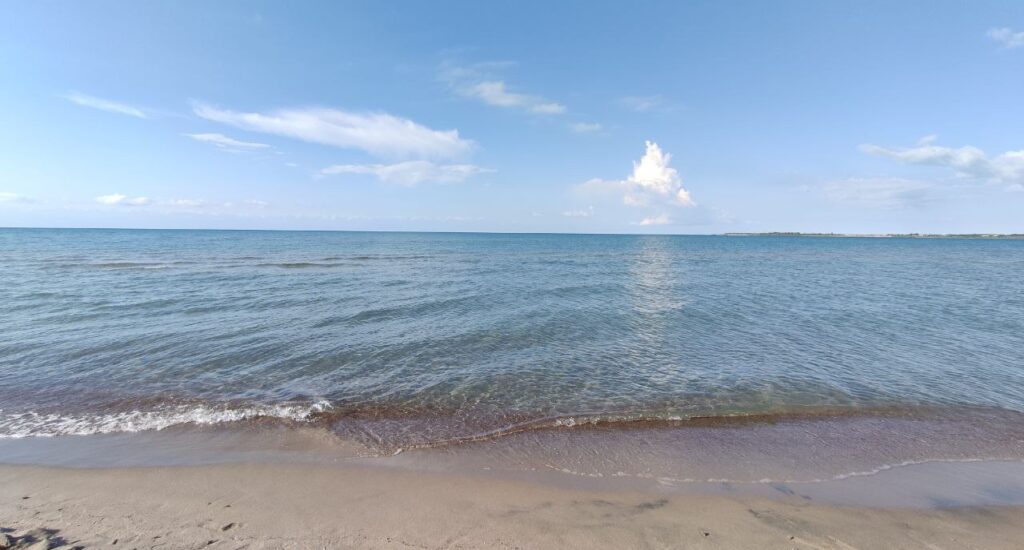
As of March 1, Kyrgyzstan has banned the use and sale of plastic bags and other plastic products in the resort and recreational areas of the Issyk-Kul region, including the beaches of Lake Issyk-Kul, the country’s main tourist destination. The Ministry of Natural Resources, Ecology, and Technical Supervision announced that fines will be imposed for violations, as part of efforts to protect the lake’s unique ecosystem and maintain cleanliness in the region. Penalties for Violations First offense: Warning Repeated violation within one year:  Individuals - 3,000 KGS ($34) Legal entities - 10,000 KGS ($114) The ban and fines apply to both local residents and tourists. [caption id="attachment_29619" align="aligncenter" width="2560"] Beach at Cholpon Ata; image: TCA, Stephen M. Bland[/caption] "It is not enough to hold only manufacturers or sellers accountable. All citizens must stop using plastic at Issyk-Kul. When visiting the lake, people should bring paper bags or reusable shopping bags," said Almaz Oskonbayev, an official with the ministry. This regional restriction is a precursor to a nationwide ban on plastic bags, set to take effect on January 1, 2027.
