• KGS/USD = 0.01143 0%
  • KZT/USD = 0.00202 0%
  • TJS/USD = 0.10433 0%
  • UZS/USD = 0.00008 0%
  • TMT/USD = 0.28575 0%
  • KGS/USD = 0.01143 0%
  • KZT/USD = 0.00202 0%
  • TJS/USD = 0.10433 0%
  • UZS/USD = 0.00008 0%
  • TMT/USD = 0.28575 0%
  • KGS/USD = 0.01143 0%
  • KZT/USD = 0.00202 0%
  • TJS/USD = 0.10433 0%
  • UZS/USD = 0.00008 0%
  • TMT/USD = 0.28575 0%
  • KGS/USD = 0.01143 0%
  • KZT/USD = 0.00202 0%
  • TJS/USD = 0.10433 0%
  • UZS/USD = 0.00008 0%
  • TMT/USD = 0.28575 0%
  • KGS/USD = 0.01143 0%
  • KZT/USD = 0.00202 0%
  • TJS/USD = 0.10433 0%
  • UZS/USD = 0.00008 0%
  • TMT/USD = 0.28575 0%
  • KGS/USD = 0.01143 0%
  • KZT/USD = 0.00202 0%
  • TJS/USD = 0.10433 0%
  • UZS/USD = 0.00008 0%
  • TMT/USD = 0.28575 0%
  • KGS/USD = 0.01143 0%
  • KZT/USD = 0.00202 0%
  • TJS/USD = 0.10433 0%
  • UZS/USD = 0.00008 0%
  • TMT/USD = 0.28575 0%
  • KGS/USD = 0.01143 0%
  • KZT/USD = 0.00202 0%
  • TJS/USD = 0.10433 0%
  • UZS/USD = 0.00008 0%
  • TMT/USD = 0.28575 0%

Viewing results 1 - 6 of 8

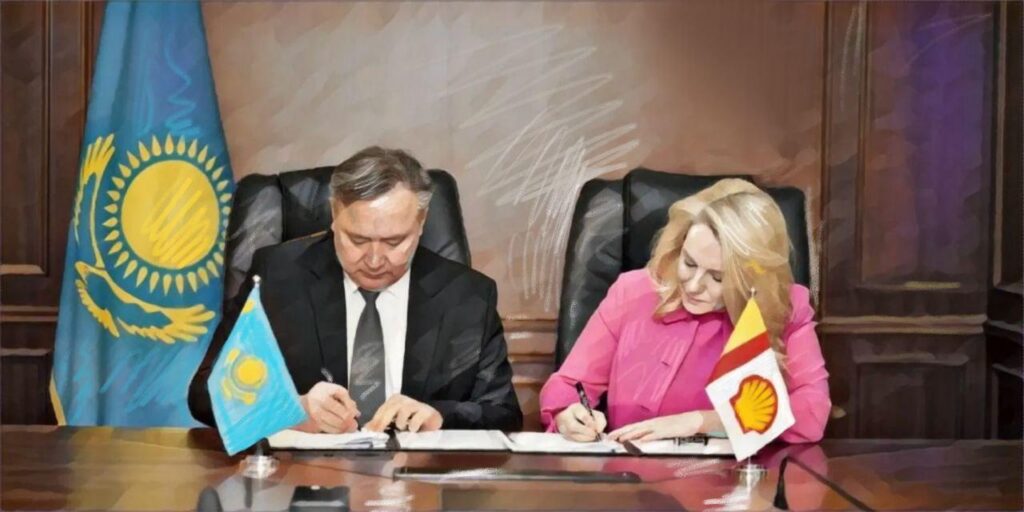
Shell Signs New Exploration Deal in Kazakhstan Amid Legal Disputes

British energy company Shell has launched a new exploration project in Kazakhstan despite previously announcing that it would pause new investments in the country. On March 5, it was announced that Shell had signed a contract for geological exploration in the Aktobe region. The company has been involved in several legal disputes with Kazakhstan over subsoil use and had stated that it did not plan to invest further in the country’s energy sector. Geological Exploration Contract The Zhanaturmys site, which has attracted Shell’s interest, covers an area of 1,377 square kilometers and is located in one of Kazakhstan’s most actively developed oil and gas basins. The document was signed by Kazakhstan’s Deputy Energy Minister, Yerlan Akbarov, and Shell’s Senior Vice President and Chair in Kazakhstan, Suzanne Coogan. The contract provides for seismic exploration, data collection, and technical assessments. “The signing of today’s contract for geological exploration is further confirmation of Shell’s commitment to long-term cooperation with the Republic of Kazakhstan. Drawing on our global experience and advanced technologies, we intend to continue contributing to geological exploration and the expansion of the country’s resource base,” Coogan said. The agreement will remain in force until 2032. The project will be implemented under the terms of an improved model contract. According to Kazakhstan’s Energy Ministry, the company will allocate at least 100 million tenge (about $200,000) to finance socio-economic development in the region where the site is located. Shell is currently involved in three projects in Kazakhstan: the North Caspian Production Sharing Agreement (NCOC, 16.81% stake); the Karachaganak Production Sharing Agreement (29.25% stake); and the Caspian Pipeline Consortium (7.4% stake). Kazakhstan produces around 1.8–1.9 million barrels per day and hosts some of the world’s largest offshore reserves in the Caspian Sea. Western energy majors, including Shell, Chevron, ExxonMobil, and Eni, have operated in the country for decades through complex production-sharing agreements. Legal Disputes In February, Shell CEO Wael Sawan said the company would suspend new investments in Kazakhstan while legal proceedings with the government were ongoing. Numerous lawsuits filed by Kazakhstan, with claims amounting to billions of dollars, have reduced the company’s willingness to invest in the country, he said. “This affects our desire to continue investing in Kazakhstan. Although we see many opportunities for investment in the future, we will wait until we have a clearer picture of how things will turn out,” Sawan stated. Karachaganak and Kashagan Kazakhstan is currently involved in several legal disputes with Western oil companies, both in national courts and international arbitration. The cases concern two major oil and gas projects. One of them is Karachaganak. In 2023, the Kazakh government filed a lawsuit against the field's developers over cost deductions. The initial claim amounted to $3.5 billion but later increased to $6 billion after additional claims were filed. The project is operated by a consortium led by Eni and Shell, each holding a 29.25% stake. Other partners include Chevron (18%), Lukoil (13.5%, which has agreed to sell its stake), and KazMunayGas (10%). In January, it was...

Kazakhstan vs Eni: How a Swiss Lawsuit Could Reshape the $160 Billion Kashagan Dispute

The legal landscape surrounding Kazakhstan’s energy sector has taken an unexpected turn. What began as a closed commercial arbitration dispute has now entered the public sphere in Switzerland’s courts. This marks a significant escalation in Astana’s confrontation with international oil and gas majors. According to Bloomberg, PSA LLP, a structure representing Kazakhstan’s interests in production-sharing agreements (PSAs), has significantly broadened its claims. The lawsuit now directly targets alleged schemes involving units and executives of the Italian company Eni. Kazakhstan alleges that during the early development of Kashagan infrastructure, including the Bolashak processing plant and pipeline systems, corruption and fraud may have occurred. Arbitration claims against the NCOC consortium, which includes Shell, ExxonMobil, TotalEnergies, and Eni, exceed $150 billion. Within this context, the Swiss case has become the most sensitive element. The Swiss case itself is much smaller – $15 million plus interest – and is being used to gather evidence and strengthen the larger arbitration case. While the financial stakes are high, the proceedings reflect a deeper political shift. Kazakhstan is moving away from the 1990s model of offering investors exceptional privileges. Under President Kassym-Jomart Tokayev’s “Fair Kazakhstan” policy, the state is aiming to secure more balanced and equitable cooperation with foreign partners. Distinctiveness of Swiss Proceedings The Swiss case is distinctive due to the nature of its allegations. The plaintiffs claim that during the tenure of Agip KCO (an Eni subsidiary) as project operator, contracts were awarded amid corrupt practices. Allegations include inflated prices and kickbacks to contractors. Targeting Eni is deliberate. The company led the project during its most troubled phase from 2001 to 2008. Kashagan’s budget swelled during this period, with repeated delays. Following a 2013 gas leak, production was halted for nearly three years. Kazakh officials have long linked Kashagan’s massive cost overruns and technical failures to poor procurement and mismanagement, and the current legal offensive zeroes in on alleged corrupt tenders. Cost estimates rose from a few tens of billions of dollars to around $60 billion, and by 2007, projections for total project costs had reached about $136 billion. Why Switzerland? The selection of the Swiss jurisdiction is strategic. Switzerland’s laws on corruption and financial crimes allow for the prosecution of both corporations and individual executives. Moreover, many entities connected to Kashagan’s operations are registered there. Another factor is the PSA’s stabilization clause, which forbids altering the contract’s terms. However, under international legal norms, if corruption is proven in the contract’s formation, such protections can be voided. This opens the door for Kazakhstan to challenge key financial terms of the agreement. Resource Nationalism 2.0: Legal Strategy Meets Political Logic Astana’s current posture can be described as a form of “new-generation resource nationalism.” Rather than using administrative leverage, the state is deploying legal tools to address grievances. This is driven in part by Kazakhstan’s fiscal needs, ranging from infrastructure upgrades to social spending. Amid these pressures, the vast expenditures reported by Kashagan operators have drawn public skepticism. Kazakhstan’s claims aim to re-evaluate the cost recovery model...

Legal Media Center to Sue Kazakh Foreign Ministry Over Journalist Accreditation Refusal

The Legal Media Center, a media-focused human rights organization, has announced plans to file a lawsuit against Kazakhstan’s Ministry of Foreign Affairs (MFA) over its refusal to accredit seven journalists from Radio Azattyq, the Kazakh service of Radio Free Europe/Radio Liberty (RFE/RL). According to Gulmira Birzhanova, head of the center’s legal department, the new regulations on foreign media introduced in 2024 have created a restrictive legal framework that infringes on journalists’ constitutional rights. “By delaying their response and failing to provide concrete grounds for the MFA’s refusal to extend accreditation, the Ministry created conditions that violate journalists’ constitutional rights and legal protections. We remind the authorities that our journalists work for a media outlet already accredited in Kazakhstan,” Birzhanova said in a statement posted to Facebook. The updated rules prohibit foreign media outlets from operating in Kazakhstan without official MFA accreditation. The Legal Media Center argues that these provisions constitute a de facto professional ban and conflict with both Kazakhstan’s Constitution and international press freedom standards. The organization also claims that the restrictions appear to be selectively enforced, with Radio Azattyq being specifically targeted. In January 2024, the MFA denied accreditation to several RFE/RL journalists, some of whom had not had their credentials renewed since late 2022. Radio Azattyq subsequently filed a lawsuit, which resulted in a mediation agreement in April. At the time, RFE/RL President Stephen Capus welcomed the outcome. “All we have ever asked for is that our journalists be allowed to do their jobs safely and without pressure. We remain committed to providing the Kazakh audience with independent and reliable information,” he said. The Times of Central Asia previously interviewed Kazakh journalist Asem Tokayeva, a long-time contributor to RFE/RL. In that interview, she described internal challenges and disagreements within the media organization, raising broader concerns about the future of independent journalism in Central Asia.

Britain’s Victoria Oil & Gas Files Multimillion-Dollar Lawsuit Against Kazakhstan

British company Victoria Oil & Gas has filed a multimillion-dollar lawsuit against the government of Kazakhstan under the Energy Charter Treaty. The development was reported by Energy Monitor, a Telegram channel focused on Kazakhstan’s energy sector. Dispute Centers on Kemerkol Oil Field The legal proceedings are registered with the International Centre for Settlement of Investment Disputes (ICSID), a World Bank-affiliated body. The case stems from a longstanding dispute over the Kemerkol oil field in Kazakhstan's Atyrau region. In 2005, Victoria Oil & Gas acquired a 100% stake in the field from Saga Creek Gold Ltd for $8.5 million. After drilling several wells, the company estimated the field’s geological reserves at approximately 15 million tons of oil. Unexplained Contract Termination In 2008, Kazakhstan’s authorities terminated the subsoil use contract without providing an official explanation. That same year, Kazakh company Bakyt Tau purchased the rights to the field from Saga Creek Gold Ltd for 360 million tenge (approximately $3 million at the 2008 exchange rate). In 2016, Bakyt Tau transferred the development license to Up-Nafta Operating for 1.36 billion tenge (nearly $4 million at the 2016 rate). The company continued exploration and drilling operations. By 2022, the State Reserves Commission reported the following: C1 category geological reserves: 2.35 million tons; recoverable: 588,000 tons C2 category reserves: 652,000 tons; recoverable: 29,000 tons As of 2023, actual oil production totaled just 14,700 tons, with 12 active wells and an average water cut of 79%. Legal Strategy or Political Statement? Given the field’s modest reserves and limited output, some experts suggest the lawsuit may be more political than economic. Energy Monitor noted: “The field is clearly not worth hundreds of millions of dollars, unlike the Stati case involving the Borankol and Tolkyn fields. Most likely, the lawsuit has a political context rather than an economic one.” Victoria Oil & Gas first raised the prospect of arbitration in April 2021. The case has now been officially registered under ICSID case number ARB/25/13, signaling the start of formal legal proceedings. Implications for Kazakhstan While the precise amount of the claim has not been disclosed, Victoria Oil & Gas is expected to seek compensation for lost investments and projected profits. However, given the field’s limited commercial viability, many industry observers question the likelihood of a favorable ruling. The case adds to Kazakhstan’s growing docket of international arbitrations, including the high-profile Stati brothers’ case. Analysts warn the dispute could affect the country’s investment climate and its bargaining position in future energy negotiations.