• KGS/USD = 0.01144 0%
  • KZT/USD = 0.00212 0%
  • TJS/USD = 0.10456 0.19%
  • UZS/USD = 0.00008 0%
  • TMT/USD = 0.28490 0%
  • KGS/USD = 0.01144 0%
  • KZT/USD = 0.00212 0%
  • TJS/USD = 0.10456 0.19%
  • UZS/USD = 0.00008 0%
  • TMT/USD = 0.28490 0%
  • KGS/USD = 0.01144 0%
  • KZT/USD = 0.00212 0%
  • TJS/USD = 0.10456 0.19%
  • UZS/USD = 0.00008 0%
  • TMT/USD = 0.28490 0%
  • KGS/USD = 0.01144 0%
  • KZT/USD = 0.00212 0%
  • TJS/USD = 0.10456 0.19%
  • UZS/USD = 0.00008 0%
  • TMT/USD = 0.28490 0%
  • KGS/USD = 0.01144 0%
  • KZT/USD = 0.00212 0%
  • TJS/USD = 0.10456 0.19%
  • UZS/USD = 0.00008 0%
  • TMT/USD = 0.28490 0%
  • KGS/USD = 0.01144 0%
  • KZT/USD = 0.00212 0%
  • TJS/USD = 0.10456 0.19%
  • UZS/USD = 0.00008 0%
  • TMT/USD = 0.28490 0%
  • KGS/USD = 0.01144 0%
  • KZT/USD = 0.00212 0%
  • TJS/USD = 0.10456 0.19%
  • UZS/USD = 0.00008 0%
  • TMT/USD = 0.28490 0%
  • KGS/USD = 0.01144 0%
  • KZT/USD = 0.00212 0%
  • TJS/USD = 0.10456 0.19%
  • UZS/USD = 0.00008 0%
  • TMT/USD = 0.28490 0%

Viewing results 1 - 6 of 298

Casinos in Kyrgyzstan To Open in State Buildings

The Kyrgyz parliament has passed legislation permitting gambling in state-owned facilities. This new law allows for casino activities within buildings owned by the state or enterprises with government stakes, and aims to attract investment, generate employment, and boost tax revenues. Developed by the Ministry of Economy and Commerce and presented to the Cabinet of Ministers, the law overturns previous restrictions by permitting casinos in state-owned hotels to enhance tourism and global competitiveness. Revenues from these casinos will support the development of tourist infrastructure. Historically, gambling was banned entirely in Kyrgyzstan in 2012, but a 2022 law reintroduced it under strict conditions, allowing only foreign nationals to participate. Kyrgyz citizens remain barred from casino entry, and the State Service for Regulation and Supervision of the Financial Market closely oversees operations to ensure compliance.

Only Half of Kazakhstan’s CO2 Emissions are Subject to State Regulation

Environmentalists say that Kazakhstan's quota system for greenhouse gas emissions covers only half of the country's emissions. This means that the state only has real leverage over large industrial polluters. Experts say that the state needs to pay further attention in the near future to emissions in three sectors: agriculture, forestry, and waste management systems. These sectors currently remain virtually uncontrolled in terms of environmental emissions. Kazakhstan ratified the UN Framework Convention on Climate Change in 1995 and, in 2016, presented its plan to the world community for transitioning to a green economy and achieving carbon neutrality. The carbon neutrality strategy envisages a 15% reduction in the 1990 level of emissions by 2030 (from 386.3 to 328.4 million tons of CO2) and achieving a net zero balance of greenhouse gases by 2060. The country has implemented a quota system for greenhouse gas emissions, and any industrial facility with emissions exceeding 20,000 tons of carbon dioxide per year is subject to quotas. However, those “polluters” whose activities result in emissions of 10 to 20 thousand tons of CO2 are subject to regulation and must report to the state for their emissions, but they are not subject to quotas. Finally, economic entities that do not even reach 10,000 tons of emissions are not obliged to notify the state about the environmental damage they cause. As a result, the state can regulate only half of emissions. Aigul Malikova, coordinator of the Central Asia Regional Environmental Network in Kazakhstan, explained to The Times of Central Asia: “In 2021, according to the national inventory, the actual volume of emissions across Kazakhstan amounted to 340 million tons, and quotas, including even additional ones, were issued for only 176 million, which means that only half of all greenhouse gas emissions fall under regulation, and in fact, we can affect only half of all emissions now. The situation is aggravated by the fact that in 2021, Kazakhstan produced one-third more emissions than the quotas granted; in 2022, this excess was 3%; that is, even regulated enterprises emit more than they are allowed under the quotas.” Malikova also noted there is no data for 2023. Still, it is already clear that the government needs to control not only major industrial polluters but also other sectors of the economy that need to be more accountable in terms of emissions regulation to achieve carbon neutrality. However, assessing their contribution to total emissions is difficult since they are not even legally required to submit reports. Paradoxically, such sectors include agriculture and forestry, which by definition should be environmentally “clean,” as well as the waste management system and housing and communal services. “For these three sectors - agriculture and forestry, waste management and housing, and communal services - data on greenhouse gas emissions could not be assessed at all. In the national reporting, this data is absent in the context of regions. In the reporting of the carbon cadastre, this data is also absent, and because they are not subject to quotas, no...

Rahmon Calls To End Persecution For Social Media ‘Likes’

Tajik President Emomali Rahmon has called on law enforcement agencies to stop prosecuting citizens for their activity on social media, particularly for likes and comments. Rahmon said this at the opening of a new training institute for Interior Ministry personnel, timed to coincide with the 30th anniversary of the Constitution and the Day of the Tajik Police. In Tajikistan, even adding simple “likes” on posts by opposition figures, or reposting their videos, can lead to arrest. Since 2016, the country's Criminal Code has included a provision on “public justification of extremism,” which allows law enforcement agencies to equate likes with support for extremist ideas. For example, in August 2023, 70-year-old Kamoliddin Sharofov was sentenced to five years for liking posts on a banned website. Rahmon expressed concern over the growth of unfounded criminal cases against social media users, and noted that law enforcement agencies' actions undermine public confidence. He called for restraint, emphasizing that any police action should show respect for citizens' rights and the principles of democracy. The Tajik government has previously been criticized by the opposition and international organizations, including the U.S. State Department, for arresting citizens for their online activities.

Kyrgyzstan Seeks to Curb Rising Teen Interest in Quadrobics

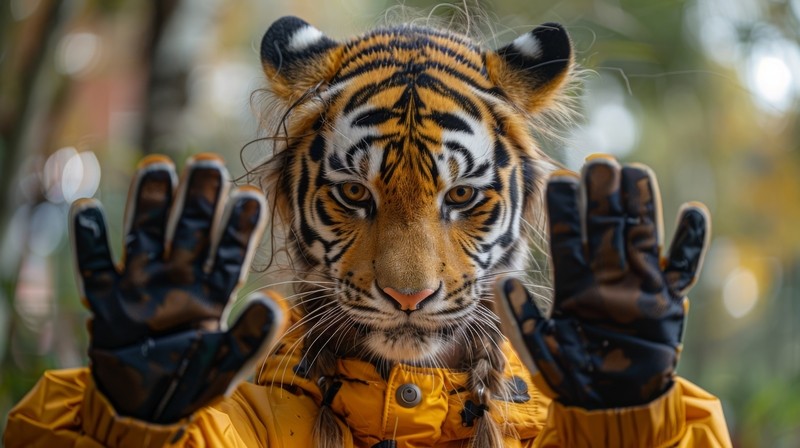
Concern is growing in Kyrgyzstan over teenagers' interest in quadrobics, a movement where people move on all fours and imitate animals. At a Zhogorku Kenesh meeting, MP Dastan Bekeshev raised the issue with cabinet spokesman Almasbek Abytov. Bekeshev suggested that the Ministry of Education and Science organize explanatory activities in schools to inform about the risks of quadrobics. “Some schoolchildren are already doing quadrobics, imitating the behavior of animals. So far, it has not become a mass problem, but preventive measures are necessary,” the deputy emphasized. Quadrobics involves moving on all fours and imitating animals, including using masks and tails to portray foxes, wolves, and other animals. This movement has already been noticed in Kazakhstan, Russia, and Ukraine. Recently, cases of such behavior have been registered in Tashkent. On October 10, a teenager wearing an animal mask frightened passers-by, and the next day, another quadrober imitating a dog attacked passengers on public transport, leaving a child visibly frightened. Earlier, The Times of Central Asia wrote that Uzbekistan is already taking steps to control this subculture. In particular, parents are being warned of fines for inappropriate behavior by teenagers in the quadrobika subculture. The Interior Ministry has stated that failure to fulfill parental duties will be punishable, as parents are responsible for educating their children to respect social norms and preventing inappropriate behavior. Russia has also raised the issue of the administrative responsibility of parents who do not follow the upbringing of their children who are addicted to quadrobika. The issue has not yet been resolved, but the request to the State Duma spoke of a fine and criminal liability for the violation. In addition, Gennady Shkil, a priest of the Russian Orthodox Church, suggested in a sermon that parents of quadrobers should be deprived of parental rights. He believes one cannot do this without “tough measures” as it is “for the salvation of mankind.”

Prosecutor’s Office Urges Caution in Reporting on Alleged Attack on Allamjonov

According to Uzbek media, an assassination attempt was made on October 26 against Komil Allamjonov, the former head of the presidential information department. At about 1:40am near Allamjonov's home in Tashkent's Kibray district, two unknown people fired several shots at the car he was sitting in and fled the scene. No-one was hurt. The type of weapon used in the attack has not been determined. An attempted murder case has been opened, and a search is underway. However, in its statement, the General Prosecutor’s Office did not confirm that this was an assassination attempt against Allamjonov. The media reported the incident under headlines about "Allamjonov's assassination," prompting an official response from the General Prosecutor’s Office. They clarified that the information being circulated about the shooting lacks confirmation from reliable official sources. The prosecutor’s office stated that the investigation was ongoing and promised further updates.

Uzbekistan President’s Party Wins Landmark Election Held Under New Voting System

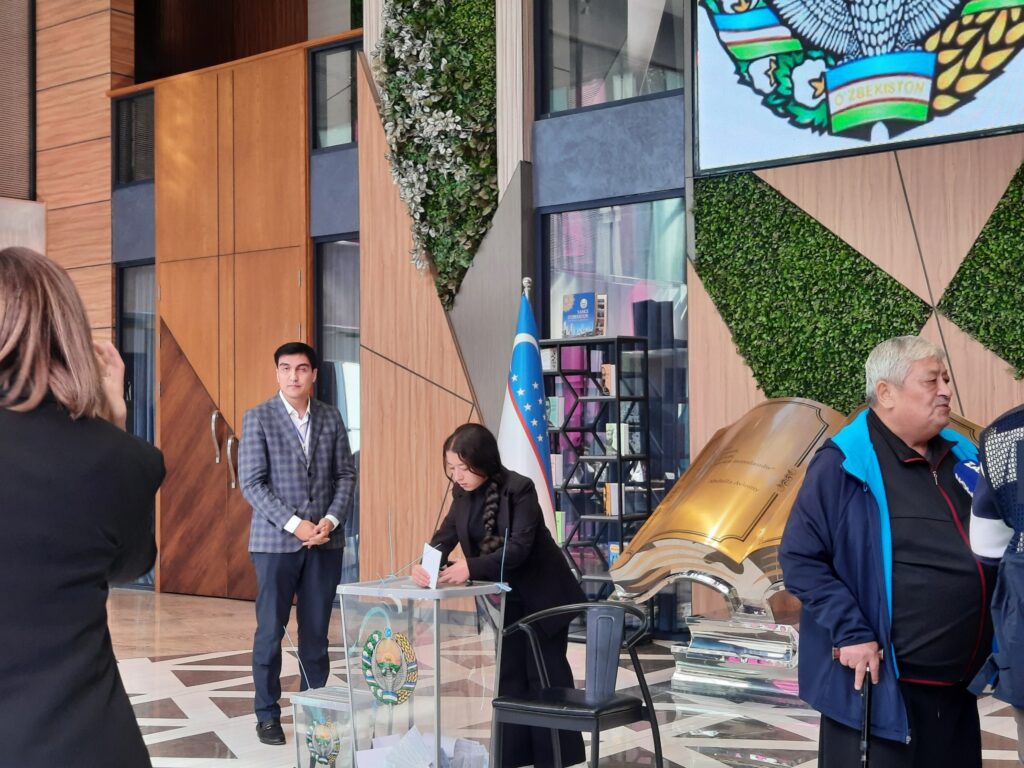
On October 27, Uzbekistan held elections for deputies of the Legislative Chamber of the Oliy Majlis (Lower House of Parliament) and local councils. This marks the first time these elections were conducted using a mixed (majority-proportional) system and featured electronic voting. For over a month, parties actively promoted their election programs to the public, with televised debates and messages on public transport urging citizens to participate in the elections and shape the country’s future. As required by law, all campaign activities were halted one day before the election. The electoral platforms of the five parties registered in Uzbekistan saw The Liberal Democratic Party of Uzbekistan (UzLiDeP) emphasize poverty reduction and promoting internal labor migration over the next five years. The party also campaigned on expanding public-private partnerships in water management, ecology, and energy to increase the private sector's share in the economy to 85%. Additionally, UzLiDeP pledged to improve education, healthcare, and social services, focusing on providing clean drinking water and sewage systems in schools. The party pledged to double the annual budget for healthcare to $6 billion, and advocated to enhance healthcare and social support for citizens over the age of 70. The People’s Democratic Party (PDP) focused on accessibility and social support, including assistive technologies at public transportation points for people with disabilities. They proposed adopting a “Social Housing” law, requiring luxury housing developers to allocate funds for social housing. This would benefit vulnerable groups, such as the homeless, people with disabilities, and those coming through the orphanage system. The party’s environmental initiatives included the Water Code and creating “Health Parks” for seniors near apartment complexes. The Milli Tiklanish (National Revival) Party’s platform spanned various topics, including youth development, cultural enrichment, family support, economic growth, and tourism. One key pledge emphasized Uzbekistan’s international relations, focusing on friendly ties with neighboring countries, cooperation, and maintaining peace - this despite party leader, Alisher Qodirov's anti-Russian rhetoric, including recent comments that “it would be better for [Russia] to deal with their own affairs [which are] full of problems than to deal with our internal issues." Qodirov has been actively responding to international discussions about Uzbekistan, reinforcing the party’s commitment to advancing national interests and strengthening Uzbekistan’s presence on the world stage. The Adolat (Justice) Social Democratic Party ran on a platform of advocating for media freedom, proposing reforms to safeguard journalists’ rights and prevent interference. Adolat pledged to introduce a “Presumption of Property Rights” to protect ownership and put forward affordable energy and price stability initiatives. The Ecology Party’s motto, “We are responsible for the future!” set out to drive home its focus on environmental and social issues. The party promoted government, business, and civil society efforts to address environmental challenges, whilst seeking to improve environmental legislation and education, and transitioning Uzbekistan toward a green economy. [caption id="attachment_24929" align="aligncenter" width="2560"] @TCA[/caption] According to Uzbek legislation, the election would be deemed valid once 33% of voters participated, and by 1pm local time 47.62% of voters had cast their ballots. President Shavkat Mirziyoyev and...