• KGS/USD = 0.01144 0%
  • KZT/USD = 0.00203 0%
  • TJS/USD = 0.10704 0%
  • UZS/USD = 0.00008 0%
  • TMT/USD = 0.28530 0%
  • KGS/USD = 0.01144 0%
  • KZT/USD = 0.00203 0%
  • TJS/USD = 0.10704 0%
  • UZS/USD = 0.00008 0%
  • TMT/USD = 0.28530 0%
  • KGS/USD = 0.01144 0%
  • KZT/USD = 0.00203 0%
  • TJS/USD = 0.10704 0%
  • UZS/USD = 0.00008 0%
  • TMT/USD = 0.28530 0%
  • KGS/USD = 0.01144 0%
  • KZT/USD = 0.00203 0%
  • TJS/USD = 0.10704 0%
  • UZS/USD = 0.00008 0%
  • TMT/USD = 0.28530 0%
  • KGS/USD = 0.01144 0%
  • KZT/USD = 0.00203 0%
  • TJS/USD = 0.10704 0%
  • UZS/USD = 0.00008 0%
  • TMT/USD = 0.28530 0%
  • KGS/USD = 0.01144 0%
  • KZT/USD = 0.00203 0%
  • TJS/USD = 0.10704 0%
  • UZS/USD = 0.00008 0%
  • TMT/USD = 0.28530 0%
  • KGS/USD = 0.01144 0%
  • KZT/USD = 0.00203 0%
  • TJS/USD = 0.10704 0%
  • UZS/USD = 0.00008 0%
  • TMT/USD = 0.28530 0%
  • KGS/USD = 0.01144 0%
  • KZT/USD = 0.00203 0%
  • TJS/USD = 0.10704 0%
  • UZS/USD = 0.00008 0%
  • TMT/USD = 0.28530 0%
09 February 2026

Viewing results 1 - 6 of 10

Uzbekistan to Import 300,000 Animals, Launch $367 Million in Livestock Projects

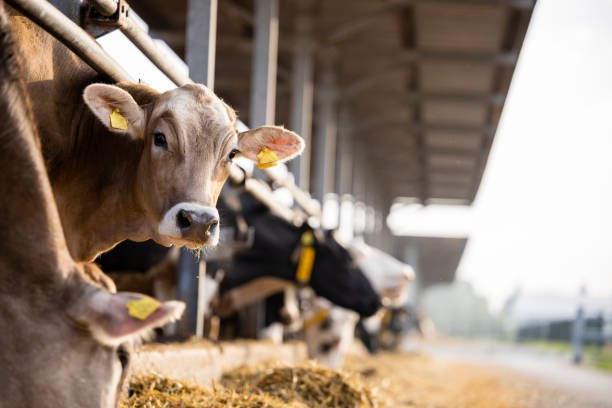
Uzbekistan’s President Shavkat Mirziyoyev has announced a sweeping expansion of the country’s livestock sector as part of broader agricultural reforms. Speaking on December 10 at a meeting with industry specialists to mark Agriculture Workers’ Day, the president outlined key initiatives aimed at boosting domestic production of meat and dairy products. According to the president’s press secretary, the government will import 100,000 head of cattle and 200,000 sheep and goats in 2026. Farmers working within cotton and grain clusters will be permitted to construct lightweight livestock facilities of up to 20 sotok (approximately 0.2 hectares) on their existing plots, a move designed to better integrate crop and livestock operations. Uzbekistan will also extend its subsidy program for imported breeding cattle and day-old chicks for an additional five years. To support the livestock sector’s growth, the government plans to allocate $157 million from funding provided by the World Bank and the International Fund for Agricultural Development. These loans will be issued to farmers at an interest rate of 17% for a term of up to 10 years, including a three-year grace period. Additional financing will include $150 million from the Japan International Cooperation Agency (JICA) and $60 million from the Asian Development Bank. Authorities say the efficient use of these resources could support the launch of 1,000 projects valued at 5 trillion UZS, including the establishment of 340 small livestock farms across 167 districts, modeled after a French framework. Last year, the European Union Delegation to Uzbekistan and the French Development Agency (AFD) signed agreements to support sustainable livestock development. The EU committed €4.7 million in grants for technical assistance and an additional €7.9 million to support Uzbekistan’s drinking water program, helping lay the groundwork for these agricultural reforms.
Kyrgyzstan Loosens Livestock Export Ban, But Only by Air

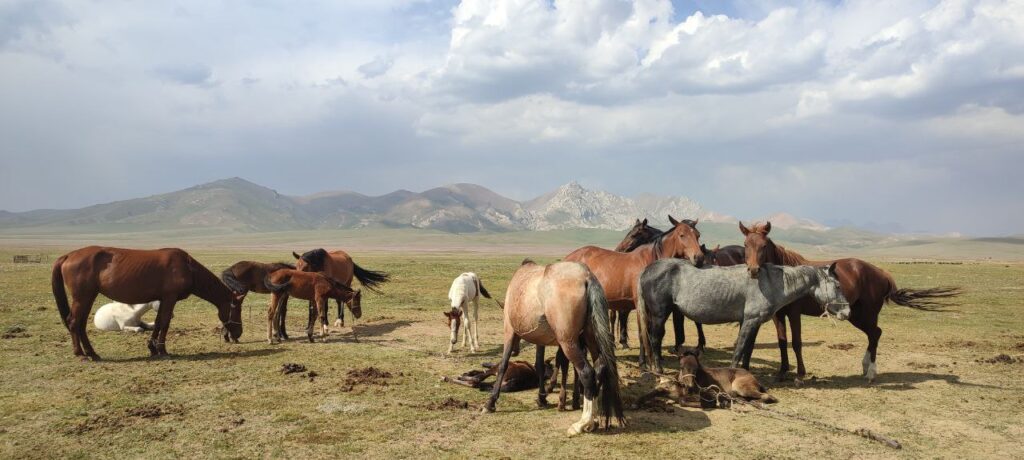
The Kyrgyz government has made an exception to its current ban on livestock exports, allowing horses to be exported by air under specific conditions. According to an official decree, the temporary export restrictions do not apply to horses transported via aircraft. Other permitted exceptions include the transit of livestock through Kyrgyz territory, the export of animals for participation in international competitions, and the gifting of horses to foreign dignitaries and international organizations. The exclusive right to export horses abroad has been granted to the state-owned enterprise Kyrgyz Agroholding. Customs and border control authorities have been ordered to step up oversight to prevent illegal animal exports. The Cabinet of Ministers initially imposed a six-month ban on the export of cattle, horses, sheep, and goats in response to rising meat prices in the domestic market. Authorities cited the widening price gap between Kyrgyzstan and neighboring countries as a key factor, with significantly higher meat prices abroad prompting farmers to sell livestock across borders.

Kyrgyzstan Restricts Livestock Exports to Stabilize Meat Prices

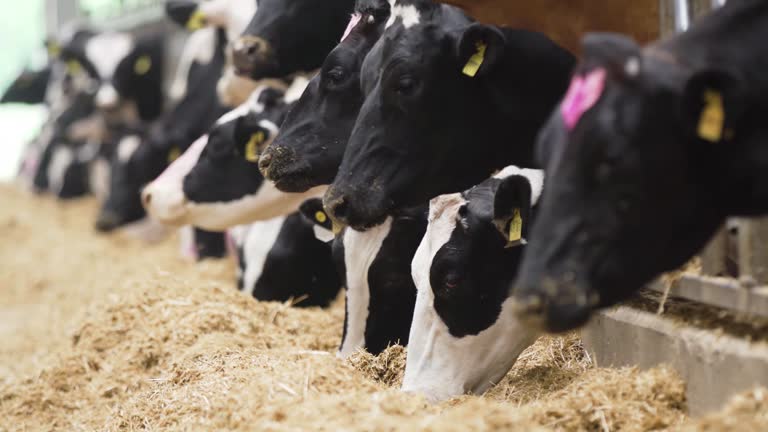
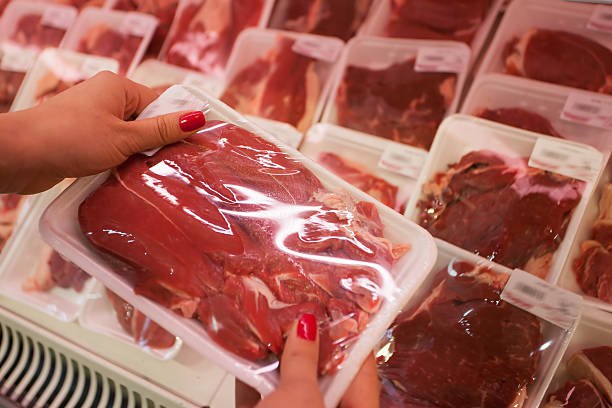
In early 2025, Kyrgyzstan temporarily suspended livestock exports in a bid to curb rising meat prices on the domestic market. The measure has resulted in a significant reduction in export volumes. According to the Ministry of Water Resources, Agriculture and Processing Industry, between January and mid-August 2025, Kyrgyzstan exported 30,493 cattle, 31,781 sheep and goats, and 1,636 horses. This marks a sharp decline compared to the same period in 2024, when the country exported 77,907 cattle, 70,392 sheep and goats, and 5,113 horses. Kyrgyz livestock is primarily exported to neighboring Central Asian countries. Officials say the suspension has helped prevent meat shortages and price surges domestically. To further bolster local meat production and supply, the ministry has proposed extending the export ban for an additional six months. In the first half of 2025, Kyrgyzstan produced 115,400 tons of meat, an increase of 3,900 tons compared to the same period in 2024. However, demand continues to outpace supply. National meat consumption stood at 309,400 tons in 2024 and reached 157,300 tons in the first half of 2025. In 2024, Kyrgyzstan met 86.2% of domestic meat demand through local production. That figure dropped to 79.7% in the first half of 2025, underscoring the country’s ongoing reliance on imports to bridge the supply gap. To contain prices, the government implemented temporary state control over retail meat prices beginning August 11. For a 90-day period, the price of beef and mutton has been capped at 700 Kyrgyz soms ($8) per kilogram.

Kyrgyzstan Urges Farmers to Expand Fodder Crop Cultivation

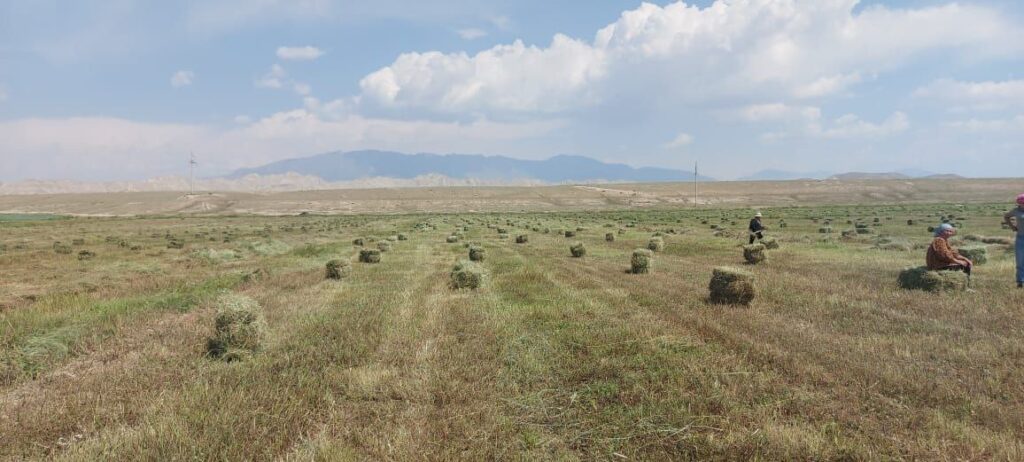
The Kyrgyz Ministry of Water Resources, Agriculture, and Processing Industry has called on farmers to actively plant corn, soybeans, sorghum, and other fodder crops for animal feed. The appeal was published on the ministry’s website. According to the ministry, these crops are used to produce green fodder for livestock during the winter months, when pastures are bare. This practice is particularly important in regions with developed livestock farming. Naryn region, for example, is the coldest in the country but also a leader in livestock production. Experts say expanding fodder crop cultivation would strengthen the sector’s resilience, boost meat and dairy output, and support overall agricultural growth. The ministry noted that each autumn, prices for hay and feed rise sharply due to shortages. In Chui region, many farmers prefer to grow alfalfa to fatten livestock. Alfalfa is also used for hay bales, but it is highly water-intensive. Given Kyrgyzstan’s limited water resources and reliance on flood irrigation, this can lead to disputes between farmers. While alfalfa remains popular, the ministry stressed that it is not suitable for all regions. As The Times of Central Asia previously reported, Kyrgyz authorities recently imposed price controls on meat amid growing exports to neighboring countries. One of the factors behind the price hikes was a shortage of animal feed.

Anthrax Outbreak Reported in Northern Kazakhstan

An outbreak of anthrax has been confirmed in the Akmola region of northern Kazakhstan. According to official data, at least seven people have been infected after coming into contact with contaminated livestock. Kazakhstan’s Minister of Agriculture, Aidarbek Saparov, identified the source as unvaccinated and unregistered animals grazing near an old cattle burial ground located approximately seven kilometers from the villages of Magdalinovka and Novomarinovka. Ten infected cattle have been identified and culled. “There are many questions for the owners of these animals. They were not registered anywhere,” Saparov said at a press briefing. Authorities have imposed a quarantine, carried out disinfection procedures, and restricted access to the affected pastures. Sanitary measures have also been intensified in nearby settlements. The Ministry of Health reported that 19 individuals underwent medical examinations, with seven cases confirmed in laboratory tests. One patient is in serious condition, while the remaining six are in stable condition. Four of these cases had been previously reported. Saparov also dismissed speculation that contaminated meat had entered Astana’s markets. "We checked everything, even the door handles. All samples tested negative. Suspicious meat was immediately seized," the minister stated. The outbreak in the Atbasar district has exposed long-standing deficiencies in Kazakhstan’s veterinary oversight and livestock registration systems. Although the country maintains an electronic livestock registration system, its usage is inconsistent, particularly in remote regions where many farmers fail to register or vaccinate their animals. In response, the government has pledged to tighten regulatory enforcement. Inspections will begin in the affected areas, with violators facing increased fines. Authorities also plan to target so-called “dealers,” middlemen trading in unregistered livestock. “This is not just about private property. It is a threat to public health,” Saparov added. The quarantine in the outbreak zone will last a minimum of 15 days. Authorities will assess whether to lift the restrictions following additional inspections. Anthrax is a dangerous bacterial infection transmitted from animals to humans, primarily through contact with infected meat or contaminated soil. Outbreaks occur periodically in Kazakhstan, particularly in areas where Soviet-era cattle burial sites remain unregistered and unmapped. Regional veterinary officials have warned that many of these burial grounds have not yet been properly identified, posing a continuing risk to grazing livestock. In recent days, Minister Saparov proposed introducing criminal liability for the sale of meat that bypasses veterinary and sanitary controls.

Kazakhstan Proposes Criminal Penalties for Illegal Meat Sales

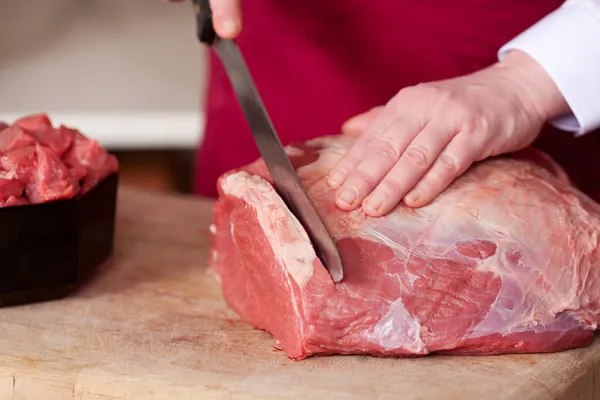
Kazakhstan’s Minister of Agriculture, Aidarbek Saparov, has proposed introducing criminal liability for the sale of meat that bypasses veterinary and sanitary inspections. Speaking at a government meeting, Saparov emphasized that Kazakhstan is undertaking large-scale efforts to digitize its livestock industry. Each farm animal now receives an individual identification number, with all veterinary procedures recorded in an electronic system. However, the minister warned that the system’s effectiveness depends on livestock owners maintaining accurate and transparent records. “We must strengthen oversight of livestock registration and tighten accountability, up to criminal liability, for unscrupulous livestock suppliers and buyers of animal products without proper veterinary documentation,” Saparov stated. Illegal Slaughterhouses a Threat to Public Health Saparov cited recent cases of underground slaughterhouses as a significant public health concern. In December 2024, two unlicensed facilities were discovered in Astana, distributing unregulated meat across the country. Similar operations were uncovered in Semey and Shymkent in spring 2025. Currently, criminal penalties in Kazakhstan apply only to cattle theft. Violations of veterinary and sanitary rules, unless they result in serious harm to human health, are punished administratively. Since the beginning of 2025, 64 veterinary checkpoints have inspected 28,500 vehicles transporting meat. Violations were identified in 547 cases, resulting in administrative fines for the owners. Livestock Industry Growth and Export Expansion Saparov also reported robust growth in livestock production. From January to May 2025, output increased by 4.2% compared to the same period in 2024. Meat production (in carcass weight) rose by 3%. Cow’s milk production grew by 7.5%. Almaty and Akmola regions led in meat output, while North Kazakhstan and Pavlodar regions led in milk production. The livestock population also expanded: Cattle: up 23.4 percent to 9.6 million head Small ruminants: up 7.8 percent to 26.3 million head Horses: up 12.2 percent to 5 million head Camels: up 8.5 percent to 321,300 head Poultry: up 2.2 percent to 47.7 million birds “Current production volumes fully meet domestic demand for beef and mutton and allow us to expand exports to up to 50,000 tons annually,” Saparov said. In 2024, Kazakhstan’s beef exports increased by 1.4 times to over 22,000 tons. Mutton exports grew 2.2 times, reaching 18,000 tons. As previously reported by The Times of Central Asia, Turkey expressed interest in importing Kazakh meat, reportedly offering prices nearly double those proposed by China.