• KGS/USD = 0.01144 0%
  • KZT/USD = 0.00212 0%
  • TJS/USD = 0.10768 0.47%
  • UZS/USD = 0.00008 0%
  • TMT/USD = 0.28490 0%
  • KGS/USD = 0.01144 0%
  • KZT/USD = 0.00212 0%
  • TJS/USD = 0.10768 0.47%
  • UZS/USD = 0.00008 0%
  • TMT/USD = 0.28490 0%
  • KGS/USD = 0.01144 0%
  • KZT/USD = 0.00212 0%
  • TJS/USD = 0.10768 0.47%
  • UZS/USD = 0.00008 0%
  • TMT/USD = 0.28490 0%
  • KGS/USD = 0.01144 0%
  • KZT/USD = 0.00212 0%
  • TJS/USD = 0.10768 0.47%
  • UZS/USD = 0.00008 0%
  • TMT/USD = 0.28490 0%
  • KGS/USD = 0.01144 0%
  • KZT/USD = 0.00212 0%
  • TJS/USD = 0.10768 0.47%
  • UZS/USD = 0.00008 0%
  • TMT/USD = 0.28490 0%
  • KGS/USD = 0.01144 0%
  • KZT/USD = 0.00212 0%
  • TJS/USD = 0.10768 0.47%
  • UZS/USD = 0.00008 0%
  • TMT/USD = 0.28490 0%
  • KGS/USD = 0.01144 0%
  • KZT/USD = 0.00212 0%
  • TJS/USD = 0.10768 0.47%
  • UZS/USD = 0.00008 0%
  • TMT/USD = 0.28490 0%
  • KGS/USD = 0.01144 0%
  • KZT/USD = 0.00212 0%
  • TJS/USD = 0.10768 0.47%
  • UZS/USD = 0.00008 0%
  • TMT/USD = 0.28490 0%

Viewing results 1 - 6 of 25

Kazakhstan Details Use of Russian Loan for First Nuclear Power Plant

Kazakhstan’s Atomic Energy Agency (AEA) has confirmed that Russian preferential export financing for the country’s first nuclear power plant will be directed toward the purchase of long-cycle equipment and major construction works. Key components to be covered include the reactor, steam generators, and main circulation pumps. The 2.4 GW twin-unit plant will be built near the village of Ulken on the shores of Lake Balkhash in the Almaty region. The loan’s terms and parameters will be set during the drafting of an intergovernmental agreement. Construction Management The project has been entrusted to Kazakhstan Atomic Power Plants LLP (KAP), a subsidiary of Samruk-Kazyna. In July, KAP was placed under the trust management of the AEA and will later become state property. The agency is also studying potential sites for the second and third nuclear power plants, taking into account geological, seismic, infrastructural, and environmental factors, along with electricity demand and public opinion. All studies are being conducted in line with International Atomic Energy Agency (IAEA) standards. Fuel Production in Kazakhstan The AEA also highlighted plans to produce nuclear fuel domestically. The Ulba-TVS plant has reached its design capacity of 200 tons of finished fuel in low-enriched uranium terms, equivalent to about 1,600 tons of natural uranium annually, enough to reload six reactors. A joint venture with China’s CGNPC, the plant currently manufactures 440 fuel assemblies per year for Chinese nuclear power stations, each weighing about half a ton and produced to a French Framatome design. Moving to two-shift production could double output. While Kazakhstan lacks uranium conversion and enrichment facilities, authorities plan to develop this segment to establish a full nuclear fuel cycle. The AEA and Kazatomprom aim to ensure a steady fuel supply for the plant’s entire operational life. Project Costs and Local Involvement Russia’s financing will primarily fund equipment with long manufacturing lead times. The total cost of construction will be set after design completion and expert review. The AEA noted that costs will depend on site-specific engineering and survey results, local seismic and meteorological conditions, use of international equipment, the degree of domestic production of materials, and the involvement of local contractors and specialists. Kazakh suppliers will have priority in providing materials and labor, provided they meet certification standards. “It is economically unfeasible to import construction materials and workers from Russia if the necessary resources and specialists are available in Kazakhstan at more competitive prices,” the agency stated.
KTZ Secures $540 Million Loan to Upgrade Trans-Kazakhstan Railway Corridor

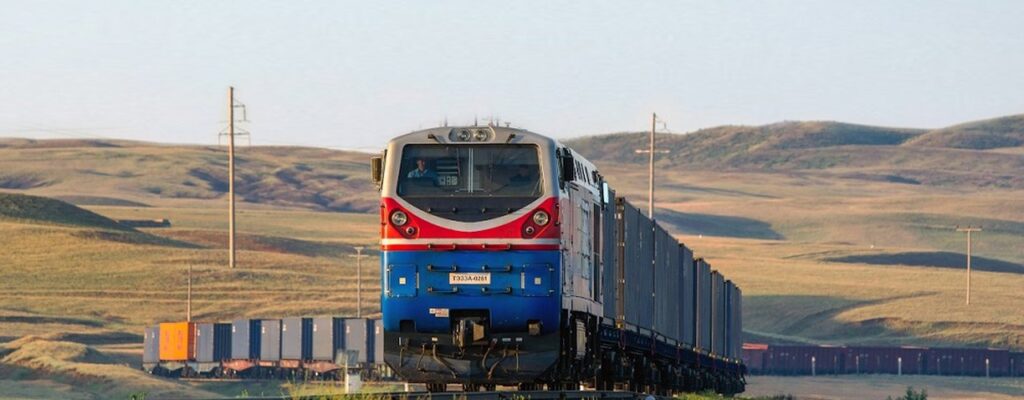
Kazakhstan Temir Zholy (KTZ), the national railway operator, has secured a syndicated loan of up to 480 million Swiss francs (approximately $540 million) for a three-year term. Arranged through Abu Dhabi Commercial Bank and Deutsche Bank, the financing will support key infrastructure projects along the Trans-Kazakhstan Railway Corridor. According to KTZ, the loan will fund construction of the Moiynty-Kyzylzhar section, upgrades to congested segments of the national rail network, and the refinancing of existing debt. The Trans-Kazakhstan Railway Corridor is central to Kazakhstan’s strategy to solidify its role as a major overland transit hub connecting China and Europe. Infrastructure improvements are expected to reduce delivery times, lower logistics costs, create jobs, and diversify international trade routes, enhancing both the resilience of Kazakhstan’s economy and the competitiveness of its transport sector. Currently, more than 80% of overland freight from China to Europe passes through Kazakhstan via the Trans-Caspian International Transport Route (TITR), also known as the Middle Corridor. This route circumvents Russia and connects China to Europe through Central Asia and the Caspian Sea. In 2024, freight volumes along the TITR surged by 60%, reaching 4.5 million tons. Kazakhstan aims to more than double that volume to 10 million tons by 2030, as part of its broader ambition to expand its footprint in global supply chains.

Kyrgyz Lending Surges 55% as Consumer Demand Fuels Growth

From January to May 2025, the volume of new loans issued by commercial banks in Kyrgyzstan rose by 55 percent, according to the Eurasian Development Bank’s (EDB) June macroeconomic forecast. The sharpest increase was recorded in consumer lending, which more than doubled during the period, rising by 2.1 times. As a result, the total loan portfolio of the Kyrgyz banking sector grew by nearly one-third. “High lending rates are supporting domestic demand: retail trade and public catering increased by 25.3 percent during the first five months of the year. Consumer activity will continue to drive economic growth,” the EDB report  states. Similar findings were previously released by the National Bank of the Kyrgyz Republic (NBKR), though with some differences in specific figures. According to the NBKR, net profits of Kyrgyz banks from January to May totaled 12 billion som (approximately 137 million USD). The overall loan portfolio reached 404 billion som (around 4.6 billion USD), with overdue loans amounting to 7.3 billion som (83.5 million USD), or 1.8 percent of the total. The deposit base also showed strong growth: citizens deposited roughly 700 billion som (8 billion USD), reflecting a 17.7 percent increase since the start of the year. Efforts to reduce dollarization have also shown progress. The share of foreign currency assets in banks’ loan portfolios fell by 1.5 percentage points to 18.5 percent. Meanwhile, the proportion of household deposits held in foreign currency declined by 4.6 percentage points to 38.4 percent. According to EDB analysts, several key factors are driving Kyrgyzstan’s economic momentum. These include rising global gold prices, strong domestic consumption, and increased investment. Based on these trends, the bank has revised its 2025 GDP growth forecast for Kyrgyzstan upward by 1.6 percentage points. The country’s economy is now projected to grow by 10.3 percent this year.

AIIB and Uzbekistan Finalize $71.1 Million Loan for Climate-Resilient Rural Roads

Uzbekistan and the Asian Infrastructure Investment Bank (AIIB) have concluded a $71.1 million loan agreement to upgrade rural roads in the Khorezm and Karakalpakstan regions. The deal was finalized during the AIIB’s 10th Annual Meeting in Beijing. The loan will finance the first phase of the Karakalpakstan and Khorezm Local Roads Network Reconstruction Project, which aims to modernize rural road infrastructure to improve climate resilience and community accessibility. The project is expected to facilitate better access to markets and essential public services for rural populations. The total cost of the project is projected at $173.4 million, with a second loan tranche planned to cover the remaining amount. The initial phase will prioritize road improvements in Khorezm, while the second tranche will address road upgrades in the Republic of Karakalpakstan. According to the AIIB, a phased approach will allow Uzbekistan to better manage its fiscal resources and enhance project planning and execution. This method also enables the bank to provide tailored technical assistance and integrate lessons learned from earlier phases into subsequent work. This initiative builds on a broader partnership between Uzbekistan and the AIIB. In 2024, the bank approved a $250 million program to support the country's transition to a greener economy. That package includes measures to reduce greenhouse gas emissions, reform climate-related policies, and promote sustainable land and water management, as well as low-carbon transportation and energy solutions. The AIIB also backs Uzbekistan’s efforts to boost energy efficiency, expand renewable energy capacity, promote e-mobility, and encourage state-owned enterprises to adopt climate risk reporting practices. The rural roads project aligns with Uzbekistan’s wider development agenda, which includes modernizing infrastructure, revitalizing underserved regions, and fostering long-term sustainability.

Kyrgyz Bank Launches Loan Self-Limitation to Fight Fraud and Boost Cybersecurity

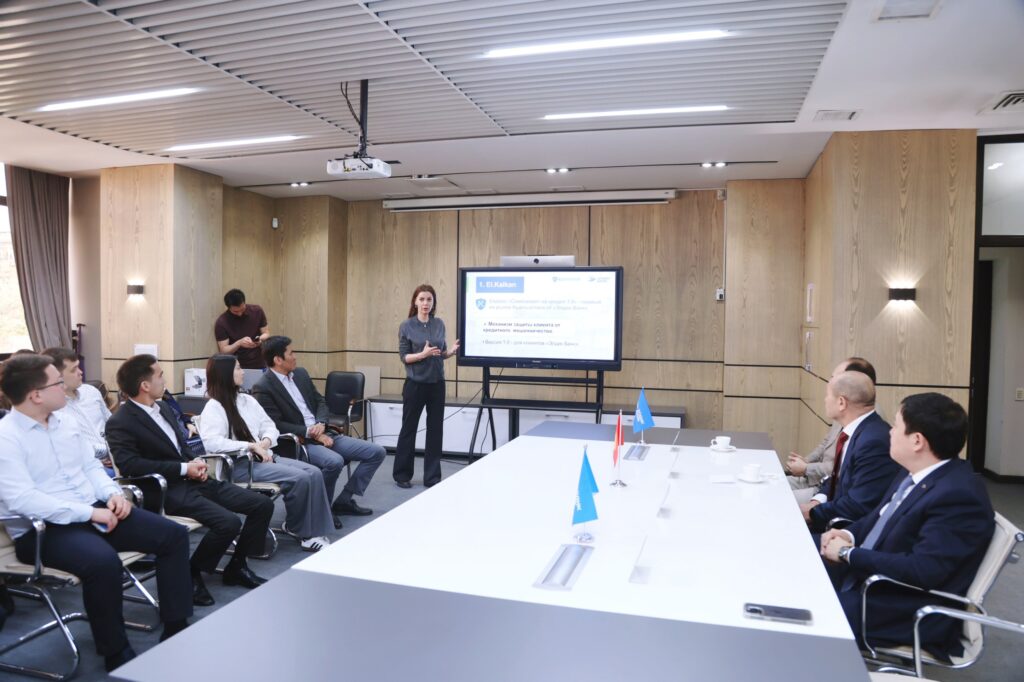
For the first time in Kyrgyzstan’s financial market, a state-owned bank has introduced a self-limitation service on loans, aiming to strengthen cybersecurity and protect citizens from financial fraud. A New Step Toward Cybersecurity According to the Union of Banks of Kyrgyzstan, Eldik Bank, a state-owned institution, has launched a digital self-limitation service for its clients. The bank believes the mechanism could significantly enhance cybersecurity across the entire banking sector, especially if commercial and other state banks adopt the initiative as well. Earlier, the National Bank of the Kyrgyz Republic (NBKR) had started examining international experiences regarding self-prohibition of online loans and the feasibility of implementing such a practice domestically. The NBKR notes that a self-ban mechanism could not only shield customers from fraud but also encourage more informed decision-making when applying for loans. The Union of Banks of Kyrgyzstan has called on the wider banking community to collaborate on this initiative, advocating for a shared database of clients who have opted to limit their access to new loans. Learning from Regional Experiences In an interview with The Times of Central Asia, Anvar Abdraev, President of the Union of Banks of Kyrgyzstan, explained that the move was motivated largely by a global rise in banking fraud. “Russia and Kazakhstan have already introduced such a service in their banks. Statistics in these countries show that a large number of financially literate people use this service, probably because of the recent increase in bank fraud around the world,” Abdraev said. He added that promoting financial literacy and offering additional protective mechanisms is becoming a crucial component of banking policy across the region. Legislative Efforts Underway The mechanism is currently being actively promoted within Kyrgyzstan’s parliament. A draft bill to formalize the introduction of self-limitation on loans has been submitted for public discussion. “The Union of Banks is also participating in the discussions and is part of the working group drafting the legislation,” Abdraev said. “We aim to create a comprehensive digital platform where, alongside self-limitation, additional customer protection mechanisms would be operational.”