• KGS/USD = 0.01143 0%
  • KZT/USD = 0.00202 0%
  • TJS/USD = 0.10599 -0.19%
  • UZS/USD = 0.00008 0%
  • TMT/USD = 0.28575 0%
  • KGS/USD = 0.01143 0%
  • KZT/USD = 0.00202 0%
  • TJS/USD = 0.10599 -0.19%
  • UZS/USD = 0.00008 0%
  • TMT/USD = 0.28575 0%
  • KGS/USD = 0.01143 0%
  • KZT/USD = 0.00202 0%
  • TJS/USD = 0.10599 -0.19%
  • UZS/USD = 0.00008 0%
  • TMT/USD = 0.28575 0%
  • KGS/USD = 0.01143 0%
  • KZT/USD = 0.00202 0%
  • TJS/USD = 0.10599 -0.19%
  • UZS/USD = 0.00008 0%
  • TMT/USD = 0.28575 0%
  • KGS/USD = 0.01143 0%
  • KZT/USD = 0.00202 0%
  • TJS/USD = 0.10599 -0.19%
  • UZS/USD = 0.00008 0%
  • TMT/USD = 0.28575 0%
  • KGS/USD = 0.01143 0%
  • KZT/USD = 0.00202 0%
  • TJS/USD = 0.10599 -0.19%
  • UZS/USD = 0.00008 0%
  • TMT/USD = 0.28575 0%
  • KGS/USD = 0.01143 0%
  • KZT/USD = 0.00202 0%
  • TJS/USD = 0.10599 -0.19%
  • UZS/USD = 0.00008 0%
  • TMT/USD = 0.28575 0%
  • KGS/USD = 0.01143 0%
  • KZT/USD = 0.00202 0%
  • TJS/USD = 0.10599 -0.19%
  • UZS/USD = 0.00008 0%
  • TMT/USD = 0.28575 0%
14 February 2026

Viewing results 1 - 6 of 20

EBRD to Allocate $6 Million for Modernization of Dushanbe’s Heat Supply System

The European Bank for Reconstruction and Development (EBRD) will provide $6 million to Tajikistan for the implementation of the “Heat Supply in Dushanbe” project. The decision was approved by parliament on December 12. According to MP Nigina Sharifzoda, the financing will comprise a $3 million grant and a $3 million loan. The funds will be used to reconstruct and expand the capital’s central heating infrastructure. The project includes the modernization of Dushanbe’s heating networks, with the aim of ensuring reliable heat supply during the winter months. By 2028, over 500,000 residents are expected to benefit from stable heating services. This initiative is part of an ongoing program. The initial credit line has been in place since 2021, and the current stage was formalized as an additional credit agreement. The document was signed on October 6 between the Ministry of Finance, the Dushanbe mayor’s office, the state-owned Dushanbe Heat Network company, and the EBRD. First Deputy Minister of Finance Yusuf Majidi noted that the project is intended not only to modernize infrastructure but also to address long-standing systemic issues in the sector. Currently, more than 43% of Dushanbe’s residential buildings, schools, kindergartens, hospitals, and businesses are connected to centralized hot water supply. By the 2025-2026 heating season, an estimated 3,300 facilities are expected to be integrated into the system. Despite progress, challenges remain. Residents in several districts continue to report inadequate heating. A recent inspection by the Energy Supervision Agency revealed that in some heating stations, the temperature of the heat carrier was just 55°C, well below the standard 75°C. Separately, the EBRD, in partnership with the European Union, has announced another major initiative: the modernization of Tajikistan’s electricity distribution infrastructure, with €43 million allocated for the project.

ADB Provides Tajik Bank with First Direct Loan of $10 Million

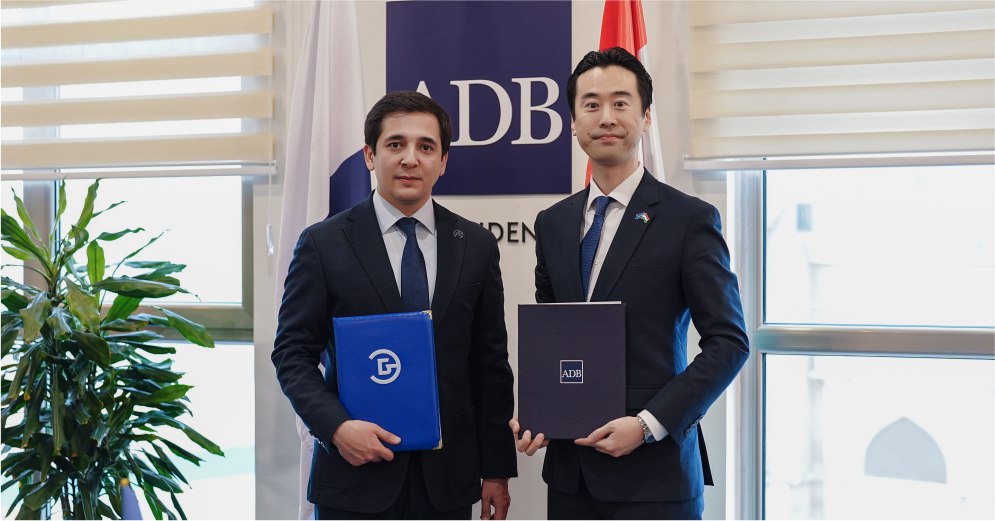
Bank Eskhata OJSC (Open Joint-Stock Company) and the Asian Development Bank (ADB) have signed a direct lending agreement, marking a new stage in financing for small and medium-sized enterprises (SMEs) in Tajikistan. This is the first time the ADB has issued a direct loan to a Tajik bank, bypassing intermediary financial institutions. The ADB stated that the format reflects a high level of trust in the partner bank and confidence in its stability within the national financial market. Tajikistan has been a member of the ADB since 1998. Under the terms of the agreement, the ADB is providing a loan in local currency equivalent to $10 million. The funds are intended to support entrepreneurs implementing environmentally friendly and energy-efficient technologies, as well as projects that reduce environmental impact and contribute to building a sustainable economy. Akmaljon Saifidinov, CEO of Bank Eskhata, described the agreement as strategically important. “We are honored to be the first financial institution in Tajikistan to receive direct lending from the ADB. This landmark event opens new horizons for supporting MSMEs and advancing green finance,” he said, referring to micro, small, and medium-sized enterprises. He added that the partnership with the ADB further strengthens the bank’s role as a leader in innovative financial solutions. The ADB expects the direct lending mechanism to significantly improve access to financing for businesses. “Direct lending will significantly expand enterprises’ access to financing and serve as a key stimulus for the development of green initiatives in Tajikistan,” said Ko Sakamoto, head of the ADB office in Dushanbe. The loan is expected to support projects in energy efficiency, green technologies, and sustainable business models, areas that have traditionally lacked access to long-term financing. In a separate initiative, the ADB recently approved a $3 million grant to enhance Tajikistan’s capacity for glacier monitoring and natural disaster forecasting.  The project includes the creation of a unified digital system for analyzing risks related to snow and ice melt and aims to improve public safety in mountainous regions.

World Bank Approves $250 Million Loan to Expand Student Financing in Uzbekistan

The World Bank has approved a $250 million loan to support Uzbekistan’s ambitious reform of its student financing system, the institution announced on December 11. The funding will back the Edulmkon Program, a three-year initiative aimed at expanding equitable access to higher and vocational education across the country. Scheduled for implementation between 2026 and 2028, the program is expected to benefit approximately 600,000 young people. Roughly 80% of the loan will be allocated to tuition loans for students from low-income families and for women, groups that continue to face significant barriers to accessing higher education. Uzbekistan, home to around 10 million people aged 14 to 30, has made educational reform a national priority in recent years. This push has led to a surge in the number of universities and vocational institutions, as well as a dramatic rise in enrollment. Between 2017 and 2024, youth participation in higher education increased from 8% to 48%. However, the rapid expansion has exposed weaknesses in the country’s student loan system, which is based on state subsidized loans issued through commercial banks. The World Bank has noted that the current model is not well aligned with labor market needs, as loans are not directed toward high demand fields such as science, technology, engineering, and mathematics (STEM), as well as information and communication technology (ICT). This misalignment has contributed to graduate underemployment, while gender disparities persist. Although women represent more than half of all university students and are the primary recipients of tuition loans, only one-third of female students are enrolled in STEM disciplines. The Edulmkon Program, to be led by the Ministry of Economy and Finance, will address these challenges through a series of reforms. These include modernizing tuition loan management, improving inter-agency coordination, and launching a centralized digital platform to streamline loan processing and improve transparency. The program will also revise eligibility and subsidy criteria to better serve vulnerable students. A cornerstone of the reform is the introduction of an income-contingent loan system, where repayments are based on a graduate’s income. This approach is designed to protect low-income borrowers and those facing temporary unemployment after graduation. By the end of 2028, students are expected to access loans through 12 participating commercial banks operating in coordination with the Ministry. The World Bank also noted that the program aims to attract approximately $30 million in private capital, reducing fiscal pressure on the state while expanding access to education financing.

ADB Approves $300 Million Loan to Support Small Business Growth in Uzbekistan

The Asian Development Bank (ADB) has approved a $300 million policy-based loan to boost the development of micro, small, and medium-sized enterprises (MSMEs) in Uzbekistan, with a particular focus on women-led businesses. The bank announced the decision on November 12. Of the total funding, $100 million will be provided on concessional terms to expand access to finance for MSMEs and strengthen Uzbekistan’s microfinance sector. The loan forms part of the second phase of the ADB’s Inclusive Finance Sector Development Program, which builds on earlier efforts to improve the legal and institutional framework for inclusive finance in the country. Key reforms have included raising the ceiling on microloans, modernizing microfinance regulations, joining the Women Entrepreneurs Finance Code, and introducing frameworks for Islamic microfinance. “ADB is proud to support Uzbekistan’s transition to a more inclusive and market-based financial system,” said ADB Country Director for Uzbekistan Kanokpan Lao-Araya. “This program will help unlock access to finance for the self-employed and microentrepreneurs, promote gender equality, and strengthen consumer protection in the financial sector.” The latest phase of the program introduces new policy measures aimed at enhancing responsible lending, regulating emerging products such as “buy now, pay later” services, and strengthening digital financial supervision. It also advances gender equality by supporting sectoral policies that implement gender-based financing quotas and improve the reporting of sex-disaggregated data. An evaluation of Uzbekistan’s National Financial Inclusion Strategy (2021-2023) revealed that 60 percent of adults now hold accounts with formal financial institutions, a significant gain attributed to rapid digitalization. The new program aims to further modernize the microfinance sector by allowing the creation of deposit-taking microfinance banks, two of which have already received preliminary licenses. This year marks the 30th anniversary of ADB-Uzbekistan cooperation. Since 1995, the bank has committed $14.6 billion in loans, grants, and technical assistance to the country. Uzbekistan has also been selected to chair the ADB Board of Governors for 2025-2026. Samarkand is set to host the ADB’s 59th Annual Meeting in May 2026.

World Bank Approves $800 Million Loan for Uzbekistan’s Economic Reforms

The World Bank has approved an $800 million concessional loan package to support Uzbekistan’s ongoing structural reforms, aimed at reducing poverty, creating jobs, and expanding private sector-led growth. The financing is designed to help the government enhance competition, strengthen social protections, and foster a more dynamic economic environment. The financial support will fund a broad set of policy initiatives, including mitigating the impact of energy tariff increases on low-income households, advancing gender equality in the workplace, and expanding access to social services for vulnerable populations. The package also targets reforms in key sectors such as telecommunications, agriculture, and energy, while supporting greater integration of Uzbekistan into global trade networks. With favorable long-term repayment terms, the loan will reduce the country’s debt servicing costs and free up government resources for economic and social development. One of the central measures backed by the package is a significant boost in financial assistance for low-income families. Annual cash transfers per household will increase from UZS 270,000 to UZS 1 million to offset the rising costs of electricity, heating, and gas. The World Bank package will also support legislation to protect women from sexual harassment and workplace discrimination, including safeguards against employment bias related to pregnancy or childcare responsibilities. Reforms will open the provision of social services to private and non-governmental organizations, enabling greater coverage and efficiency. Among other key initiatives is the establishment of a National Investment Fund to manage and privatize state-owned enterprises. The creation of an independent telecommunications regulator is expected to promote competition, while new agricultural risk insurance schemes and liberalized cotton pricing aim to strengthen resilience and market access for farmers. Textile companies will be permitted to buy cotton directly from producers at flexible prices. The reform agenda also focuses on trade liberalization, including the removal of exclusive rights in strategic sectors such as energy, oil and gas, and agriculture. Export procedures will be simplified, and new regulations will promote private participation in electricity distribution and allow renewable energy producers to sell directly to consumers. Energy efficiency and climate policy are integral to the package. Uzbekistan plans to establish a National Energy Efficiency Agency and introduce incentives for solar power, heat pumps, and energy-efficient building retrofits. Public procurement processes will incorporate environmental criteria to support sustainable products and services. According to a World Bank report released in July, Uzbekistan’s economy grew steadily between 2010 and 2022, with per capita GDP rising by an average of 4.2% a year, outpacing the regional average. However, the report noted that growth has relied heavily on capital investment rather than productivity gains, and that deeper reforms are needed to build a more competitive private sector.

Kazakhstan Details Use of Russian Loan for First Nuclear Power Plant

Kazakhstan’s Atomic Energy Agency (AEA) has confirmed that Russian preferential export financing for the country’s first nuclear power plant will be directed toward the purchase of long-cycle equipment and major construction works. Key components to be covered include the reactor, steam generators, and main circulation pumps. The 2.4 GW twin-unit plant will be built near the village of Ulken on the shores of Lake Balkhash in the Almaty region. The loan’s terms and parameters will be set during the drafting of an intergovernmental agreement. Construction Management The project has been entrusted to Kazakhstan Atomic Power Plants LLP (KAP), a subsidiary of Samruk-Kazyna. In July, KAP was placed under the trust management of the AEA and will later become state property. The agency is also studying potential sites for the second and third nuclear power plants, taking into account geological, seismic, infrastructural, and environmental factors, along with electricity demand and public opinion. All studies are being conducted in line with International Atomic Energy Agency (IAEA) standards. Fuel Production in Kazakhstan The AEA also highlighted plans to produce nuclear fuel domestically. The Ulba-TVS plant has reached its design capacity of 200 tons of finished fuel in low-enriched uranium terms, equivalent to about 1,600 tons of natural uranium annually, enough to reload six reactors. A joint venture with China’s CGNPC, the plant currently manufactures 440 fuel assemblies per year for Chinese nuclear power stations, each weighing about half a ton and produced to a French Framatome design. Moving to two-shift production could double output. While Kazakhstan lacks uranium conversion and enrichment facilities, authorities plan to develop this segment to establish a full nuclear fuel cycle. The AEA and Kazatomprom aim to ensure a steady fuel supply for the plant’s entire operational life. Project Costs and Local Involvement Russia’s financing will primarily fund equipment with long manufacturing lead times. The total cost of construction will be set after design completion and expert review. The AEA noted that costs will depend on site-specific engineering and survey results, local seismic and meteorological conditions, use of international equipment, the degree of domestic production of materials, and the involvement of local contractors and specialists. Kazakh suppliers will have priority in providing materials and labor, provided they meet certification standards. “It is economically unfeasible to import construction materials and workers from Russia if the necessary resources and specialists are available in Kazakhstan at more competitive prices,” the agency stated.