• KGS/USD = 0.01143 0%
  • KZT/USD = 0.00200 0%
  • TJS/USD = 0.10593 -0.19%
  • UZS/USD = 0.00008 0%
  • TMT/USD = 0.28575 0%
  • KGS/USD = 0.01143 0%
  • KZT/USD = 0.00200 0%
  • TJS/USD = 0.10593 -0.19%
  • UZS/USD = 0.00008 0%
  • TMT/USD = 0.28575 0%
  • KGS/USD = 0.01143 0%
  • KZT/USD = 0.00200 0%
  • TJS/USD = 0.10593 -0.19%
  • UZS/USD = 0.00008 0%
  • TMT/USD = 0.28575 0%
  • KGS/USD = 0.01143 0%
  • KZT/USD = 0.00200 0%
  • TJS/USD = 0.10593 -0.19%
  • UZS/USD = 0.00008 0%
  • TMT/USD = 0.28575 0%
  • KGS/USD = 0.01143 0%
  • KZT/USD = 0.00200 0%
  • TJS/USD = 0.10593 -0.19%
  • UZS/USD = 0.00008 0%
  • TMT/USD = 0.28575 0%
  • KGS/USD = 0.01143 0%
  • KZT/USD = 0.00200 0%
  • TJS/USD = 0.10593 -0.19%
  • UZS/USD = 0.00008 0%
  • TMT/USD = 0.28575 0%
  • KGS/USD = 0.01143 0%
  • KZT/USD = 0.00200 0%
  • TJS/USD = 0.10593 -0.19%
  • UZS/USD = 0.00008 0%
  • TMT/USD = 0.28575 0%
  • KGS/USD = 0.01143 0%
  • KZT/USD = 0.00200 0%
  • TJS/USD = 0.10593 -0.19%
  • UZS/USD = 0.00008 0%
  • TMT/USD = 0.28575 0%
22 February 2026

Viewing results 1 - 6 of 15

Kazakhstan Yet to Decide on Potential Purchase of LUKOIL Assets

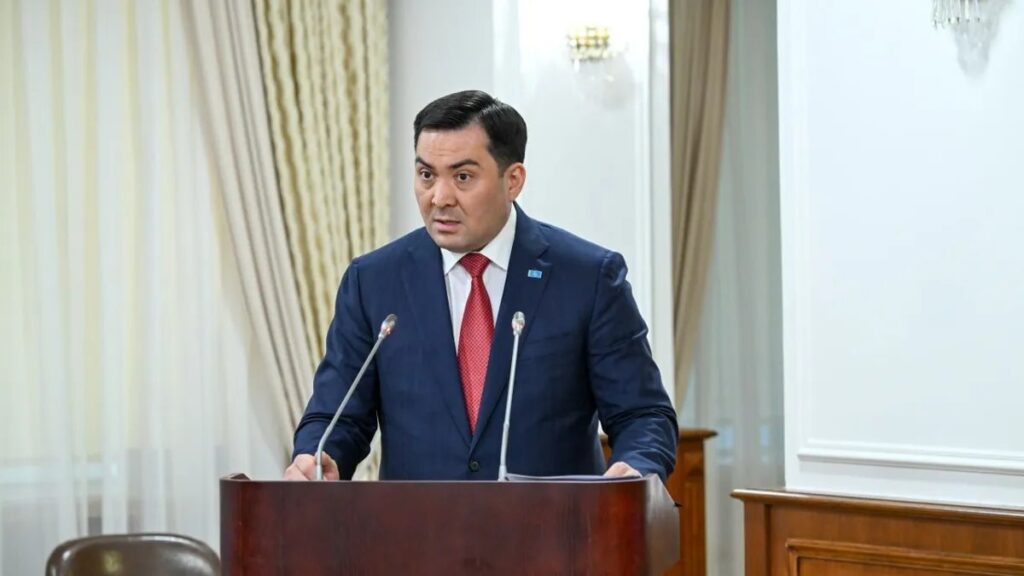
Kazakhstan holds the legal right of first refusal on any potential sale of LUKOIL's assets within its territory, but the authorities have not initiated negotiations to acquire them, Energy Minister Yerlan Akkenzhenov has said during a recent briefing. In October, the U.S. Treasury Department’s Office of Foreign Assets Control (OFAC) expanded restrictions affecting Russian energy companies, including certain transactions involving LUKOIL and Rosneft, granting temporary licenses permitting specified transactions and wind-down activities until November 21. The United Kingdom also issued restrictions on October 15. In response, LUKOIL began exploring the sale of its foreign assets, including holdings in Kazakhstan. LUKOIL has maintained a presence in Kazakhstan since 1995. The company currently holds a 13.5% stake in Karachaganak Petroleum Operating B.V. (operator of the Karachaganak field), 5% of Tengizchevroil LLP (which develops the Tengiz field), 50% of Turgai Petroleum JSC (Kumkol field operator), and 12.5% of the Caspian Pipeline Consortium (CPC), the primary export route for Kazakh oil. However, several of LUKOIL’s international projects, such as its involvement in Tengiz and Karachaganak, as well as the CPC, have received exemptions from U.S. and UK sanctions. OFAC recently extended a license allowing negotiations and agreements related to the potential sale of LUKOIL International GmbH or other affiliated entities until January 17, 2026. Speaking at the briefing, Minister Akkenzhenov stated that Kazakhstan is not rushing to engage in any asset acquisition discussions. "The deadline has now been extended until mid-January, and we are all awaiting the conclusion of that period and any further developments. The government is not currently negotiating the purchase of these assets," Akkenzhenov said. "However, many companies around the world are interested, and I would like to remind everyone that Kazakhstan has priority rights under the Subsurface Code. We will decide in due course whether to exercise this right." Akkenzhenov also addressed the ongoing arbitration dispute over the Kashagan oil field, the largest in the Kazakh sector of the Caspian Sea. According to the minister, substantive legal proceedings are not expected to begin before the second half of 2026, with a more detailed review likely to follow in 2027. “Currently, the process is limited to collecting documents. It is premature to speculate on potential arbitration amounts, as the court has not yet accepted the case for detailed consideration,” he said. As previously reported by The Times of Central Asia, Kazakhstan’s arbitration claims against the NCOC consortium developing Kashagan, which includes Shell, ExxonMobil, TotalEnergies, and Eni, exceed $150 billion.

China’s Power Play in Central Asia’s Energy Sector

China is steadily expanding its influence in Central Asia’s oil and gas sector through multi-billion-dollar investments, long-term supply agreements, and a growing network of strategic partnerships. From Kazakhstan to Turkmenistan, Beijing’s state-backed companies are securing key upstream and midstream assets, financing new petrochemical and pipeline projects, and positioning themselves as indispensable players in the region’s resource development. This expansion is driven not only by China’s rising energy demand, but also by Beijing’s ambition to establish durable overland energy corridors that reduce reliance on maritime routes vulnerable to disruption. Central Asia’s existing and planned pipelines provide China with rare direct access to oil and gas fields across its western frontier, making the region a focal point of its broader energy-security strategy and a cornerstone of Beijing’s efforts to diversify supply while deepening political and economic footholds across Eurasia. Kazakhstan Eyes Chinese Investment Amid Lukoil Sanctions Kazakhstan may seek to transfer Russian company Lukoil’s stake in the offshore Kalamkas-Khazar oil and gas project to a new partner, with some industry channels, including the Telegram channel Energy Monitor, speculating about possible Chinese interest. Lukoil, which has been targeted by Western sanctions, is reportedly planning to exit Kalamkas-Khazar Operating LLP, a joint venture with KazMunayGas (KMG). Each company currently holds a 50% stake. Some commentators have suggested that a Chinese investor could step in, but no replacement has been officially confirmed. Seconded engineers from KMG Engineering are expected to be withdrawn from the project as of January 1, 2026, with several Kalamkas-Khazar staff members temporarily reassigned to other KMG subsidiaries until a new partner is confirmed. The project is considered highly promising, with earlier estimates citing reserves of 81 million tons of oil and 22 billion cubic meters of gas. New exploration has identified additional oil-bearing structures. A final investment decision (FID) worth more than $6.5 billion was originally expected by the end of 2025. However, U.S. sanctions against Lukoil have delayed progress. Located 120 km from the Kashagan field in the North Caspian Basin, the Kalamkas-Khazar block comprises the Kalamkas-More and Khazar fields. The site is situated in Kazakhstan’s Mangistau Region, 60 km from the Buzachi Peninsula. KazMunayGas Chairman Askhat Khasenov previously confirmed that production was expected to begin in 2028-2029, with peak output reaching four million tons annually. Lukoil was sanctioned by the UK on October 15, followed by the U.S., complicating ongoing negotiations. Despite this, major projects where Lukoil holds minority stakes, such as Tengiz, Karachaganak, and the Caspian Pipeline Consortium, have not been impacted. A Lukoil withdrawal would create a rare opening for China to secure its first significant offshore position in the North Caspian, a zone historically dominated by Western majors and Russian firms. Such an entry would represent a notable shift in Kazakhstan’s offshore partnership landscape. Beijing's Billion-Dollar Energy Deals in Kazakhstan In September 2025, President Kassym-Jomart Tokayev announced a series of energy deals with China valued at $1.5 billion. During his official visit to China, more than 70 commercial agreements totaling approximately $15 billion were signed, several...

Lukoil ‘Garage Sale’ – Uzbekistan Bows Out, Kazakhstan Keeps Its Options Open

The story of the disposal of foreign assets by Lukoil, which has fallen under U.S. sanctions, is reaching its closing stages. A shortlist of potential buyers has already emerged, and in Kazakhstan intrigue remains: will the country’s national oil and gas company capitalise on the opportunity to acquire Lukoil’s shares in major projects? A recent Reuters report noted that potential buyers of Lukoil’s assets face two key complications: first, U.S. firms, such as Carlyle, Chevron, and Exxon, are seen by analysts as more likely to get licensed, meaning deals will only be recognised after proper U.S. licence approval. Second, Lukoil itself had preferred to sell its assets as a package deal rather than piecemeal.  However, after a deal to offload assets to Guvnor collapsed, several analyses now say a full package sale is unlikely and that piecemeal deals are more realistic or even more profitable. A new negotiation deadline has now been set for December 13, 2025, for the completion of authorised transactions.  Kazakhstan-based oil and gas market observer Oleg Chervinsky suggests that this could increase the likelihood of a “twostage process”. “Most likely, a single buyer with sufficient resources will purchase all of Lukoil’s foreign assets at a significant discount, then sell them off in parts,” Chervinsky said. Some media reports point to the U.S. investment firm Carlyle Group as showing interest in Lukoil’s assets. The firm is considered a plausible main buyer due to its former ties to U.S. presidents Bush senior and junior. In this scenario, Carlyle would act both as buyer and organiser of the subsequent 'garage sale' of individual assets. Other firms, such as Chevron Corporation and ExxonMobil, have already been linked in reports with interest in Lukoil’s Kazakh stakes in the Tengiz and Karachaganak oil fields, while Abu Dhabi National Oil Company (ADNOC) has shown interest in Lukoil’s Uzbek gas projects.  Meanwhile, three weeks ago, Uzbekistan made its position clear: it will not participate in the acquisition of Lukoil’s assets. Uzbekneftegaz Chairman Bahodir Sidikov said that "Buying out Lukoil’s assets in Uzbekistan is not on the table right now.”  In Kazakhstan, energy sector experts believe that this moment presents a real window of opportunity to acquire Lukoil’s shares in systemically important oil and gas projects. “Why hasn’t our Ministry of Energy asked: does the Ministry approve changes in the shareholder structure under the terms of the stabilized contracts for Tengiz and Karachaganak? These shares (if a sale takes place) should go to KazMunayGas. If KMG doesn’t have the cash, then the Chinese state-owned CNPC should be brought in. To balance interests, it would be optimal for one of the world’s largest oil corporations to enter Tengiz and Karachaganak,” argues specialist Olzhas Baidildinov. Baidildinov cited a review by Norway’s Rystad Energy estimating that Lukoil’s net cash flow from its Tengiz stake over the next five years will total $2.8 billion, and from Karachaganak $2.1 billion. However, Kazakhstan’s Energy Minister Erlan Akkenzhenov recently stated that the government is not considering a purchase of Lukoil’s shares. At the same time,...

U.S. Eases Sanctions on Key Kazakh Oil Projects

The Caspian Pipeline Consortium (CPC), oil producer Tengizchevroil (TCO), and the Karachaganak field have been granted permission to resume services and conduct transactions related to their operational activities, following a United States Treasury Department decision to ease sanctions. The Tengiz and Karachaganak fields are located in Kazakhstan, and Kazakh oil is exported through the CPC system. In October, the U.S. Treasury added Russian oil giants Lukoil and Rosneft, along with 34 of their subsidiaries, to its latest package of sanctions. However, experts now suggest that the exemption of key projects in Kazakhstan could have a stabilizing effect on the country's oil sector and its broader economy. The U.S. Treasury’s Office of Foreign Assets Control (OFAC) issued General License No. 124B, allowing services and other transactions required to maintain the operations of the CPC, Tengizchevroil, and the Karachaganak project, even when sanctioned entities such as Lukoil and Rosneft are involved. The license does not permit any transactions related to the sale or transfer of shares in these projects. Kazakhstan’s Minister of Energy, Yerlan Akkenzhenov, confirmed on November 12 that the government is working to have the Karachaganak field fully exempt from the U.S. sanctions regime. The CPC system links oil fields in western Kazakhstan and parts of Russia with a marine terminal in Novorossiysk on Russia’s Black Sea coast. It remains the main export route for Kazakh oil, carrying more than 80% of the country’s crude. The system has an annual capacity of about 83 million tons. CPC shareholders include Kazakhstan, holding a combined 20.75% through KazMunayGas (19%) and Kazakhstan Pipeline Ventures LLC (1.75%). Other shareholders include Chevron Caspian Pipeline Consortium Company (15%), Lukoil International GmbH (12.5%), Mobil Caspian Pipeline Company (7.5%), Rosneft-Shell Caspian Ventures Limited (7.5%), BG Overseas Holdings Limited (2%), Eni International N.A. N.V. (2%), and Oryx Caspian Pipeline LLC (1.75%). The Russian government and Transneft also hold significant stakes. Tengizchevroil LLP, the operator of the Tengiz field, is a joint venture between Chevron (50%), ExxonMobil Kazakhstan Ventures Inc. (25%), KazMunayGas (20%), and Lukoil (5%). Tengiz is one of Kazakhstan’s largest oil fields, with reserves estimated at 3.1 billion tons. The Karachaganak field is among the world’s largest, with development carried out by the Karachaganak Petroleum Operating consortium. Shell and Eni serve as joint operators, and the partnership also includes Chevron (18%), Lukoil (13.5%), and KazMunayGas (10%). On November 13, it was reported that KazMunayGas is considering acquiring Lukoil’s stake in the Karachaganak project, reflecting efforts to manage shifting ownership dynamics under the sanctions environment.

Kazakhstan Authorities Deliberate Future of Lukoil Assets

Russian oil giant Lukoil has announced plans to divest its international assets, including subsidiaries, amid ongoing Western sanctions. The company stated the sale is being conducted under a license issued by the U.S. Treasury Department’s Office of Foreign Assets Control (OFAC), which allows Lukoil to wind down its foreign operations in an orderly manner by November 21, 2025. An extension of this deadline may be requested. “Review of applications from potential buyers has begun,” the company said in an official statement. According to industry data, Lukoil currently holds stakes in several key Kazakh projects: 5% in Tengizchevroil (TCO), 13.5% in Karachaganak Petroleum Operating B.V., 50% in the Kalamkas-Khazar project (Kalamkas-Khazar Operating joint venture), 49.99% in Al-Farabi Operating (offshore exploration and production), and 12.5% in the Caspian Pipeline Consortium (CPC). While analysts suggest CPC operations are unlikely to be affected by U.S. restrictions, Kazakhstan may witness a significant redistribution of oil sector investments. Despite this, Kazakh authorities remain cautious in making definitive assessments. Nurlan Zhakupov, head of the Samruk-Kazyna sovereign wealth fund, stated that discussions are ongoing with both domestic and international advisors regarding Lukoil’s shares in Kazakh ventures. “A great deal of complex work is being carried out with relevant consultants, including international ones, on how KazMunayGas can navigate the current situation. Lukoil has major projects in Kazakhstan, so this is a complex and multifaceted issue,” Zhakupov said. Deputy Minister of Energy Sanzhar Zharkeshov emphasized that any decisions regarding the acquisition of Lukoil’s shares fall under the purview of the national oil company KazMunayGas. “Lukoil is KazMunayGas’s partner. They are jointly involved in Kalamkas, Khazar, and other projects. At this stage, the Ministry of Energy is not addressing the buyout or shareholder restructuring, this is a matter for KazMunayGas as an economic entity,” Zharkeshov said at a press conference. Energy Minister Yerlan Akkenzhenov added that decisions on potential buyouts have not yet been made. “This discussion has not yet taken place. The sanctions are still being analyzed, and their full impact on companies and the economy remains to be assessed. I believe a decision will be made soon, within the next few days, before the end of this week,” Akkenzhenov stated. The Times of Central Asia has previously reported on the broader effects of U.S. and EU sanctions on economies across Central Asia.