• KGS/USD = 0.01144 0%
  • KZT/USD = 0.00205 0%
  • TJS/USD = 0.10784 0%
  • UZS/USD = 0.00008 0%
  • TMT/USD = 0.28490 0%
  • KGS/USD = 0.01144 0%
  • KZT/USD = 0.00205 0%
  • TJS/USD = 0.10784 0%
  • UZS/USD = 0.00008 0%
  • TMT/USD = 0.28490 0%
  • KGS/USD = 0.01144 0%
  • KZT/USD = 0.00205 0%
  • TJS/USD = 0.10784 0%
  • UZS/USD = 0.00008 0%
  • TMT/USD = 0.28490 0%
  • KGS/USD = 0.01144 0%
  • KZT/USD = 0.00205 0%
  • TJS/USD = 0.10784 0%
  • UZS/USD = 0.00008 0%
  • TMT/USD = 0.28490 0%
  • KGS/USD = 0.01144 0%
  • KZT/USD = 0.00205 0%
  • TJS/USD = 0.10784 0%
  • UZS/USD = 0.00008 0%
  • TMT/USD = 0.28490 0%
  • KGS/USD = 0.01144 0%
  • KZT/USD = 0.00205 0%
  • TJS/USD = 0.10784 0%
  • UZS/USD = 0.00008 0%
  • TMT/USD = 0.28490 0%
  • KGS/USD = 0.01144 0%
  • KZT/USD = 0.00205 0%
  • TJS/USD = 0.10784 0%
  • UZS/USD = 0.00008 0%
  • TMT/USD = 0.28490 0%
  • KGS/USD = 0.01144 0%
  • KZT/USD = 0.00205 0%
  • TJS/USD = 0.10784 0%
  • UZS/USD = 0.00008 0%
  • TMT/USD = 0.28490 0%

Viewing results 1 - 6 of 79

How Kazakhstan and Kyrgyzstan Have Reacted to Pavel Durov’s Arrest

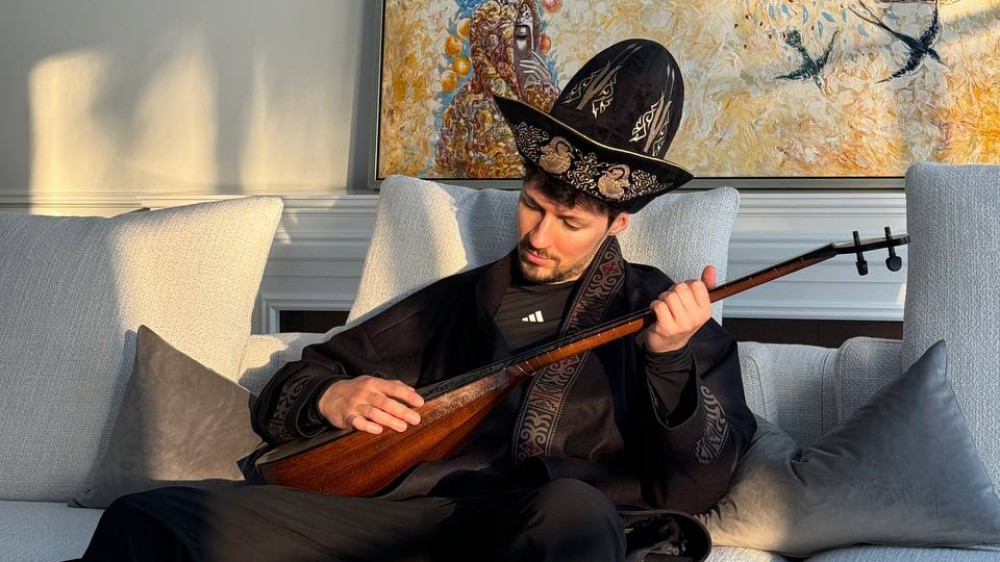
Pavel Durov, the founder of Telegram, was arrested on August 24 at Le Bourget airport in Paris. He is suspected of illegal activities including enabling drug trafficking, crimes against minors, and fraud. His arrest has been met with shock around the world, especially in countries where censorship and internet control remain pressing. According to various sources, the French authorities suspect Durov of being involved in activities related to the distribution of illegal content through the Telegram messenger. The investigation concerns materials related to extremism, copyright infringement, and alleged assistance to criminal groups. The investigation lasted several months. In response, Telegram said that it has always strictly complied with the law, and is ready to cooperate with French authorities to clarify the situation, expressing hope for a fair investigation and Durov's speedy release. In Kazakhstan, where Durov has long been known for his stance against censorship, his arrest has not gone unnoticed. The Minister of Digital Development, Innovation and Aerospace Industry, Zhaslan Madiev, made a statement that said: “We had a positive experience interacting with the Telegram team. We have often successfully and promptly resolved issues related to the leakage of personal data, the fight against drug trafficking, and the suppression of other illegal activities in the messenger. The Telegram team has always demonstrated a willingness to cooperate to ensure the safety of citizens while remaining true to its principles of protecting privacy and freedom of speech.” He also noted that on his last visit to Kazakhstan, Pavel Durov became one of the trustees of the IQanat project, which aims to support rural children in Kazakhstan. The project has awarded 12 grants worth $365,000. Madiev continued: “He did not just allocate money but personally participated in studying the educational process, selecting children, familiarizing himself with their lives. I am grateful to Pavel's team for caring, and his sincere interest in the development of the children. We hope for a speedy resolution of this situation.” The Union of Journalists of Kazakhstan also expressed support for Durov, calling on the French authorities to ensure respect for his fundamental rights and freedoms, and to conduct an objective investigation into the case. “The detention of Telegram founder Pavel Durov has caused concern among all those who fight for freedom, democracy, and the principles of free speech. It is important to take into account that in several countries where officially registered independent democratic media regularly face persecution or cease to exist at all, where blocking of websites is regularly practiced, Telegram, created by Pavel Durov, is currently almost the only source of bringing to the public objective and reliable information free from censorship,” the statement said. The Union of Journalists of Kazakhstan recalled that in 2018, Pavel Durov received an award from the Union of Journalists of Kazakhstan, precisely for his principled position against censorship. His arrest could negatively affect freedom of speech and human rights in developing countries with fragile democracies. The response in Kyrgyzstan was more restrained than that of the Kazakhstani authorities. None...

New York NGO Calls on Tajik Authorities to Release Journalist Ahmad Ibrohim

The New York-based press freedom NGO the Committee to Protect Journalists (CPJ) has called on the Tajik authorities to release journalist Ahmad Ibrohim. Ibrohim is the founder and editor-in-chief of Paiq, the only independent newspaper in Tajikistan's Khatlon region. According to Radio Ozodi sources, Ibrohim was detained on August 12. CPJ expressed concern that his arrest underscores the dangers journalists in Tajikistan face. CPJ's Program Coordinator for Europe and Central Asia, Gulnoza Said, said Tajik authorities should release Ibrohim and seven other journalists imprisoned for their professional activities, and ensure media freedom. Officials have not yet provided information about Ibrohim's detention, and his relatives refuse to comment. However, a source in the security services said that a criminal case had been opened against him under Article 320 of the Criminal Code (bribery), allegedly for attempting to bribe a government official to extend Paiq's registration. This is not the first instance of government pressure on Paiq. In 2014, the regional prosecutor's office stopped the newspaper from operating, citing problems with renewing its registration. Despite this, Ahmad Ibrohim continued to work, remaining one of the few independent journalists in the region.

Kyrgyzstan Establishes Center for “Information Security”

Kyrgyzstan has created the Information Environment Research Center (IERC), which will be part of the Ministry of Culture, Information, Sports, and Youth Policy; its main task is to monitor and analyze the country's information space in order to protect citizens' rights and freedoms and prevent the spread of misinformation and inaccurate information. The Center will identify and block illegal content on the internet and in the media and cooperate with the administrations of major social networks such as Facebook, Google, and TikTok. It will monitor compliance with legislation in the information sphere and provide recommendations on improving the information environment in Kyrgyzstan. The establishment of the Center is part of the state strategy to strengthen information security and control the observance of citizens' rights in the media space. Earlier, we reported that a unified TV channel and a regional media platform could appear in Central Asia, which would become important elements in strengthening information security and cultural exchange in the region. This year, Central Asia, and Kazakhstan in particular, has been the subject of swathes on disinformation on the internet. However, independent media in Kyrgyzstan has been the target of repression by the authorities, which UN Special Rapporteurs have denounced.

Mixed Results for Kazakhstan in Media Freedom Rankings

Analysts at Ranking.kz have provided an overview of press freedom in Kazakhstan and alleged violations against journalists. According to the International Foundation for the Protection of Freedom of Expression, Әdil sөz, there was a 20.1% decrease in incidents of violations against correspondents last year, with 434 incidents in 2023 and 141 from January to May this year. Additionally, reports of pre-trial claims or lawsuits against individual journalists or editorial offices declined by 5% in 2023. Despite this, seven court decisions led to various sentences for journalists at the end of 2023. The most common violation was obstruction of legitimate professional activities, with 51 cases, including six violent ones, primarily involving police and state employees. Threats to journalists and editorial offices were also significant, with 44 incidents reported. Nonviolent attempts to coerce journalists were noted to have decreased slightly. However, despite fewer reported violations, according to Reporters Without Borders, censorship issues have worsened. Kazakhstan's press freedom ranking fell from 134th to 142nd in 2024, with a score of 41.11 out of 100. In contrast, Kyrgyzstan ranks highest in Central Asia at 120th, while Turkmenistan remains one of the worst globally in 175th place.

A Greater Role for Kazakhstan’s Media

On June 27, in the lead-up to Mass Media Workers' Day, Kazakhstan’s President Kassym-Jomart Tokayev took to the stage to address a gathering of journalists and media professionals. His engagement underscored the government’s response to the public’s increasing attention to a more liberalized media landscape. Western observers, having taken a renewed interest in former Soviet states amidst Russia’s invasion of Ukraine, are pushing these countries for progress, particularly on press freedoms. The European Center for Press Freedoms criticized the passage of Georgia’s foreign agent law that drove of tens of thousands of citizens to protest in the streets. Amnesty International condemned raids of journalists’ offices and homes in Kyrgyzstan. Reporters Without Borders downgraded Uzbekistan’s position in its State of Press Freedom Index to “very serious”. Kazakhstan has also received its fair share of Western criticism about freedom of the country’s media. Human Rights Watch reports that “although Kazakhstan’s new mass media law has some amendments that should improve the status quo, its ambiguity and the restrictive nature of other provisions threaten to create obstacles to the work of local and foreign journalists”. Government attitudes towards the media vary widely along the periphery of Russia and the former Soviet Union. In Kazakhstan, despite ongoing challenges and shortcomings, it is increasingly seen as the fourth estate, providing citizens with the information they need to check the government’s power. Increasing media influence on society and elected officials Indeed, Tokayev referred to the media as the “fourth estate” in his address, expanding on its growing roles and responsibilities in building “a just and fair Kazakhstan”. He acknowledged the media provides a “pluralism of opinion (which) is exactly what we strived for from the beginning, (and) is our fundamental achievement,” noting that it can “criticize the activities of the authorities”. He called it the “voice of the people, the messenger of the nation, and the spiritual support of society,” adding that it can “shape the legal culture”. A recent example of the media’s influence in the legal realm in Kazakhstan can be seen in the aftermath of Saltanat Nukenova’s murder by her husband, who is a former Minister of the Economy. This tragic story garnered an enormous reaction in Kazakhstani media and resulted in calls for legislation to protect women against domestic violence. Consequently, in April 2024, the President signed what became known as “Saltanat’s Law”, and the former minister was sentenced to 24 years in prison. A burgeoning media space, but some challenges remain According to the TCA’s count, over a hundred independent media outlets operate in Kazakhstan through sites and social media channels. They express a wide range of opinions, including criticizing government activities. On the other hand, the government maintains the right to revoke their license to operate inside Kazakhstan. In the last year, for instance, the Ministry of Culture and Information has blocked digital currency platform, Coinbase.com, as well as an LGBTQ+ site for children called Selftanu.kz, and the Russian news portal Sputnik24. In this environment, the June 27 ceremony did...

Kazakhstan’s Attempts to Address Disinformation and Media Freedom

On June 19, President Tokayev signed amendments to the law governing Kazakhstan's mass media. Meanwhile, public debate on foreign and domestic media that allegedly receive financing from abroad continues. While human rights activists focus on the principle of freedom of speech, political analysts are concerned about a string of disinformation campaigns attempting to destabilizing the country. The respective changes to legislative acts affect a wide range of issues. In particular, a new and broader concept of mass media has been introduced which includes internet resources. It is envisaged that a Unified Media Platform will be created to implement the state’s information policy, including grants for non-state media and accreditation of journalists to state bodies and organizations through a simplified accreditation procedure. In addition, the statute of limitations for claims brought against the media to refute information that does not correspond to facts and defames honor, dignity, and business reputation has been reduced to one year. Under the new law, Kazakhstan's Ministry of Foreign Affairs has the right to deny accreditation to foreign journalists "in case of a threat to the national security of the Republic of Kazakhstan." A few months ago, the Ministry did not issue accreditation to 36 correspondents from Azattyk. The publication subsequently filed a lawsuit, and in April, the media outlet and the Ministry reached a mediation agreement. While the new law focuses mainly on foreign funded domestic media, experts cite recent examples of pressures on Kazakhstan’s society and authorities through disinformation campaigns that mostly originated from abroad. For instance, a week ago in Kyiv, Ukrainian authorities claimed an assassination attempt was made on Kazakhstani national Aidos Sadykov, the creator of a YouTube channel called Bәse. Sadykov and his wife Natalya were placed on the wanted list in Kazakhstan in October 2023 for “inciting social, national, clan, racial, class, or religious discord.” Their inclusion on the list is linked to the January 2022 coup attempt and riots, as well as their ties to controversial fugitive billionaire Mukhtar Ablyazov, who currently has judgements against him in U.S. and UK courts exceeding $5 billion. Ablyazov faced murder charges in Kazakhstan following the death of the CEO of a local bank that he later took over and reportedly defrauded. According to government authorities, Sadykov repeated Ablyazov's calls for violence surrounding the January 2022 coup attempt as well as the Mazhilis elections in March 2023, where the channel openly called for organizing riots. Furthermore, on the one-year anniversary of the January 2022 events, his Bәse channel gave instructions to overthrow the government in Kazakhstan, following the example of events in Ukraine. The four-minute video includes information on how to create coordination committees for regime change. Natalya Sadykova has also worked for the Respublika newspaper, allegedly funded by Ablyazov. Aidos Sadykov had previously served two years in Kazakhstan for hooliganism and fled to Kyiv in 2014. The alleged perpetrators of the attack on Sadykov, Meiram Karataev and Altai Zhakanbaev, are Kazakhstani citizens. Shortly after the purported assassination attempt, Natalya Sadykova accused Kazakhstan’s...