• KGS/USD = 0.01144 0%
  • KZT/USD = 0.00208 0%
  • TJS/USD = 0.10429 0.1%
  • UZS/USD = 0.00008 0%
  • TMT/USD = 0.28530 0%
  • KGS/USD = 0.01144 0%
  • KZT/USD = 0.00208 0%
  • TJS/USD = 0.10429 0.1%
  • UZS/USD = 0.00008 0%
  • TMT/USD = 0.28530 0%
  • KGS/USD = 0.01144 0%
  • KZT/USD = 0.00208 0%
  • TJS/USD = 0.10429 0.1%
  • UZS/USD = 0.00008 0%
  • TMT/USD = 0.28530 0%
  • KGS/USD = 0.01144 0%
  • KZT/USD = 0.00208 0%
  • TJS/USD = 0.10429 0.1%
  • UZS/USD = 0.00008 0%
  • TMT/USD = 0.28530 0%
  • KGS/USD = 0.01144 0%
  • KZT/USD = 0.00208 0%
  • TJS/USD = 0.10429 0.1%
  • UZS/USD = 0.00008 0%
  • TMT/USD = 0.28530 0%
  • KGS/USD = 0.01144 0%
  • KZT/USD = 0.00208 0%
  • TJS/USD = 0.10429 0.1%
  • UZS/USD = 0.00008 0%
  • TMT/USD = 0.28530 0%
  • KGS/USD = 0.01144 0%
  • KZT/USD = 0.00208 0%
  • TJS/USD = 0.10429 0.1%
  • UZS/USD = 0.00008 0%
  • TMT/USD = 0.28530 0%
  • KGS/USD = 0.01144 0%
  • KZT/USD = 0.00208 0%
  • TJS/USD = 0.10429 0.1%
  • UZS/USD = 0.00008 0%
  • TMT/USD = 0.28530 0%

Viewing results 1 - 6 of 70

Kazakh News Publisher Says New Media Law Does Little for National Press

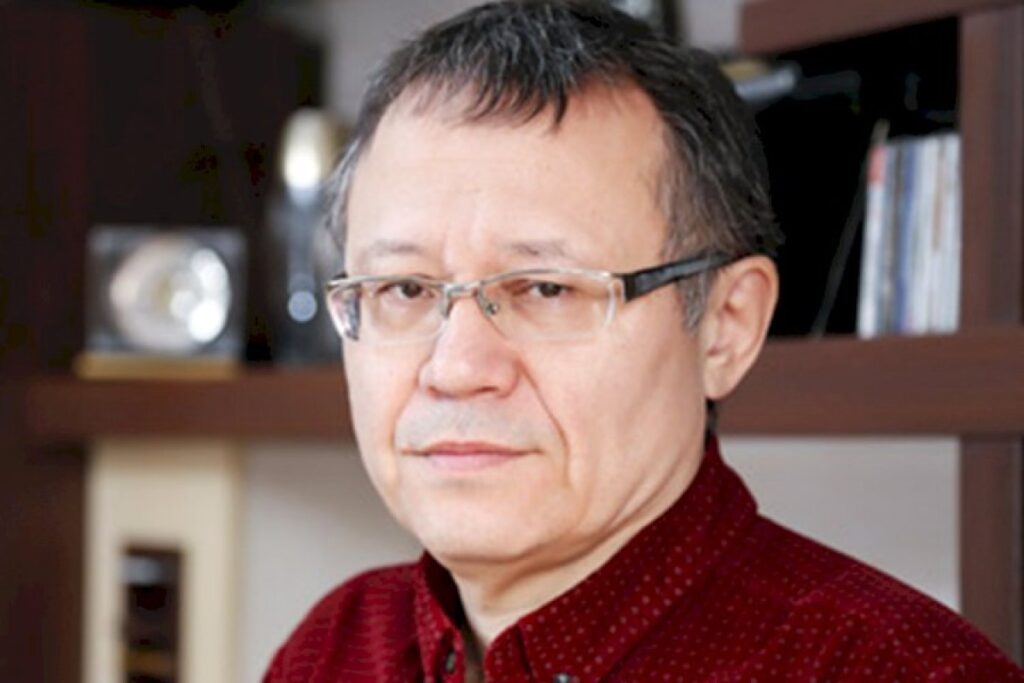
Kazakhstan's new law "On Mass Media," recently passed by its lower house of parliament (the Mazhilis), has agitated the country's reporters. In an interview with The Times of Central Asia, Dzhanibek Suleyev, the publisher of several news sites, remonstrates that the law should have been more supportive of the national press. An aspect of the law that has caused heated discussions is the Ministry of Foreign Affairs' new right to deny accreditation to foreign journalists "in case of a threat to the national security of the Republic of Kazakhstan." A few months ago the Ministry of Foreign Affairs didn't renew or refused to issue accreditation to 36 correspondents of the news website Azattyq, the Kazakh affiliate of the U.S. Government's Radio Free Europe/Radio Liberty (RFE/RL). No explanation was given for this rejection, and Azattyq has filed a lawsuit in court. Suleyev explained: "It is clear that the state wants to protect itself and society as much as possible from extremist publications and the spread of deviant morality, but what is proposed for those who simply do their work honestly, every day? We like to impose restrictions, but what about support? I think that if the state were to expand the field of cooperation, the press would be less critical." "Apparently, the state authorities have such an ambiguous opinion of Azattyq. In addition, the lack of accreditation clearly does not prevent 'going on the air,' the audience has access to the materials. I do not think that denial of accreditation to foreign media will become a mass phenomenon. The New York Times or leading sports publications and channels will hardly be denied accreditation. You have to understand that from the point of view of the state, there are ordinary media, and there are structures engaged in propaganda and counter-propaganda, and this should be taken into account," Suleyev explained. Suleyev said that the establishment of a one-year statute of limitations for media materials is a positive development, as it protects journalists' rights. It was initially proposed to set the term at three years from the date of publication. "It is good that it was reduced to a year, three years of limitation is the death of the publication. Of course, I would have liked to reduce the statute of limitations even further, but thanks for that. If journalists are always afraid of the court, how can they work? Because of the long statute of limitations, editorial offices need to keep archives, video, audio and documents, not everyone can do this. Besides, with a long statute of limitations, it is easier to settle scores with the press, to get unwanted people closed down," he said. Suleyev was happy to see more television programs in Kazakh. The new law aims to increase the amount of Kazakh-language and domestic content on television and radio. From 2025 at least 55% of TV and radio programs should be broadcast in Kazakh, rising to 60% from 2027. Retransmission of foreign TV and radio channels will be reduced to 10%...
Kyrgyzstan Minister Says Case Against Media Workers Not About Politics

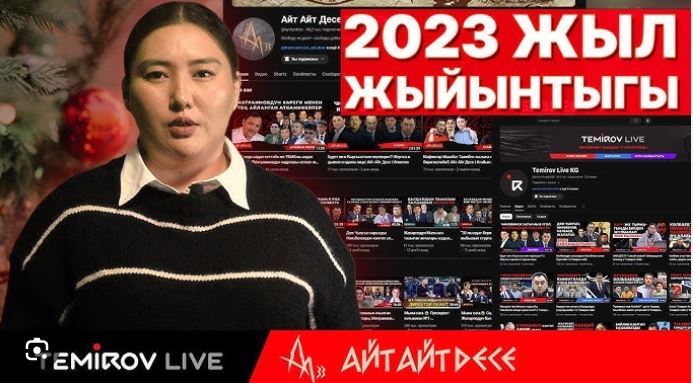
BISHKEK, Kyrgyzstan – Kyrgyzstan is pushing back against international criticism of a high-profile prosecution of media workers, saying the case is not politically motivated and that those facing charges of inciting mass unrest are poorly educated people masquerading as journalists. Minister of Internal Affairs, Ulan Niyazbekov, said the case against 11 former and current workers for media outlet Temirov Live stems from the publication of false information that flouts the basic rules of journalism. Free speech advocates say Kyrgyzstan is clamping down on what was once a relatively permissive environment for the media. “If they continue to write everything that comes to their mind without facts and evidence, just saying that they are journalists, then we will arrest them,” Niyazbekov said in an interview with Kabar, Kyrgyzstan’s national news agency. He said most of the people accused in the Temirov Live case are “bloggers,” not journalists. “They spread false information because they don't have education and make people panic. And there is no need to make noise about them saying that they are journalists,” he said. The minister’s comments were published on Thursday, two days after a court in Bishkek ordered the transfer of four of the journalists from prison to house arrest. Four others accused in the same case remain in pretrial detention. If convicted, they could be sent to prison for years. Temirov Live is a YouTube-based outlet that has published and broadcast reports on alleged corruption by senior officials. It was founded in 2020 by Bolot Temirov, who was expelled from Kyrgyzstan in 2022. He has said the ongoing case against his colleagues is in retaliation for Temirov Live’s investigations into alleged government misconduct. In an interview with Kabar, Niyazbekov noted that there were potential penalties in Europe and the United States for journalists who spread false or unconfirmed information. “They don't accuse someone without proof,” he said. “If someone tries to slander someone or spread false information about the activities of the authorities, they will be brought to court and pay a large compensation or be imprisoned.” The government in Kyrgyzstan tolerates criticism but its “only demand” is that critics “gather evidence or make the information very precise and then release it to the public,” Niyazbekov stated.

Kyrgyzstan Court Moves Four Journalists from Prison to House Arrest

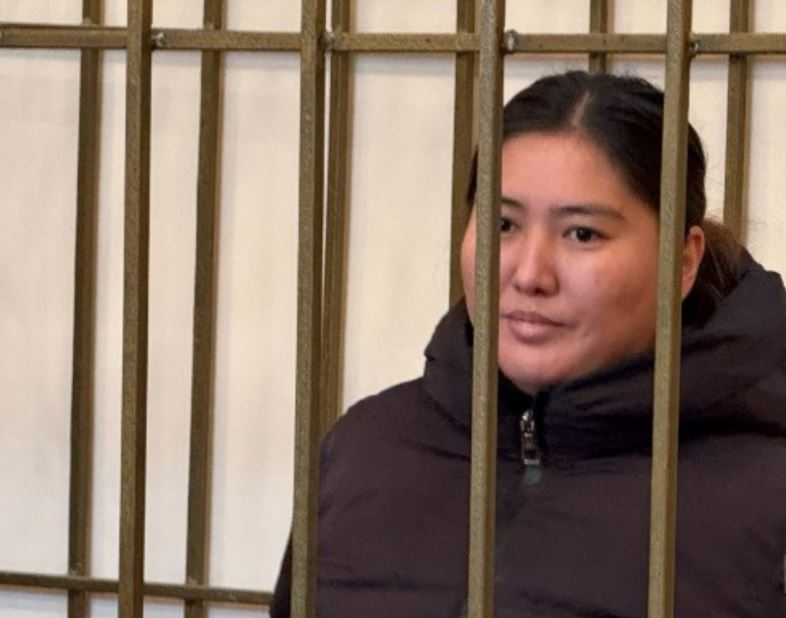
BISHKEK, Kyrgyzstan - Four journalists in Kyrgyzstan who were jailed in January on suspicion of inciting mass unrest have been moved to house arrest, while four others accused in the same case remain in pretrial detention. A district court in Bishkek ordered the release on Tuesday of the former employees of Temirov Live, which supporters say is being targeted by the government because of its reports – some on YouTube - on alleged corruption involving senior officials. Police concluded that Temirov Live reports “contain signs of calls for mass chaos,” according to media outlet Politklinika. The four journalists transferred from jail to house arrest are Tynystan Asypbekov, Saipidin Sultanaliev, Joodar Buzumov, and Maksat Tajibek uulu. Those still in jail are Temirov Live director Makhabat Tajibek kyzy; two other journalists with the outlet, Aike Beishekeyeva and Azamat Ishenbekov, and a former Temirov Live journalist, Aktilek Kaparov. A total of 11 former and current Temirov Live workers face charges in the case that could send them to jail for years if they are convicted. Free speech advocates say the prosecution is part of an increasingly restrictive rollback from a time when media enjoyed relative freedom in Kyrgyzstan. The conditions of the journalists still in prison came under further scrutiny this past weekend when Makhabat Tajibek kyzy, the Temirov Live director, alleged that she and other detainees not involved in her case were beaten. Authorities deny the allegation.

U.S. Ambassador Calls on Tajik Government to Protect Journalists’ Rights

The government in Tajikistan must support journalists’ rights to free speech, according to a statement by U.S. Ambassador, Manuel P. Micaller Jr. in honor of Tajikistan’s Press Day, which is observed on March 11th. He said in a Facebook post commemorating the holiday that he was speaking on behalf of the U.S. Embassy in Tajikistan. The statement was first reported by the ASIA-Plus news portal. “Mass media that is free and independent enables society to hear various viewpoints, make just and reasonable decisions, and stay informed about events,” he wrote in the post. He called independent mass media the foundation of democracy in Tajikistan and around the world. The United States supports Tajikistan’s efforts to train journalists, the post reminded readers, stating that "this is accomplished through study tours, English language classes, exchange programs, and technical assistance for the media.” Additionally, Micaller asked the U.S. Government to uphold journalists’ freedom of speech and defend their rights.

Kyrgyz Court Rules in Favor of Shutting Down another Mass Media Outlet

Bishkek's Oktyabrsky District Court has ruled in favor of liquidating a public foundation named Kloop Media. The official reason, as stated in a social network post by Kloop Media, is discrediting state and municipal bodies. According to the publication's staff, Bishkek prosecutor Emilbek Abdymannapov filed a lawsuit in court last August seeking to liquidate Kloop Media. The prosecutor had argued that most of the publication's stories were negative and aimed at discrediting certain representatives of state and municipal bodies. On August 22nd 2023, Kloop Media published a journalistic investigation focusing on corruption schemes undertaken by top officials in Kyrgyzstan - and later published more material criticizing the president of the republic and his relatives. Consequently, in September 2023, access to the Kloop Media website was blocked, and now the foundation itself has been closed by the authorities following the court's decision, which states that Kloop Media is not listed in the state register of Kyrgyz media and that the organization's charter doesn't specify its main activity, which is the dissemination of information. The Civil Code of the Kyrgyz Republic allows for the liquidation of legal entities if they systematically carry out activities which don't correspond to the objectives set out in their charters. Lawyers for the public fund in turn stated that the court session contained multiple violations, and they will appeal the decision to a higher authority. The public foundation, Kloop Media was established in 2007 and positioned itself as a human rights media outlet. Kloop primarily hired young writers and trained them in investigative journalism. On the day the court's decision was announced, the international organization, Reporters without Borders called on the Media Freedom Coalition to take action against what they called an "arbitrary and unjustified decision." In April 2023, the Lenin Court of Bishkek ruled in favor of a lawsuit brought by the Ministry of Culture, Information, Sports and Youth Policy of Kyrgyzstan that called for the shutdown of Azattyk Media, which was the Kyrgyz service of Radio Free Europe/Radio Liberty, financed by the U.S. State Department. The Ministry objected to material published about fighting on the border between Kyrgyzstan and Tajikistan. The authorities claimed that the content contained "elements of hostility and unconfirmed information about an alleged attack by the Kyrgyz side on Tajikistan, inflaming the situation in society and causing hatred, discrimination and division among citizens when covering the events in Batken Oblast."

U.S. State Department Asks Kyrgyzstan To Reconsider Foreign Agents Law

U.S. Secretary of State Antony Blinken urged Kyrgyz President Sadyr Japarov to reconsider Kyrgyzstan's draft law on foreign agents, which is currently under consideration in the parliament and has already been passed by the country's Supreme Council in a second reading. In his letter, Secretary Blinken says that this bill in its current form "jeopardizes the access of Kyrgyz citizens to vital services." According to the U.S. official, after the law is passed, Kyrgyz citizens may have problems with access to health care, education and more services provided through programs run by non-governmental organizations with the support of Washington and other foreign partners. "Your vibrant civil society has long been the strongest in the region and a key part of Kyrgyzstan's democracy. I am therefore writing to you to express my concern about the Kyrgyz parliament's draft law on foreign representatives, which, if passed, would impose onerous civil and criminal penalties on non-governmental organizations (NGOs). It jeopardizes one of your country's greatest assets," the U.S. Secretary of State wrote. According to Blinken, many Kyrgyz NGOs and foreign-funded NGOs are already thinking about stopping their activities in Kyrgyzstan. The U.S. Secretary of State urged the Kyrgyz president to weigh these concerns and discuss them with members of parliament (MPs). According to the bill being discussed by MPs, the concept of "foreign representative" will be introduced into law, and will place special responsibility under the law on non-profit (NPO) and non-governmental organizations. In particular, Western representatives aren't satisfied with the fact that the bill proposes introducing an article in the Kyrgyz Criminal Code on "creation of a non-profit organization that infringes on the personality and rights of citizens." Active participation in such organizations will be punishable by imprisonment for up to 10 years or a fine of 100,000-200,000 soms ($1,100-$2,200). Moreover, the draft law introduces additional reporting obligations for foreign-funded non-profit organizations that engage in political activity in Kyrgyzstan. Other international organizations such as the Organization for Security and Co-operation in Europe (OSCE), Human Rights Watch, Amnesty International, as well as representatives of EU, UK and other countries stated that they are not satisfied with the draft law. They also called on parliament and the president to reconsider the bill. "The introduction of onerous reporting requirements in the draft law is likely to prove crippling for small and medium-sized media organizations and create significant risks for media freedom and open debate on issues of public interest in the [Kyrgyz Republic]. It is particularly worrying that the amendments under consideration would impose almost complete state control over the right to free expression of civil society and media representatives," said Teresa Ribeiro, OSCE Representative on Freedom of the Media. The discussion about draft laws on NGOs and foreign agents has been going on in Kyrgyzstan for several years. Amendments and additions have been made to the draft law. Now the bill is close to final adoption and signing by the president. Speaking at the People's Kurultai last December, President Japarov said that more than...