• KGS/USD = 0.01144 0%
  • KZT/USD = 0.00212 0%
  • TJS/USD = 0.10829 0.19%
  • UZS/USD = 0.00008 0%
  • TMT/USD = 0.28571 0%
  • KGS/USD = 0.01144 0%
  • KZT/USD = 0.00212 0%
  • TJS/USD = 0.10829 0.19%
  • UZS/USD = 0.00008 0%
  • TMT/USD = 0.28571 0%
  • KGS/USD = 0.01144 0%
  • KZT/USD = 0.00212 0%
  • TJS/USD = 0.10829 0.19%
  • UZS/USD = 0.00008 0%
  • TMT/USD = 0.28571 0%
  • KGS/USD = 0.01144 0%
  • KZT/USD = 0.00212 0%
  • TJS/USD = 0.10829 0.19%
  • UZS/USD = 0.00008 0%
  • TMT/USD = 0.28571 0%
  • KGS/USD = 0.01144 0%
  • KZT/USD = 0.00212 0%
  • TJS/USD = 0.10829 0.19%
  • UZS/USD = 0.00008 0%
  • TMT/USD = 0.28571 0%
  • KGS/USD = 0.01144 0%
  • KZT/USD = 0.00212 0%
  • TJS/USD = 0.10829 0.19%
  • UZS/USD = 0.00008 0%
  • TMT/USD = 0.28571 0%
  • KGS/USD = 0.01144 0%
  • KZT/USD = 0.00212 0%
  • TJS/USD = 0.10829 0.19%
  • UZS/USD = 0.00008 0%
  • TMT/USD = 0.28571 0%
  • KGS/USD = 0.01144 0%
  • KZT/USD = 0.00212 0%
  • TJS/USD = 0.10829 0.19%
  • UZS/USD = 0.00008 0%
  • TMT/USD = 0.28571 0%

Viewing results 1 - 6 of 13

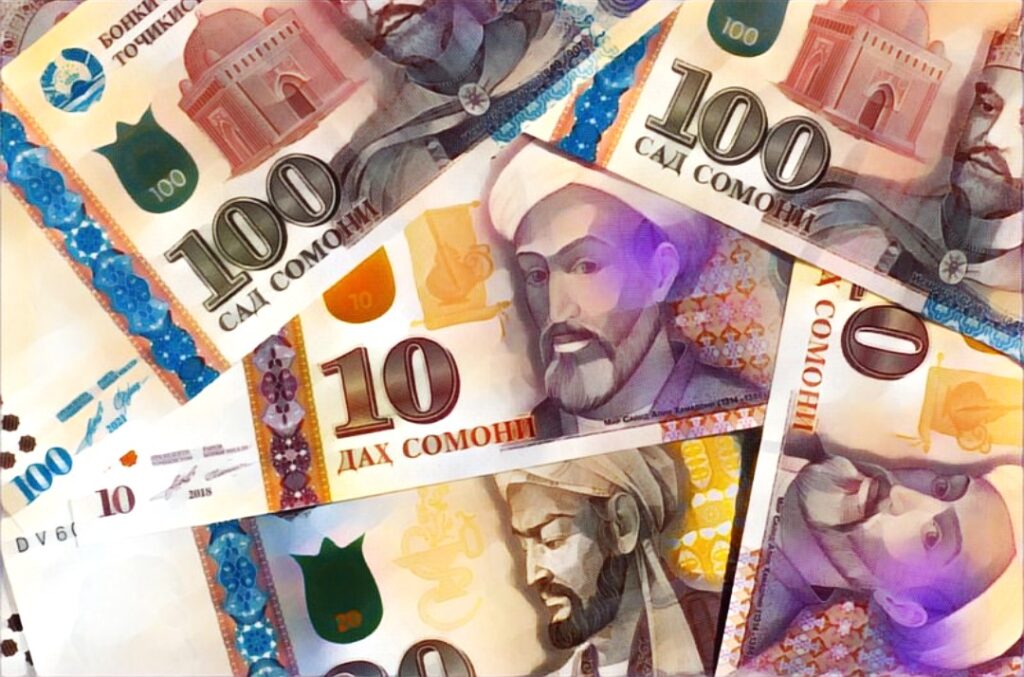
Why Tajikistan Cannot Give Up Remittances from Migrant Workers

Labor migration is no longer a temporary phenomenon in Tajikistan. Remittances from migrants now account for nearly half of the country’s GDP, supporting families, sustaining the national budget, and helping preserve social stability. But at the same time, the country has found itself dangerously dependent on external factors, factors that directly impact the welfare of millions of citizens. Thirty Years On Since gaining independence, Tajikistan has undergone a transformation in which labor migration has become a systemic feature of society. While the country remained predominantly agrarian during the Soviet era, over the past three decades, the word “Tajik” has become closely associated, particularly across the post-Soviet space, with low-skilled labor abroad. This shift traces back to the 1990s, when Tajikistan, unlike its Central Asian neighbors, failed to restructure its economy and descended into civil war. With factories shuttered, jobs scarce, and political instability rampant, tens of thousands of people left the country. The early waves of migrants were mainly working-age men. Some educated professionals moved to Europe or the US, others to Kazakhstan, but most went to Russia, where cultural and linguistic ties remained strong and the labor market was more accessible. Even after the peace agreement, migration continued and even intensified. Today, more than 30 years later, the annual outflow of the working-age population remains consistently high. The Economy on the Migrant “Needle” Official data record up to 600,000 migrant departures per year. However, the real number is likely higher: many migrants do not return home between seasons, and some have settled permanently in Russia. Since the war in Ukraine began in 2022, migration routes have shifted again, some now leave for Europe and the United States, sometimes under refugee status. According to the World Bank, in 2024, remittances from migrant workers reached $5.8 billion, representing 45.3% of Tajikistan’s GDP, a global record. Over the past 17 years, this figure has dropped below 30% only three times. For the last three years, remittances have consistently made up nearly half of the national economy. A Hushed-Up Contribution Despite the critical role of labor migration, the topic is largely avoided by the Tajik authorities. As far back as 2013, then-head of the National Bank Abdujabbor Shirinov refused to disclose statistics, stating that “this issue could take on a political connotation.” In 2019, his successor, Jamshed Nurmahmadzoda, advised journalists “not to focus on migrants’ money.” Today, the National Bank attributes the lack of up-to-date data to “technical difficulties” linked to electronic and online transfers. Meanwhile, the Ministry of Labor has not published migration figures for Russia in two years, citing discrepancies with Russian data. As a result, one of the main sources of economic stability remains unacknowledged at the official level. What Keeps the Budget Afloat Tajikistan’s economy remains structurally fragile. Its export potential is 3-4 times smaller than its import demand. Foreign currency earned through trade covers only about a quarter of the country’s imports, the rest is financed by remittances. These funds support domestic consumption: families use them to buy...

Uzbek Migrants Send Home $4.8 Billion in Q2 2025

Uzbekistan’s Central Bank has reported that migrant workers sent home $4.8 billion in remittances during the second quarter of 2025. This marks a 21.4% increase compared to the same period last year, although it represents a slowdown from the 38.6% recorded in 2024. The Central Bank attributed the increase to stable exchange rates in host countries, higher wages, and continued economic activity. However, the report also noted varied growth by region. Remittances from the Baltic states saw the sharpest rise, up 65.6% year-on-year, while transfers from the United States, Russia, and Europe increased more modestly by 10.3%, 23.7%, and 26.9%, respectively. Inflows from Asia remained relatively unchanged. At the start of the year, Uzbekistan’s Embassy in Russia urged its citizens working abroad to consider returning home to participate in the construction of New Tashkent, an ambitious capital expansion project, according to Podrobno.uz. The embassy noted that companies involved in the project could offer jobs to approximately 10,000 workers across 38 professions. Demand is especially high for concrete workers, plasterers, plumbers, electricians, and bricklayers. Officials emphasized that the project provides an opportunity to earn decent wages while contributing to national development. Since the collapse of the Soviet Union in 1991, Russia has remained the primary destination for labor migrants from Central Asia. Official Russian data suggests nearly four million citizens from Kazakhstan, Kyrgyzstan, Uzbekistan, Tajikistan, and Turkmenistan currently reside in Russia, alongside an estimated 670,000 undocumented migrants. Anti-migrant sentiment has intensified in Russia following the terrorist attack at Moscow’s Crocus City Hall on March 22, 2024. In response, the Russian authorities have tightened migration regulations and increased enforcement.

Has Kyrgyzstan Benefited From Its Membership of the EAEU?

On the sunlit shores of Lake Issyk-Kul this August, Kyrgyzstan played host to leaders from across the Eurasian Economic Union (EAEU). On August 14-15, officials from Armenia, Belarus, Kazakhstan, and Russia descended on the resort town of Cholpon-Ata for a meeting of the Eurasian Intergovernmental Council, accompanied by ceremonies to mark a decade since Kyrgyzstan joined the Moscow-led economic bloc. The Kyrgyz government issued a commemorative stamp to celebrate the anniversary, while the guest of honor, Russian Prime Minister Mikhail Mishustin, arrived with pledges of deeper integration. Rosatom, Moscow’s nuclear agency, signed agreements to build Kyrgyzstan’s first wind farm near Issyk-Kul, while the union’s five governments also agreed to recognize each other’s digital documents, and talks continued on a long-awaited gas union. Mishustin also caused a stir on social media by addressing the Kyrgyz honor guard in their own language. The words “Salam Asker” (hello, soldiers) were enough to draw appreciation from a Kyrgyz society unused to hearing Russian politicians use any language but Russian in its former colonies. The flattery was all part of the choreography: in return, Kyrgyz government officials and state media fell in line to proclaim the benefits of EAEU membership. But have these benefits been worth it? Or has the EAEU merely tethered Bishkek to a partner whose grip is more suffocating than supportive? [caption id="attachment_35121" align="aligncenter" width="1600"] The Conference Hall at Cholpon-Ata, where the council meeting took place; image: Joe Luc Barnes[/caption] The Case for the Union Kyrgyz officials are keen to emphasize the upsides. In an interview with state mouthpiece Slovo.kg, former economic minister Arzybek Kozhoshev said that joining the bloc had eased conditions for Kyrgyz migrant laborers in Russia and Kazakhstan. “With the accession of the Kyrgyz Republic to the EAEU, the conditions of stay and work of citizens of the Kyrgyz Republic in other EAEU countries have changed significantly,” Kozhoshev said, highlighting simplified entry, no requirement to take a Russian language exam, equal access to health insurance, and even the right to draw pensions on par with local workers. For a country where remittances have accounted for around 25% GDP over the past decade, these measures are not insignificant. Kyrgyz drivers, once barred from operating commercial vehicles in Russia, now enjoy full rights. Digital labor platforms like Work Without Borders make it easier to find jobs, and migrant workers in Russia pay the same flat 13% tax as local workers. In short, for the hundreds of thousands of Kyrgyz toiling in Moscow, Novosibirsk, and Almaty, the EAEU has meant fewer hurdles and more predictability. It’s worth bearing in mind that other potential labor destinations, such as Korea, the United States, or the European Union, are not handing out hundreds of thousands of visas to Kyrgyz citizens every year. Kremlin officials have also stressed that Kyrgyzstan pays lower tariffs on Russian gas – only $150 per 1,000 cubic meters, due to its EAEU membership. That said, given Russia’s current oversupply of gas with the closure of the European market, this is not...

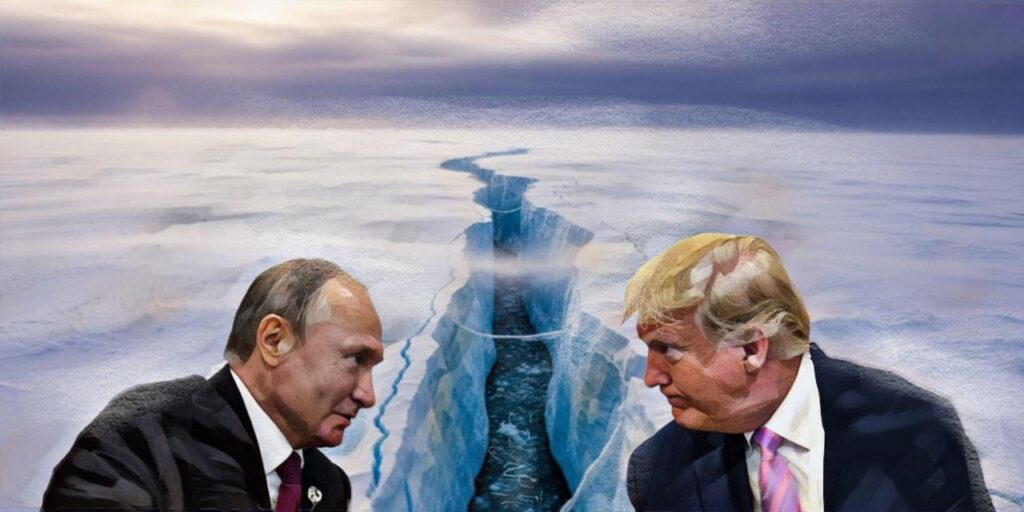
Trump–Putin Talks in Alaska: What Could They Mean for Central Asia?

As U.S. President Donald Trump prepares to meet Russian President Vladimir Putin at the Joint Base Elmendorf-Richardson, located just outside of Anchorage, Alaska, hopes and anxieties are reverberating across Central Asia. Trump has signaled that securing a ceasefire in Ukraine is his top priority, warning of “very severe consequences” for Moscow if Putin refuses to halt the war. For the five former Soviet republics of Central Asia, these peace talks carry high stakes. Any truce or breakdown could ripple into their economies and strategic calculus. The war has already fundamentally changed Central Asia’s strategic positioning, accelerating diversification away from Russian dependence. With Trump and Putin poised to negotiate, Central Asian leaders are mindful that all possible outcomes - a ceasefire, a prolonged conflict, or a major power realignment - could each reshape the region’s economic fortunes and foreign policy choices. Central Asian Stances on the Ukraine War All five Central Asian governments have officially maintained neutrality on the Ukraine conflict. On the first UN General Assembly resolution of March 2, 2022, Kazakhstan, Kyrgyzstan, and Tajikistan abstained, while Uzbekistan and Turkmenistan did not vote. On subsequent resolutions, Uzbekistan abstained alongside Kazakhstan, Kyrgyzstan, and Tajikistan; Turkmenistan continued not to vote. None has recognized Russia’s claims to Ukrainian territory. Seated beside Putin at a plenary session of the St. Petersburg International Economic Forum in June 2022, referring to them as “quasi-state territories,” President Kassym-Jomart Tokayev of Kazakhstan refused to recognize the independence of the so-called Donetsk and Lugansk People’s Republics. “Modern international law is the United Nations Charter,” Tokayev stated. Despite maintaining ties with Russia, Kazakhstan has boosted its engagement with China, Turkey, and Europe during the conflict. Whilst publicly affirming that it will comply with Western sanctions on Russia, Kazakhstan has stated that it will continue to prioritize its economic interests, vowing not to “blindly follow” such measures when they harm its domestic industries. “Kazakhstan will continue to comply with the sanctions but will pursue a balanced policy to minimize the impact on its own economy,” Deputy Prime Minister Serik Zhumangarin said in August 2024. Uzbekistan has adopted a similar “balanced and neutral” approach to the war in Ukraine. In March 2022, then-Foreign Minister Abdulaziz Kamilov stated that Uzbekistan “recognizes the independence, sovereignty and territorial integrity of Ukraine, and does not recognize the Luhansk and Donetsk People’s Republics.” Despite Kamilov leaving his position shortly after making this statement, the nation’s position appears largely unchanged. Calling for an immediate end to “hostilities and violence,” Tashkent has expanded links with Turkey, China, and the EU. According to a U.S. State Department report from 2024, “Uzbekistan formally committed to adhering to U.S. and EU sanctions and trade restrictions on Russia.” Kyrgyzstan has continued to maintain a close economic relationship with Moscow while abstaining from all key United Nations resolutions concerning the Ukraine war. President Sadyr Japarov has said the country “adheres to a neutral position” and that exports to Russia are civilian in nature. In January 2025, Kyrgyzstan’s Keremet Bank was designated by the U.S....

Potential Mass Expulsion of Migrants Looms in Russia

Russia introduced new regulations for foreign citizens in the country on February 5, and started keeping a list at the Interior Ministry of foreigners who are living or staying in Russia without proper documentation, the “controlled persons registry.” The rules are aimed at migrant laborers working in Russia, many of whom come from Central Asian countries. Russia has set a September 10 deadline for foreigners in the country to clear up all their paperwork with the authorities or face expulsion with a ban on re-entry. Judging by recent comments from Kyrgyzstan’s ambassador to Russia, Kubanychbek Bokontayev, many might not make that September 10 deadline. Needed but Not Desired Over the course of the last two decades, millions of citizens from Central Asian countries have worked in Russia. Most are from Kyrgyzstan, Tajikistan, and Uzbekistan. The remittances they send home have grown to the point where this money now accounts for nearly 40% of the GDP in Tajikistan, 24% in Kyrgyzstan, and 14% in Uzbekistan. Most of these remittances come from Russia. Russia badly needs the extra workers, and, until recently, the arrangement seemed to suit all parties. But the March 2024 terrorist attack on Moscow’s Crocus City Hall changed the situation. The Russian authorities detained and charged a group of Tajik nationals for the attack, and the always simmering xenophobia in Russia, particularly toward Central Asians, boiled over. New rules and restrictions have been imposed on migrant workers. Those that came into force in February this year were only the latest in a series of changes that already included mandatory fingerprinting and photographs upon entry to Russia, a reduction in the term of stay from 180 to 90 days, and an increasing list of infractions that provide grounds for deportation. In 2024, Russia expelled some 157,000 migrants who were in the country illegally, which, according to Russian Interior Minister Vladimir Kolokoltsev, was an increase of some 50% over 2023. The Clock Is Ticking At the start of February, just before the latest regulations came into effect, Russia’s Deputy Interior Minister Aleksandr Gorovoi said there were some 670,000 foreigners living illegally in Russia. Gorovoi added that more than half were women and children, “those who entered, but we do not see that they received a patent registered with the migration service… [or] that an employment agreement was concluded with them.” On July 24, Kyrgyz media outlet AKIpress published an interview with the Kyrgyz Ambassador to Russia, Bokontayev, in which he said that at the start of July, there were some 113,000 Kyrgyz citizens on the controlled persons registry, which he referred to as the “gray list.” He also said there were some 80,000 Kyrgyz citizens on the “black list” of people barred from entering Russia. In a separate interview with Radio Free Europe/Radio Liberty’s Kyrgyz Service published on July 25, Kyrgyzstan’s General Consul in Russia, Bakyt Asanaliyev, said that about 30% of the Kyrgyz citizens on the gray list are children. Ambassador Bokontayev said Kyrgyzstan’s embassy is working to make sure...

Essential but Unwelcome: Central Asian Migrants in Russia

The Crocus City Hall terrorist attack in Moscow on March 22, 2024 triggered strong anti-migrant sentiment in Russian society. Since then, the nation’s authorities have been imposing stricter migration rules. But how does this impact millions of Central Asian labor migrants and their families living and working in Russia? Following the collapse of the Soviet Union in 1991, Russia became a major destination for migrant workers from Central Asia. According to the official Russian statistics, there are currently almost four million citizens of Kazakhstan, Kyrgyzstan, Uzbekistan, Tajikistan, and Turkmenistan living in Russia, along with approximately 670,000 illegal migrants. Rosstat (the Federal State Statistics Service of the Russian Federation) reports that 260,400 migrants arrived in Russia from January to July this year, with 60% (about 156,200) coming from Central Asian countries. The majority of them are citizens of Tajikistan. In 2023, over one million Tajiks have moved to Russia in search of work. With a large community of its citizens in Russia, the Tajik government seems to be working to not only improve their legal status in the Russian Federation, but also to coordinate some of their actions, particularly in the field of culture. On April 9, in Dushanbe, a meeting took place between Tajikistan’s Minister of Labor, Migration, and Employment of the Population, Solekhi Kholmakhmadzoda, and leaders and activists of the Tajik diaspora living in Russia. Tajikistan initiated the summit after Russia began testing migrant children on their knowledge of the Russian language before admitting them to school. Starting April 1, a law came into effect that prevents Russian schools from enrolling migrant children who do not speak Russian or are in Russia illegally. This measure is just the tip of the iceberg in the Kremlin’s plans to regulate the migrant issue in the country. Alexey Nechaev, the leader of the New People party – one of the handful of the so-called systemic opposition parties in Russia – said on March 19 that “artificial intelligence should be made a new tool for monitoring migrants… It is unfair that Russian citizens are digitized from head to toe, while migrants continue to live with paper documents without any problems,” Nechaev stressed, pointing out that monitoring migrants’ activities through AI could “help keep a closer eye on what foreigners are doing and make it easier to track illegal money flows.” Last year, the Liberal Democratic Party – another ‘systemic opposition’ group – proposed restricting the rights of migrant workers to bring their families into Russia. This initiative raised concerns in neighboring Kazakhstan. The ambassador of the largest Central Asian nation expressed unease to Moscow about such ambitions, referring to the Eurasian Economic Union (EAEU), the foundation of which, as he highlighted, is based on ensuring the four freedoms – the movement of goods, services, capital, and labor. Russian reports, however, claim that, as a result of Kazakhstan and Kyrgyzstan’s membership in the EAEU, their citizens living in Russia have a much better status than those from other Central Asian states. Despite that, on...