• KGS/USD = 0.01144 0%
  • KZT/USD = 0.00200 0%
  • TJS/USD = 0.10470 -0.19%
  • UZS/USD = 0.00008 0%
  • TMT/USD = 0.28490 0%
  • KGS/USD = 0.01144 0%
  • KZT/USD = 0.00200 0%
  • TJS/USD = 0.10470 -0.19%
  • UZS/USD = 0.00008 0%
  • TMT/USD = 0.28490 0%
  • KGS/USD = 0.01144 0%
  • KZT/USD = 0.00200 0%
  • TJS/USD = 0.10470 -0.19%
  • UZS/USD = 0.00008 0%
  • TMT/USD = 0.28490 0%
  • KGS/USD = 0.01144 0%
  • KZT/USD = 0.00200 0%
  • TJS/USD = 0.10470 -0.19%
  • UZS/USD = 0.00008 0%
  • TMT/USD = 0.28490 0%
  • KGS/USD = 0.01144 0%
  • KZT/USD = 0.00200 0%
  • TJS/USD = 0.10470 -0.19%
  • UZS/USD = 0.00008 0%
  • TMT/USD = 0.28490 0%
  • KGS/USD = 0.01144 0%
  • KZT/USD = 0.00200 0%
  • TJS/USD = 0.10470 -0.19%
  • UZS/USD = 0.00008 0%
  • TMT/USD = 0.28490 0%
  • KGS/USD = 0.01144 0%
  • KZT/USD = 0.00200 0%
  • TJS/USD = 0.10470 -0.19%
  • UZS/USD = 0.00008 0%
  • TMT/USD = 0.28490 0%
  • KGS/USD = 0.01144 0%
  • KZT/USD = 0.00200 0%
  • TJS/USD = 0.10470 -0.19%
  • UZS/USD = 0.00008 0%
  • TMT/USD = 0.28490 0%

Viewing results 1 - 6 of 52

Kyrgyzstan Criticizes Russia’s Approach to Migration

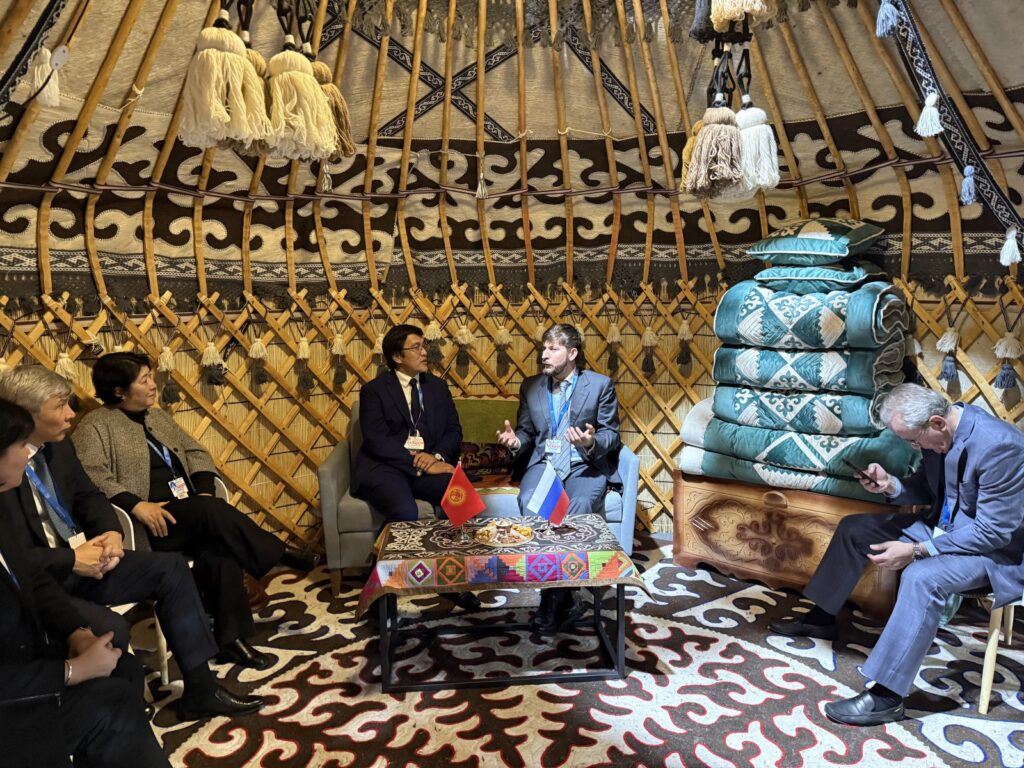
Edil Baisalov, Deputy Chairman of Kyrgyzstan’s Cabinet of Ministers, voiced frustration over Russia’s approach to labor migration during an interview with Russian media. He criticized Moscow for failing to fully honor the principle of free movement of labor within the Eurasian Economic Union (EAEU), of which Kyrgyzstan is a member. “Free movement of labor resources is one of the principles of the Eurasian Economic Union. Our fundamental documents state that we have access to the labor market on the same basis as citizens of any member state. Thousands of Russians work for us on the same terms as Kyrgyz,” Baisalov stated. Despite these agreements, he claimed that Kyrgyz workers often face restrictions and criticisms in Russia akin to those applied to migrants from non-EAEU countries. “People, including seasonal workers, may stay for weeks or months. Some have relocated to Russia with their families and work as doctors, teachers, scientists, and professors. Our migrants significantly contribute to various sectors of Russia’s modern economy, particularly in the service industry—hotels, cafes, and more. Every penny earned by Kyrgyz migrants in the Russian Federation comes at the cost of incredible effort,” he said. Baisalov highlighted that these challenges are prompting Kyrgyz labor migrants to seek opportunities in other nations, such as South Korea, Japan, the UAE, Turkey, and EU countries. “Tens of thousands of our women have found their calling in Italy, where elderly care is in high demand. It turns out there’s no better choice than our caregivers and nannies. We even opened an embassy in Italy because nearly 30,000 Kyrgyz citizens reside in Naples and on the island of Sardinia,” he explained. In light of these trends, the Kyrgyz government has pledged to create 250,000 new jobs within the country in the coming year. A campaign is also underway to encourage citizens working abroad to return home.
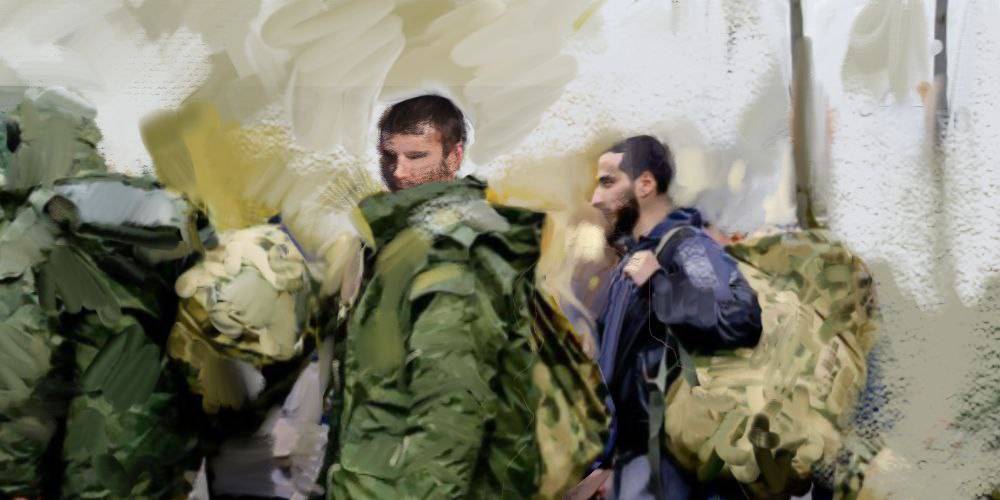
Solidarity Center: Central Asian Migrant Workers Face Low Pay and Unsafe Workplaces

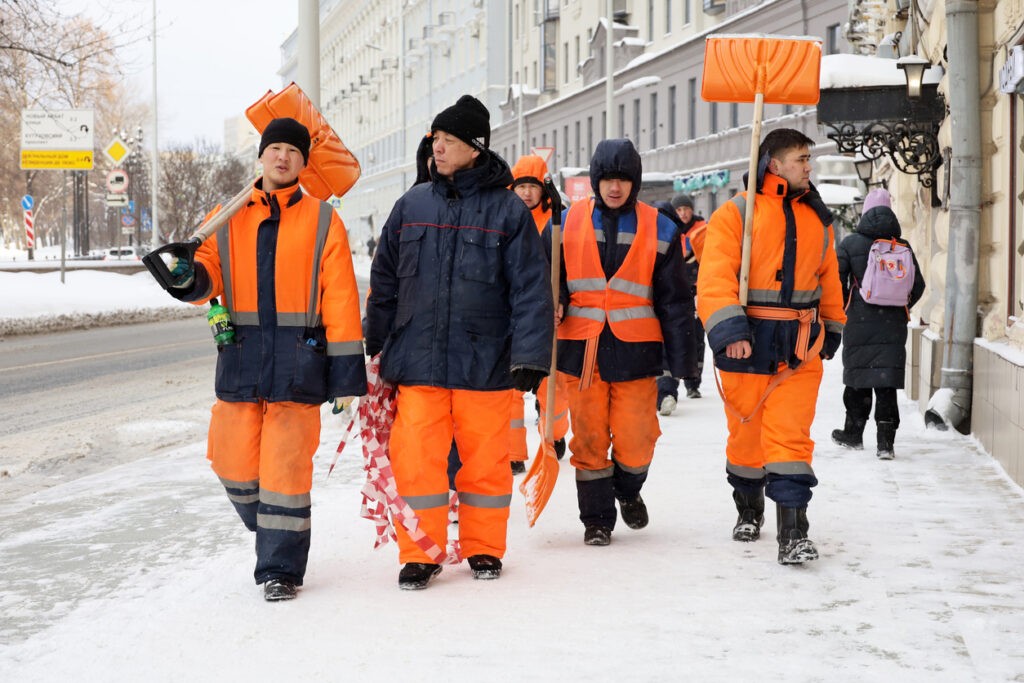
Central Asian migrant workers face new challenges as they look for well-paying jobs, with economic shifts and political instability adding to the uncertainty. More women and young people also choose to migrate, often facing unique risks. Panelists at a recent Solidarity Center webinar highlighted that protecting these workers’ rights is more effective when countries in the region work together on safe migration plans. A Solidarity Center study involving over 1,000 migrant workers from Kazakhstan, Kyrgyzstan, and Uzbekistan found that Kyrgyzstan and Uzbekistan are the primary countries of origin, while Kazakhstan is becoming a growing destination. Most participants (58%) left due to low wages in their home countries, and 31% cited a lack of jobs as their main reason for migrating. Russia, once a top destination for Central Asian workers, has seen a drop in migrant numbers since its economy took a hit following Russia's invasion of Ukraine. A migrant worker from Uzbekistan shared that overtime hours weren’t paid, and medical expenses had to come out of his pocket if he got sick. According to Lola Abdukadyrova, Solidarity Center's regional director in Kyrgyzstan, this story reflects the harsh conditions many migrant workers face—no overtime pay, no sick leave, and frequent discrimination or harassment. Abdukadyrova noted that for nearly 30% of Kyrgyz migrant households, money for food is often a struggle. In Uzbekistan, this rate rises to 45%, as shared by Nodira Karimova, director of the Republican Social Information Center Istiqbolli Avlod. Abdukadyrova added that many migrants earn only enough for basic food, and they face delayed payments, heavier workloads without extra pay, and unsafe working conditions. “Kazakhstan has endorsed the Global Compact for Safe, Orderly and Regular Migration (GCM) and participates in various regional migration dialogues,” said Aleksandr Mukha, director of the Mangistau Regional Branch of the Kazakhstan International Bureau for Human Rights and Rule of Law. In another significant win for migrant worker rights organizations, Kyrgyzstan issued the GCM in August to improve conditions for Kyrgyz citizens who travel abroad to earn their livelihoods. The Times of Central Asia has previously written about how that Russia's ongoing war in Ukraine has increased pressure on Central Asian migrants.

Migrants in the Crossfire: Russia’s Recruitment for Ukraine War Sparks Tensions

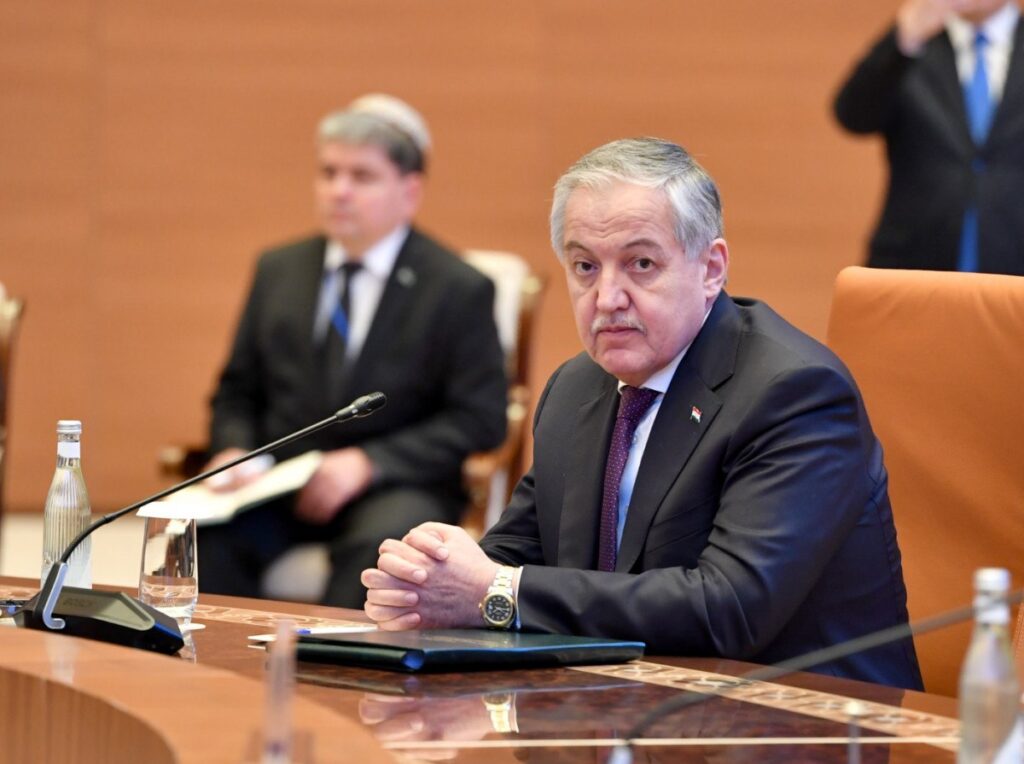
Russia’s ongoing “special military operation” in Ukraine has increased the demand for additional forces, and, in response, Russia is increasingly viewing the use of migrants as a good solution to the situation. As of September 1, 2024, official figures state that 3,985,000 citizens of Central Asian countries lived in Russia. Uzbekistan leads the way with over 1,792,000 migrants, followed by Tajikistan with more than 1,231,000, Kazakhstan with 606,900, Kyrgyzstan with 262,800, and Turkmenistan with 92,000. Some Central Asian migrants have signed contracts with the Russian Ministry of Defense to participate in the war, motivated mainly by financial incentives. However, economic reasons are not the only factor driving them to war. People from Central Asian countries who have received citizenship are also being threatened with imprisonment for failing to join the war effort. TCA has previously reported on efforts by officials to recruit young men detained at the Sakharovo immigration processing center to join the Russian army and fight in Ukraine. In addition, a decree issued by Vladimir Putin has simplified the process for foreigners who join the military to gain Russian citizenship. In contrast, Central Asian governments have looked to discourage their citizens from engaging in the conflict. For example, Uzbekistan has warned that any citizen involved in the Russia-Ukraine war will face legal consequences. In October 2023, an Uzbek citizen who fought in Ukraine for financial reasons was sentenced to three years in prison by a Uzbek court. The defendant had returned to Uzbekistan after being wounded in the conflict, and authorities discovered military documents and proof of his Russian citizenship during their investigation. By September 2024, a growing number of Central Asians had perished in the war, including 47 Uzbeks, 51 Tajiks, and 26 Kyrgyz nationals. In Kazakhstan, since 2014, following the start of the war in the Donetsk and Luhansk regions, criminal liability was been introduced for citizens who participate in armed conflicts abroad. A person who commits such an offense can be punished with imprisonment for up to 12 years, face the confiscation of property, and be deprived of their citizenship. For example, in November of last year, a 34-year-old man from Kazakhstan was imprisoned for six years and eight months for participating in the war in Ukraine. Kyrgyzstan and Tajikistan have also applied measures involving the deprivation of liberty their citizens who participate in the war. Tajikistan’s economy significantly depends on remittances from labor migrants in Russia, which account for approximately one-third of its GDP. Despite the war in Ukraine, over 1.7 million Tajik citizens sought work in Russia in the first half of 2022. However, reports indicate that many Tajik migrants are being sent to Ukraine against their will, raising concerns. The situation further deteriorated after a terrorist attack at Crocus City Hall in February 2024. Tajik nationals were among the primary suspects, leading to a shift in Russia’s attitude towards Central Asian migrants. Tajikistan’s Foreign Minister, Sirojiddin Muhriddin, expressed concerns over the violations of Tajik citizens’ rights in some CIS countries, calling for a...

Kyrgyzstan Reports Growing Return Migration

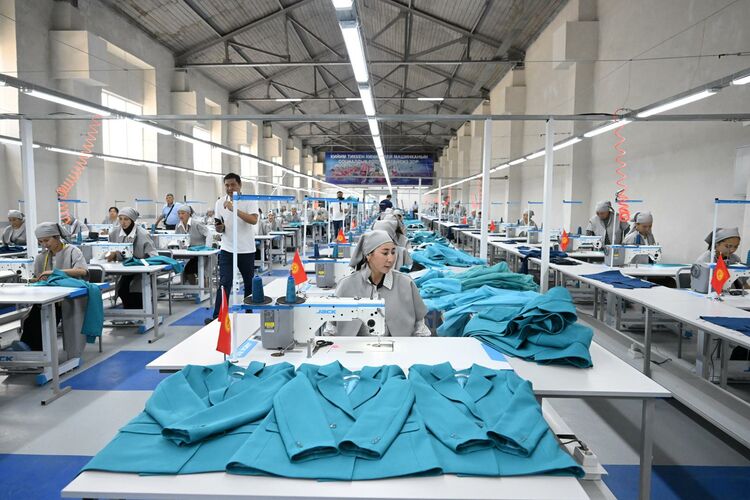
Kyrgyzstan’s Ministry of Labor, Social Security and Migration and the International Organization for Migration (IOM) announced the results of their assessment of the country’s migration trends on October 15. The statistics show that return migration increased from 2020 to April 2024, and the number of migrants returning to Kyrgyzstan is continuing to grow. The number of returning migrants increased by 85% in 2023 compared to the previous year. Kyrgyzstan’s southern Osh and Batken regions and the northern Chui region lead the figures in the number of returning labor migrants. According to the report, the number of Kyrgyz citizens who plan to migrate once again to the country from which they have just returned has decreased by half. In June, the Speaker of the Kyrgyz Parliament, Nurlanbek Shakiyev said that more Kyrgyz people are returning from abroad, and over the past two years, the numbers have reached 241,000. Shakiyev cited the opening of many new industrial enterprises in Kyrgyzstan in recent years as a reason for growing return migration, emphasizing that Kyrgyz citizens can now earn more at home. Over the past 30 years, hundreds of thousands of Kyrgyz citizens have left their homeland as labor migrants, mainly for Russia. In the last couple of years, however, there has been a growing trend of return migration largely caused by Russia's deteriorating economic situation, depreciation of the ruble, stricter rules and harsher attitudes toward Central Asian immigrants, and increasing attempts by the Russian authorities to recruit Central Asian immigrants (with or without Russian passports) to join Russian troops fighting in Ukraine. According to a 2022 census by Kyrgyzstan’s National Statistics Committee, more than 876,000 Kyrgyz citizens (close to 15% of the country’s population) migrated abroad. The top five destination countries for Kyrgyz migrants were Russia (870,304), Kazakhstan (2,158), Turkey (1,828), Germany (336), and South Korea (240). The IOM report states that 328,458 Kyrgyz nationals have lived abroad since 2020. As of 2023, 79% live in Russia, 4.5% in Kazakhstan, and 4% in Turkey. According to the report, the primary drivers of migration were dissatisfaction with wages in Kyrgyzstan (26%), lack of job opportunities (17%), financial difficulties and debts (16%), and a perceived lack of prosperity in their homeland (10%). According to the National Bank of the Kyrgyz Republic, in 2023, remittances from Kyrgyz labor migrants totaled $2.144 billion, compared to $1.873 billion in 2022.

Tajikistan Expresses Concerns over Violations of its Citizens’ Rights in CIS Countries

The most recent meeting of the Council of Foreign Ministers of the Commonwealth of Independent States (CIS) was hosted by Moscow on October 7. During the meeting,  Minister of Foreign Affairs of Tajikistan, Sirojiddin Muhriddin, expressed his concern about the violation of the rights of the republic's citizens on the territory of some CIS countries. Emphasizing the need for a comprehensive approach to solving migration issues in the countries of the Commonwealth of Nations, he called for consideration of all parties' interests: host countries, migrant-sending countries, foreign citizens, and the local population. The Minister also addressed urgent security issues and stressed the need to strengthen the fight against terrorism, extremism, illegal drug trafficking, and transnational crimes. He invited the CIS states to participate in the international conference on counterterrorism, scheduled for early November in Kuwait City as part of the Dushanbe process.

Russia Wants to Ban Migrants’ Families

Russia is considering a bill that could restrict the right of migrant workers to bring their families into the country. The initiative from LDPR deputies, led by Leonid Slutsky, has already sparked active discussions among politicians and society. The main goal of the proposed law is to reduce the inflow of uncontrolled migration and the ensuing public tension. Particular reference is made to the many migrant families living in Russia who accumulate debts for public utilities and create enclaves where local laws and customs are often ignored. The bill suggests that with the exception of highly qualified specialists, the presence of a work contract or a patent, should no longer be a reason for migrants to move their families to Russia. This bill is not the only measure aimed at tightening the migration policy in Russia. In 2022, a “controlled stay” system was introduced, strengthening control over migrants on the country's territory. In recent years, Russia has also introduced labor migration quotas limiting the number of jobs available to foreign nationals, especially in construction, trade, and other low-skilled sectors. These quotas were further tightened, resulting in fewer migrants entering the country. Another measure was the introduction of compulsory health insurance for migrants, adding a financial burden to those coming to work in Russia. In addition, strict language and cultural integration requirements have been introduced, including mandatory Russian language training and exams on the country's history and culture. Such actions have drawn criticism from human rights activists, who believe that the restrictions could increase social tensions and make life difficult for migrants already living in Russia.