


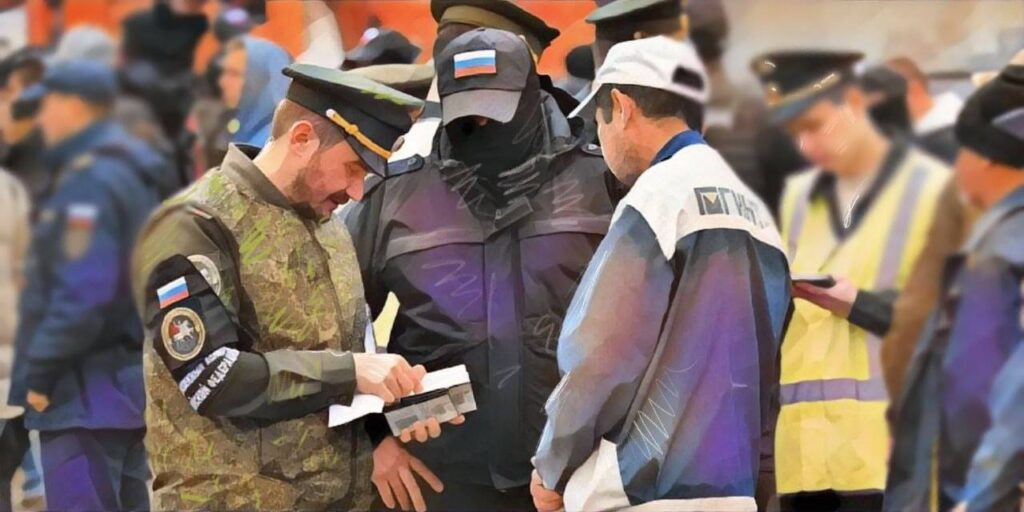
They Went to Russia for Work and Ended Up at War: How Central Asians Enter the Russian Military
Twenty-year-old Ainabek Keldibek went to Russia expecting to work as a security guard. Relatives of other young Kazakh men say they had taken jobs at a sausage factory and a poultry farm. But according to reports aired in early October on Kazakhstan’s KTK television channel, the men later ended up in or near the combat zone in Ukraine. Some appeared in videos wearing Russian military uniforms and asked Kazakhstan to help bring them home. On October 7, relatives of Kazakh citizens who had reportedly ended up in Russia’s military visited the Foreign Ministry in Astana to seek help bringing them home. Lawyer Meirman Shekeyev, who accompanied the families, said his list had grown from eight to 21 people as more relatives contacted him. The same day, ministry spokesperson Zhanbolat Ussenov said officials were checking appeals and would send Russia a list of citizens after verification. Negotiations over their return were underway, he said. Exactly how the men ended up in the Russian military remains unclear. One family said their relative had already been wounded, while KTK reported that the circumstances surrounding the signing of the military contracts have not been independently established. For now, much of what is known comes from the men themselves and their relatives. Their stories raise a broader question that neither Moscow nor the capitals of Central Asia have fully answered: how many people from the region have ended up in the Russian military, and under what circumstances did they get there? Nearly 13,000, According to a Ukrainian Database Russia does not publish comprehensive statistics on foreign contract soldiers. Central Asian governments have only fragmented data from criminal cases, consular appeals, and reports from relatives. The most detailed country-by-country breakdown comes from the Ukrainian government project I Want to Live. By May 2026, the project said it had identified 12,919 citizens of the five Central Asian states who had signed contracts with the Russian Ministry of Defense: 4,955 citizens of Uzbekistan, 3,489 of Tajikistan, 2,420 of Kazakhstan, 1,474 of Kyrgyzstan, and 581 of Turkmenistan. These figures cannot be regarded as complete or independently verified. I Want to Live operates within Ukraine’s Coordination Headquarters for the Treatment of Prisoners of War, and Ukraine is a party to the war. In addition, 12,919 is a cumulative figure, not the number of Central Asians currently at the front. Some may have been killed or captured, completed their service, returned home, or obtained Russian citizenship. Another major estimate comes from the International Federation for Human Rights (FIDH), Truth Hounds, and the Kazakhstan International Bureau for Human Rights and Rule of Law. Their report estimates that Russia recruited at least 27,000 foreign nationals from more than 130 countries after February 2022. More than 10,000 of them, according to the study, came from Central Asia. The study is based on open sources, consultations with Ukrainian authorities and experts, and interviews with 16 prisoners of war and former Russian servicemen. There are no comparable publicly available Russian statistics, meaning it is impossible to...

