Twenty-year-old Ainabek Keldibek went to Russia expecting to work as a security guard. Relatives of other young Kazakh men say they had taken jobs at a sausage factory and a poultry farm. But according to reports aired in early October on Kazakhstan’s KTK television channel, the men later ended up in or near the combat zone in Ukraine. Some appeared in videos wearing Russian military uniforms and asked Kazakhstan to help bring them home.
On October 7, relatives of Kazakh citizens who had reportedly ended up in Russia’s military visited the Foreign Ministry in Astana to seek help bringing them home. Lawyer Meirman Shekeyev, who accompanied the families, said his list had grown from eight to 21 people as more relatives contacted him.
The same day, ministry spokesperson Zhanbolat Ussenov said officials were checking appeals and would send Russia a list of citizens after verification. Negotiations over their return were underway, he said.
Exactly how the men ended up in the Russian military remains unclear. One family said their relative had already been wounded, while KTK reported that the circumstances surrounding the signing of the military contracts have not been independently established. For now, much of what is known comes from the men themselves and their relatives.
Their stories raise a broader question that neither Moscow nor the capitals of Central Asia have fully answered: how many people from the region have ended up in the Russian military, and under what circumstances did they get there?
Nearly 13,000, According to a Ukrainian Database
Russia does not publish comprehensive statistics on foreign contract soldiers. Central Asian governments have only fragmented data from criminal cases, consular appeals, and reports from relatives.
The most detailed country-by-country breakdown comes from the Ukrainian government project I Want to Live. By May 2026, the project said it had identified 12,919 citizens of the five Central Asian states who had signed contracts with the Russian Ministry of Defense: 4,955 citizens of Uzbekistan, 3,489 of Tajikistan, 2,420 of Kazakhstan, 1,474 of Kyrgyzstan, and 581 of Turkmenistan.
These figures cannot be regarded as complete or independently verified. I Want to Live operates within Ukraine’s Coordination Headquarters for the Treatment of Prisoners of War, and Ukraine is a party to the war. In addition, 12,919 is a cumulative figure, not the number of Central Asians currently at the front. Some may have been killed or captured, completed their service, returned home, or obtained Russian citizenship.
Another major estimate comes from the International Federation for Human Rights (FIDH), Truth Hounds, and the Kazakhstan International Bureau for Human Rights and Rule of Law. Their report estimates that Russia recruited at least 27,000 foreign nationals from more than 130 countries after February 2022. More than 10,000 of them, according to the study, came from Central Asia.
The study is based on open sources, consultations with Ukrainian authorities and experts, and interviews with 16 prisoners of war and former Russian servicemen.
There are no comparable publicly available Russian statistics, meaning it is impossible to establish the actual number of Central Asian citizens who have passed through the Russian military since 2022.
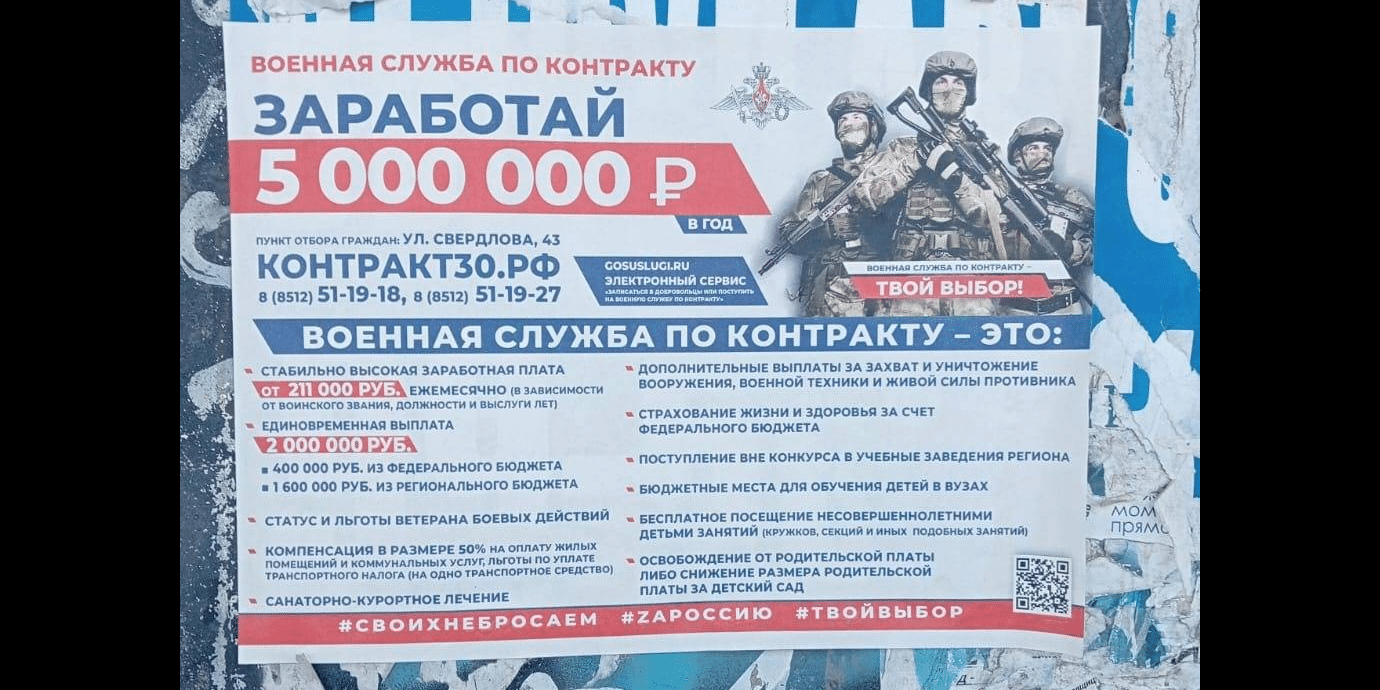
A Russian military recruitment poster advertises annual earnings of 5 million rubles for contract soldiers; image: TCA
A Military Contract Instead of Immigration Problems
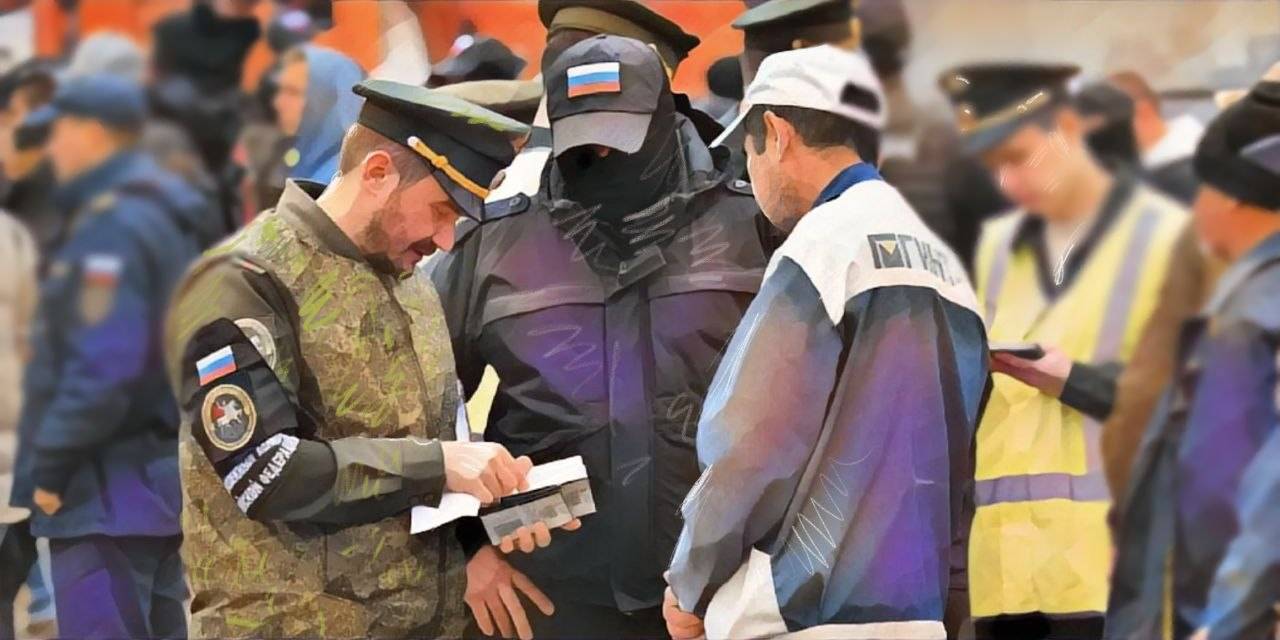
Foreign nationals are legally permitted to enlist in the Russian military. In Moscow, applications are accepted at locations including the Sakharovo migration center, where migrants also go to deal with registration, work permits, and other documents.
A military contract offers more than a salary. Foreign servicemen can use a simplified procedure to obtain Russian citizenship. A separate law that took effect on July 7, 2026, also bars authorities from imposing deportation and several other immigration sanctions against certain serving and former foreign contract soldiers.
For a migrant without a secure legal status, the choice can be driven by material considerations: money, legal status in Russia, and the possibility of obtaining a Russian passport.
There is another route into the military: through Russian prisons.
The case of a 27-year-old Uzbek citizen reached court after he returned home. In 2023, he went to Russia for work and was sentenced there to 12 years in prison on drug charges. The man claimed that heroin had been planted on him and that his confession was obtained after he was abused.
In prison, he was offered release, money, and Russian citizenship in exchange for signing a military contract. He accepted in December 2025, was sent to war, was wounded, fled from a hospital, and returned to Uzbekistan. In September, an Uzbek court sentenced him to three years and one month in prison for mercenary activity and joining the armed forces of a foreign state.
In Kyrgyzstan, Deputy Labor Minister Bakyt Darmankul uulu has also spoken about Kyrgyz citizens in Russian prisons who were offered the option of military service instead of continuing to serve their sentences.
“They may receive such an offer… But no one is forcing them,” he said. According to Darmankul, Kyrgyz representatives speak with prisoners to determine whether they are being pressured.
A Security Guard Job Can End at the Front
In September, Amnesty International described cases involving citizens of African, Latin American, and Asian countries. Recruitment methods it documented included misleading online advertisements for civilian jobs in construction, security, logistics, and IT, promises of non-combat work, high payments, and Russian citizenship.
Amnesty concluded that in many of the cases it examined, the practices met the definition of human trafficking under the UN Palermo Protocol. The finding does not apply to every foreign recruit.
The Times of Central Asia examined recruitment websites targeting citizens of all five Central Asian states. Military Contract offers help with documents, travel, and signing a military contract. Work Crew Agency advertises pay, housing, relocation, and roles including drivers and construction specialists. Both websites explicitly state that the positions involve military service.
An August investigation published by EUvsDisinfo, a project of the European External Action Service, identified at least 35 recruitment websites operating in up to 40 languages. It traced them to four recruitment brands, including Work Crew Agency.
According to the investigation, the other three brands shared WhatsApp contact details linked to a Russia-registered organization located at the same address as a volunteer battalion training center in Bashkortostan. Researchers also linked one Work Crew Agency domain to Russian military blogger Roman Saponkov, who has documented ties to the Wagner Group.
These findings provide context for the recruitment websites but do not establish how individual recruits were treated. TCA has not established a connection between Military Contract and the network described by EUvsDisinfo, or independently verified either website’s formal relationship with the Russian Ministry of Defense.
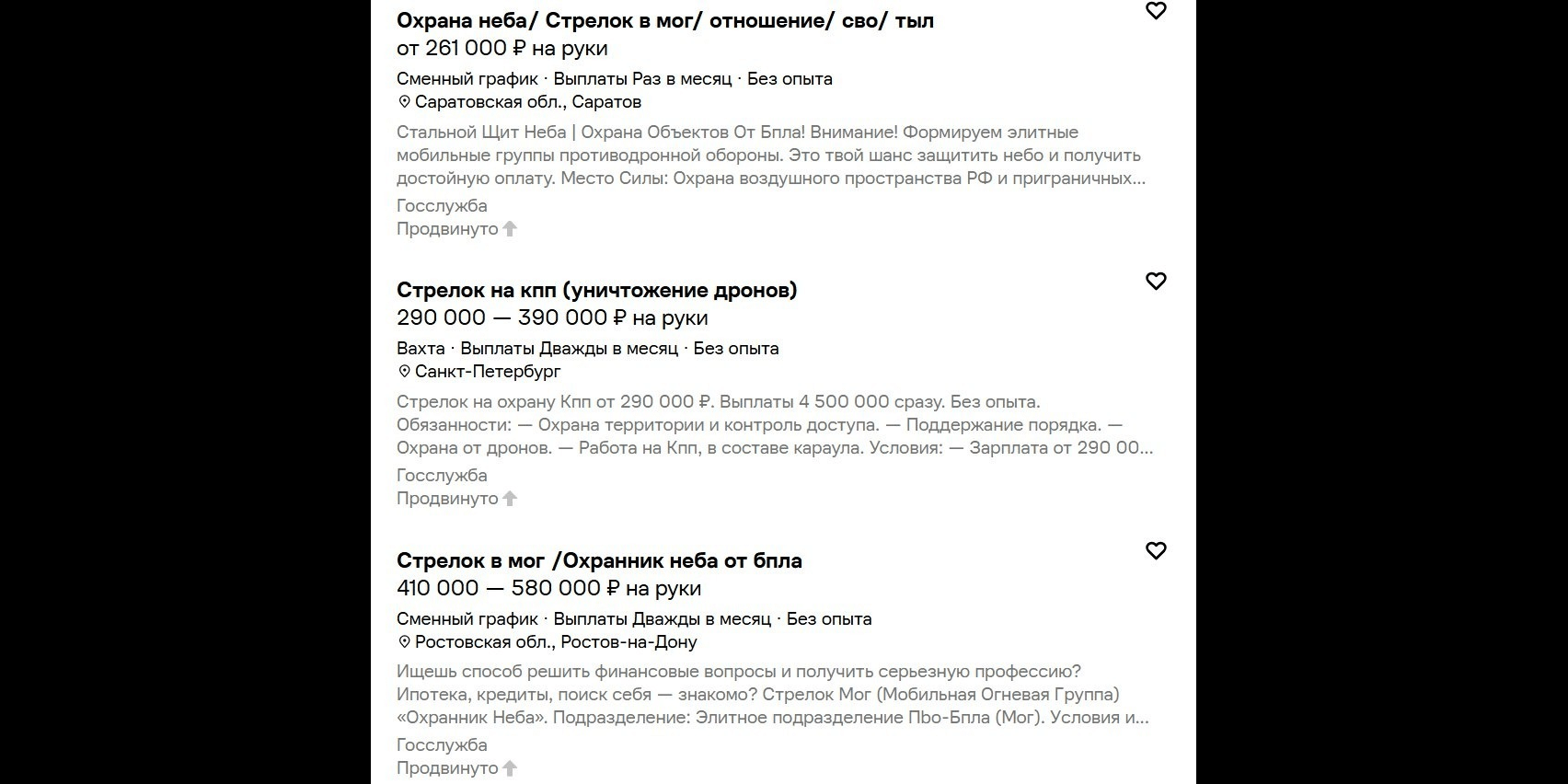
Russian-language job advertisements offer armed security and anti-drone roles, with some stating that no experience is required: AVITO marketplace
A Contract Abroad Can Mean Prison at Home
A Russian military contract may be legal under Russian law while still leading to criminal prosecution when a person returns home. All five Central Asian states have criminal provisions covering mercenary activity, participation by their citizens in armed conflicts abroad, or service in foreign armed formations. The wording of the laws and their application by courts vary from country to country.
In Kazakhstan, Article 172 of the Criminal Code provides for five to nine years in prison for a citizen’s intentional unlawful participation in an armed conflict or hostilities abroad when the act does not constitute mercenary activity. Mercenary activity is covered separately under Article 170.
In January 2025, an Almaty resident was sentenced to five years in prison for participating in hostilities outside Kazakhstan.
By late 2025, Uzbekistan had opened 338 criminal cases under its mercenary provision since 2022. This figure should not be treated as a statistic exclusively covering the Russia-Ukraine war. Uzbekistan’s State Security Service referred more broadly to citizens participating in conflicts abroad, including in foreign military, extremist, and terrorist formations.
In May, Uzbekistan’s Migration Agency warned citizens about cases in which migrant workers were being drawn into armed conflicts. The agency mentioned offers of “work,” “legal assistance,” and “rapid processing of entry permits.”
Kyrgyzstan also provides criminal liability for certain forms of participation by its citizens in armed conflicts abroad. In January, Foreign Minister Jeenbek Kulubaev acknowledged that fear of criminal prosecution makes it difficult to determine the scale of the problem.
“Many do not know and are afraid to talk,” he said. According to the minister, authorities sometimes learn that a citizen took part in the war only after that person has been killed.
Tajikistan is a special case because of its dual-citizenship agreement with Russia. Prosecutor General Habibullo Vohidzoda said in February that Dushanbe does not open criminal cases against Tajik citizens who also hold Russian passports for serving in the Russian military. Tajik laws apply to citizens who do not hold Russian citizenship.
Turkmenistan’s criminal law also provides penalties for mercenary activity, but there is very little public information on the application of these provisions to people involved in the Russia-Ukraine war.
A Mercenary and a Foreign Serviceman Are Not the Same Thing
The word “mercenary” requires caution. A foreign passport and payment for military service do not by themselves make someone a mercenary under international humanitarian law. Article 47 of Additional Protocol I to the Geneva Conventions sets out several conditions that must all be met for a person to fall under that definition.
National criminal codes use their own definitions. A person charged with mercenary activity at home therefore does not necessarily have the same status under international law.
The circumstances under which a contract was signed are equally important. Someone who knowingly chose military service for financial compensation and a migrant who says they were deceived while applying for a civilian job may both face investigation after returning home, even though they reached the war by very different routes.
The Syrian Experience
Central Asian governments have experience bringing citizens home from foreign conflicts. Following the collapse of ISIS’s territorial control in Syria and Iraq, Kazakhstan’s Zhusan and Uzbekistan’s Mehr operations formed part of a wider regional effort to repatriate and reintegrate citizens, many of them women and children.
The circumstances differ substantially from recruitment into Russia’s military. But those operations offer a practical precedent for organizing returns. Bringing citizens home leaves authorities to assess their individual conduct and determine whether prosecution is warranted.
A Subject Few Want to Discuss
The participation of Central Asians in the Russia-Ukraine war remains an extremely sensitive subject across the region.
TCA approached regional specialists for comment, but some declined to discuss the issue. It would be an exaggeration to describe the subject as taboo, but caution is evident even in statements made by officials. Governments in the region tend to discuss criminal liability, consular assistance, and individual cases rather than publicly assessing Russia’s practices in recruiting foreign nationals.
The reasons are largely practical. Russia remains one of the main labor markets for people from Central Asia. For Kyrgyzstan, Tajikistan, and Uzbekistan, labor migration is linked to substantial remittance flows. Kazakhstan and Kyrgyzstan are members of the Eurasian Economic Union alongside Russia, while Kazakhstan, Kyrgyzstan, and Tajikistan belong to the Collective Security Treaty Organization.
Governments across the region prohibit their citizens from certain forms of participation in foreign wars.
The video appeals from Kazakh citizens now present the authorities with a problem. If these men return, officials will have to establish not only where they fought but how they got there: whether they knowingly signed military contracts, chose service while in prison, used it as a route to Russian citizenship, or traveled to Russia expecting civilian employment.
The circumstances of their recruitment will be central to how the authorities handle their return.