• KZT/USD = 0.00218
  • TJS/USD = 0.10800
  • UZS/USD = 0.00008
  • TMT/USD = 0.29850
  • KZT/USD = 0.00218
  • TJS/USD = 0.10800
  • UZS/USD = 0.00008
  • TMT/USD = 0.29850
  • KZT/USD = 0.00218
  • TJS/USD = 0.10800
  • UZS/USD = 0.00008
  • TMT/USD = 0.29850
  • KZT/USD = 0.00218
  • TJS/USD = 0.10800
  • UZS/USD = 0.00008
  • TMT/USD = 0.29850
  • KZT/USD = 0.00218
  • TJS/USD = 0.10800
  • UZS/USD = 0.00008
  • TMT/USD = 0.29850
  • KZT/USD = 0.00218
  • TJS/USD = 0.10800
  • UZS/USD = 0.00008
  • TMT/USD = 0.29850
  • KZT/USD = 0.00218
  • TJS/USD = 0.10800
  • UZS/USD = 0.00008
  • TMT/USD = 0.29850
  • KZT/USD = 0.00218
  • TJS/USD = 0.10800
  • UZS/USD = 0.00008
  • TMT/USD = 0.29850
21 August 2026

Viewing results 1 - 6 of 175

Mystery and Intrigue Behind the Death of Inessa Papernaya

Further details have come to light which shroud the death of Inessa Papernaya in yet more mystery. As reported by TCA yesterday, Papernaya and her companion were found dead in a Tashkent hotel on October 20, along with an Uzbek man in a neighboring room whom media sources initially referred to simply as U.Kh. It has since come to light that this person was Khushnud Udekov, a well-known 48-year-old businessman from the Khorezm region whose private gas company was liquidated. Initially, reports stated that Papernaya was a Russian journalist known for her work with lenta.ru and profile.ru. It was also reported that Papernaya was in Uzbekistan on vacation, and was staying at the Karaman Palace Hotel with her fiancé, Maxim Radchenko, whom she had traveled with in order to meet his relatives. However, Papernaya’s last post for either of these publications came in 2019, since when she had become an employee of the Russian mining company, Norilsk Nickel. According to accounts surrounding the death of Papernaya and Radchenko, hotel staff knocked on the door of their room after the couple, who were supposed to have returned to Moscow, stopped answering the phone. Receiving no response, staff entered the room, where they discovered the bodies of the pair in the bathroom. “When she didn’t answer her phone at 11 PM, I felt something was wrong,” Papernaya’s mother told the media. “I knew something had happened.” The body of Udekov was subsequently found in the room directly below, with some local publications speculating that the businessman may have been the target of a contract killing. Preliminary reports attributed the cause of the deaths to poisoning of “unknown origin,” with early suggestions being made that gas seeped into the room through the ventilation system after the hotel’s pool was cleaned on October 19-20, leading to the incident. The hotel where the incident occurred was also still under construction, and the first floor was stuffed with building materials and furniture. Following the gruesome discovery, authorities sealed off the Karaman Palace Hotel. The Prosecutor General’s Office of Uzbekistan launched an investigation under Article 186 of the Uzbek Criminal Code, which covers the provision of unsafe services, and a forensic examination was ordered to determine the precise causes of death. According to Hayat Shamsutdinov, the press secretary of Uzbekistan's Prosecutor General 's Office, the exact cause of death will be determined after a thorough examination, the results of which are expected in about a month. Forensic expert Alexey Reshetun, however, has stated that it is “extremely difficult to imagine that two adults would die in a single room as a result of gas entering through the ventilation.” Relatives of Radchenko, meanwhile, have disputed what they describe as several different versions of the deaths which have been put forward. Radchenko’s sister stated that the family were initially told “he had an epileptic seizure; she ran up to him, slipped, fell, hit her head and died. This is some kind of TV series: how do you fall? What...
Changing Volumes of Gold Mined in Kazakhstan and Uzbekistan

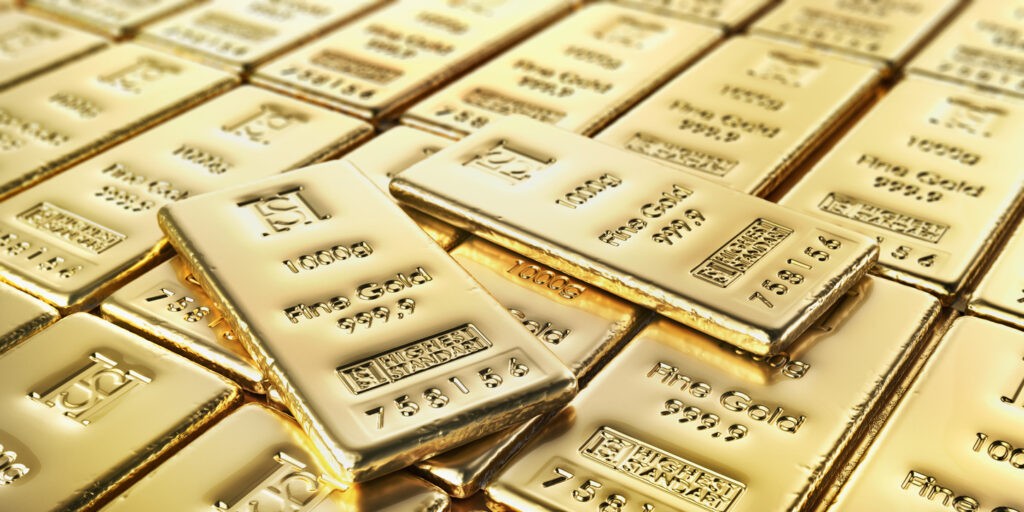
According to data  issued by the U.S. Geological Service, in 2023, 130 tons of gold were mined in Kazakhstan and 100 tons in Uzbekistan. Kazakhstan's volume increased by 15 tons compared to 2022, whilst Uzbekistan's decreased by 4 tons. Russia produced 310 tons of gold, equivalent to that mined the previous year. Worldwide, 3,600 tons of gold were produced in 2023, 60 tons less than in 2022. The U.S. Geological Survey has yet to release the latest estimate of gold production in Kyrgyzstan but according to data, the country mined  25.3 tons in 2022. As of September 1, Uzbekistan’s international reserves reached $39.15 billion; a record indicator since data disclosure began in 2018. The National Bank of Kazakhstan counts the country’s gold and foreign exchange reserves in February 2024 at $36.1 billion. In 2014, this indicator was at $26.05 billion, meaning that over the past ten years, the volume of gross international reserves has increased by $10 billion (+38.6%).

Kyrgyzstan Begins Development of Large Titanomagnetite Deposit

Kyrgyzstan has begun developing its largest titanomagnetite deposit, Kyzyl-Ompol, in the Issyk-Kul region. Speaking at the launch ceremony on September 25, the Chairman of the Kyrgyz Cabinet of Ministers, Akylbek Japarov, emphasized that the state will develop and finance this strategic deposit. "This is a very important event for Kyrgyzstan. The Kyzyl-Ompol deposit contains millions of tons of titanomagnetite. Titanium is valuable in various industries, including medicine, aviation, and space. The development of this deposit will allow us not only to increase exports but also to create new jobs, which will give an impetus to developing the country's economy," Japarov said. Japarov also emphasized the importance of an environmentally friendly approach to the deposit's development, saying that technologies used to extract titanomagnetite will guarantee the safe extraction of associated minerals such as uranium and thorium. Early in June, the Kyrgyz parliament approved a government bill lifting a ban on the mining of uranium and thorium that had been in place since 2019. The move caused environmental concerns in Kyrgyz society, as the country still works on the rehabilitation and conservation of radioactive uranium waste sites left over from the Soviet era. The ban was lifted to start the mining of titanomagnetite, which is accompanied by uranium and thorium. The government plans to process both elements at the Kara-Balta Mining Combine, some 100 km west of Bishkek.

The Government of Tajikistan and FLSmidth to Cooperate in Mining

Sherali Kabir, Minister of Industry and New Technologies of Tajikistan, and Peter Flanagan, representative of the transnational company FLSmidth have signed a memorandum of cooperation in the mining sector. FLSmidth is one of the world's leading mining equipment suppliers. During their meeting, the parties exchanged views on priority areas of cooperation in the mining sector and the development of joint projects in the mining industry and under the memorandum, will form a working group to instigate plans. It was noted that 93% of Tajikistan's territory is occupied by mountains possessing essential breakthrough minerals, including lithium, copper, antimony, and others.

Kyrgyzstan Promotes Investment in Mineral Resources

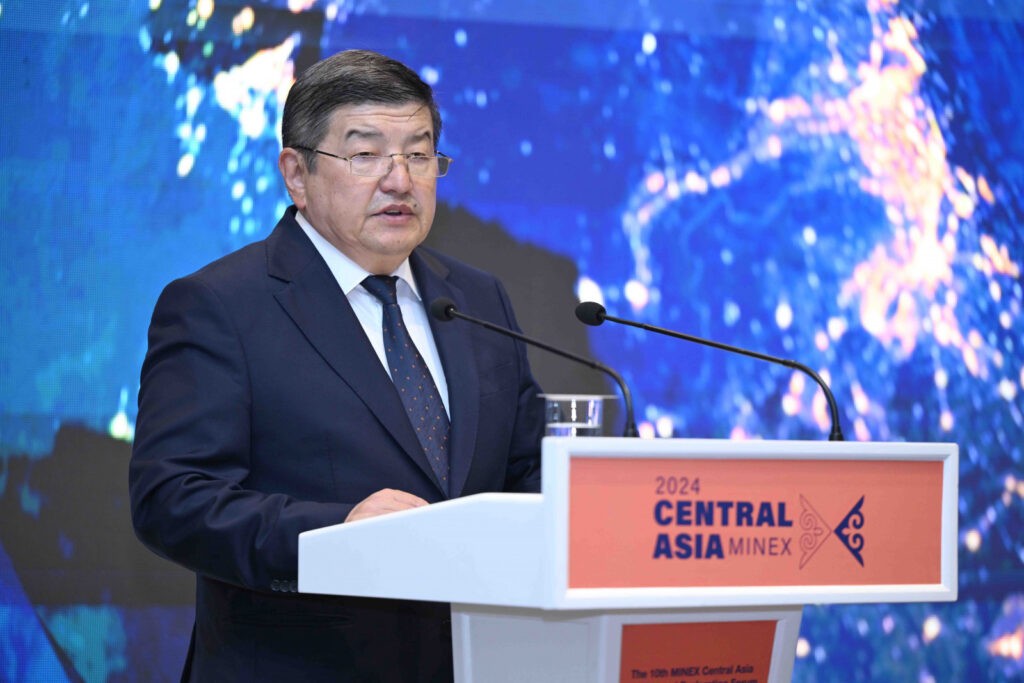
On June 19, Bishkek hosted the 10th mining and geological forum “MINEX Central Asia” with the participation of over 100 companies from 22 countries of Central Asia, Europe, China, North America, and the Middle East. Addressing the forum, Chairman of the Cabinet of Ministers of the Kyrgyz Republic Akylbek Japarov reported that 95% of the territory of Kyrgyzstan consists of mountains, the depths of which are rich in minerals, not only gold and coal, but also iron (one section of one deposit alone, contains over 5 billion tons of ore), titanium, and high in demand rare earth metals such as europium, zirconium, cesium, and group of lanthanides. Citing examples, the prime minister said that the predicted reserves of titanomagnetite in just one area of ​​the Kyzyl-Ompol deposit, amount to some 20 million tons, and the reserves of rare earth metals, including more than 21 elements, at Kutessay-2 deposit, to around 60 thousand tons. “These reserves were recorded more than 50 years ago, and there is an opinion among authoritative geologists and scientists that these figures could increase significantly following more detailed geological exploration using new technological solutions. We invite partners to engage in joint geological exploration and are seeking investors in this promising sector of the economy – mining,” explained Japarov. Regarding Kyrgyzstan’s current climate, which ultimately determines its attraction to investors, he stated: “Political stability has been achieved through the improvement of our country’s economic situation. We have achieved a sharp reduction in the shadow economy, an increase in tax revenues and customs duties and, accordingly, an increase in wages for teachers, medical doctors, cultural workers, an increase in the [economic] activity of impoverished citizens, and a tough fight against corruption and crime. As a result, 82% of the population supports the course set by the country's leadership, headed by the President; a fact substantiated by the International Republican Institute (IRI).” In conclusion, he remarked,  “Our people are experiencing improvements across the board – and after- three revolutions, we are focused on creating a better economy for our country.”  

Kyrgyzstan Lifts Ban on Mining of Uranium and Thorium

Deputies of the Kyrgyz Parliament have approved a bill lifting the ban on mining uranium and thorium by 69 votes in favor to three against. Parliamentarians are confident that the legislative changes will bring significant economic dividends to the country. The law banning uranium and thorium mining was passed in 2019. At that time, authorities wanted to sell the license to develop a deposit, but faced a significant pushback from residents who feared the project could harm the environment and damage the water table. The result was a complete ban on the entire territory of the Republic. In the Issyk-Kul region of Kyrgyzstan alone, 150,000 cubic meters of radioactive waste were accumulated from uranium mining in the last century. According to the Ministry of Emergency Situations, the country has 92 burial sites, with 23 tailing dumps containing uranium elements. Kyrgyzstan's total volume of poisonous and hazardous substances stands at 2.9 million cubic meters. The notes behind the new bill indicate that alternative sources of income are needed due to severe economic impacts over recent years. However, these activities must strictly comply with environmental norms and standards in uranium and thorium mining. Speaking in parliament, Minister of Natural Resources, Environment, and Technical Supervision, Melis Turganbayev assured deputies that the bill's passage would not harm the environment or the health of Kyrgyz citizens. “For uranium mining to be profitable, a deposit needs 40-50 tons. Kyrgyzstan lacks such reserves. There are occurrences from 0.01 to 0.08% in 83 locations. Our goal is not the uranium, but the associated metals,” Turganbayev said. Authorities plan to mine titanomagnetite, which is accompanied by uranium and thorium. Both elements will be processed at the Kara-Balta Combine in Chui Oblast. Thorium will be stored, while uranium will be sold to other states. Iskhak Masaliyev, one of the three deputies who voted against the bill, reminded his colleagues of discussions in the early 2000s on ecology. However, only now has it been possible to begin to eliminate harmful waste. Doctor of Geological and Mineral Sciences, academician Rozalia Jenchuraeva told The Times of Central Asia that the 2019 law banning mining was “a big folly” as it suspended all waste activities and impacted jobs, leaving hazardous materials lying no more than 20 meters deep are slowly contaminating the soil and water. “If they pull it all out, it will be wonderful. It will clean up the land. This is work for the Kara-Balta Combine. I think the government has decided to develop Kyzyl-Ompol, which is the right thing to do,” Jenchuraeva said. Jenchuraeva believes that Kyrgyzstan has qualified personnel who have previously worked at uranium sites, know how to mine uranium and thorium, and can develop the deposits using their expertise and resources. Earlier, President Japarov met with residents near the Kyzyl-Ompol deposit. “The development of Kyzyl-Ompol will create over a thousand jobs. This mine will become the second Kumtor (gold deposit). The local budget will cease to be subsidized, and the people will get richer,” the president said. Kyzyl-Ompol is...