• KGS/USD = 0.01144 0%
  • KZT/USD = 0.00191 0%
  • TJS/USD = 0.10850 0%
  • UZS/USD = 0.00008 0%
  • TMT/USD = 0.28490 0%
  • KGS/USD = 0.01144 0%
  • KZT/USD = 0.00191 0%
  • TJS/USD = 0.10850 0%
  • UZS/USD = 0.00008 0%
  • TMT/USD = 0.28490 0%
  • KGS/USD = 0.01144 0%
  • KZT/USD = 0.00191 0%
  • TJS/USD = 0.10850 0%
  • UZS/USD = 0.00008 0%
  • TMT/USD = 0.28490 0%
  • KGS/USD = 0.01144 0%
  • KZT/USD = 0.00191 0%
  • TJS/USD = 0.10850 0%
  • UZS/USD = 0.00008 0%
  • TMT/USD = 0.28490 0%
  • KGS/USD = 0.01144 0%
  • KZT/USD = 0.00191 0%
  • TJS/USD = 0.10850 0%
  • UZS/USD = 0.00008 0%
  • TMT/USD = 0.28490 0%
  • KGS/USD = 0.01144 0%
  • KZT/USD = 0.00191 0%
  • TJS/USD = 0.10850 0%
  • UZS/USD = 0.00008 0%
  • TMT/USD = 0.28490 0%
  • KGS/USD = 0.01144 0%
  • KZT/USD = 0.00191 0%
  • TJS/USD = 0.10850 0%
  • UZS/USD = 0.00008 0%
  • TMT/USD = 0.28490 0%
  • KGS/USD = 0.01144 0%
  • KZT/USD = 0.00191 0%
  • TJS/USD = 0.10850 0%
  • UZS/USD = 0.00008 0%
  • TMT/USD = 0.28490 0%
10 November 2025

Viewing results 1 - 6 of 10

Kyrgyzstan Expands Mineral Reserves Amid New Exploration Drive

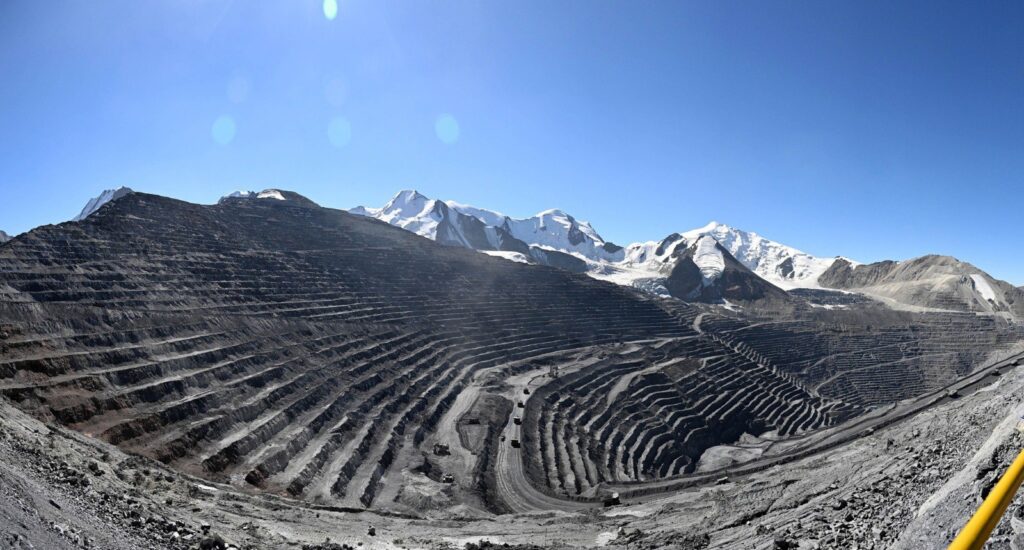
Kyrgyzstan now boasts over 1,000 deposits of 51 different types of minerals, including precious, base, and rare earth metals, as well as coal and hydrocarbons, according to the Ministry of Natural Resources, Ecology, and Technical Supervision. Among the most prominent is the Kumtor gold mine, situated at an altitude of 4,000 meters in the Issyk-Kul region. Kumtor ranks among the world’s ten largest gold deposits and remains a cornerstone of the national mining sector. Approximately 400 deposits across the country are currently under development or active exploration, while operations at around 600 sites have been suspended pending reserve reassessments and upgrades to mining technologies. The mining sector is considered a strategic priority for Kyrgyzstan’s economy. After years of limited geological activity, the government allocated 1 billion soms in 2024 to Kyrgyzgeology for equipment modernization and intensified exploration of polymetals and rare earth elements. Between January and September 2025, the industry recorded stable growth in both output and reserves. As of January 1, 2025, Kyrgyzstan’s confirmed reserves included 973 tons of gold, 1,100 tons of silver, and 960,400 tons of copper, along with significant quantities of other minerals. Recent exploration efforts yielded an additional 5.8 tons of gold, 3.7 tons of silver, and substantial volumes of non-ferrous metals, coal, and construction materials. In the first nine months of 2025, Kyrgyzstan produced 17 tons of gold, 198,000 tons of oil, 18.9 million cubic meters of gas, and 2.3 million tons of coal. To support industry growth, the government conducted 26 auctions for subsoil use rights, generating $1.6 million in revenue. As of September 2025, a total of 2,005 mining licenses had been issued, including 103 granted to state-owned enterprises.

Kyrgyz State Mining Company Kyrgyzaltyn Doubles Authorized Capital Through Dividend Recapitalization

The Kyrgyz state mining company Kyrgyzaltyn, which holds most of the country’s mineral deposits, has doubled its authorized capital by converting owed dividends into equity. According to local media reports citing the Kyrgyz Stock Exchange, Kyrgyzaltyn increased its authorized capital by 5.2 billion soms ($59.6 million) through dividends that were due to the State Agency for State Property Management and the Ministry of Finance. As a result, the company's authorized capital now stands at 9.5 billion soms ($109 million). The company has issued 52,000 shares with a nominal value of 100 soms ($1.2) each, to be allocated among employees of the Ministry of Finance and the State Property Fund. “The shares will be issued in book-entry form and will be paid for from dividends payable on the state-owned stake, as well as the balance from previous issues,” Kyrgyzaltyn said in a statement. The deadline for placing the shares is December 31, 2025. This marks Kyrgyzaltyn’s second capital increase this year. In April 2025, the company issued 768,000 ordinary shares, raising its authorized capital by 77 million soms ($883,000) through a full primary market placement. Kyrgyzaltyn also reported record-breaking profits in the first half of 2025. The company posted a net profit of 17 billion soms ($195 million), five times higher than during the same period last year. “Today, the Kyrgyz Cabinet is the main investor in state-owned companies. The state is constantly recapitalizing these firms to increase their market value and efficiency,” said Medet Nazaraliev, former director of the Kyrgyz Stock Exchange, in an interview with The Times of Central Asia. According to Nazaraliev, recapitalization enhances operational efficiency, facilitates the adoption of new technologies, and supports the launch of new business processes. “The company’s share capital increases, and the state's investment sends a positive signal to other investors,” he said. “Investors observe improving financial stability and growing capital bases. This, combined with visible state support, makes the company an attractive investment,” Nazaraliev added. He noted that recapitalization could signal the company’s intent to expand or initiate major new projects. Earlier this year, Kyrgyzaltyn launched pilot production of titanomagnetite near Balykchy in the Issyk-Kul region. The deposit holds an estimated 20 million tons of reserves, with experts valuing the total mineral content at approximately $1 billion.

Kazakhstan to Launch First International Full-Cycle Geo-Laboratory in Almaty

Kazakhstan is establishing GeoLab Eurasia, the first internationally certified full-cycle geological laboratory in Central Asia. Located in Almaty, the facility will provide high-precision analysis of ore composition and quality in accordance with internationally recognized standards, including NI 43-101, JORC, and ISO/IEC 17025. The creation of this domestic laboratory marks a strategic move to improve the accuracy and credibility of Kazakhstan’s mineral reserve assessments, enhance investor confidence, and reduce reliance on foreign laboratories. GeoLab Eurasia is expected to streamline the mineral certification process and boost the country’s competitiveness in global geological markets. International Collaboration and Scientific Sovereignty The project is being implemented through a tripartite partnership involving the Satpayev Institute of Geological Sciences, Kazakhstan’s Kepler Group, and Chinese firm Eurasia Mineral Standard, which serves as the project’s strategic investor. Founding documents were signed in Almaty on July 23. Askar Syzdykov, Director of the Satpayev Institute, emphasized the broader impact of the initiative: “We view this project as a long-term platform not only for rock and core analysis, but also for joint training programs and the exchange of best international practices. This marks a historic moment where science, technology, and Kazakhstan’s development strategy converge.” Sultan Kinzhekulov, Deputy Chairman of the Investment Committee under the Ministry of Foreign Affairs, underscored the strategic value of the initiative: “GeoLab Eurasia represents a new level of Kazakhstan’s industrial and scientific sovereignty. Projects like this are crucial not only economically, but also in positioning Kazakhstan as a reliable player in global critical mineral supply chains.” Infrastructure and Timeline GeoLab Eurasia will consist of two main components: a laboratory and educational center housed at the Geological Institute in Almaty, and an industrial hub outside the city that will include sample preparation lines and core storage facilities. The laboratory is expected to open in October 2025, with the industrial complex slated for launch in the first quarter of 2026. Once operational, GeoLab Eurasia will serve as a regional center for geological research and mineral certification. The facility is positioned to elevate Kazakhstan’s technological and scientific capabilities in geology and to strengthen its standing in the global market for strategic mineral resources.

Kazakhstan Begins Mineral Exploration in Afghanistan’s Nuristan Province

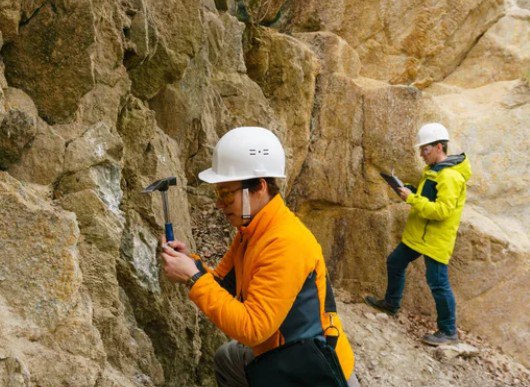
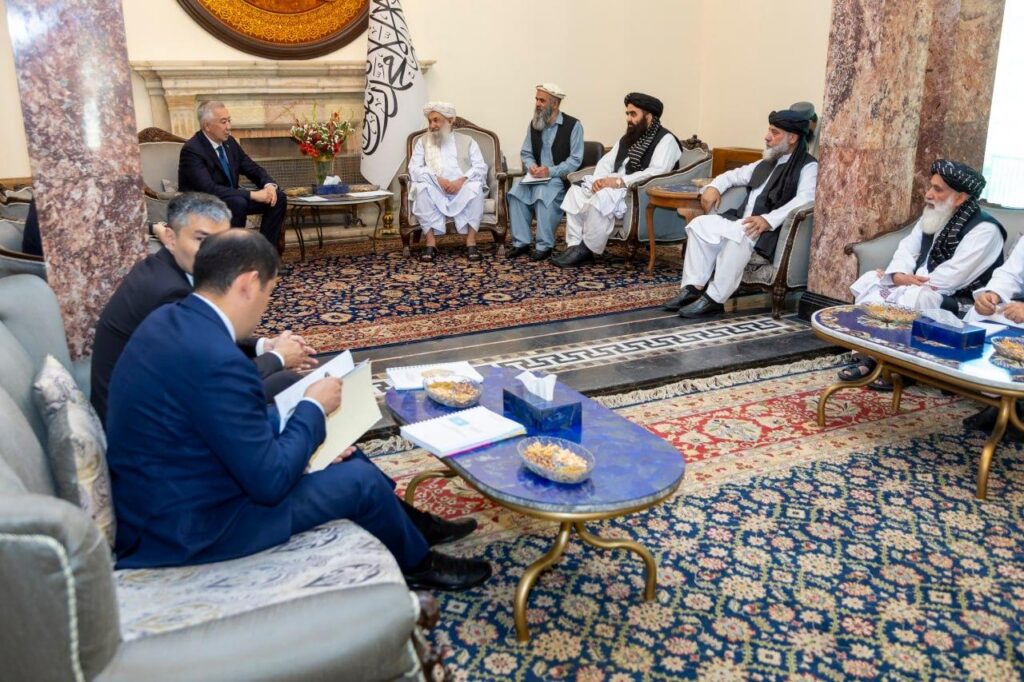
Kazakhstani geologists have begun prospecting potential mining sites in Afghanistan, starting with the resource-rich Nuristan Province. The initiative reflects Kazakhstan’s broader efforts to expand its mining interests and strengthen economic ties with Afghanistan. In mid-April, a group of geologists and engineers from Kazakhstan traveled to Afghanistan, according to the Ministry of National Economy. During their visit, specialists collected 130 kilograms of ore samples from prospective deposits in Nuristan Province, targeting beryllium, lead, and zinc resources. The samples will now be sent to Kazakhstan for laboratory analysis. Depending on the results, Kazakhstan may move to a more in-depth phase of negotiations regarding the development of these deposits. Nuristan Province is located along the border between Afghanistan and Pakistan, south of the Hindu Kush mountain range, with its administrative center in the city of Parun. Mining activity in the province has historically focused on artisanal extraction of precious and semi-precious stones, including varieties of beryl. At least 55 gemstone deposits are known to exist in the region, featuring lazurite, cordierite, ruby, kunzite, emerald, and danburite. However, industrial-scale mining of lead and zinc has not previously been developed in the area. Kazakhstan’s geological exploration in Afghanistan will not be limited to Nuristan. During a meeting in Kabul between Kazakhstan’s Deputy Prime Minister Serik Zhumangarin and Afghanistan’s Minister of Mines and Petroleum Hedayatullah Badri, it was agreed that another team of Kazakhstani specialists would travel to Afghanistan at the end of May. The Afghan side also expressed readiness to share information about confirmed mineral reserves that could be of interest to Kazakh companies. “Today Kazakhstan has formed a professional pool of extractive companies experienced in geological exploration, mining, and processing of solid minerals. These companies are keen to find and invest in promising deposits,” Zhumangarin noted. Representatives from major firms such as ERG Exploration, Kazakhmys Barlau, and Kazatomprom accompanied the Kazakh delegation. The meeting participants agreed to establish a joint technical commission to facilitate timely discussions on emerging issues. Zhumangarin also attended the Kazakhstan-Afghanistan Business Forum, which saw participation from 50 Kazakhstani companies. During the forum, he highlighted the potential for Afghanistan to serve as a key logistics hub between Central and South Asia, while Kazakhstan could become a reliable supplier of food products, technologies, engineering services, chemicals, and IT solutions. "An ambitious but achievable goal has been set, to increase the volume of trade to $3 billion in the short term. Achieving this requires building sustainable supply chains, expanding the range of traded goods, and creating favorable conditions for investment and entrepreneurship," Zhumangarin stated. He also proposed to Afghan Deputy Prime Minister Abdul Ghani Baradar the opening of a Kazakh trade house in Kabul. Additionally, the Kazakh side suggested considering the export of buses manufactured by QazTehna LLP to Afghanistan. As previously reported by The Times of Central Asia, Kazakhstan is also exploring the possibility of exporting cars produced in Kostanay and Almaty to Afghanistan, with first deliveries potentially taking place this year.

Kyrgyzstan Promotes Investment in Mineral Resources

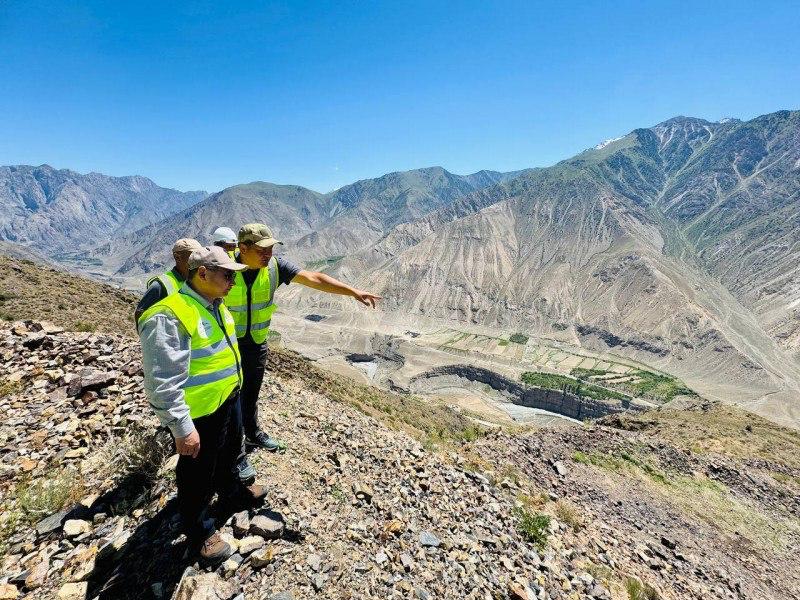
On June 19, Bishkek hosted the 10th mining and geological forum “MINEX Central Asia” with the participation of over 100 companies from 22 countries of Central Asia, Europe, China, North America, and the Middle East. Addressing the forum, Chairman of the Cabinet of Ministers of the Kyrgyz Republic Akylbek Japarov reported that 95% of the territory of Kyrgyzstan consists of mountains, the depths of which are rich in minerals, not only gold and coal, but also iron (one section of one deposit alone, contains over 5 billion tons of ore), titanium, and high in demand rare earth metals such as europium, zirconium, cesium, and group of lanthanides. Citing examples, the prime minister said that the predicted reserves of titanomagnetite in just one area of ​​the Kyzyl-Ompol deposit, amount to some 20 million tons, and the reserves of rare earth metals, including more than 21 elements, at Kutessay-2 deposit, to around 60 thousand tons. “These reserves were recorded more than 50 years ago, and there is an opinion among authoritative geologists and scientists that these figures could increase significantly following more detailed geological exploration using new technological solutions. We invite partners to engage in joint geological exploration and are seeking investors in this promising sector of the economy – mining,” explained Japarov. Regarding Kyrgyzstan’s current climate, which ultimately determines its attraction to investors, he stated: “Political stability has been achieved through the improvement of our country’s economic situation. We have achieved a sharp reduction in the shadow economy, an increase in tax revenues and customs duties and, accordingly, an increase in wages for teachers, medical doctors, cultural workers, an increase in the [economic] activity of impoverished citizens, and a tough fight against corruption and crime. As a result, 82% of the population supports the course set by the country's leadership, headed by the President; a fact substantiated by the International Republican Institute (IRI).” In conclusion, he remarked,  “Our people are experiencing improvements across the board – and after- three revolutions, we are focused on creating a better economy for our country.”  

Major Mineral Fertilizer Production Plant Planned for Kazakhstan

EuroChem, a global fertilizer leader and China National Chemical Engineering Co. (CNCEC), a global provider of industrial engineering technologies are to collaborate on the design, construction, and commission of a large-scale chemical complex to produce mineral fertilizers in Zhanatas located in Kazakhstan’s Zhambyl region. The agreement was officially signed on 14 May in Astana. Scheduled to open in 2027, the construction of  the chemical complex is part of the Integrated Kazakhstan Industrialization Roadmap and represents the third and final stage of a project in which EuroChem has invested over US$1 billion. EuroChem Group President Oleg Shiryaev said that once in operation, the plant will have an annual output of over one million tons of mineral fertilizers, in high demand by Kazakhstan, other Central Asian countries, China, Russia and Europe. According to a report by the Kazakh Ministry of Industry and Construction, the new enterprise will create 2,400 new jobs. During the signing of the agreement, Minister of Industry and Construction of Kazakhstan Kanat Sharlapaev, welcomed the input of  world leaders in mineral fertilizer production as an important step in developing the country's chemical industry and emphasized: “To be truly food secure, fertilizers are a must. This is therefore a landmark project for us. Its joint implementation with EuroChem and Chinese partners is a great example of large Eurasian cooperation at its best and a significant event for regional food security.”